How to Organize a Small Bedroom Without Making It Feel Cramped
Your bedroom doesn’t have to be tiny to feel overwhelming. If you’re constantly moving clothes from the bed to a chair, you know the frustration. Figuring out how to organize a small bedroom without feeling boxed in can feel like a constant battle.
You might even be a naturally tidy person. But when floor space is limited, small things add up quickly. A pair of shoes by the door or an overcrowded nightstand can make the whole room feel chaotic.
The obvious solution is to buy more bins and baskets from Target or IKEA. But adding more storage furniture to a tight layout can backfire, taking up valuable floor space and creating more visual clutter.
Real organization isn’t about filling your room with plastic tubs or making it look stark and empty. It’s about working with the space you already have and creating simple systems that are easy to maintain.
Before you buy another organizer, let’s rethink your room from the ground up. A few smart changes can give you a calmer, more breathable space without making it feel overstuffed.
How to Organize a Small Bedroom: Start With the Space You Have
Before you open Amazon or head to the store, stop and look at your room. It’s easy to reach for bins and organizers when clutter starts taking over. But adding more products can create more clutter if you haven’t figured out what the room actually needs.
Good small bedroom organization starts with understanding your space. Look for areas that aren’t being used well before deciding what to change.
Clear the Floor First
A crowded floor can make a small bedroom feel even tighter.
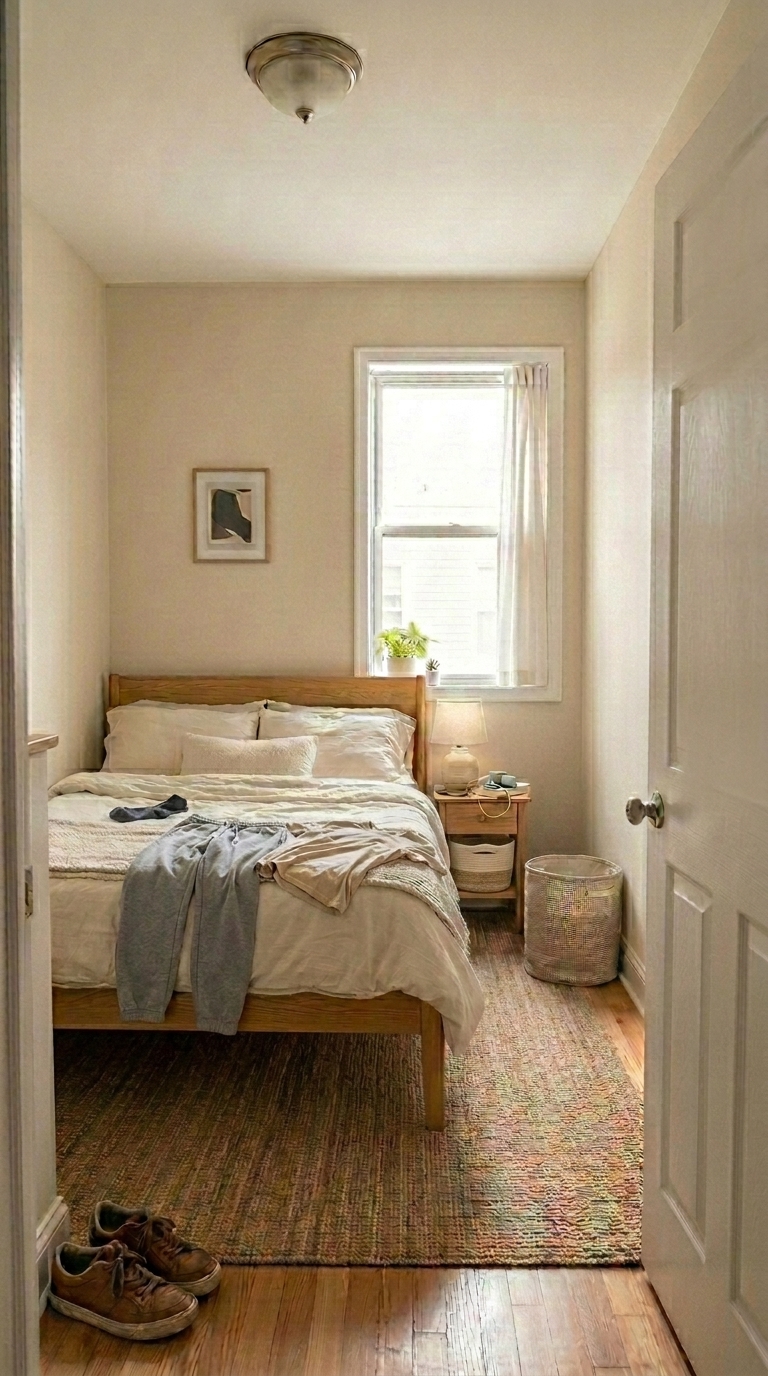
Stand in the doorway and look toward the bed. Is there a clear path, or are shoes, laundry, and storage bins taking over the walking areas?
Start there. Keep the floor open for moving around rather than storing things. Even a little more visible floor space can make the room feel calmer and easier to use.
Identify Your “Dead” Spaces
Once the floor is clear, look around again. Small bedrooms often have pockets of unused space. Instead of wishing for a bigger room, look at the areas that could work harder:
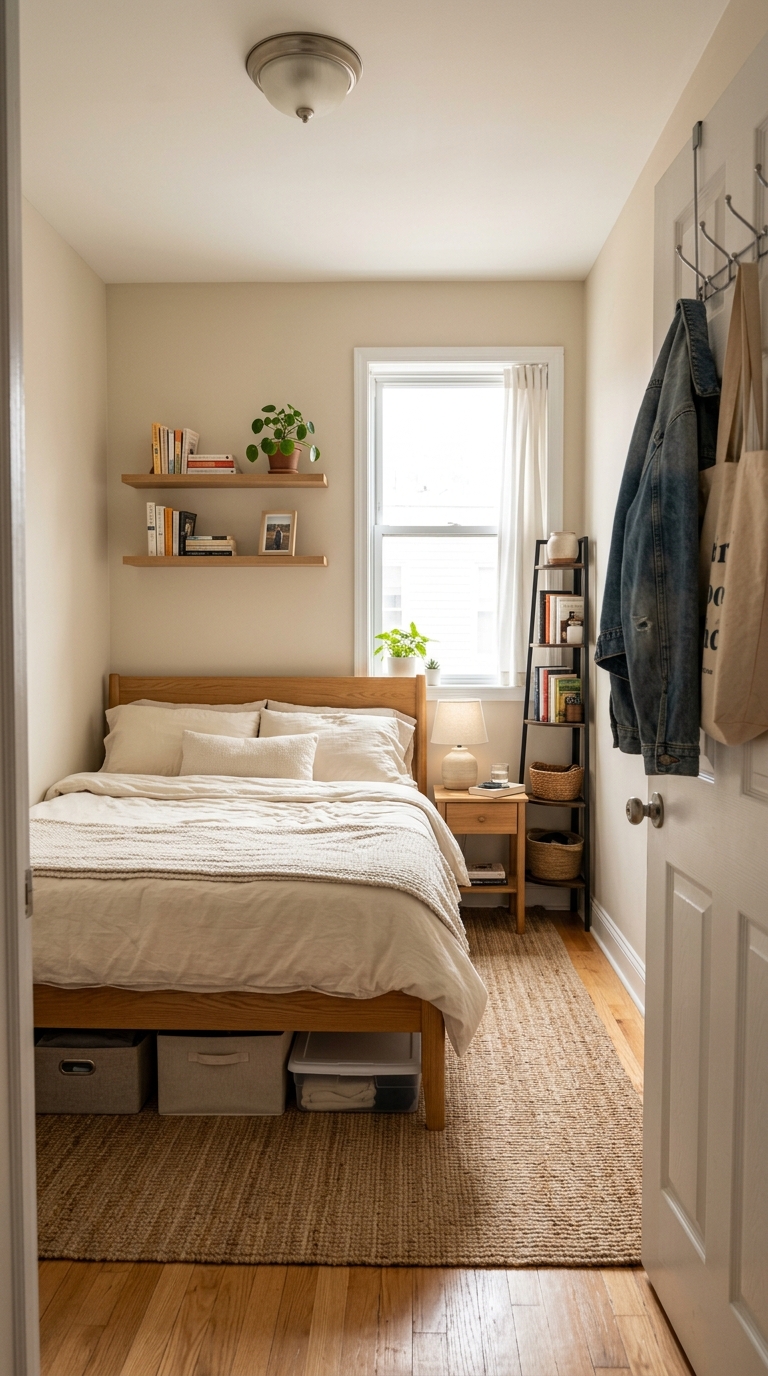
- Under the bed: Store seasonal clothes, spare bedding, or other less-used items.
- Behind the bedroom door: Add hooks or a slim organizer for bags, accessories, or shoes.
- Above eye level: Use the wall above your closet rod or other overlooked wall space.
- Awkward gaps: A narrow space beside a nightstand or dresser may fit a slim organizer.
- Corner nooks: An empty corner can sometimes hold a tall, narrow shelf.
Once you learn how to maximize bedroom space, you may find that you don’t need more square footage. You simply need to make better use of what you already have.
Decluttering: The First Step to Organizing a Small Bedroom
Let’s be honest: storage bins can’t fix a volume problem.
If a small bedroom is packed to the brim, putting everything into ten storage containers won’t make it calmer. It just hides the excess. That’s why learning how to organize a small bedroom starts with decluttering before you buy another basket.
Once the excess is gone, organizing a small bedroom becomes much easier because you’re only finding homes for the things you actually use.
Remove What Doesn’t Belong
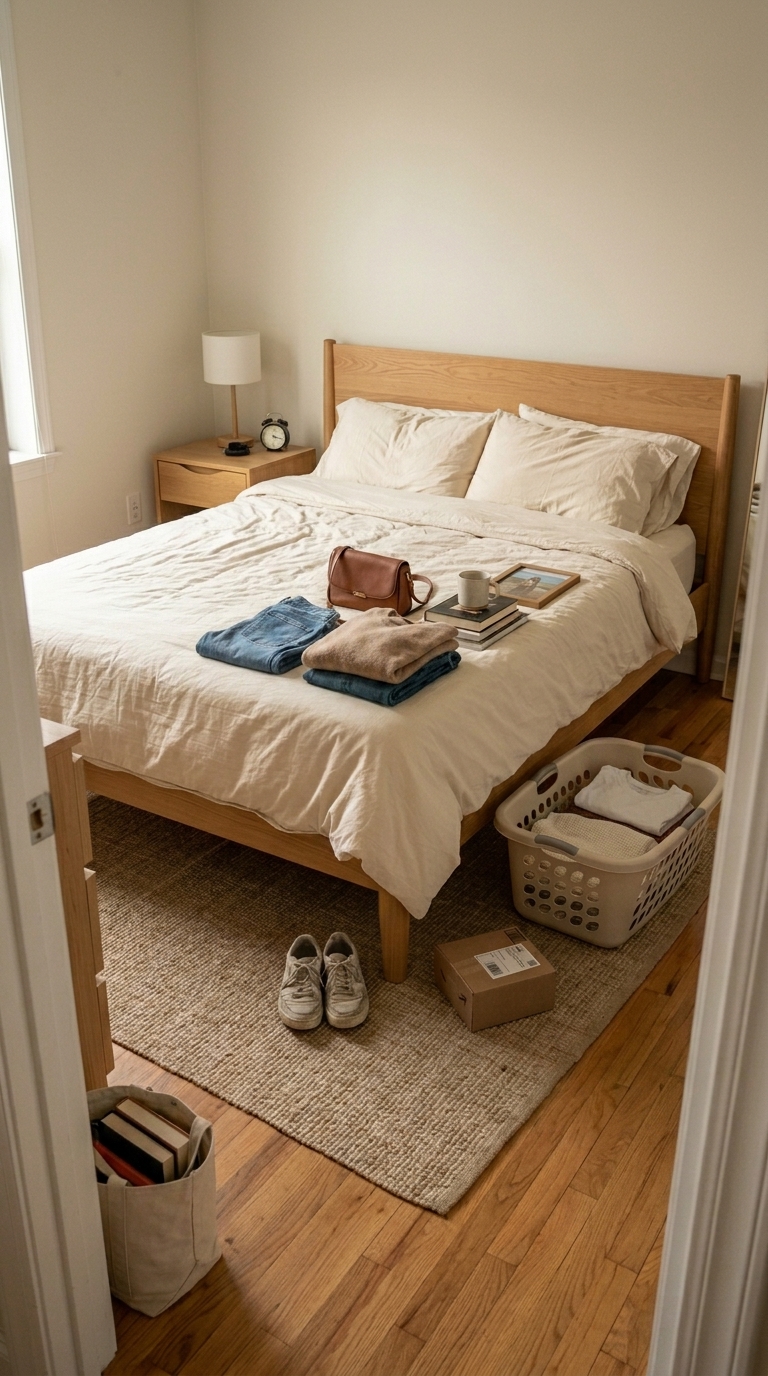
Over time, small bedrooms can become the dumping ground for the rest of the house. A package comes in, some paperwork gets dropped off, and somehow it all stays there.
Walk through the room with a laundry basket and collect anything that belongs in the kitchen, living room, entryway, or elsewhere.
Your bedroom should be a place to rest, not a holding zone for household errands.
Create Three Simple Categories
When you start sorting, keep the process simple. You don’t need ten piles. Three are enough:
- Keep: Things you use regularly and genuinely want.
- Relocate: Items you still need but that belong somewhere else, such as luggage or extra linens.
- Let Go: Worn-out clothes, duplicates, and things you no longer use.
Keeping the choices simple makes decluttering less overwhelming and helps you keep moving.
Don’t Organize Things You Don’t Use
This is where a little tough love helps.
Organizing a pair of jeans you haven’t worn in years doesn’t solve anything. It simply gives something you don’t use a nicer place to sit.
Before finding a home for something, ask yourself whether it actually deserves one.
If you haven’t worn it, used it, or missed it in a long time, consider letting it go. Once the excess is gone, organizing what remains becomes much easier.
Make Your Bed Work Harder
In most bedrooms, the bed takes up more floor space than anything else. When the room is small, that space can do more than hold your mattress.
The area under your bed can give you extra storage without adding another bulky piece of furniture. The trick is knowing what belongs there and what doesn’t.
Use Under-Bed Storage for Less-Used Items
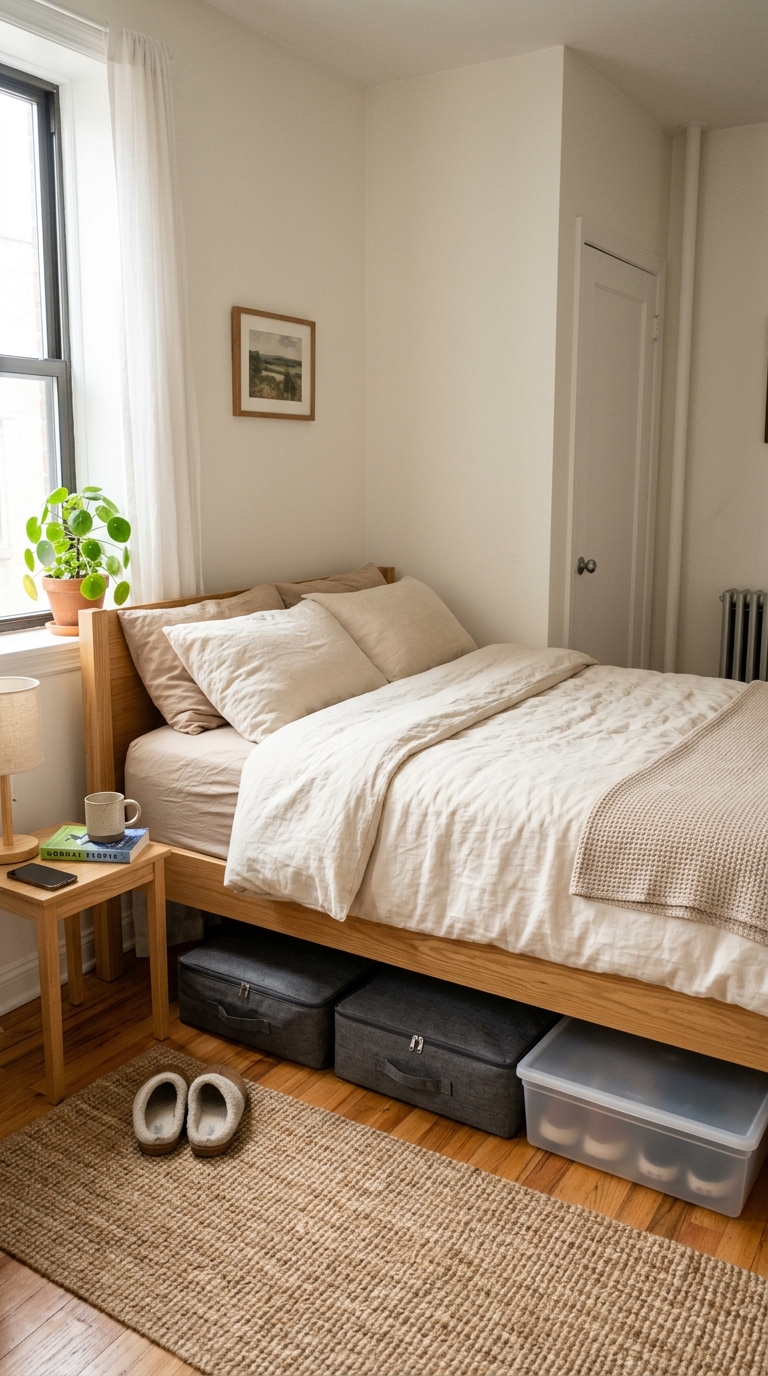
The space under your bed works best for things you don’t need every day. Digging through heavy storage bins every morning gets old quickly.
Instead, use this area for items you reach for less often, such as:
- Seasonal clothes: Store winter sweaters or summer clothes in flat fabric bags.
- Extra bedding: Keep spare sheets, comforters, and pillows together.
- Travel gear: Flat suitcases, duffle bags, and packing cubes can fit neatly underneath.
- Shoe overflow: Store formal shoes or seasonal boots in lidded boxes.
If clothes are taking up more space than you’d like, these small bedroom clothes storage ideas can help you find room without adding bulky furniture.
Keep Everyday Items Easy to Reach
If you have a storage bed with built-in drawers, use them for things you reach for often, such as pajamas, workout clothes, or lounge pants.
Before filling them, check that the drawers open fully. If a nightstand or another piece of furniture gets in the way, move less-used items into that drawer instead.
Avoid Turning Under the Bed Into a Clutter Cave
It’s tempting to push random things under the bed just to get them out of sight. Eventually, though, you forget what’s down there.
Keep this area simple. Use lidded containers or zippered fabric bags to protect belongings from dust, and group similar items together so they’re easy to find.
Most importantly, put things back after using them. Otherwise, useful storage can quickly become another hiding place for clutter.
Use Vertical Space Before Adding More Floor Furniture
When a small bedroom runs out of floor space, look up before adding another piece of furniture. The walls often have plenty of unused room.
Using vertical space is one of the easiest small bedroom organization ideas because it adds storage without taking over your walking path.
Put Walls to Work
Your walls can do more than display art.
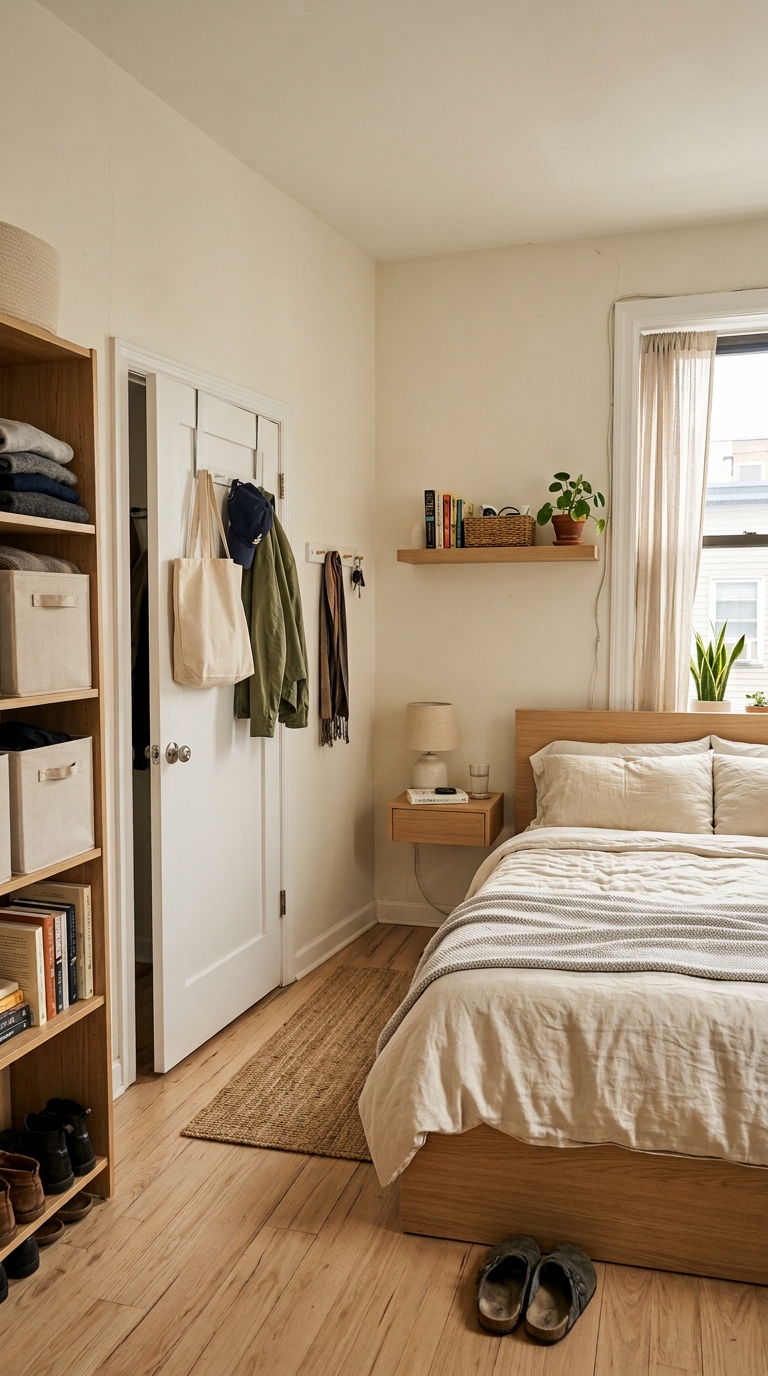
A floating shelf above a desk or nightstand can hold books, small storage boxes, or a few decorative pieces. These floating shelves styling ideas can help you keep the look practical without making the wall feel busy.
You can also use a peg rail or sturdy hooks for hats, tote bags, and tomorrow’s outfit. Keeping these items off the floor helps the room feel lighter.
Use the Back of the Door
The back of a bedroom or closet door is another easy storage zone that often goes unused.
A slim over-the-door organizer or a few hooks can hold:
- Everyday accessories: Belts, scarves, and crossbody bags.
- Shoes: Clear pocket organizers keep casual pairs off the floor.
- Bathrobes or jackets: Hooks give frequently worn layers a place to hang.
This keeps everyday clutter contained without taking up more floor space.
Think Up, Not Out
When you do need standalone storage, choose height over width whenever the layout allows.
A wide, low dresser can eat into a narrow walkway. A tall, slim bookcase or dresser can provide useful storage while taking up less floor space.
The goal isn’t to fill the walls either. Use vertical storage where it genuinely solves a problem, then leave enough open space to keep the room feeling balanced.
Make Your Closet Work Harder
When a small bedroom starts overflowing, the closet is often part of the problem. If your wardrobe system isn’t working well, clothes quickly spill onto chairs, the bed, and even the floor.
You don’t need a huge walk-in closet to fix this. Make better use of the space you already have. If your hanging rod is the main bottleneck, these small bedroom clothes storage ideas can help you rethink your closet before clothes take over the room.
Double Your Hanging Space
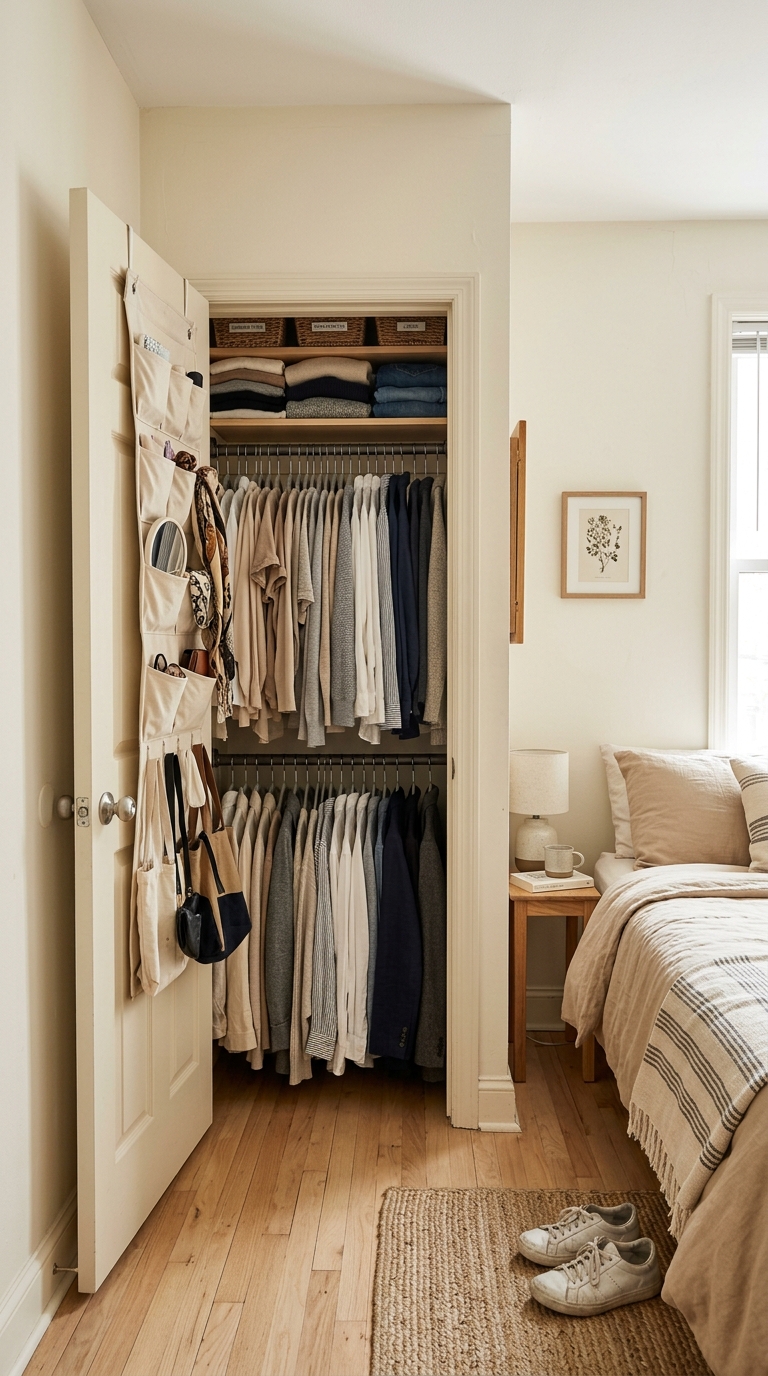
Many apartment closets have one hanging rod and a shelf above it, leaving plenty of unused space underneath.
A second hanging rod can change that. Try an adjustable tension rod or tiered hanging organizer. Use the upper level for shirts, blouses, and jackets, then keep pants, skirts, and shorter pieces below.
This simple change can give you more hanging room without expanding the closet.
Switch to Slim Hangers
Bulky hangers can take up more space than you realize and make a small closet look crowded.
Matching slim velvet hangers take up less room, allowing clothes to sit closer together. They also help prevent clothes from slipping and give the closet a more uniform look.
Make Use of the Upper Shelf
Don’t let the shelf above your hanging clothes become a random pile. Use it for things you don’t need every day, such as off-season clothes, spare bedding, or small travel bags.
Keep these items in labeled bins or fabric boxes so you can find what you need without pulling everything down. Also, check the inside of the closet door. If there is enough clearance, an over-the-door organizer can hold shoes, belts, scarves, or bags.
Rotate Seasonal Clothing
Trying to fit every season into one small closet can make it feel permanently stuffed.
When the seasons change, move heavy sweaters and coats out and bring them back when the weather cools. Store off-season pieces in flat bags or under-bed containers, while keeping your current wardrobe within easy reach.
You’ll gain hanging space and make your closet much easier to use every morning—without buying a bigger wardrobe.
Give Every Surface a Limit
Flat surfaces can become clutter magnets in a small bedroom.
When you walk in with your hands full, it’s easy to drop things on the nearest table or dresser. A few days later, receipts, water glasses, loose change, and charging cables can take over.
Instead of adding more storage, give each surface a clear purpose and a simple limit.
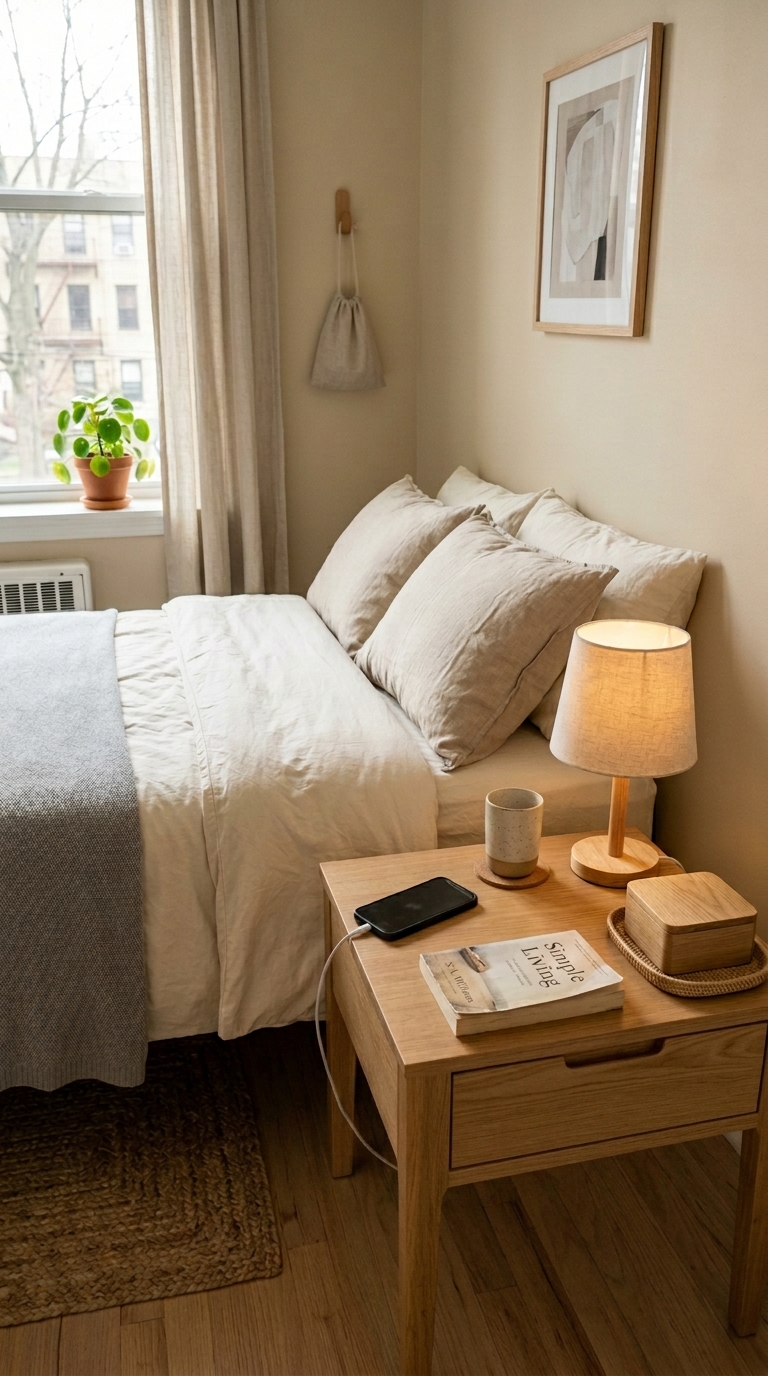
Keep the Nightstand Useful, Not Full
Your nightstand should make bedtime easier, not become another storage pile.
For most people, three or four essentials are enough: a lamp, water coaster, phone charger, and current book. Everything else should have a home elsewhere.
If you want more personality without adding clutter, these nightstand decor ideas can help you style the space while keeping it practical.
Use the drawer, if you have one, for smaller items such as reading glasses, lip balm, and charging cables. A few dividers can keep everything contained and out of sight.
Give the Dresser a Clear Boundary
A dresser top can quickly become a drop zone for mail, shopping bags, jewelry, and unfolded laundry.
Instead, give it one small landing spot. A woven tray or decorative bowl can hold everyday items such as keys, jewelry, or loose change.
The rule is simple: if everything no longer fits inside the tray, it’s time to put things away.
Give Small Items a Permanent Home
Tiny items are often what make a bedroom look messy because they rarely have a designated place.
Give them one:
- Jewelry and watches: Use a small lidded box or drawer organizer.
- Chargers and cables: Keep them together with cable clips or a charging dock.
- Hair ties and skincare: Store them in a small lidded basket or drawer.
- Loose change: Give it one designated tray or container.
Once everything has a home, tidying becomes much easier. You don’t have to decide where something belongs each time. You simply put it back.
That small habit can make a big difference in a compact bedroom.
Choose Furniture That Earns Its Space
In a tight bedroom, every piece of furniture needs to earn its footprint. Otherwise, even the best small bedroom organization ideas can leave you feeling cramped.
A bed frame, dresser, bench, or nightstand takes up valuable floor space. Before buying anything, ask yourself: What job is this piece doing, and can it do more?
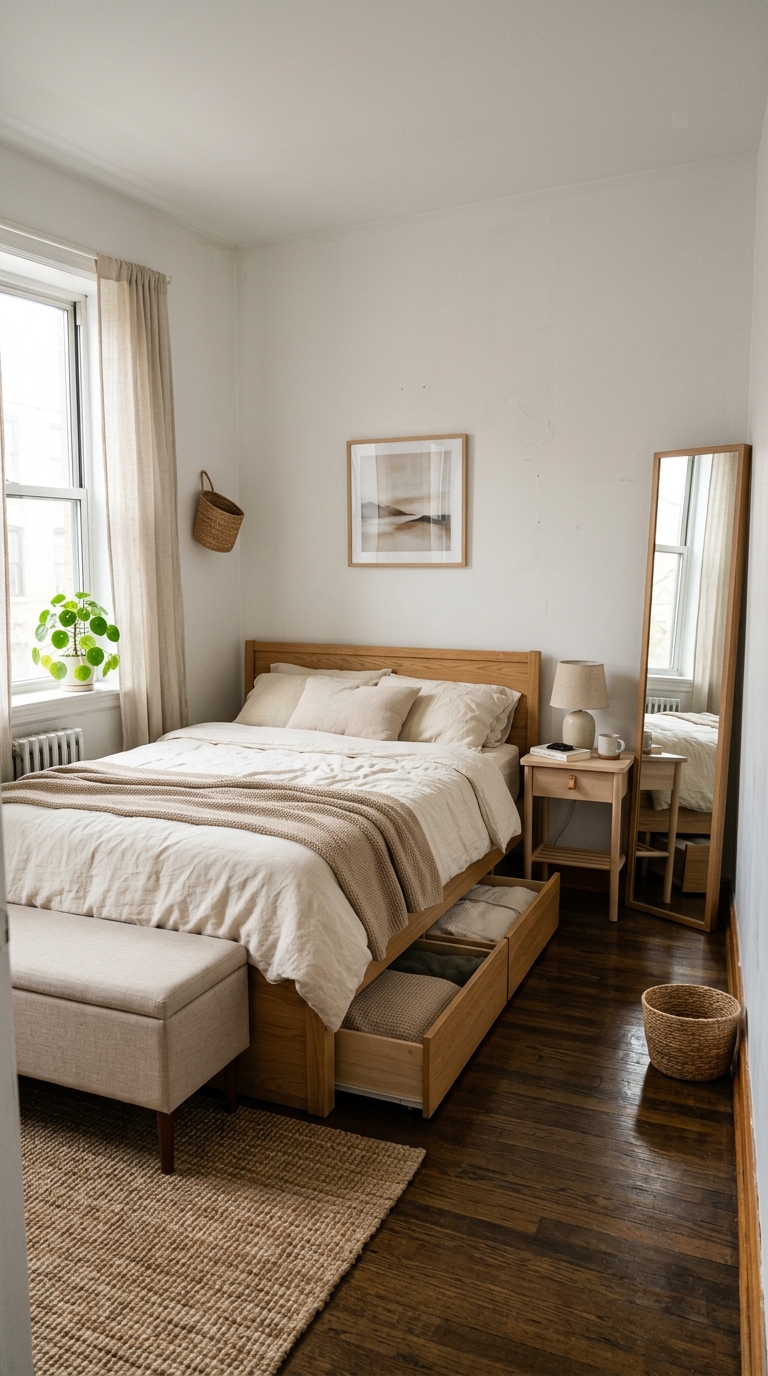
Measure Before Replacing Anything
Don’t choose bedroom furniture based on appearance alone. Something that looks compact online or in a large showroom can feel surprisingly bulky in a small room.
Before ordering, measure the wall, available floor space, doorway clearance, and nearby door and drawer swing paths. Leave enough room to move comfortably around the bed.
If you’re working with a larger bed in a small room, these small bedroom layout ideas with a queen bed can help you plan the space before making an expensive purchase.
Choose Pieces With More Than One Job
Multifunctional furniture can help you avoid adding unnecessary pieces. Consider:
- Storage beds: Lift-up frames or built-in drawers can hold bedding, shoes, and off-season items.
- Storage ottomans or benches: A bench at the foot of the bed can provide seating and hide blankets or pillows.
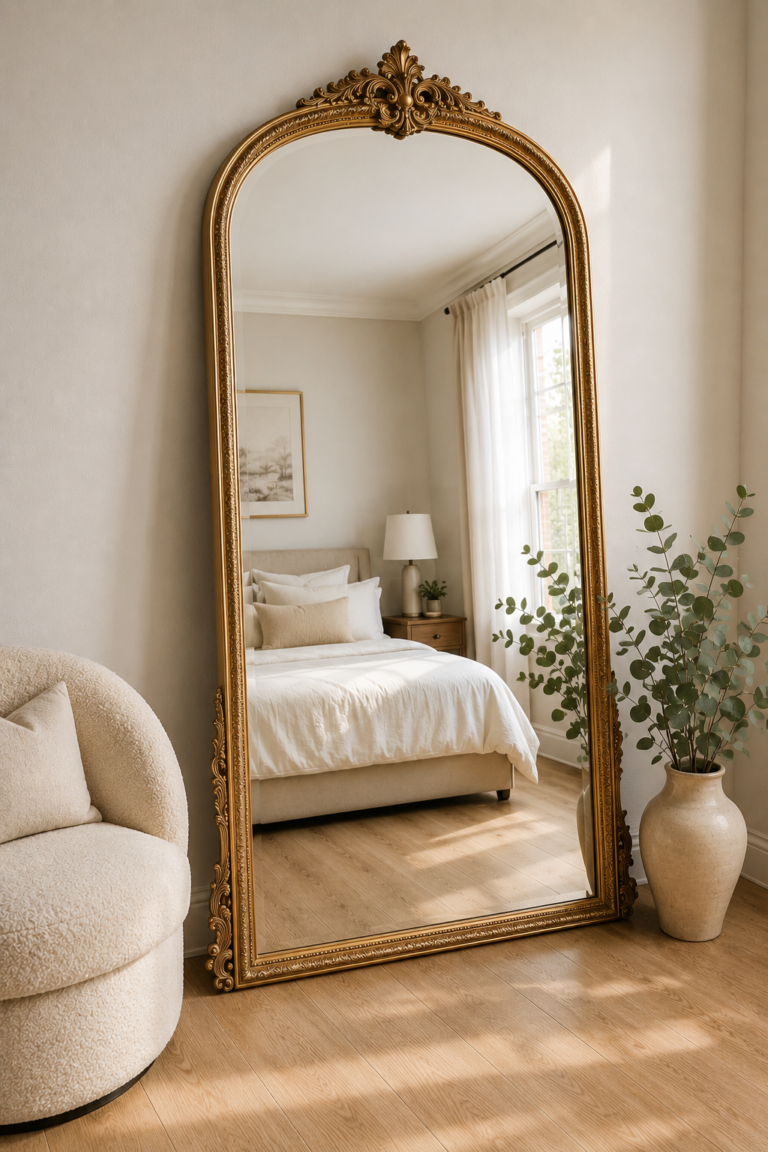
- Mirrors with storage: A full-length mirror with shelves or hooks can combine dressing and storage in one spot.
- Deep-drawer dressers: Look for drawers that make good use of available depth. These dresser storage ideas for a small bedroom can help you organize more without adding another piece of furniture.
Don’t Confuse More Storage With Better Storage
A bigger dresser or taller cabinet won’t necessarily solve your storage problems.
A large chest that blocks your walking path can make the bedroom harder to use, even when the drawers are perfectly organized. Heavy furniture can also make a small room feel more enclosed.
Instead, choose pieces that fit your actual space, provide useful storage, and leave enough clearance to move comfortably.
In a small bedroom, a slightly smaller piece that fits naturally will often serve you better than a giant storage unit you have to squeeze past every morning.
Protect the Walking Space
A bedroom can have plenty of smart storage and still feel cramped. Good small bedroom organization is just as much about protecting your walking space as it is about finding places to put things. Often, the problem isn’t the amount of furniture. It’s where that furniture sits.
If you have to squeeze around the bed, dodge a laundry basket, or struggle to reach the closet, the layout is working against you. So, protect your main walking paths just as carefully as you protect your storage.
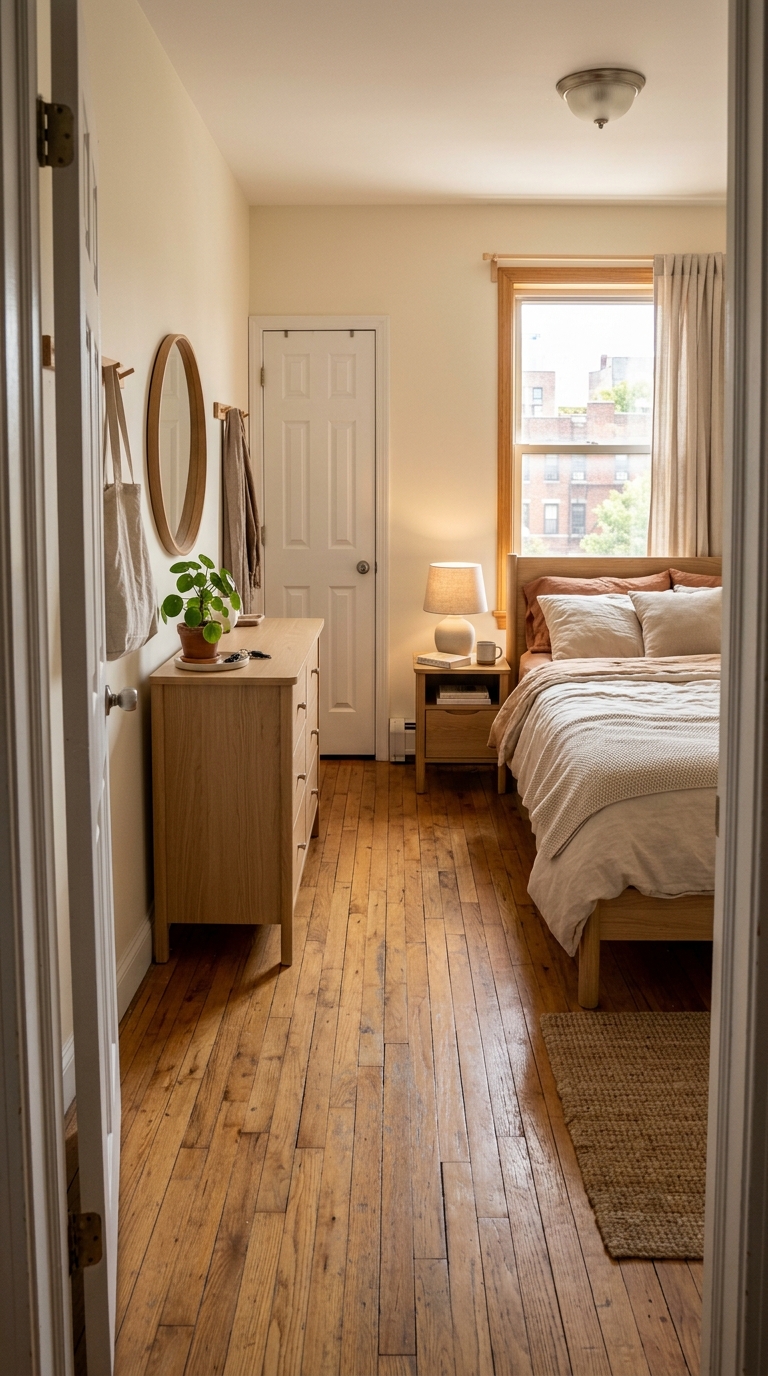
Keep the Main Path Clear
Keep the route from the bedroom door to the bed as open as possible. Avoid placing laundry baskets, plant stands, or extra chairs directly along the path.
That clear stretch of floor makes the room easier to move through and can also make it feel more spacious.
Check Doors and Drawers
Storage only helps when you can actually reach it.
Before settling on your layout, open the bedroom door, closet doors, and dresser drawers fully. Make sure none of them collide with the bed, nightstand, rug, or another piece of furniture.
If you have to move something every time you open a drawer, the layout needs adjusting.
Leave Some Space Empty
Don’t feel pressured to fill every empty corner.
A bare patch of floor or wall gives your eyes somewhere to rest. It also keeps the bedroom from feeling overloaded.
In a small room, empty space is part of the design. Leaving some breathing room can make the entire layout feel calmer and more comfortable.
Create a Simple Everyday Reset System
The best storage system in the world fails if it takes too much effort to maintain.
Instead of letting clutter build up all week, use a 5-minute evening reset:
- Clear the surfaces: Return small items to their homes and take drinking glasses to the kitchen.
- Reset your clothes: Put clean clothes away, hang pieces you plan to wear again, and place dirty laundry straight into the hamper.
- Straighten the bed: Fluff the pillows and smooth the bedding so the room starts fresh the next morning.
The goal isn’t a spotless bedroom every night. It is simply to prevent small messes from becoming overwhelming ones.
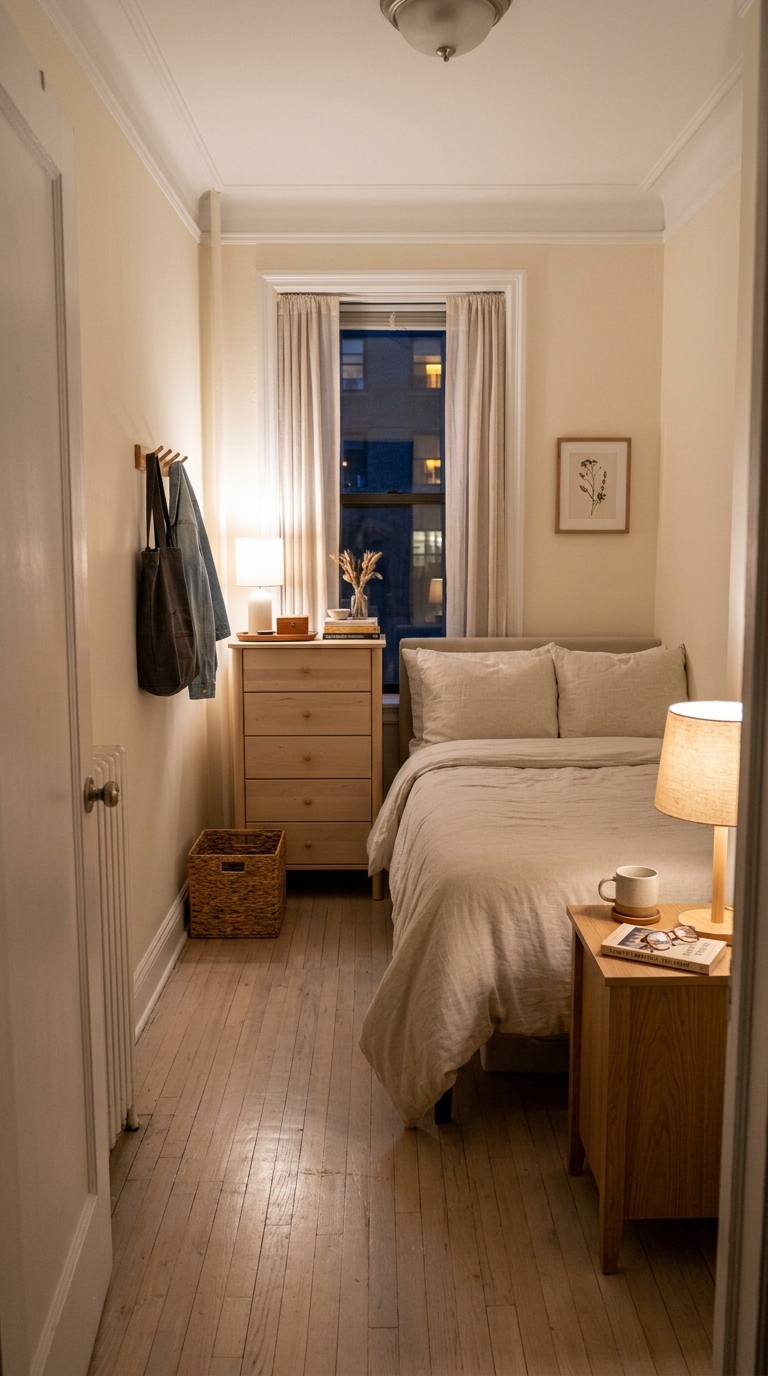
What If Your Small Bedroom Has No Closet?
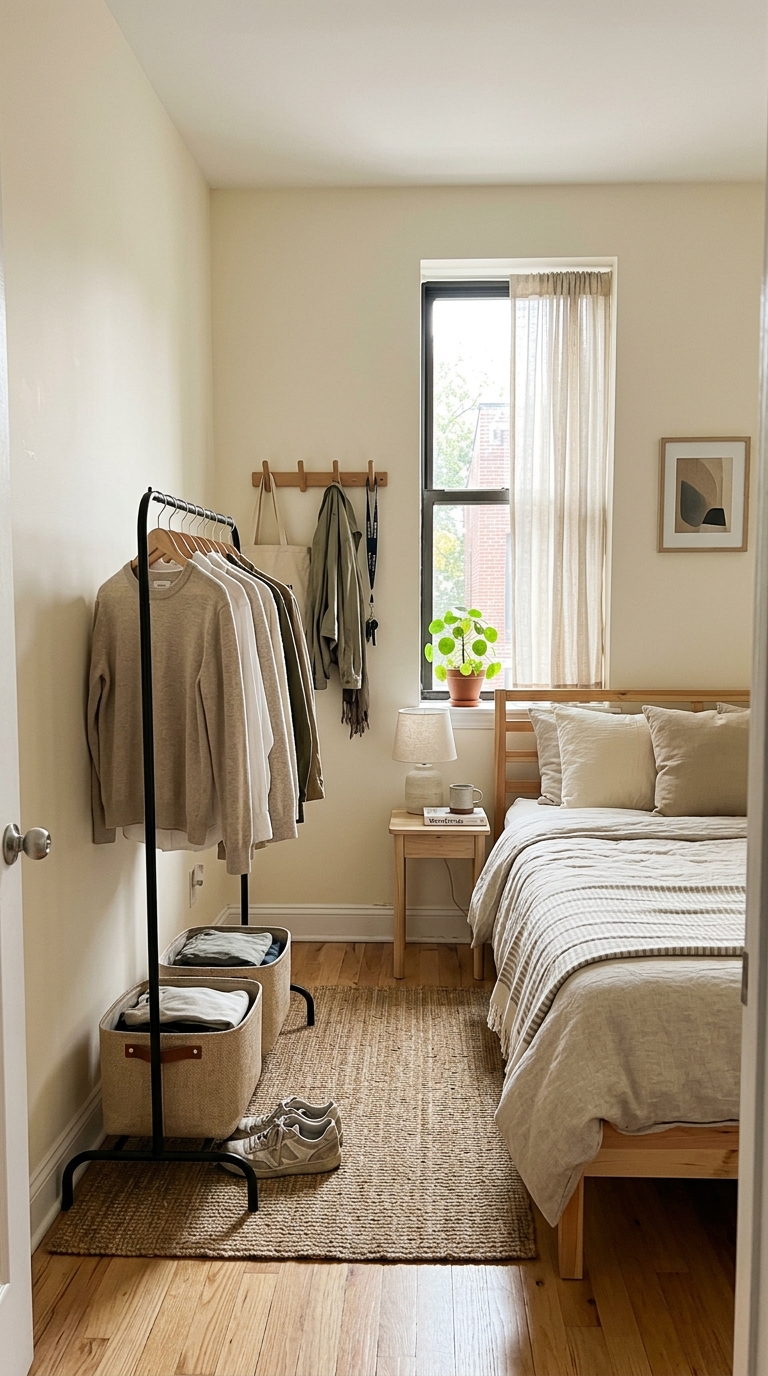
No closet doesn’t mean you need a bulky wardrobe that consumes half the room. When you’re organizing a small bedroom without a closet, start with storage solutions that use overlooked space.
- Slim garment rack: A simple garment rack keeps daily essentials accessible without adding a bulky wardrobe. For more ideas, see these ways to store clothes without a closet.
- Under-bed storage: Use shallow bins or drawers for off-season clothing that doesn’t need daily access.
- Vertical hooks: Install a few sturdy hooks on an unused wall or behind a door for jackets, bags, and frequently worn pieces.
The trick is to give your clothes a designated home without allowing storage furniture to take over the room.
Common Small Bedroom Mistakes to Avoid
Even well-intentioned organization can make a small bedroom feel more crowded. Watch for these common mistakes:
- Buying organizers before decluttering: Pretty bins cannot fix a room full of things you don’t use.
- Using too many small containers: Too many individual organizers can create visual noise. Choose fewer, more useful pieces instead.
- Filling every empty wall: Some open space helps the room feel lighter and less enclosed.
- Choosing oversized furniture: A large dresser or nightstand can consume valuable walking space without giving you enough additional storage to justify it.
Good organization isn’t about filling every available inch. It’s about deciding what deserves the space.
A Simple 5-Day Organization Plan
If the entire bedroom feels overwhelming, break the process into smaller tasks:
- Day 1: Declutter. Remove items that belong elsewhere and set aside things you no longer use.
- Day 2: Maximize the closet. Add a second hanging level, switch to slim hangers, and move seasonal items higher up.
- Day 3: Organize the bed zone. Put less-used belongings into under-bed storage and clear the surrounding floor.
- Day 4: Reset surfaces. Reduce your nightstand and dresser to the essentials.
- Day 5: Build the habit. Start the 5-minute evening reset so the room stays organized.
You don’t have to transform the entire room in one afternoon. Small changes are easier to maintain.
Frequently Asked Questions
How do I organize a small bedroom with little storage?
Start by decluttering, then use vertical walls, under-bed storage, and the backs of doors to add capacity without taking up more floor space.
Where should clothes go in a small bedroom?
Use double hanging rods for everyday clothing, dresser drawers for folded pieces, and under-bed storage for off-season items.
How do I make a small bedroom feel bigger?
Keep the main walking path clear, choose appropriately scaled furniture, and leave some open floor and wall space instead of filling every corner.
Final Thoughts
Learning how to organize a small bedroom isn’t about squeezing more storage into every available corner. It’s about making the square footage you already have work harder.
Declutter first, use overlooked spaces, protect your walking paths, and choose furniture that earns its footprint. With a simple daily reset, even a very small bedroom can stay functional, calm, and comfortable.