Color Drenching a Small Room Without Making It Feel Cramped: 7 Smart Paint Tips
A small room can start feeling cramped surprisingly fast. A few bare walls, bulky furniture, or too much contrast can make the space feel smaller than it really is. That’s where color drenching a small room can make a difference. Instead of trying to hide the room’s size, you use one thoughtful color to make everything feel more connected.
White walls can certainly make a room feel brighter. But brighter isn’t always the same as warmer or more inviting. In some small spaces, white walls paired with bright trim can create lots of visual breaks.
Color drenching takes a different approach.
The walls, ceiling, trim, and sometimes the door share one color. Those surfaces begin to feel like one continuous backdrop instead of separate pieces.
But there’s an understandable hesitation.
Could all that color make your small room feel even smaller?
Not necessarily. The result depends on the shade, natural light, ceiling height, furniture, and how much contrast you leave in the room. Get those details right, and color can make a small space feel surprisingly cozy and pulled together.
Before you buy the paint, let’s look at seven smart ways to get the look right without making your room feel cramped.
What Is Color Drenching?
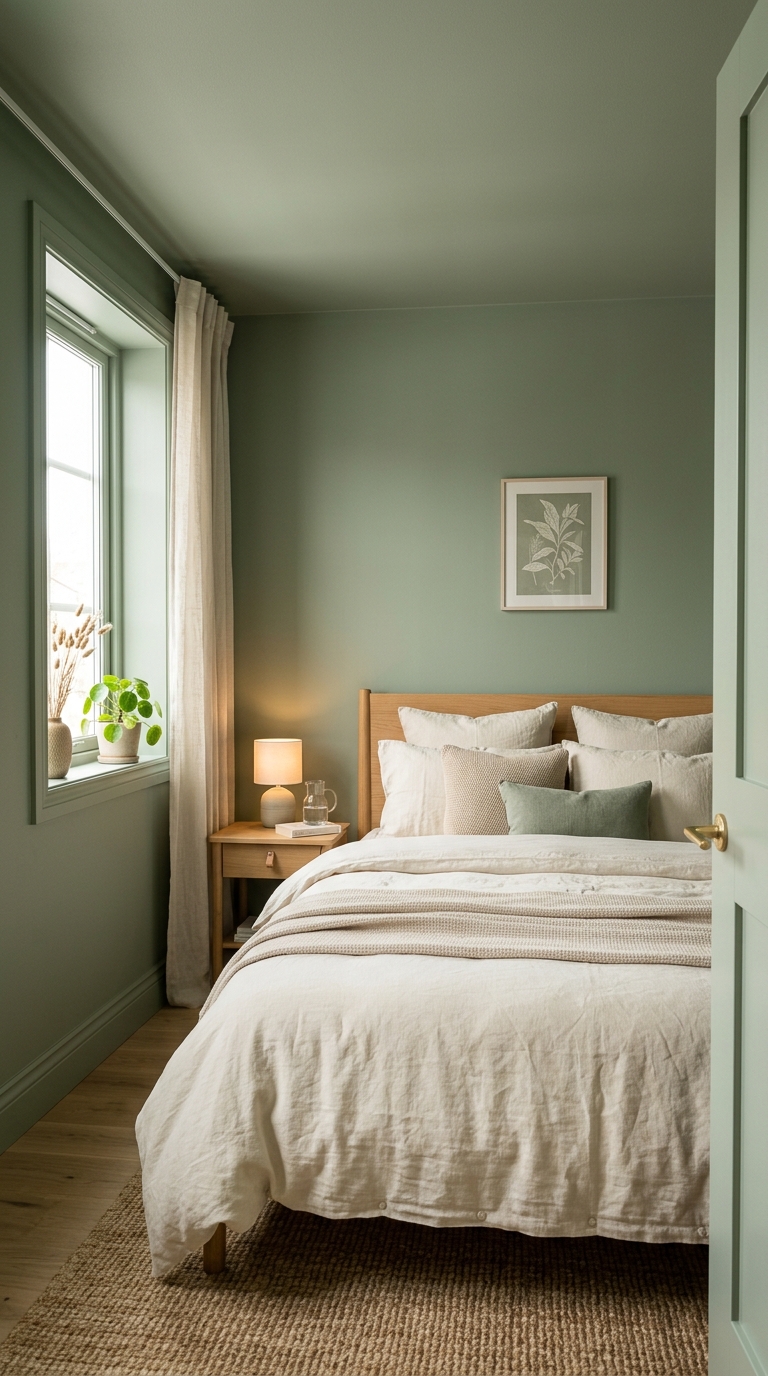
Color drenching means letting one color take over a room. Instead of making the walls, ceiling, and trim compete for attention, you let them blend into one continuous look.
Picture a typical bedroom. The walls might be soft sage green. The ceiling stays white. The baseboards are painted cream. The door adds another break.
Color drenching removes most of those contrasts.
You might carry the same paint color or color family across:
- Walls: The main surface that sets the room’s mood.
- Ceiling: Painting it too can soften the line above the walls.
- Trim: Baseboards, window casings, and crown molding can blend in.
- Doors: Matching the door and frame extends the effect.
- Built-ins: Shelves, cabinets, and other fixed features can join the scheme.
You don’t have to treat every surface the same way. The goal is visual continuity, not a rigid checklist.
Color Drenching vs. Painting the Walls One Color
The difference can be subtle at first.
Paint the walls sage green while leaving the ceiling and trim white. That’s a one-color wall treatment.
Paint the walls, ceiling, trim, and door in the same color family. Now the room feels much more enveloped in color.
That distinction matters in a small room. Contrasting trim creates clear visual breaks. When those surfaces blend together, the boundaries become less noticeable.
You aren’t adding square footage. You’re simply giving the eye fewer hard stops.
And that can change how a small room feels.
Can Color Drenching Make a Small Room Feel Bigger?
Let’s be clear about one thing first.
Paint won’t add square footage.
Your walls aren’t actually moving outward.
What color drenching can change is how the room feels.
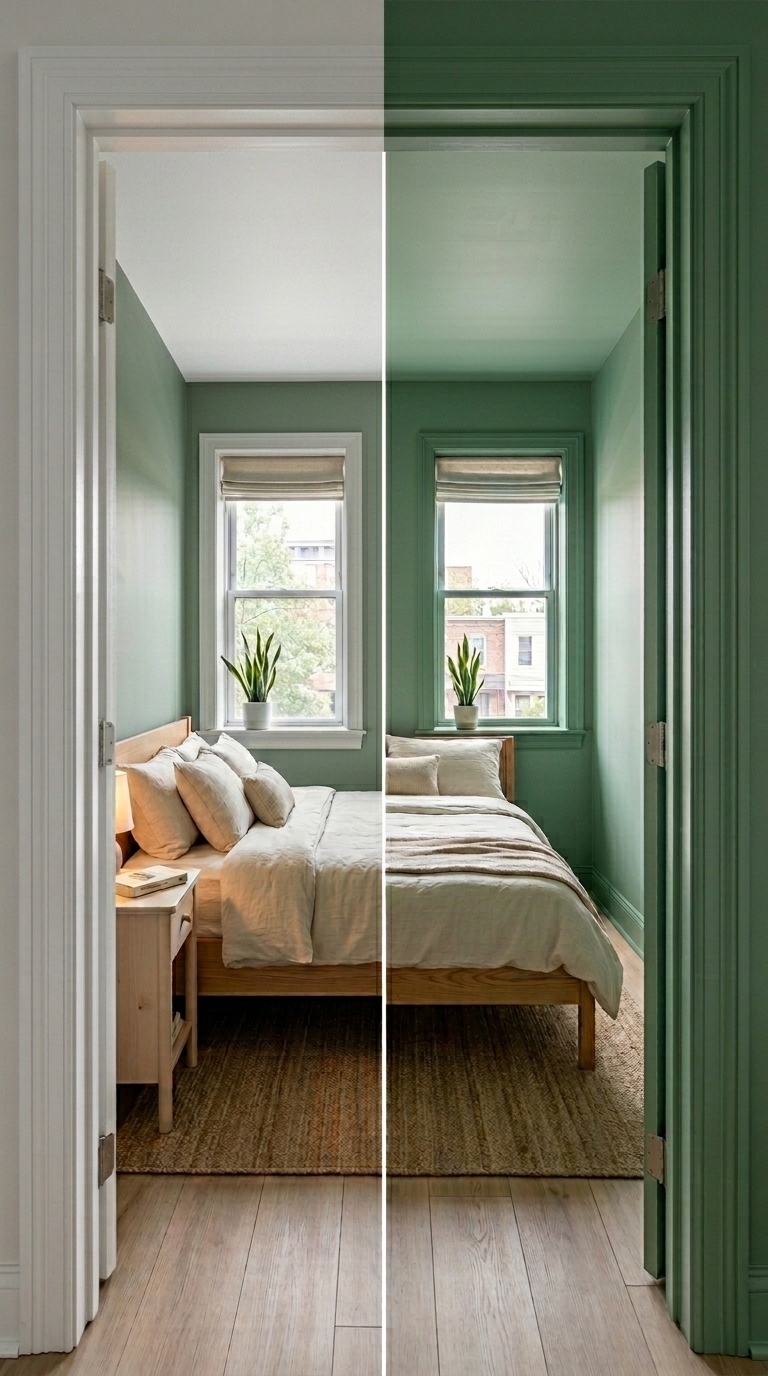
In a traditionally painted room, contrasting trim creates clear boundaries. A white ceiling sits above colored walls. White baseboards outline the floor. A contrasting door and frame add another visual break.
Those details aren’t wrong. But in a small room, they can make its edges more noticeable.
Color drenching takes a softer approach. When the walls, ceiling, trim, and door share the same color or color family, those boundaries become less prominent. Your eye can move more easily across the room instead of stopping at each contrasting edge.
This can make the space feel more connected. It can also make the ceiling feel less separate from the walls.
But color alone isn’t enough.
A very intense shade can overwhelm a small room. Poor lighting can make it feel darker. Bulky furniture can have the same effect, especially when it competes with a deep wall color.
The goal isn’t to make a small room look huge. It’s to make the space feel cohesive, comfortable, and intentional.
And that’s where your paint choice really matters.
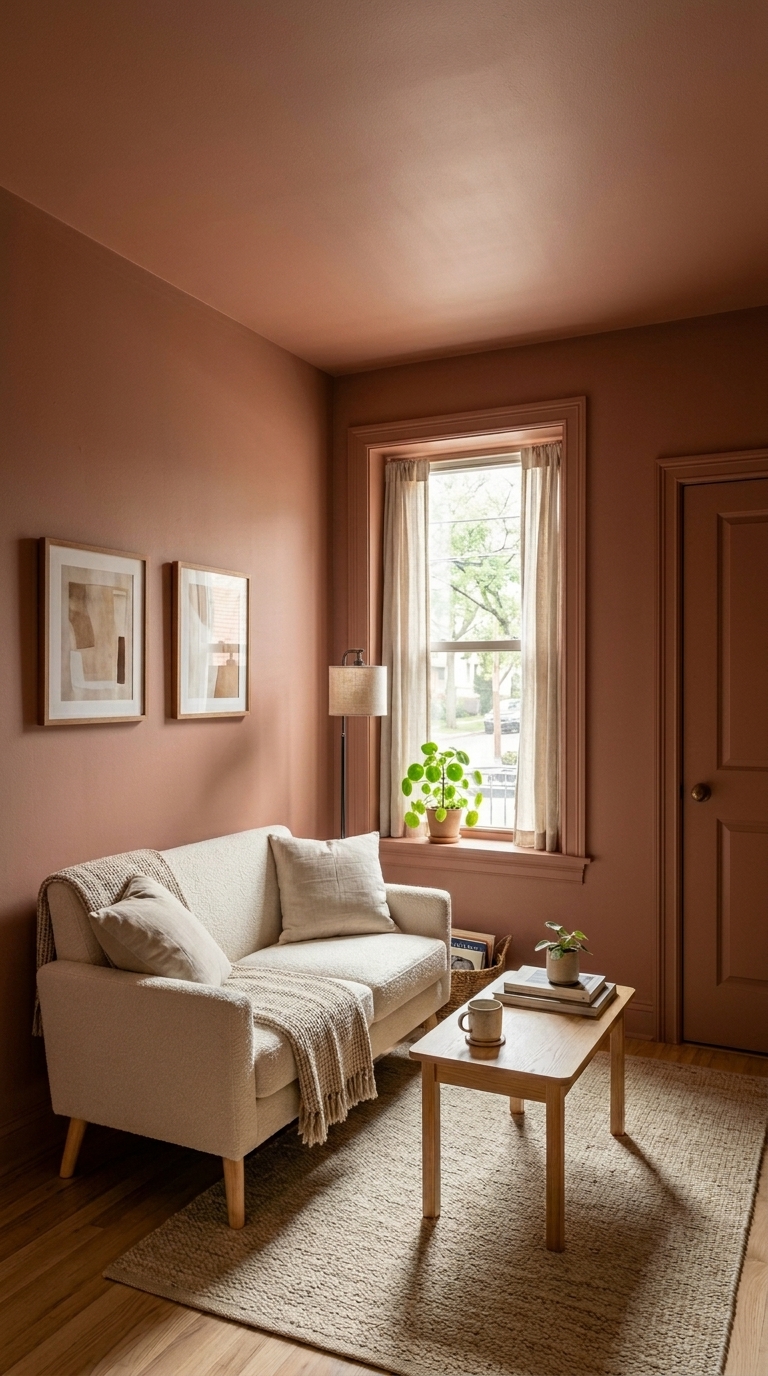
7 Smart Paint Tips for Color Drenching a Small Room
Choose the Color Based on Your Natural Light
Before you fall in love with a paint color, look at your light.
A shade that looks soft in the morning can feel warmer by evening. That change matters even more when you’re color drenching a small room, because you’re covering several surfaces with the same color.
Your windows’ direction can make a difference, too.
- North-facing rooms: These usually get cooler, softer daylight. Warm neutrals, muted greens, soft taupes, and earthy shades can help keep the room from feeling too cold.
- South-facing rooms: These tend to receive warmer, stronger sunlight. Many colors can work here, but very saturated shades may look much brighter during the day.
- Rooms with limited windows: Don’t assume you need the palest paint possible. A warm light or mid-tone can still feel inviting. Just pair it with enough artificial light to keep the room balanced.
There’s another easy mistake to avoid. Don’t choose your color from a tiny paint chip alone.
Buy a sample first. Paint a large patch on the actual wall. Check it in the morning, afternoon, and evening.
Then look at it beside your flooring, furniture, curtains, and bedding. Those colors can change how the paint appears, too.
The best color isn’t the prettiest one in the store. It’s the one that works in your room.
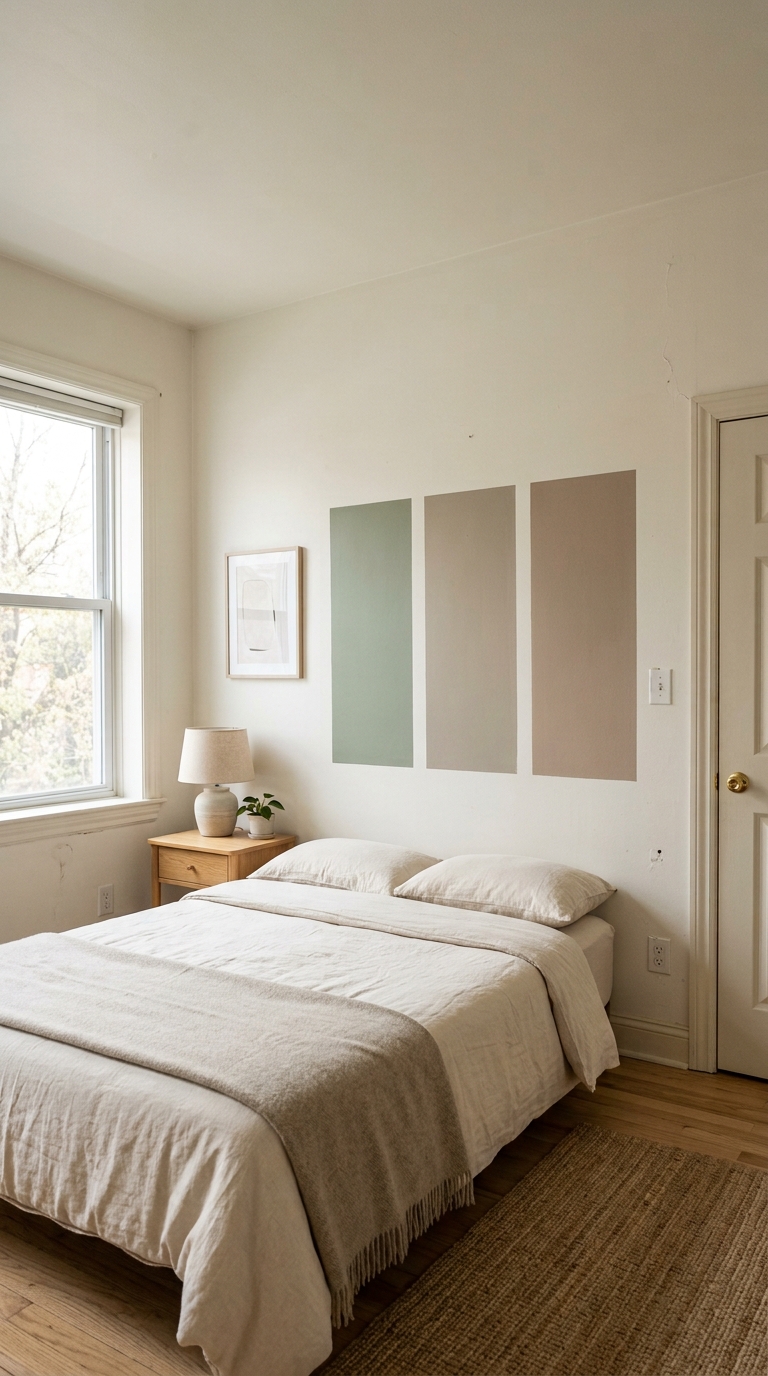
Don’t Assume Dark Colors Are Off-Limits
Small rooms don’t automatically need pale walls.
You’ve probably heard the usual advice. Keep everything light. Use white to make the room feel bigger. Avoid anything too dark.
That advice isn’t completely wrong. Light colors can help a room feel brighter and more open. But they aren’t your only option.
A deeper shade can make a small room feel cozy and intentional. With color drenching, that effect can feel even more natural. The color continues across the walls, ceiling, and trim instead of stopping at each edge.
Some shades worth considering include:
- Muted olive: Earthy, relaxed, and easy to soften.
- Deep blue-green: Rich without feeling overly formal.
- Charcoal blue: Moody, modern, and surprisingly versatile.
- Deep earthy clay: Warm, grounded, and inviting.
The key is balancing the depth of the paint.
Pair deeper walls with lighter bedding, natural wood, or warm neutral fabrics. Keep furniture relatively simple, too. A small room doesn’t need heavy pieces competing for attention.
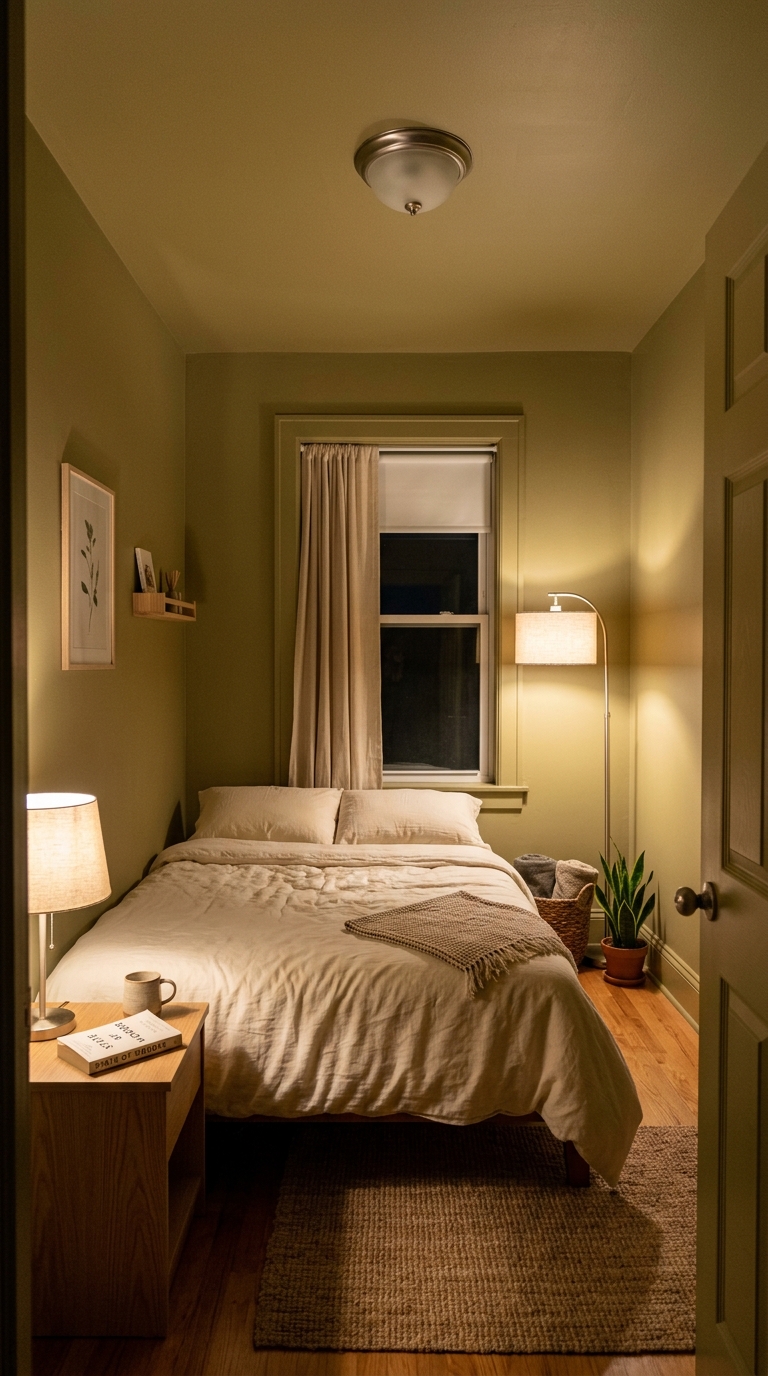
Lighting matters just as much. A deep color may look beautiful in daylight but feel heavier at night. Add warm lamps wherever the room needs them.
You don’t have to make the room look brighter. You want it to feel balanced, comfortable, and intentional.
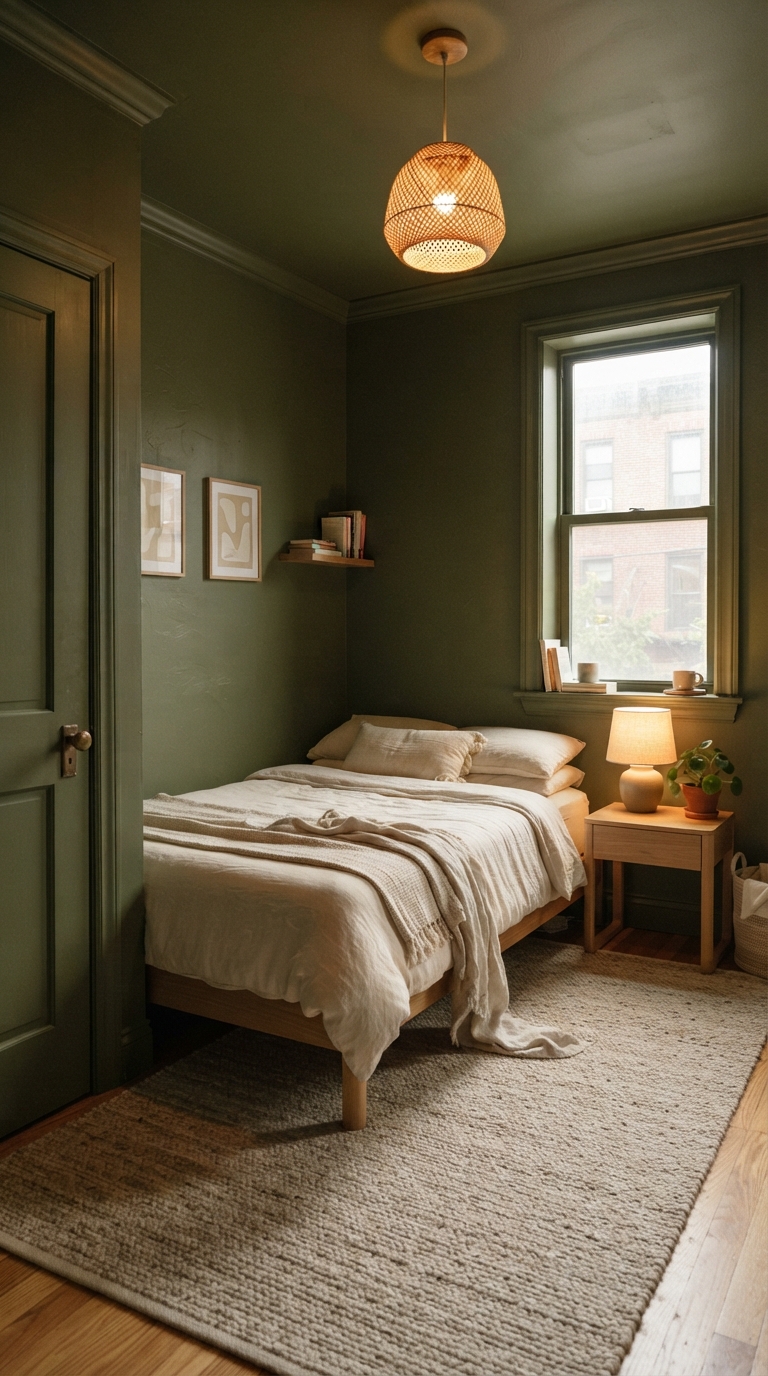
Decide Whether the Ceiling Should Match
The ceiling deserves a little thought, too.
In a color-drenched room, matching the ceiling creates strong visual continuity. The wall color flows upward instead of stopping at a bright white line.
That can work beautifully in a small room. With fewer contrasting boundaries, the space can feel more connected and intentional.
But you don’t have to match it completely.
For a true color-drenched look:
Paint the ceiling the same color as the walls. This creates the most seamless effect, especially with soft, muted shades.
For a lighter approach:
Choose a lighter version of the wall color. This keeps the ceiling connected to the room while giving you more brightness overhead.
I’d avoid automatically choosing stark white. A bright white ceiling can create a noticeable horizontal break, especially beside a deeper wall color.
Instead, consider three things: ceiling height, natural light, and paint depth.
If your room has plenty of natural light and you’re comfortable with a more enveloping look, matching the ceiling is a strong choice. If the room already feels dark or you’re using a very deep shade, a lighter ceiling may feel more comfortable.
There isn’t one correct answer. The best choice is the one that suits your room and the mood you want.
And once you’ve decided on the ceiling, don’t forget the trim.
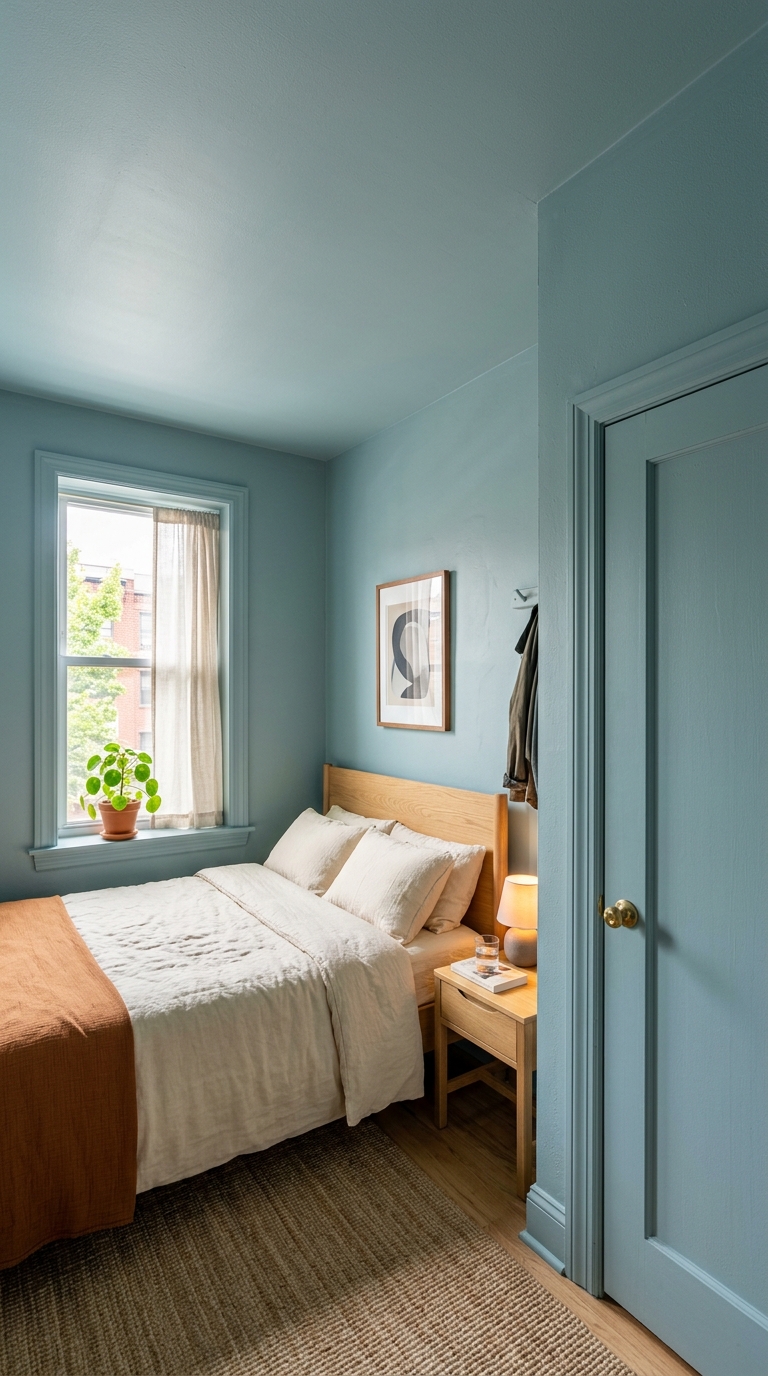
Let the Trim Blend In
Trim can change the feel of a small room.
White baseboards, window casings, and door frames create clear visual boundaries. Those contrasts aren’t necessarily bad. But they can make a compact room feel more visually divided.
Color drenching softens those boundaries.
If you can paint the trim, carry the wall color onto the baseboards, window trim, and door frame. Painting the door itself can take the effect one step further.
You can still add definition without introducing another color.
Try changing the finish instead. A matte or low-sheen wall paired with a satin trim finish creates a subtle shift in texture. The color stays cohesive while the different sheen gives the architectural details some depth.
Renting? You still have options.
If painted trim isn’t allowed, don’t worry. You can still reduce some of the visual contrast.
Choose curtains close to your wall color. Hang them as high as practical and let them reach the floor. This helps the window feel more integrated with the wall.
You can also repeat your wall color through larger pieces. A headboard, cabinet, or storage unit in a similar tone can help the room feel more connected.
It won’t perfectly recreate painted trim. But it can give you some of the same visual softness without a permanent change.
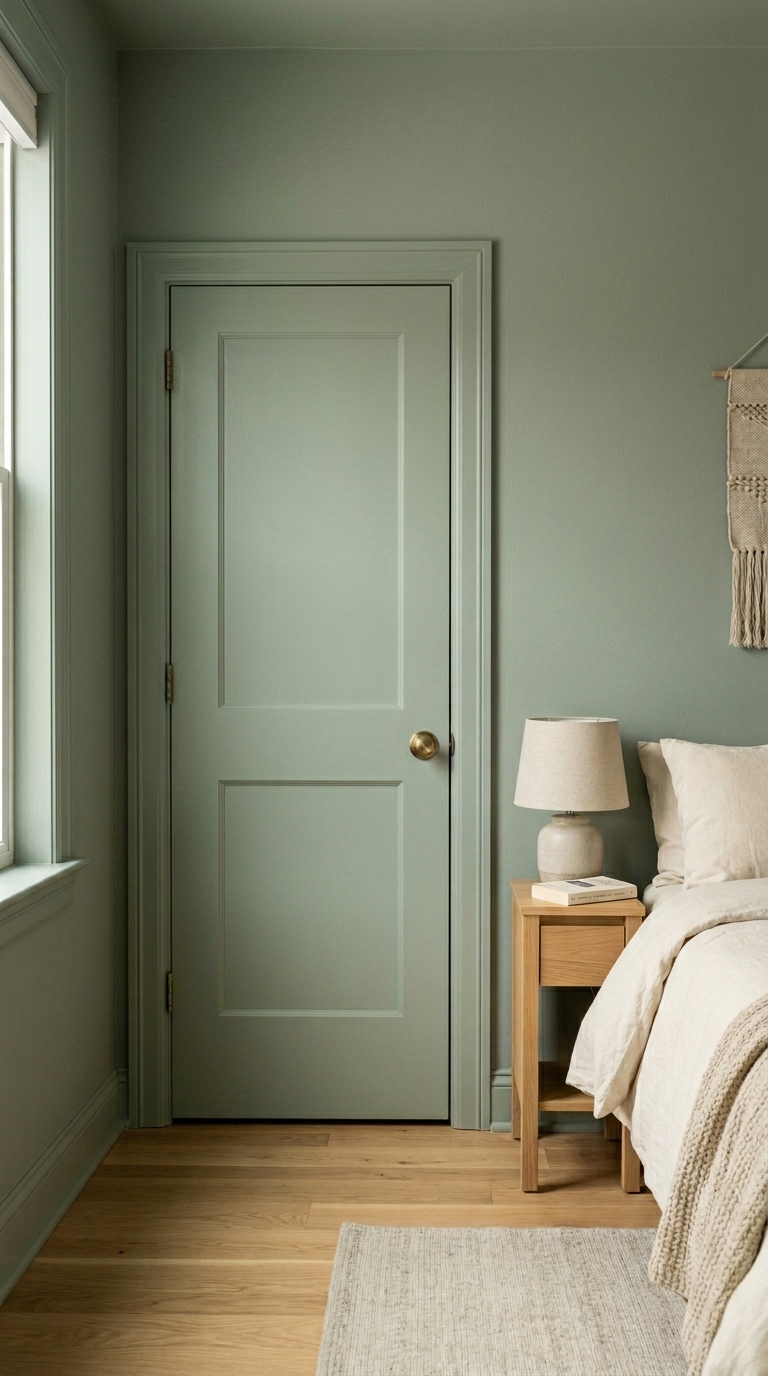
Balance the Color With Lighter Furniture
Dark paint can look beautiful in a small room.
But dark paint plus bulky furniture can feel heavy.
You don’t need to replace your furniture. Instead, look at its visual weight.
Light oak, ash, and birch are easy choices. Their natural tones soften deeper wall colors without competing with them.
The same applies to bedding. Cream, ivory, soft white, and pale flax can brighten the room without making it feel stark.
Then add texture. A woven throw, linen curtains, or a simple neutral rug can make the space feel warmer. Ceramic lamps and woven baskets work well, too.
But don’t feel like everything has to be light.
A dark walnut nightstand can look beautiful against a deep olive wall. Pair it with cream bedding and a pale rug. The darker wood then feels intentional instead of overwhelming.
The same applies if you already own a dark bed frame or dresser. You don’t need to replace it just because you’re changing the paint.
Give larger dark pieces some breathing room. Keep the surrounding furniture simple. Avoid filling every empty corner with another piece.
Keeping everyday items organized helps, too. If you’re working with limited floor space, these small bedroom clothes storage ideas can help you keep clothing contained without adding more visual clutter.
And pay attention to size.
A slim dark nightstand may feel lighter than a bulky white dresser. A simple wood bed can take up less visual space than an oversized upholstered frame.
So think beyond paint color. Shape, size, material, and spacing all affect how heavy a room feels.
The goal isn’t to make everything pale. It’s to create enough balance for your wall color to shine.
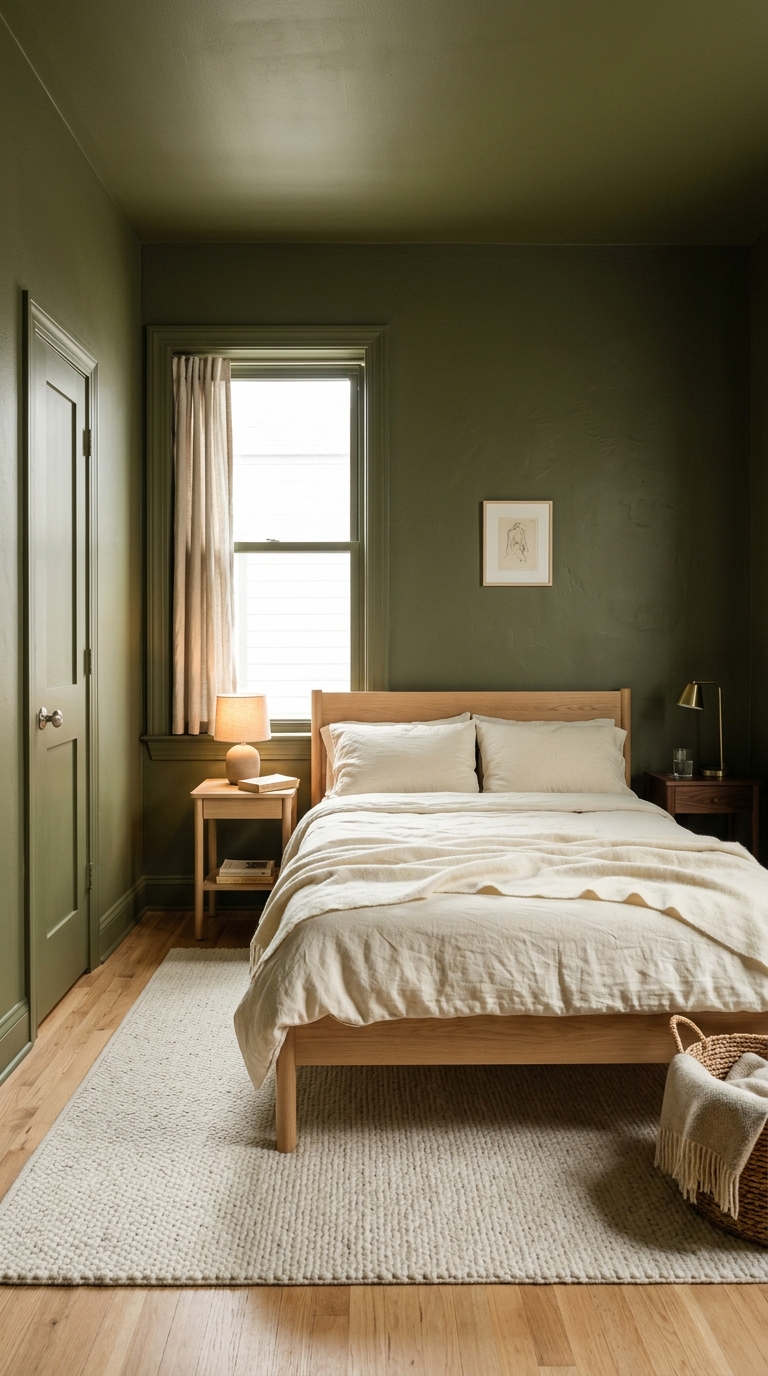
Plan Your Lighting Before You Paint
Paint can look surprisingly different at night.
A color that feels soft in daylight may look much deeper under artificial light. That’s especially noticeable when the same color covers your walls, ceiling, and trim.
So before you paint, look at your existing lighting first.
You don’t need expensive fixtures. Start with what you already have. Then notice where the room feels too dark once the sun goes down.
Layer your lighting where you can.
- Task lighting: Add a table lamp beside your bed or desk. Wall sconces can also work well for reading.
- Ambient lighting: Use lamps or diffused fixtures to spread light around the room.
- Accent lighting: A small lamp can brighten a darker corner or highlight a favorite piece.
Your light bulb also affects the paint color.
For cozy living room lighting ideas, warm white bulbs around 2700K to 3000K usually create a softer, more comfortable atmosphere. Cooler bulbs can make colors appear bluer and less warm.
You don’t need every bulb in your home to match perfectly. Just think about how the room should feel at night.
And don’t skip the paint sample.
Paint a large patch on the actual wall. Check it during the day. Then look at it again after your usual evening lights are on.
That simple test can save you from choosing a color that looks completely different after sunset.
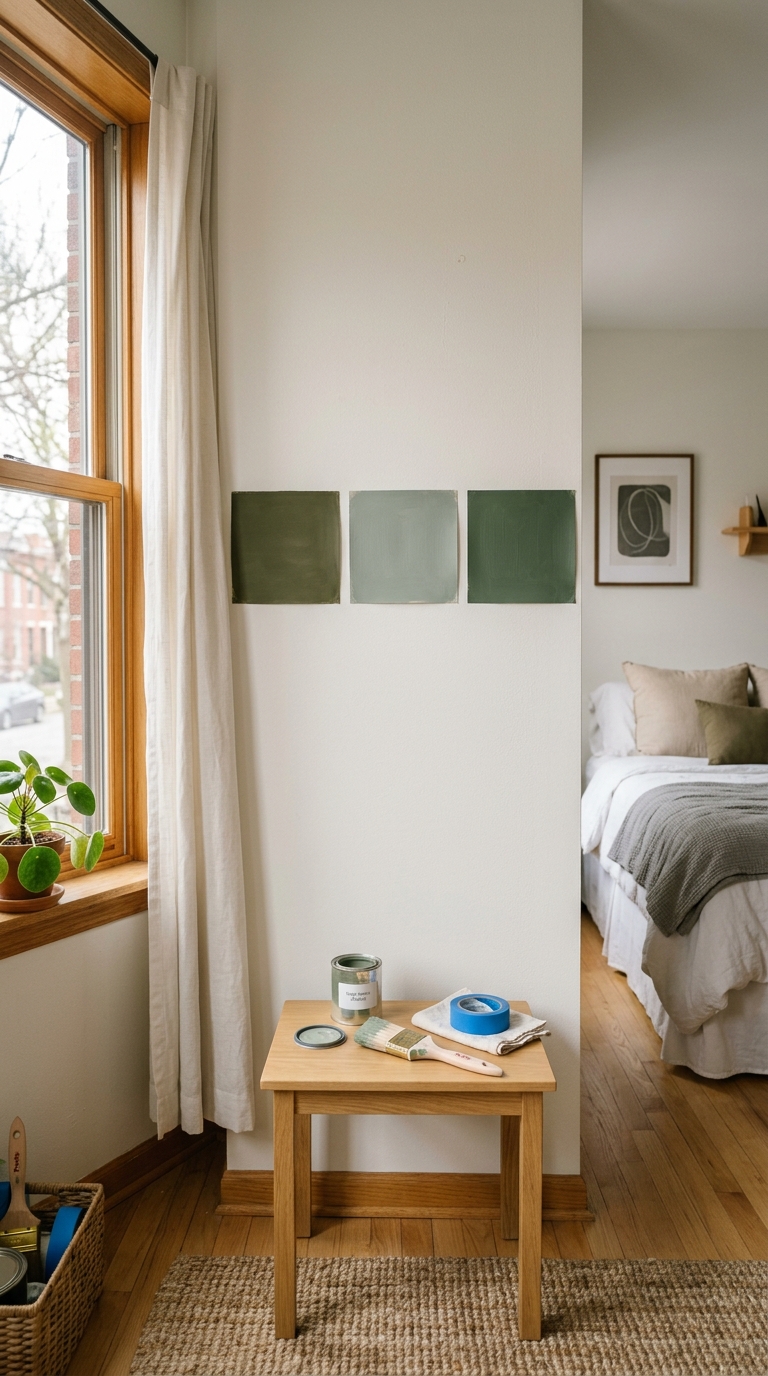
Test the Paint Before Drenching the Whole Room
Before you commit to a color, live with it first.
A shade can look beautiful online. It can look completely different on your wall. Your natural light, flooring, furniture, and evening bulbs all affect how it appears.
Testing first can save you from repainting the entire room later.
Start with real paint samples.
Choose two or three shades you’re seriously considering. Sample pots are worth the small cost.
Paint large patches.
Skip the tiny swatch. Paint generous patches on different walls. Include one that gets plenty of daylight and another that stays more shaded.
Check the edges.
Look at the color where the wall meets the ceiling and trim. These areas can reveal undertones you might miss elsewhere.
Watch it throughout the day.
Check your samples in the morning, afternoon, and evening. Notice how the color changes as the light shifts.
Bring your room into the test.
Hold your bedding, curtains, rug, and furniture against the painted areas. Warm wood can make a color feel different. Cream fabrics can change it, too.
Then leave the samples up for a few days.
Don’t decide after one quick glance.
If you still love the color after seeing it in different light, you’re much more likely to love it across the entire room.
A few days of testing can save you a full weekend of repainting.
Is Color Drenching Right for Your Small Room?
Color drenching isn’t right for every room. And that’s okay.
It works especially well if you want your small space to feel cozy, calm, and intentional. It’s also useful when you dislike stark white trim or want more personality without adding more decor.
But think twice if your room gets very little natural light. A deeper color can feel heavier without enough lighting to balance it.
If you rent, check your lease before painting walls, trim, or doors. You may be able to recreate the same effect with removable changes instead.
Most importantly, don’t choose a color just because it looks beautiful online. Look at your room’s light, furniture, flooring, and overall mood.
If you want your small room to feel warmer and more enveloping, color drenching may be exactly the change you’re looking for.
Frequently Asked Questions
Does color drenching work in a small room?
Yes. Color drenching can work especially well in small rooms.
Using one color across the walls, ceiling, and trim reduces strong visual breaks. That can make the room feel more continuous instead of emphasizing where each surface begins and ends.
It won’t add physical square footage. But it can change how the room’s boundaries are perceived.
Should the ceiling match the walls when color drenching?
It can, and matching it creates the strongest color-drenched effect.
Using the same color overhead helps soften the line between the walls and ceiling. This can be particularly useful in rooms with low ceilings.
But you don’t have to match them exactly. A lighter version of the same color can work if a fully drenched ceiling feels too intense.
What colors work best for a small color-drenched room?
There isn’t one perfect color.
Muted olive, warm taupe, soft greige, dusty blue, and earthy clay can all work beautifully. The better choice depends on your natural light and the mood you want.
If you’re nervous about going dark, start with a muted version of the color you love rather than an extremely saturated shade.
Does color drenching make a room look smaller?
It can, depending on the color, lighting, and furniture.
Deeper colors tend to create a more enveloping feeling. Lighter colors can feel brighter and more open.
That’s why the goal isn’t simply to choose the lightest paint possible. Think about the whole room. Natural light, furniture size, flooring, and artificial lighting all affect the final result.
Should door trim and baseboards match the walls?
For a traditional color-drenched look, yes.
Matching the trim reduces the contrast that normally outlines doors, windows, and the edges of the room. Color drenching commonly extends beyond the walls to include trim, doors, and other woodwork.
You can still create subtle definition by using different paint sheens rather than introducing another color.
Can renters color drench a small room?
Yes, but it depends on what your lease allows.
If painting is permitted, you can create the full effect with paint. If permanent painting isn’t allowed, use reversible elements instead.
Removable wallpaper, wall-colored curtains, and furniture in a similar color family can create some of the same visual continuity without permanently changing the room.
Always check your lease before making changes.
Is color drenching better than painting a small room white?
Neither is automatically better.
White can work beautifully when you want a bright, airy room. Color drenching creates a different feeling. It can make a small space feel warmer, more cohesive, and more enveloping.
If you love crisp, bright interiors, white may suit you better. If your room feels plain or visually chopped up, color drenching may be worth trying.