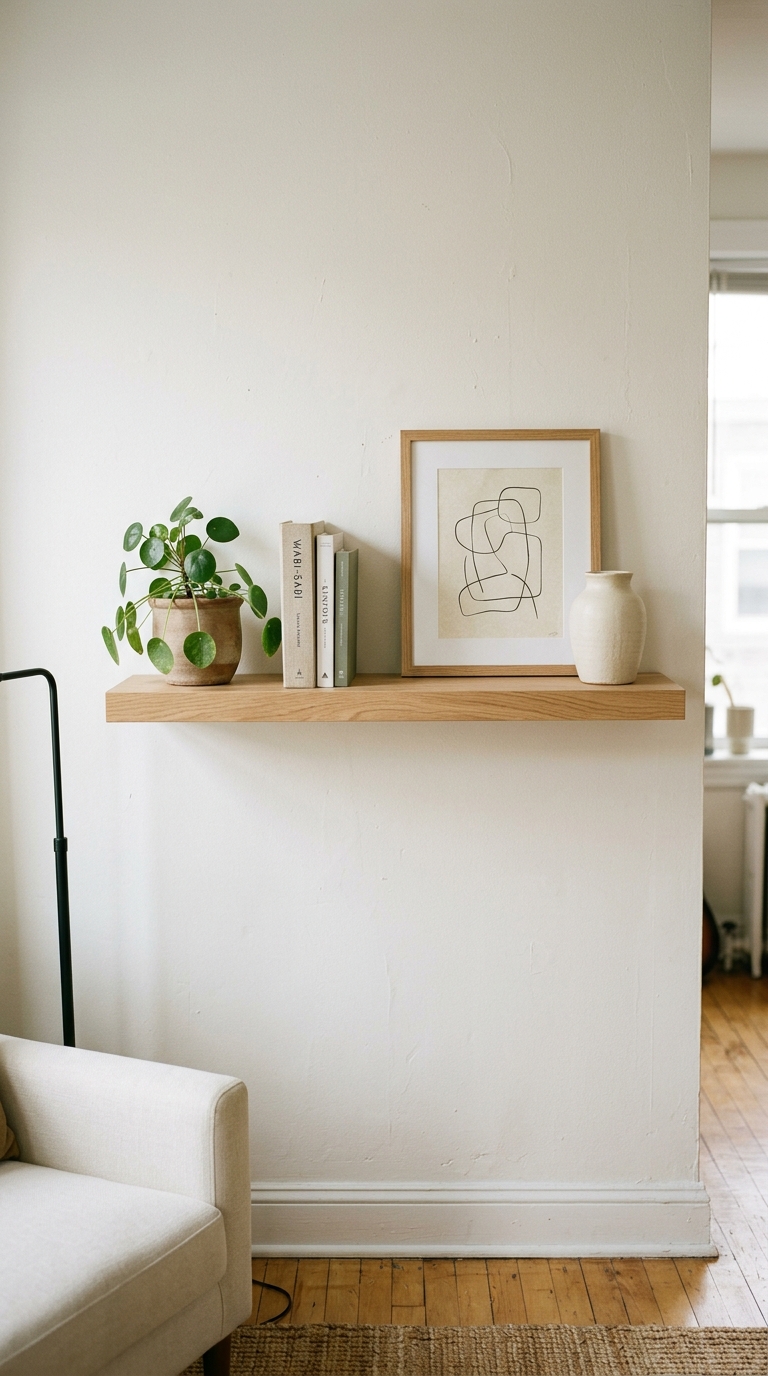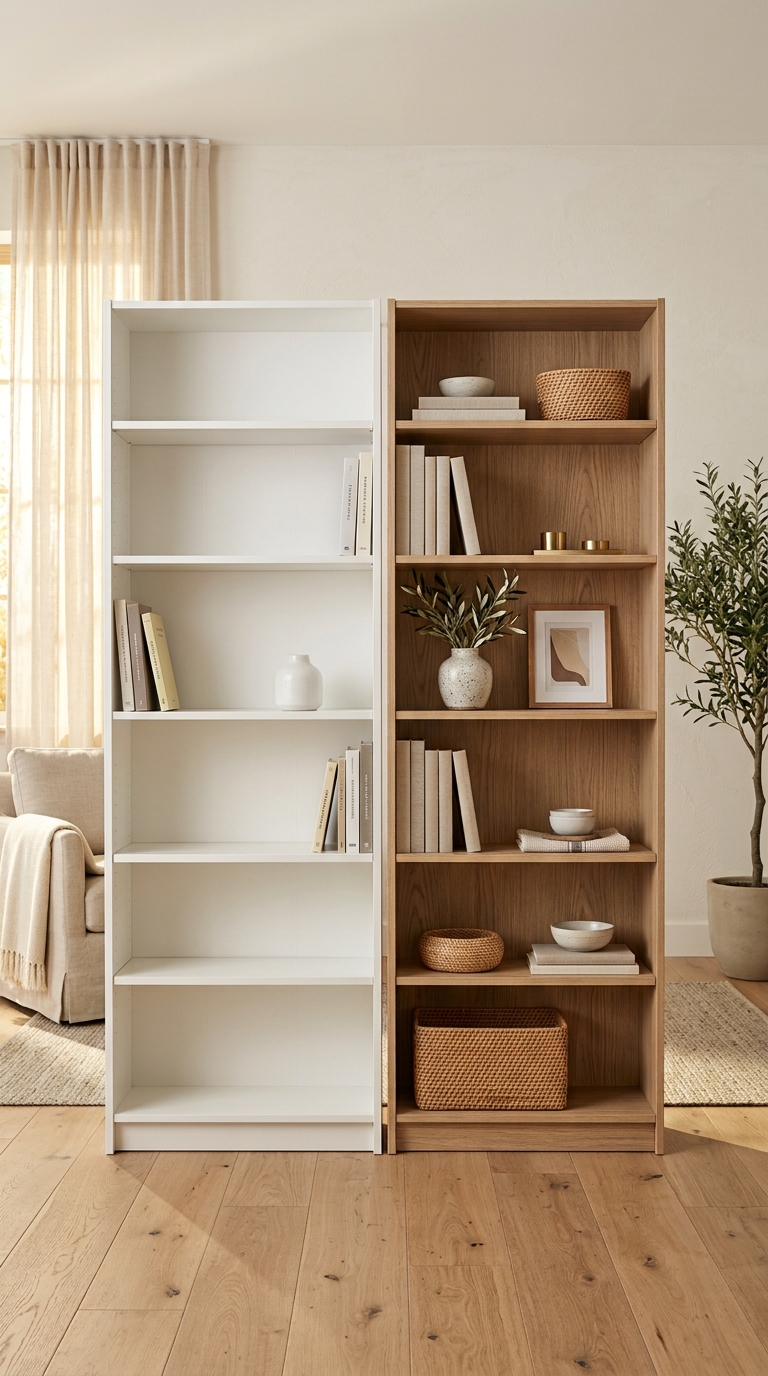
Staggered floating shelves styled with framed art, books, ceramics, and greenery in a small apartment
|

Floating Shelves Styling Ideas: Organize Open Wall Spaces

When an Empty Wall Still Feels Like a Problem

Small apartments have a way of running out of places to put things. The best floating shelves styling ideas can help, especially when the coffee table fills up by evening and the kitchen counter becomes a drop zone. Somehow, there is always one more thing that needs a home.

Then there is that empty wall.

It has been sitting there for months. You keep thinking you should do something with it. But adding a cabinet or console means giving up floor space you already need.

That is where floating shelves can be so useful. They let you use the wall without crowding the room below. Books, dishes, plants, and everyday pieces can stay within reach without another bulky piece of furniture.

Of course, open shelves come with a catch. Everything is visible. A few misplaced items can quickly make a tidy room feel messy again.

So you don’t need to fill every inch. You need to edit what goes there. Choose pieces that earn their space, group them naturally, and leave room around them.

That small shift can make a floating shelf feel less like extra storage and more like a natural part of the room.
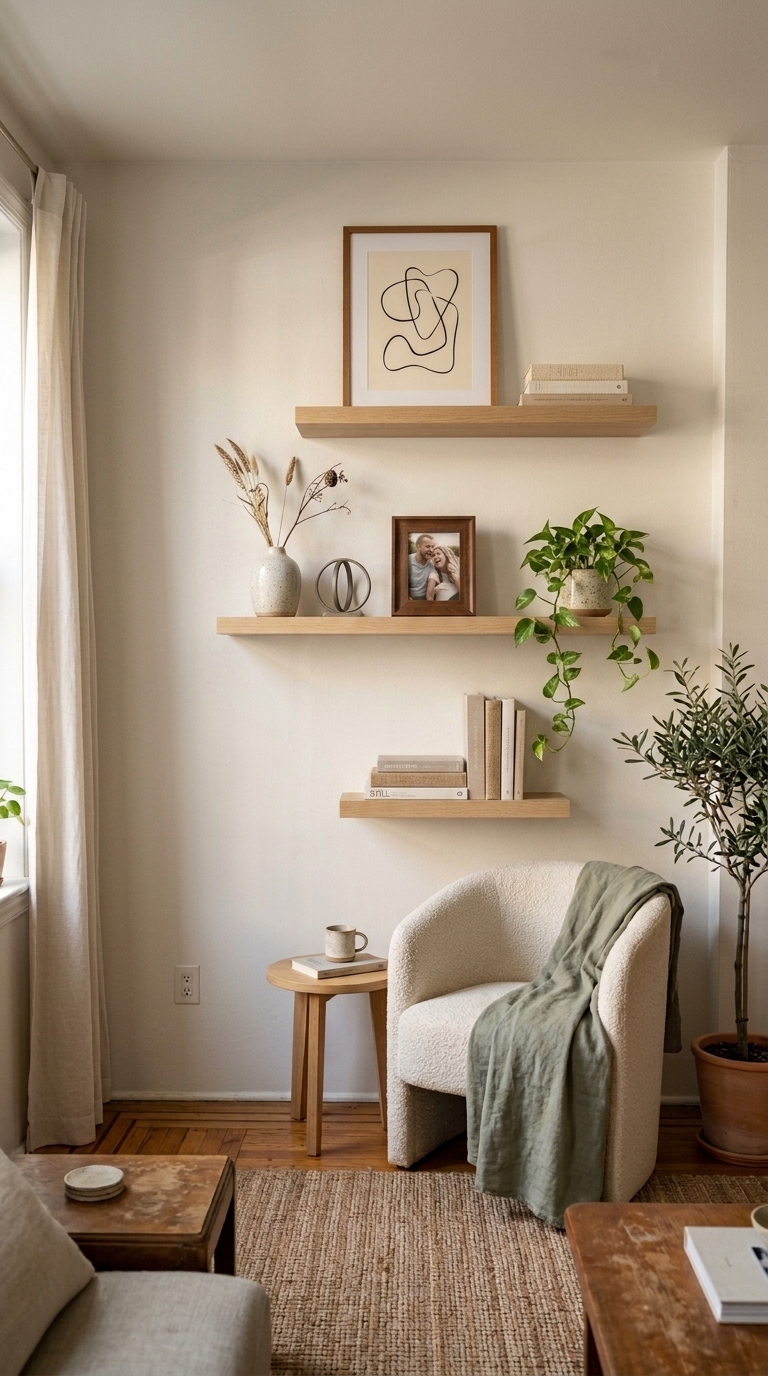
Staggered floating shelves styled with framed art, books, ceramics, and greenery in a small apartment

The 4-Step Floating Shelf Styling Formula

Styling a shelf does not have to feel complicated. You don’t need a perfect eye for design, either. A few simple choices can make everything feel more intentional. This matters even more in a small apartment, where too many objects can quickly make a room feel busy.

Think of these as flexible principles. They are not rules you have to follow perfectly.

1. Start With One Visual Anchor

Give your eyes somewhere to land first.

Your anchor should be the strongest piece on the shelf. It might be a medium framed print, a larger ceramic vase, or a small plant with plenty of shape.

Try placing it slightly off-center. This often feels more relaxed than putting it right in the middle.

Then build around it.

A few smaller pieces can support the anchor without competing with it. This also keeps you from adding lots of little decorations just to make the shelf feel finished.

In a small space, that restraint makes a difference.

2. Layer Pieces Instead of Lining Them Up

A shelf can look oddly flat when everything sits in one straight row.

Instead, create a little depth.

Lean a framed print against the wall. Place a small ceramic piece slightly in front of it. Stack two books beneath another object. Let a trailing plant spill gently over the shelf edge.

You don’t need much overlap.

Even small changes in depth can make the arrangement feel more relaxed. It also keeps your shelves from looking like every item was placed with a ruler.

3. Mix Heights and Groupings

Now look at the height of everything.

If every object sits at roughly the same level, the shelf can feel stiff. Mixing tall, medium, and shorter pieces creates a more natural rhythm.

You can also try grouping three items together. This often works well because the arrangement feels balanced without looking too formal.

But don’t treat odd numbers as a rule.

Two pieces can look just as good together. What matters more is variation. A tall vase beside a low ceramic bowl can create enough contrast on its own.

Let the objects feel related without making them match.

4. Leave Room to Breathe

This may be the easiest step to overlook.

When a shelf looks a little empty, the temptation is to add something. Then you add one more piece. Before long, nothing has room to breathe.

Resist that urge.

Open space is part of the styling. It separates your groupings and gives your eyes somewhere to rest. It also helps a small room feel lighter.

Step back from the shelf before adding anything else. If it feels heavy, remove an item first.

You may find that the shelf didn’t need more decoration. It simply needed less.
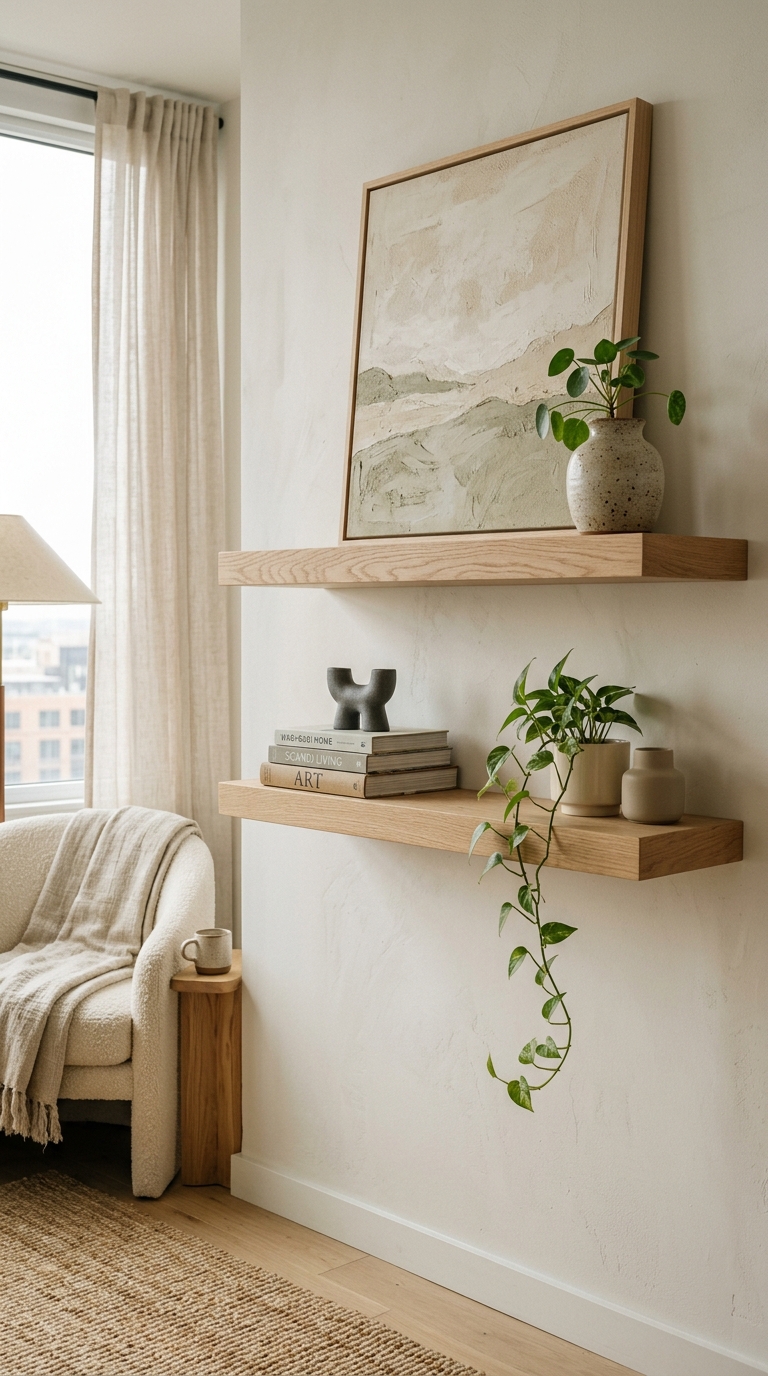
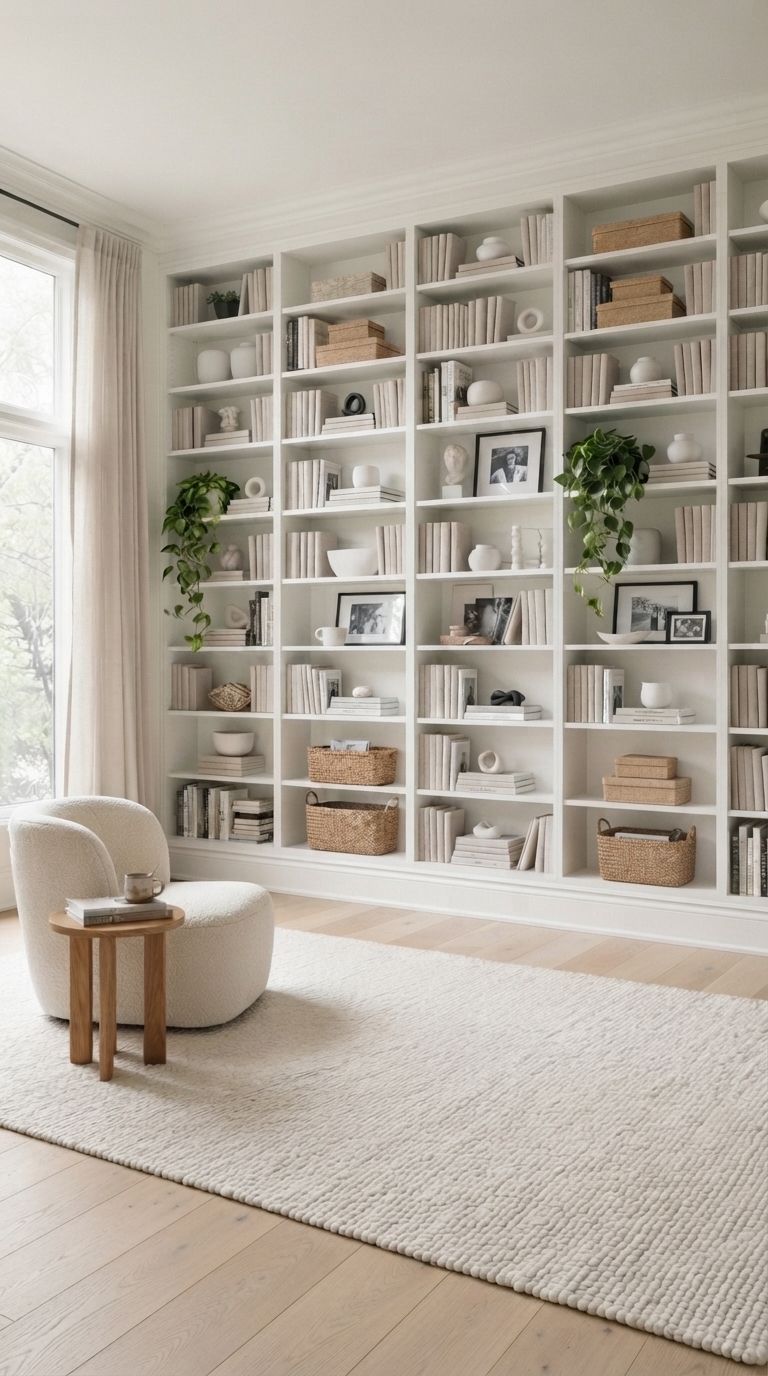
Warm Scandinavian floating shelves styled with books, plants, and neutral decor in a small apartment living room

A few versatile pieces can make this approach easy. Think light-oak frames, neutral ceramics, small plants, and simple objects with natural texture. You don’t need a shelf full of decor. You need a few pieces that work well together.

And before loading those shelves with books or ceramics, there is one practical question to answer: can the wall actually support what you want to put on it?
Rental-Friendly Mounting: What Actually Works

Renting can make wall decorating feel complicated. You want useful storage, but you also want your security deposit back. That is why “damage-free” mounting products can seem like the perfect answer.

Not every shelf, however, works with the same mounting method. A small picture ledge has very different needs from a deep floating shelf filled with books or ceramics. Before choosing hardware, think about what you actually want to display. That decision helps determine how much support the shelf needs.

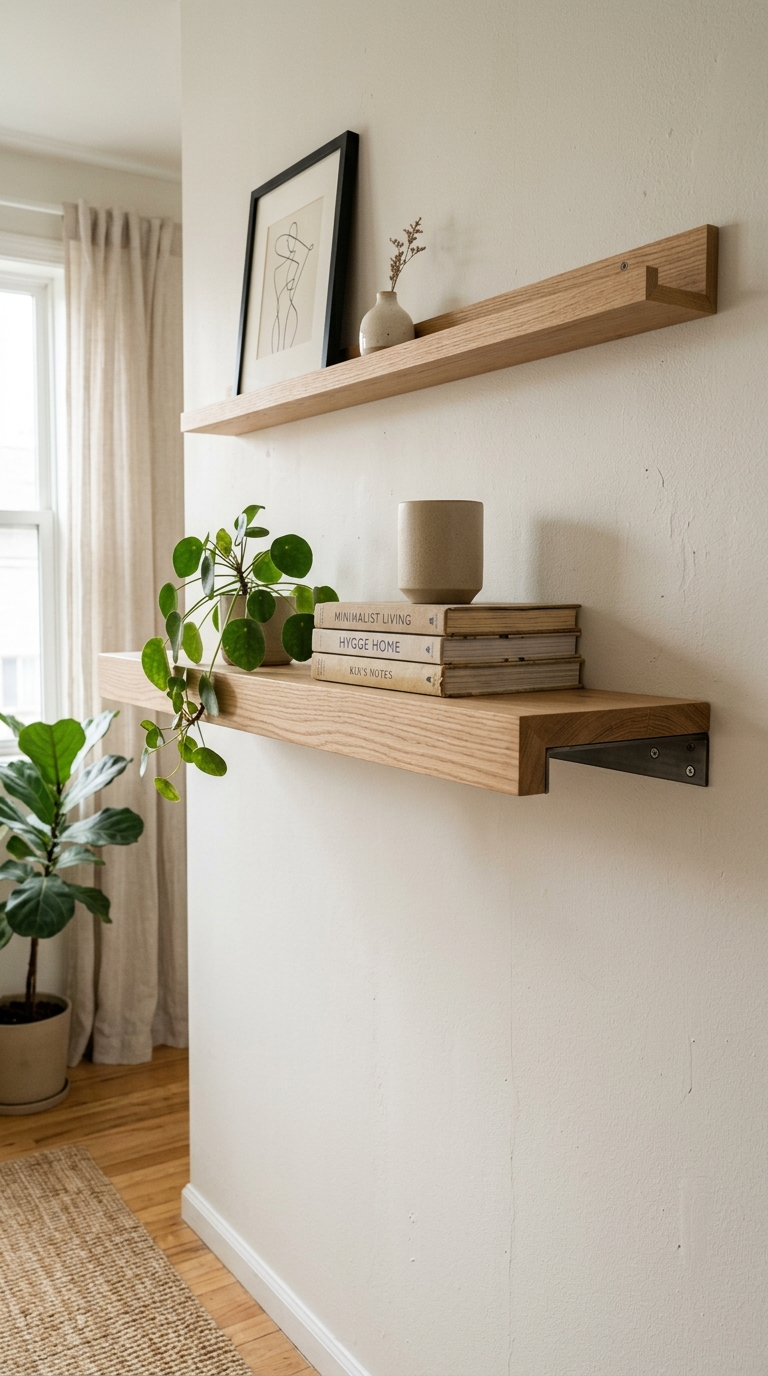
Rental-friendly floating shelves showing a slim picture ledge above a deeper natural oak shelf

Lightweight Display Ledges vs. True Floating Shelves

Shallow picture ledges suit lightweight displays. Framed prints, postcards, and small decorative pieces usually work well here. Since everything stays close to the wall, the mounting points experience less leverage.

Deeper floating shelves need more consideration. Their extra depth makes room for books, plants, ceramics, and kitchenware. Those useful storage options add weight, though.

Placement matters too. Something heavy near the front edge puts more force on the mounting hardware than an item sitting close to the wall.

Choose the shelf based on what you plan to store. Afterward, check its weight capacity and installation requirements before buying the hardware.

The Reality of Adhesive and No-Drill Options

Adhesive mounting is understandably attractive to renters. There are no screws to install, and you avoid making holes in the wall.

We all want a shortcut. The idea of hanging a shelf without drilling sounds perfect for renters. For a very lightweight picture ledge, an adhesive system may be suitable. The product must specifically be rated for the shelf, wall surface, and total weight involved. Always follow the manufacturer’s instructions.

A substantial floating shelf is different. Books and ceramic pieces can become surprisingly heavy. Greater shelf depth also creates more leverage against the wall.

That combination makes adhesive mounting unsuitable for many heavier shelves. If the mounting fails, your belongings could fall and the wall could be damaged.

Don’t choose a product simply because the package says “damage-free.” Check the actual weight rating and application requirements first. When in doubt, choose a mounting method designed for the load rather than the one that leaves the fewest holes.

When Proper Anchoring Matters

For heavier floating shelves, connecting the mounting hardware to a wall stud is generally the strongest approach. Solid framing gives the hardware a firmer connection and better support for substantial loads.

Finding a stud in the perfect position isn’t always possible, though. In that case, a properly rated drywall anchor may be suitable for the installation.

Toggle-style and other heavy-duty anchors can distribute weight behind drywall. The right choice depends on the shelf design, wall condition, hardware, and intended load.

Never choose an anchor simply because it looks sturdy. Check the shelf manufacturer’s instructions first. Make sure the anchor is rated for your specific application and installed correctly.

One more thing matters for renters: check your lease before drilling.

Some landlords allow normal picture and shelf mounting. Others have specific rules about holes, anchors, or wall modifications. Knowing those rules beforehand can save you an unpleasant conversation later.

A few small holes may be easy to repair when you move. Damage from an improperly mounted shelf is a much bigger problem.

For a rental, secure storage is always worth doing properly.

Floating Shelves Styling Ideas by Room

Floating shelves can do more than fill an empty wall. In a small apartment, they can add storage, display space, or a little personality without taking up valuable floor space.

The best approach depends on the room. A kitchen shelf needs to work harder than a living room display. A bedroom arrangement should feel calmer than a home office. Here’s how to make each space work.

Entryway — Create a Small Drop Zone

Small apartments do not always have a proper entryway. That does not mean keys, mail, and everyday essentials need to collect on the nearest table.

A narrow floating shelf can create a simple drop zone right beside the door. Add a small ceramic bowl for keys and sunglasses. A shallow tray can hold incoming mail. If there is room underneath, a few discreet hooks can handle a light jacket or everyday bag.

Keep this shelf practical rather than decorative. When the things you reach for every day have a designated home, the entire entrance feels more organized.

Living Room — Warm Floating Shelf Styling

The living room is where floating shelves can have the biggest visual impact. They give you a place to display books, art, plants, and collected pieces without adding another bulky piece of furniture.

Try leaning a framed print against the wall rather than hanging everything separately. Stack two or three books underneath a small ceramic object. A trailing plant can soften the edges and add movement.

Mixing warm wood, neutral ceramics, books, and greenery creates a collected look without making the wall feel busy. Most importantly, leave some empty space between the groupings. That breathing room helps the entire arrangement feel lighter.

Kitchen — Practical Floating Shelf Styling

Limited cabinet space is one of the biggest frustrations in a small kitchen. Floating shelves can turn an unused wall into useful storage while keeping everyday pieces close at hand.

Use the lower shelf for things you reach for often, such as mugs, bowls, or plates. Glass jars can hold coffee, grains, or other dry ingredients while keeping the contents visible. A small plant or a single decorative piece can add warmth without competing with the functional items.

The key is restraint. If everything on the shelf is decorative, you lose valuable storage. If everything is purely functional, the wall can feel cold. A thoughtful mix gives you both.

Bedroom — Calm Floating Shelf Styling

A floating shelf can be a smart alternative when there is barely enough room for a traditional nightstand.

Keep the styling simple. A couple of current reads, a small plant, and one framed print may be all you need. A compact rechargeable light can provide a soft evening glow without adding another cord to the wall.

Avoid turning the bedroom shelf into extra storage for things you rarely use. A small amount of visual clutter can make a restful space feel surprisingly busy.

Bathroom — Smart Floating Shelf Storage

An empty wall above the toilet or beside the mirror can become useful storage in a small bathroom.

Choose materials that can handle the moisture in the room, and make sure the shelf is mounted securely. Small baskets are useful for containing toiletries, while matching containers can make everyday products look more intentional.

Rolled hand towels can also add a soft, spa-like touch. Just keep the arrangement edited. Bathroom shelves can quickly go from organized to overcrowded when every available inch becomes storage.

Home Office — Free the Desk

When a small desk is covered with notebooks, reference books, chargers, and stationery, there is very little room left to work.

A floating shelf above the desk can move secondary items off the work surface. Use simple bookends to keep reference books together. Add a small organizer for papers, then bring in one framed print or a little greenery for personality.

Keep the things you use most often within easy reach. Everything else can stay somewhere less prominent. Your desk should support your work, not compete with it.

Dining Area — Replace Bulky Storage

A small dining nook may not have room for a buffet or china cabinet. Floating shelves can provide some of the same display value without taking up floor space.

Use them to show off a few favorite pieces of glassware, a ceramic serving bowl, or a small vase. You do not need a full collection on display. Two or three well-chosen groupings can make a much stronger statement than a shelf packed from end to end.

That little bit of restraint also keeps the dining area feeling open, which matters even more when the table is already taking up most of the available floor space.

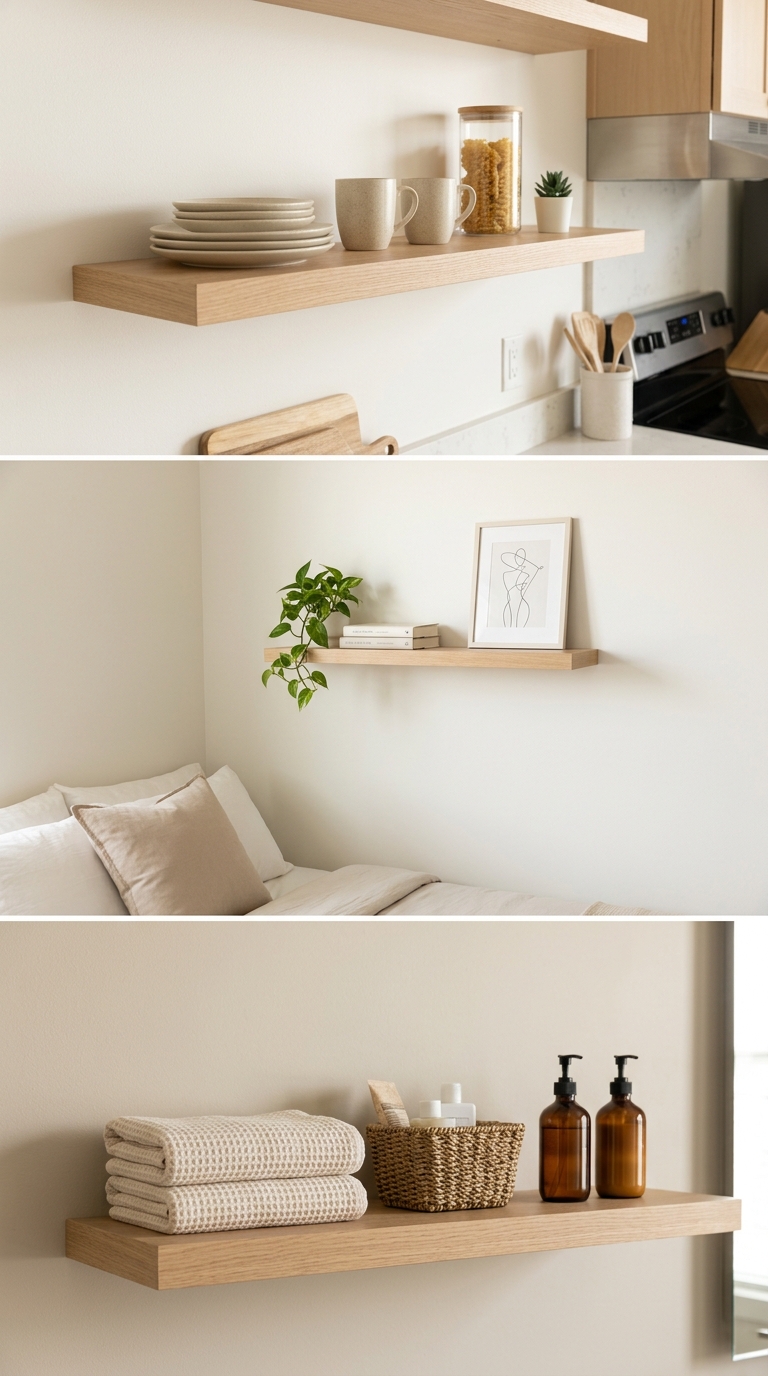
Warm Scandinavian floating shelves styled in a small apartment kitchen, bedroom, and bathroom

How to Keep Floating Shelves From Looking Cluttered

The good news is that floating shelves styling ideas don’t have to mean filling every inch of the wall.

Open shelves can look beautiful. They can also become a quick landing spot for random things. Since nothing hides behind a cabinet door, every item affects the overall look. A few simple choices can keep your shelves feeling calm and intentional.

Too Many Tiny Objects

Small decorations can add personality. Too many create visual noise.

Instead of displaying several tiny pieces, choose fewer items with more presence. One medium wooden frame can work better than several small ones. A substantial ceramic bowl can also replace a cluster of little trinkets.

Making Everything Match

A perfectly matching shelf can feel flat and impersonal. Warm Scandinavian spaces usually benefit from some variation.

Mix natural wood with matte ceramics, clear glass, woven textures, and greenery. These differences add warmth without requiring lots of color.

Ignoring Shelf Depth and Scale

Your decor should suit the shelf itself. A deep shelf can handle books, bowls, and larger vessels. A narrow picture ledge works better with flat artwork and smaller pieces.

When the scale feels right, the arrangement looks more natural.

Filling Every Inch

Empty space is part of the design. You do not need to use every available inch.

If a shelf feels crowded, remove one or two items before rearranging everything. The remaining pieces may look better immediately.

Forgetting the Surrounding Wall

The shelf is part of a larger composition. Look at the furniture, artwork, windows, and wall around it.

A shelf should feel connected to the room rather than floating awkwardly on its own.

Using Too Many Colors

A small room can feel busy when every object introduces another color. Keep the foundation simple with warm whites, natural wood, soft neutrals, muted greens, and small touches of black.

A restrained palette lets the objects stand out without making the shelf feel chaotic.

Warm Scandinavian floating shelf styled with framed art, books, ceramic decor, and greenery in a small apartment

Conclusion — Edit Until It Feels Right

When it comes to floating shelves styling ideas, the best approach is often simple: edit before you add. Start with what you already own, use the four-step formula, then step back and look at the whole wall. If the arrangement feels crowded, remove one or two pieces.

The best shelf isn’t the fullest one. It is the one that gives useful and meaningful items a place to live while still letting your apartment breathe.

For more ideas on using vertical space without crowding a small room, see our guide to Small Bedroom Layout Ideas with Queen Bed.

Frequently Asked Questions Floating Shelves Styling Ideas

How do I prevent floating shelves from sagging?


Check the weight rating and use the correct mounting hardware. For heavier shelves, secure the bracket to a wall stud whenever possible.

Can I use adhesive strips to hang floating shelves?


They are best for lightweight picture ledges. Deeper shelves holding books or ceramics need proper screws and anchors.

What is a good depth for small apartment floating shelves?


Around 6 to 8 inches works well for most small spaces. It provides useful display space without making the room feel cramped.


Similar Posts

Leave a Reply

Your email address will not be published. Required fields are marked *