Small Bedroom Clothes Storage Ideas: 7 Smart Ways to Make More Room
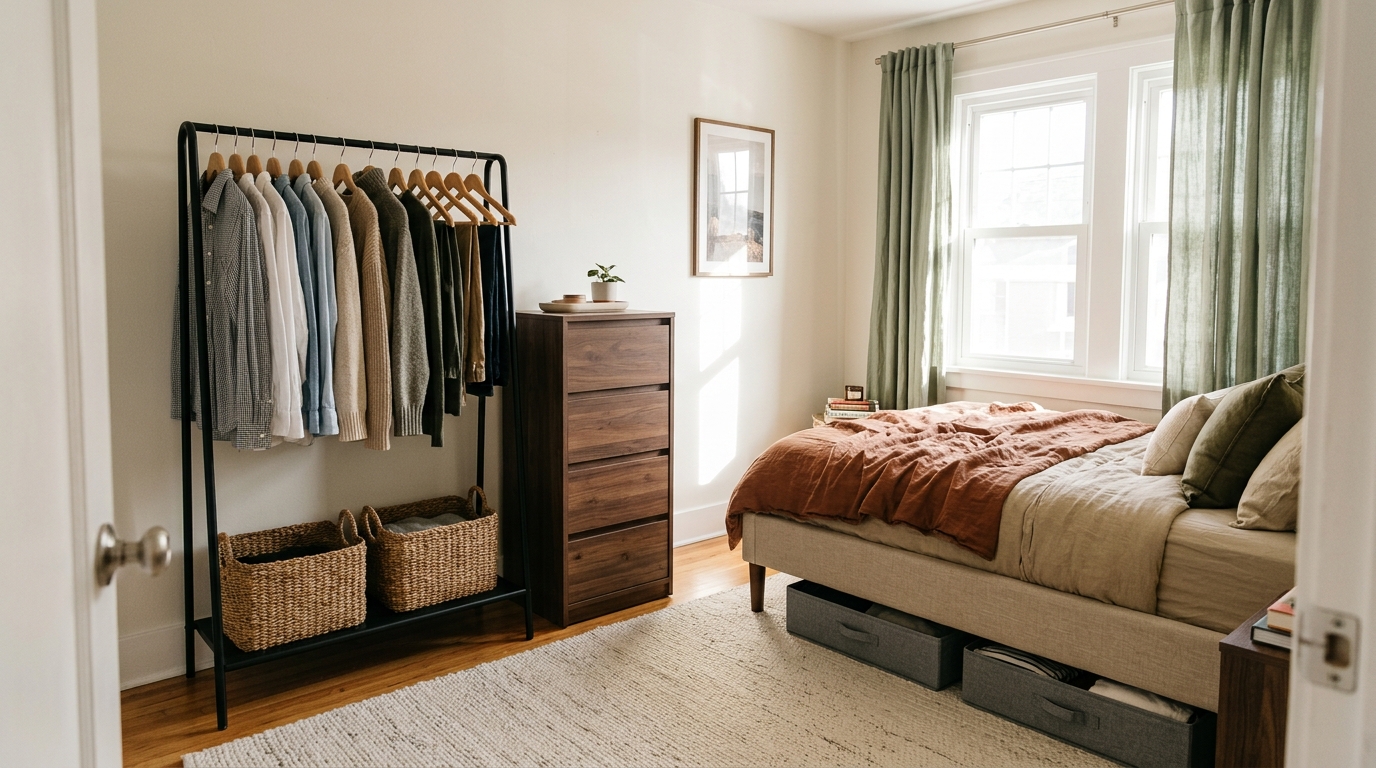 Finding practical small bedroom clothes storage ideas can make a big difference in how your room looks and functions. When your bedroom is short on space, clothes can quickly take over. A chair becomes a makeshift wardrobe, drawers get crowded, and finding somewhere to put clean laundry becomes another daily frustration.
The solution isn’t necessarily buying a bigger wardrobe or adding more furniture. Often, it’s about making better use of the storage space you already have and choosing a few pieces that work harder without crowding the room.
Whether you have a tiny bedroom, a small closet, or no built-in closet at all, these seven ideas can help you organize your clothes, use overlooked spaces, and make everyday routines easier.
1. Use a Slim Freestanding Clothing Rack
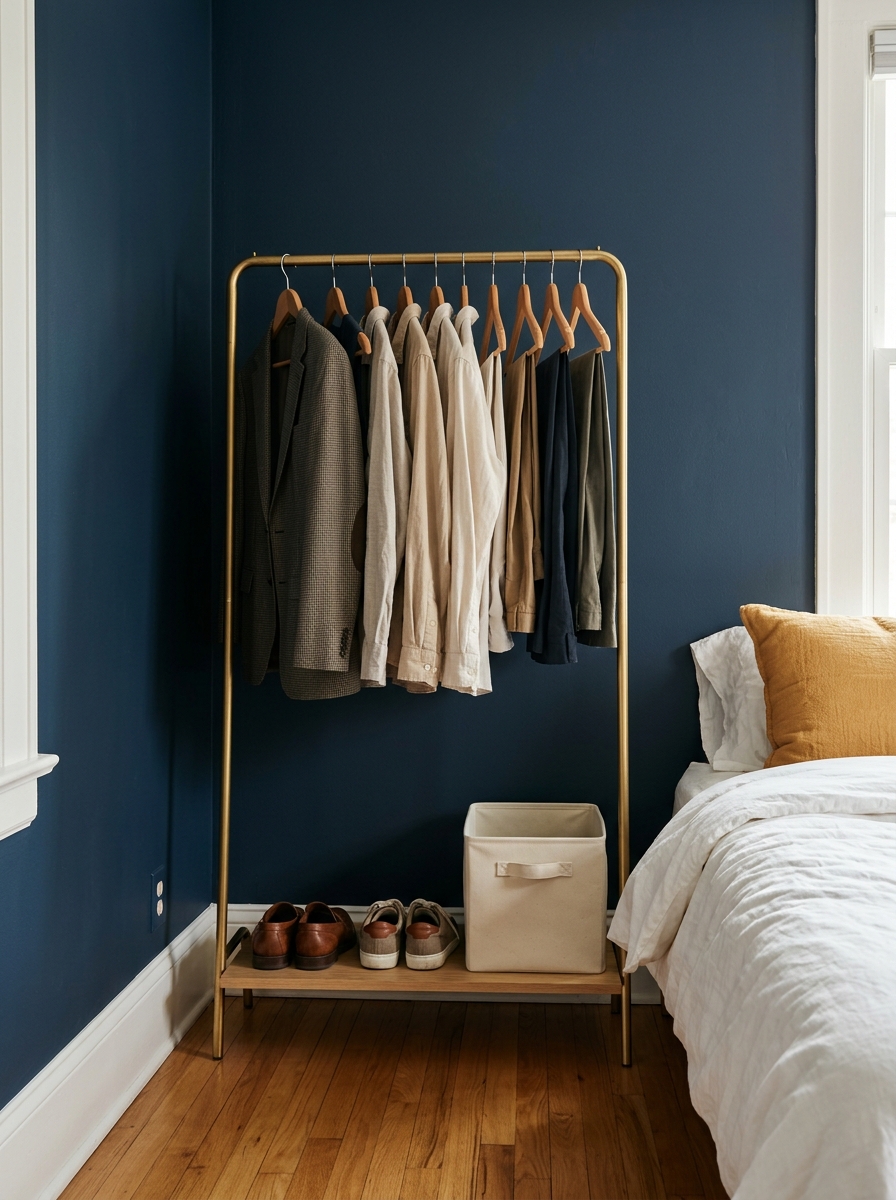
If your bedroom doesn’t have enough closet space, a slim clothing rack can give you somewhere to hang everyday outfits without adding a bulky wardrobe.
Unlike a large traditional closet, an open garment rack has a lighter appearance and can fit into an unused corner, along an empty wall, or beside a dresser. It’s especially useful for renters, studio apartments, and bedrooms where installing a built-in closet isn’t practical.
The key is choosing a rack that fits your actual wardrobe and available floor space. A narrow single-rail design is often enough for frequently worn shirts, dresses, jackets, and a few pairs of trousers. If you need more capacity, look for a model with a lower shelf for shoes or storage baskets.
How to make it work:
- Measure the available wall or corner before purchasing a rack.
- Choose a sturdy frame with a stable base rather than an overly lightweight model.
- Keep everyday clothing on the rail and store occasional outfits elsewhere.
- Use matching hangers to make the arrangement look less crowded.
- Leave enough room around the rack to walk comfortably and reach your clothes.
One important thing to remember: an open clothing rack is not a replacement for unlimited closet storage. If you hang every item you own on it, the room can look cluttered very quickly. Keep the selection intentional and store less frequently used clothing in drawers or under the bed.
2. Install a Double Hanging Rod in Your Closet
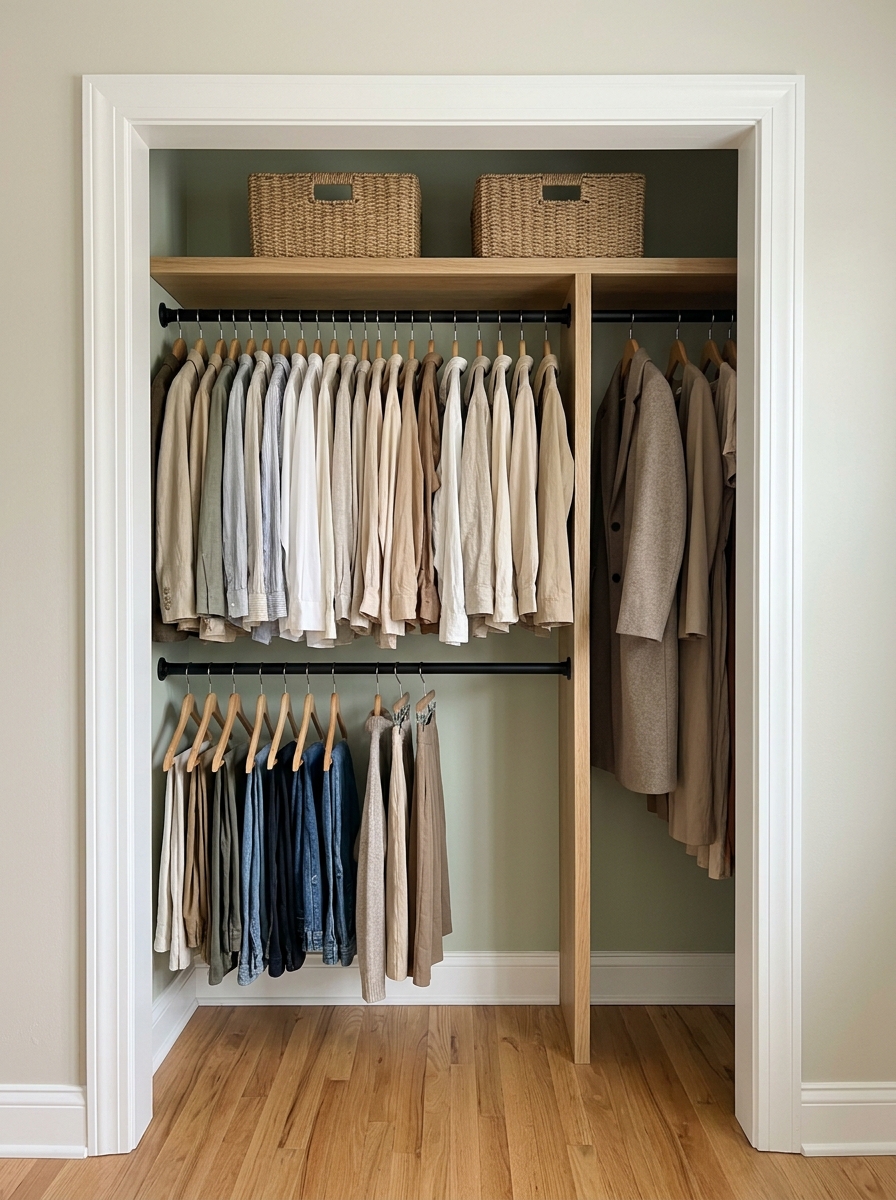
If your bedroom already has a closet but you keep running out of hanging space, look at how you’re using its vertical area.
Many closets have one long hanging rod with a large amount of unused space above or below it. That arrangement can waste valuable room, particularly when most of your clothes are shorter items such as shirts, blouses, skirts, and folded trousers.
A double hanging rod creates two levels of hanging space, allowing you to organize shorter garments separately rather than spreading everything across one long rail.
For example, you could hang shirts and blouses on the upper rod and trousers or skirts on the lower one. This makes it easier to see what you own and can free up space elsewhere in the bedroom.
How to make it work:
- Measure the distance from your existing rod to the closet floor before considering a second rod.
- Check that both levels have enough vertical clearance for the garments you plan to hang.
- Remember that long dresses, coats, and jumpsuits still need a full-height hanging section.
- Use slim, sturdy hangers to avoid wasting unnecessary rod space.
- Check the manufacturer’s weight limits and avoid overloading either rod.
- Confirm that your existing closet system can support an additional rod before installing one.
A double hanging rod works best when most of your wardrobe consists of shorter garments. If you own many long dresses or coats, dividing the closet into two hanging levels may leave you with less useful space rather than more.
Also, don’t assume that every closet can accommodate a second rod safely. Some existing closet systems, shelves, and support brackets aren’t designed to carry the additional load. Check the manufacturer’s instructions and the condition of the closet structure. If the existing system isn’t suitable, choose a compatible freestanding or adjustable system designed for that purpose rather than attaching a rod to weak supports.
If you rent, consider an adjustable double-hanging system that works with your existing closet rather than drilling into the wall. Check that it is compatible with your closet, installed according to its instructions, and stable before loading it with clothes.
This is one of the most useful small bedroom clothes storage ideas when the problem is not a lack of closet space altogether, but a closet that isn’t being used efficiently.
3. Turn the Space Under Your Bed Into Clothing Storage
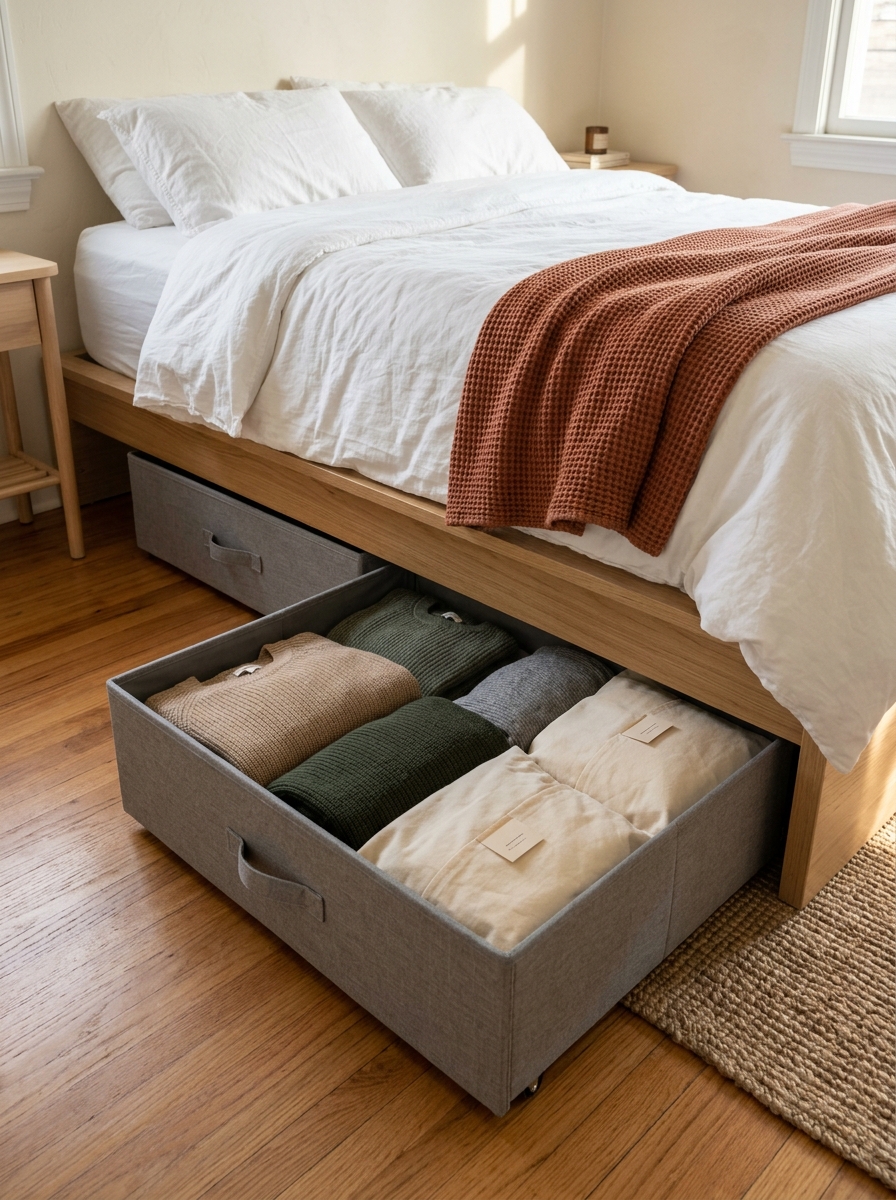
The area beneath your bed is one of the easiest places to add hidden storage without introducing another visible piece of furniture.
Instead of leaving it empty or allowing it to collect dust, use it for clothing you don’t need to access every morning. This could include off-season outfits, bulky sweaters, extra bedding, or occasional clothing.
The best storage option depends on the height of your bed frame. Low-profile rolling containers work well when there is limited clearance, while shallow drawers can provide a more finished appearance if your bed has enough space underneath.
How to make it work:
- Measure the height and width beneath your bed before buying containers.
- Check the space available when the bed frame or mattress is in its normal position.
- Choose storage boxes or drawers that slide out without catching on the bed frame.
- Use clean, dry, breathable fabric organizers for clothing that needs ventilation.
- Keep similar items together, such as winter clothing, summer clothing, or extra blankets.
- Add simple labels so you can find what you need without opening every container.
Clear containers make it easier to see what is stored inside, while fabric storage bags can help keep clothing protected from dust. For long-term storage, make sure clothes are clean and completely dry before packing them away.
Under-bed storage is one of the more practical small bedroom clothes storage ideas because it creates extra room without taking up additional floor space.
Try not to use under-bed storage as a place to throw everything you don’t know where to put. Sort your clothes before storing them and keep the containers organized. Otherwise, the clutter is simply hidden rather than solved.
4. Choose a Narrow Dresser or Vertical Drawer Unit
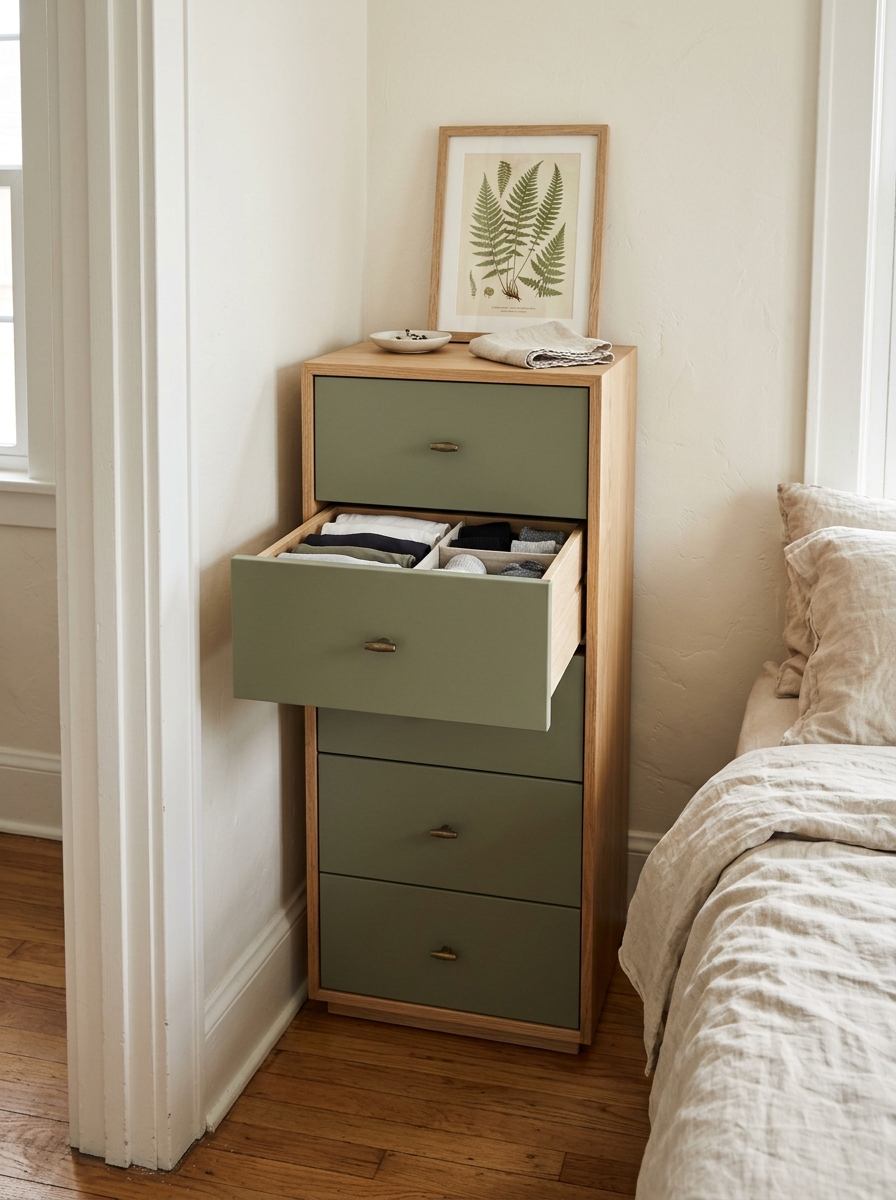
Sometimes, the problem isn’t hanging space. You may have plenty of clothes that need folding but nowhere to store them.
A large, wide dresser can take up too much room in a small bedroom, especially when it competes with the bed, nightstands, and walking space. A narrow dresser or vertical drawer unit can offer useful storage while occupying a smaller section of the floor.
Look for a design that uses height rather than width. Several drawers stacked vertically can hold T-shirts, underwear, sleepwear, workout clothes, and other folded items without spreading across an entire wall.
Before buying one, think about where it will go. A narrow unit beside the wardrobe, against an empty wall, or in an unused corner may work better than placing it beside the bed simply because there is a small gap.
How to make it work:
- Measure the available floor space, including room for drawers to open fully.
- Check the depth of the drawers so they can hold the clothing you intend to store.
- Organize each drawer by clothing category rather than mixing everything together.
- Use small drawer dividers for socks, underwear, and accessories.
- Keep frequently worn clothing in the easiest-to-reach drawers.
- Check that the unit does not block a doorway, closet, or main walking path.
A slim dresser can also help reduce the number of storage baskets and piles around the bedroom. However, don’t choose one that is too tall or unstable for the space.
If you have children or a busy household, secure dressers and other tall storage furniture according to the manufacturer’s instructions. The U.S. Consumer Product Safety Commission provides guidance on anchoring furniture to help prevent tip-overs.
5. Add Hanging Closet Organizers for Folded Clothes
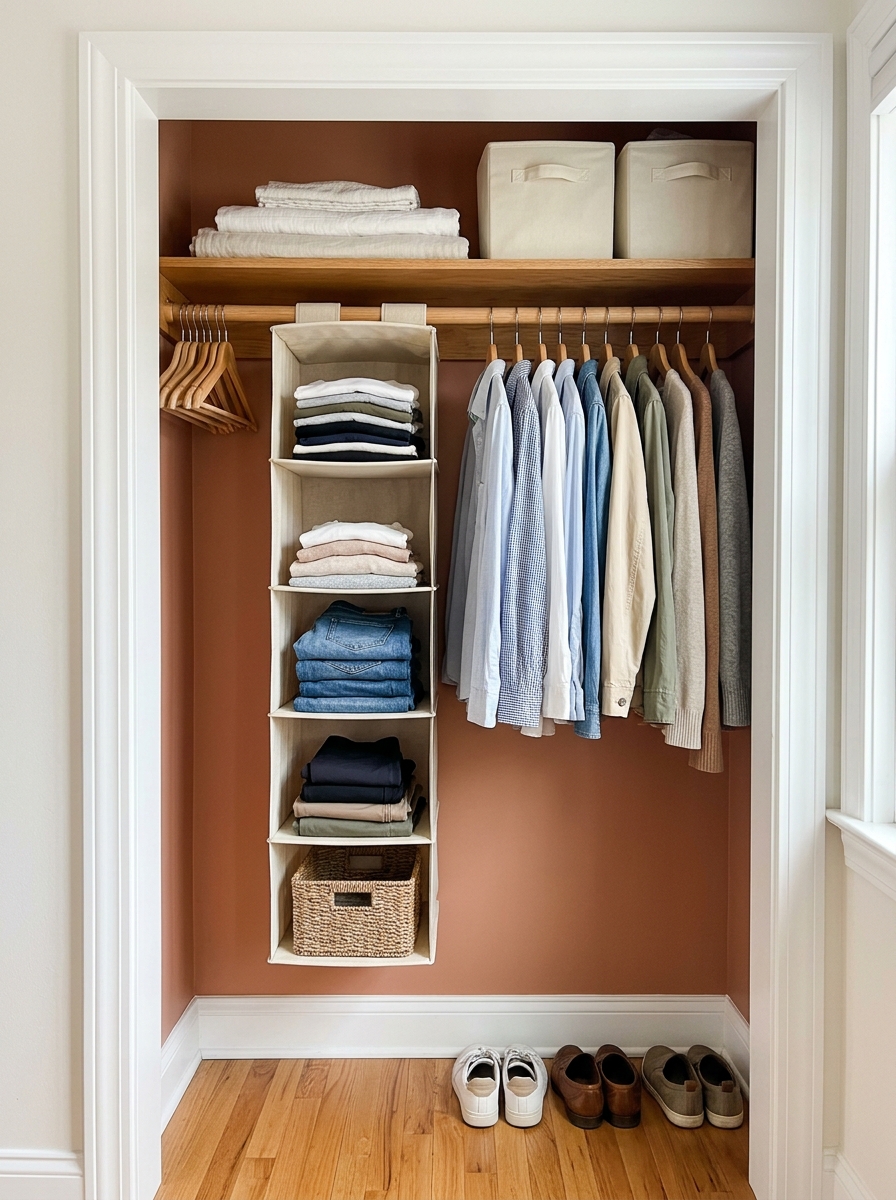
Not every closet has built-in shelves, and adding a full shelving system may not be practical in a small bedroom.
A hanging closet organizer is a simple alternative. These fabric or structured organizers hang from an existing closet rod and create several compartments for folded clothing.
They’re useful for T-shirts, jeans, leggings, sweaters, and other items that don’t necessarily need to be hung individually. Instead of stacking clothes on the floor or squeezing everything into an overcrowded drawer, you can give each category its own section.
How to make it work:
- Choose an organizer that fits the height of your closet.
- Check the width so it doesn’t interfere with the clothes hanging beside it.
- Store lighter folded items in the upper compartments.
- Keep heavier clothing in lower compartments if the organizer allows it.
- Avoid overfilling the shelves, as excessive weight can make fabric organizers sag.
You can also use small baskets or fabric boxes inside the compartments to separate smaller items.
This setup is particularly helpful in closets that have a hanging rod but very little built-in shelving. It makes better use of the vertical space without requiring a separate dresser.
6. Use the Back of Your Door for Small Clothing Items
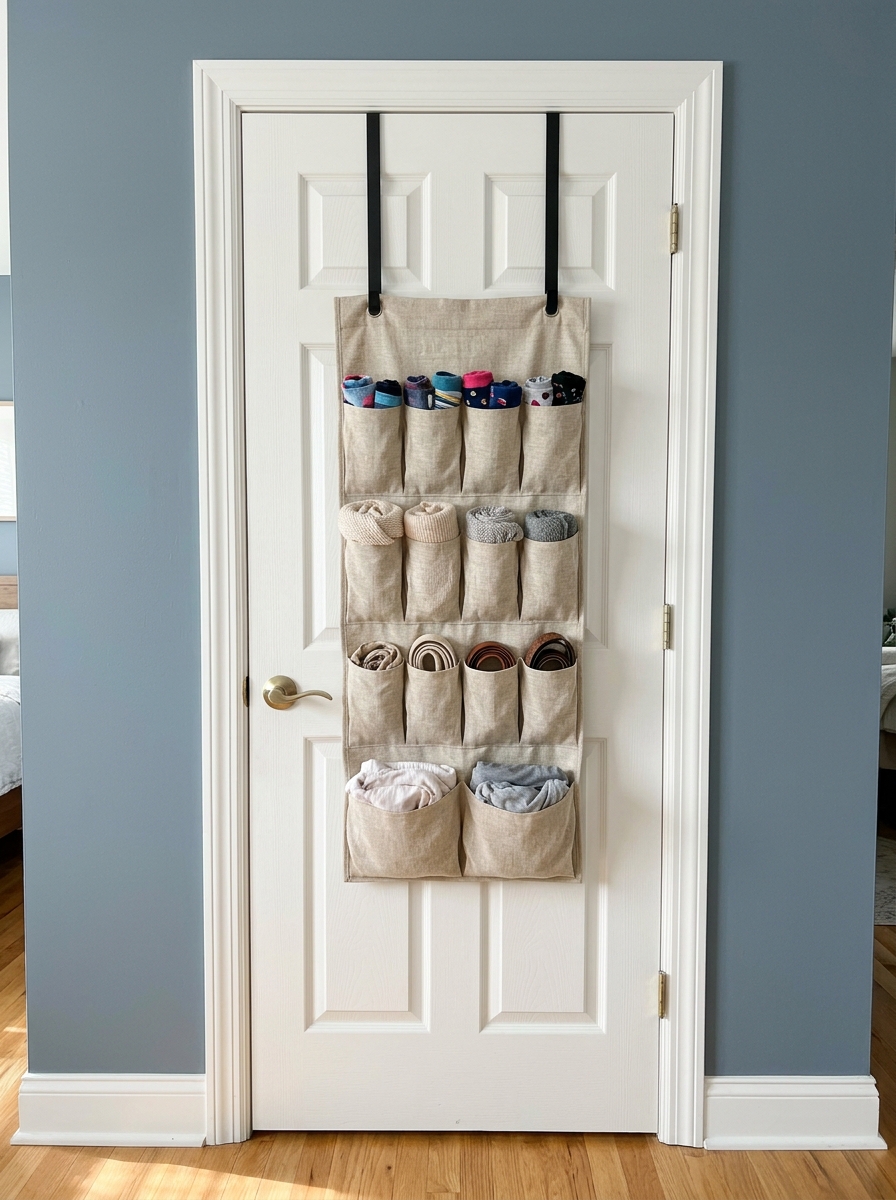
The back of a bedroom or closet door can provide useful storage space that is easy to overlook.
An over-the-door organizer with pockets or hooks can hold smaller clothing items and accessories without taking up floor space. It’s a practical solution when your drawers are full but you still need somewhere to keep everyday essentials.
Depending on the design, you can use it for socks, scarves, belts, lightweight accessories, sleepwear, or other small items.
How to make it work:
- Choose an organizer that fits your door and allows it to close properly.
- Look for deep, sturdy pockets rather than shallow compartments that allow items to fall out.
- Group similar accessories together so they’re easy to find.
- Avoid putting heavy clothing into organizers designed for lightweight items.
- Check that the hooks won’t scratch or damage the door.
If you don’t need pockets, a few over-the-door hooks can also hold robes, jackets, or frequently used bags.
This is a particularly useful option for renters because many organizers can be installed without drilling holes into the wall. Just make sure the door can still open and close freely.
7. Install a Wall-Mounted Clothing Rail and Hooks
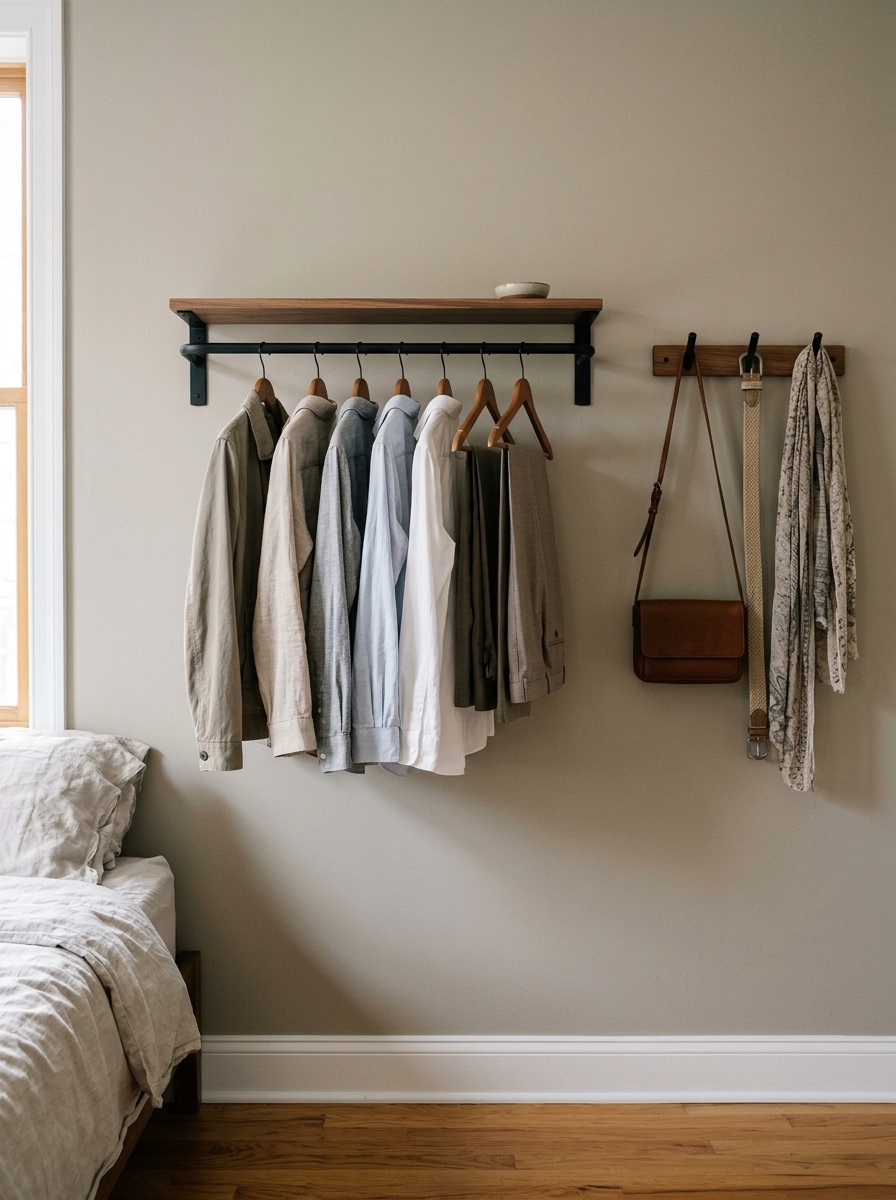
When there is no room for another wardrobe or dresser, the walls may offer the extra storage you need.
A wall-mounted clothing rail is different from a freestanding rack because it uses an otherwise empty wall instead of occupying floor space. It can be especially useful in a narrow bedroom where even a small furniture unit would make movement difficult.
Use the rail for a small selection of frequently worn clothes, while individual hooks below or beside it can hold bags, scarves, belts, and other accessories. This creates a compact hanging area without requiring a full wardrobe.
How to make it work:
- Measure the wall and choose a rail that doesn’t interfere with doors, windows, or furniture.
- Install it at a height that makes clothes easy to reach without dragging them on the floor.
- Follow the manufacturer’s installation instructions and use suitable fixings for your wall type.
- Use hooks for accessories rather than allowing them to pile up on a chair or dresser.
- Keep the rail from becoming an overflow area for every item in your wardrobe.
If you’re renting, removable hooks may be useful for lightweight accessories, but don’t assume they can safely support heavy bags or clothing rails. Check the product’s weight limits and your lease before installing anything.
Unlike a freestanding rack, a wall-mounted rail requires secure installation, but it can be a useful choice when keeping the floor clear is your main priority.
Small Bedroom Clothes Storage Ideas: Which Solutions Work Best?
The best storage solution depends on what you’re struggling with most. Before buying anything, identify the type of clothing you need to store and the space you have available.
Here is a simple way to decide:
| Your Main Storage Problem | A Practical Solution |
|---|---|
| No built-in closet or need for extra hanging space | Slim freestanding clothing rack |
| Existing closet has unused vertical hanging space | Double hanging rod |
| Seasonal clothes have nowhere to go | Under-bed storage |
| Too many folded clothes | Narrow dresser |
| Closet has no shelves | Hanging closet organizer |
| Small items keep getting lost | Over-the-door organizer |
| No floor space for another storage unit | Wall-mounted rail and hooks |
You don’t need to use all seven ideas in one bedroom. In fact, adding too many storage systems can make a small room feel even more crowded.
Start with the solution that addresses your biggest problem. If your closet is already full but has enough vertical clearance and a suitable support system, a double hanging rod may help more than buying another dresser. If you have no closet at all, a compact clothing rack combined with under-bed storage may be a better starting point.
Before buying anything, also consider how often you need to access the clothes. Everyday outfits should be easy to reach, while seasonal clothing can go into less accessible storage. This simple distinction can help you avoid spending money on storage that doesn’t solve your actual problem.
How to Organize Clothes When You Don’t Have a Closet
A bedroom without a built-in closet can feel particularly difficult to organize, but you don’t necessarily need a full wardrobe to make it functional.
The trick is to create separate storage areas for different types of clothing.
For example, use a slim garment rack for everyday hanging clothes, a narrow drawer unit for folded items, and under-bed containers for seasonal clothing. A few hooks can take care of bags, belts, and accessories.
Try to keep the arrangement simple:
- Hang what needs hanging. Keep dresses, shirts, jackets, and easily wrinkled items on a garment rack.
- Fold what can be folded. Use drawers or hanging shelves for T-shirts, jeans, leggings, and sleepwear.
- Store occasional clothing out of sight. Move off-season pieces into under-bed containers.
- Give accessories a home. Use hooks, small baskets, or an over-the-door organizer.
- Keep the floor clear. Avoid turning the area beside the rack into another clothing pile.
You can also make the arrangement look more intentional by choosing storage pieces in similar finishes or neutral colors. This isn’t essential, but it can help open storage blend into the bedroom rather than becoming the first thing you notice.
Common Clothes Storage Mistakes to Avoid in a Small Bedroom
Even useful storage furniture can make a bedroom feel cramped when it is poorly chosen or overloaded.
A few common mistakes are worth avoiding:
Buying storage before measuring the room. A dresser may look compact in a store but take up more space than expected once you account for open drawers and walking room. Measure first.
Keeping too many clothes within reach. Your everyday wardrobe doesn’t need to include every seasonal item you own. Rotate clothing when the weather changes and store pieces you aren’t currently wearing.
Overloading open clothing racks. Open storage makes everything visible. When too many clothes are squeezed together, the rack can look messy and become harder to use.
Using the wrong storage for the wrong items. Heavy sweaters may not work well in a lightweight hanging organizer, while delicate clothing may need proper hanging space instead of being compressed into a bin.
Ignoring safety and stability. Tall dressers and shelving units should be installed and secured according to their manufacturer’s instructions, particularly in homes where children may be present.
Adding furniture without removing anything. If your bedroom is already crowded, another storage unit may not be the answer. Reorganize what you own before deciding that you need more furniture.
Frequently Asked Questions About Small Bedroom Clothes Storage
How can I store a lot of clothes in a small bedroom?
Start by separating your everyday clothing from seasonal and occasional items. Use hanging space for clothes that wrinkle easily, drawers for folded pieces, and under-bed containers for items you don’t need regularly. A combination of storage methods usually works better than relying on one large wardrobe.
How do I organize clothes in a small bedroom without a closet?
A slim freestanding clothing rack can hold your everyday hanging clothes, while a narrow drawer unit or hanging closet organizer can store folded items. Use under-bed containers for seasonal clothing and hooks for accessories. Keeping each category in its own place makes the room easier to maintain.
What is the best way to store clothes under a bed?
Use shallow rolling bins, drawers, or fabric storage bags that fit comfortably beneath your bed frame. Store seasonal clothing, bulky sweaters, and other items you don’t need every day. Measure the available clearance before buying containers, and keep the contents sorted so you can find things easily.
How can I create more hanging space in a small closet?
If your closet has enough vertical clearance and a suitable support system, consider installing a second hanging rod for shorter garments. You can also use slim hangers and organize clothes by category. Keep long dresses and coats in a separate section so they don’t interfere with the lower hanging space.
Are open clothing racks a good idea for small bedrooms?
Yes, provided you keep them organized and avoid overfilling them. A slim rack can be useful when you don’t have enough closet space, but it isn’t ideal for storing an entire large wardrobe in plain sight. Use it for everyday clothing and keep less frequently worn pieces in closed storage.
What can I use instead of a bulky wardrobe?
A slim clothing rack, narrow dresser, hanging closet organizer, or wall-mounted rail can provide storage without taking up as much space as a large wardrobe. The right combination depends on whether you need hanging space, drawers, or shelves.
How do I keep clothes from making a small bedroom look messy?
Avoid storing too many items in open view. Keep frequently worn clothes on a neat rack, put folded clothing into drawers or covered organizers, and move seasonal pieces out of the way. Returning clothes to their designated storage area each day also prevents piles from building up.
What are some inexpensive small bedroom clothes storage ideas?
Start with storage you already have. Rearrange your closet, use suitable boxes beneath the bed, add hooks for accessories, or try a hanging organizer. You don’t need to buy several new furniture pieces to improve how your bedroom functions.
Final Thoughts
Making a small bedroom work doesn’t mean squeezing more furniture into every available corner. It’s about choosing storage that fits your room, your wardrobe, and the way you get dressed each day.
A slim clothing rack can solve a lack of hanging space, a double rod can make an existing closet more useful, and under-bed drawers can take care of seasonal clothing. Even a few well-placed hooks or a narrow dresser can make everyday organization easier.
Start with the area that causes you the most frustration, make one practical change, and see how much difference it makes before adding anything else.
And if your main problem is a cramped closet rather than the bedroom itself, take a look at our guide to tiny closet hanging layout for more ways to organize a limited hanging space.