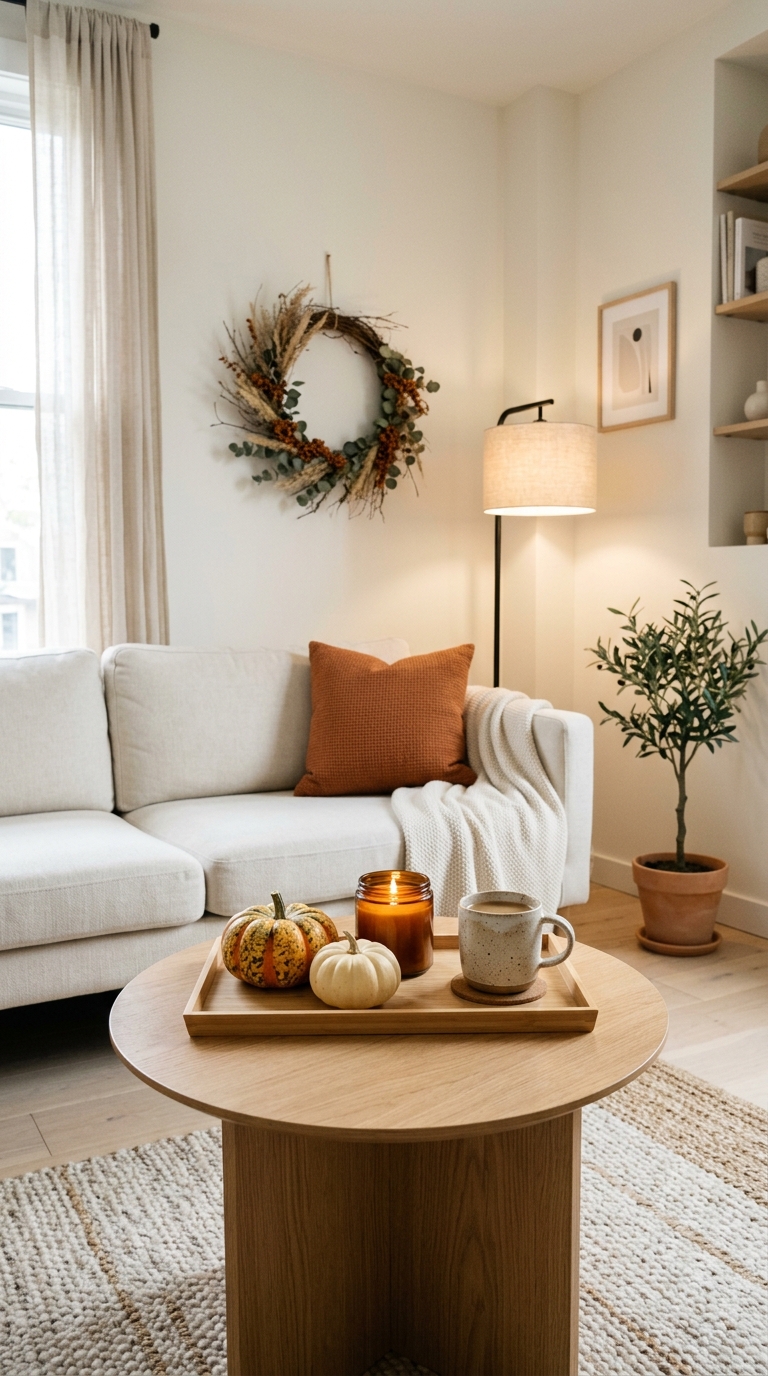
Thanksgiving Table Decor Ideas for Small Spaces That Leave Room for Dinner
Thanksgiving table decor for small spaces can be tricky: you want a table that feels warm and festive, but you still need room for dinner plates, glasses, serving bowls, and everyone’s elbows. A beautiful centerpiece can look lovely before the meal and become one more thing to move once the food arrives.
The answer isn’t to leave your table bare or buy a bigger one. It’s to decorate around the way you’ll actually eat. A narrow runner, a few mini pumpkins, cloth napkins, and one easy-to-move centerpiece can make a small table feel special without taking over the space.
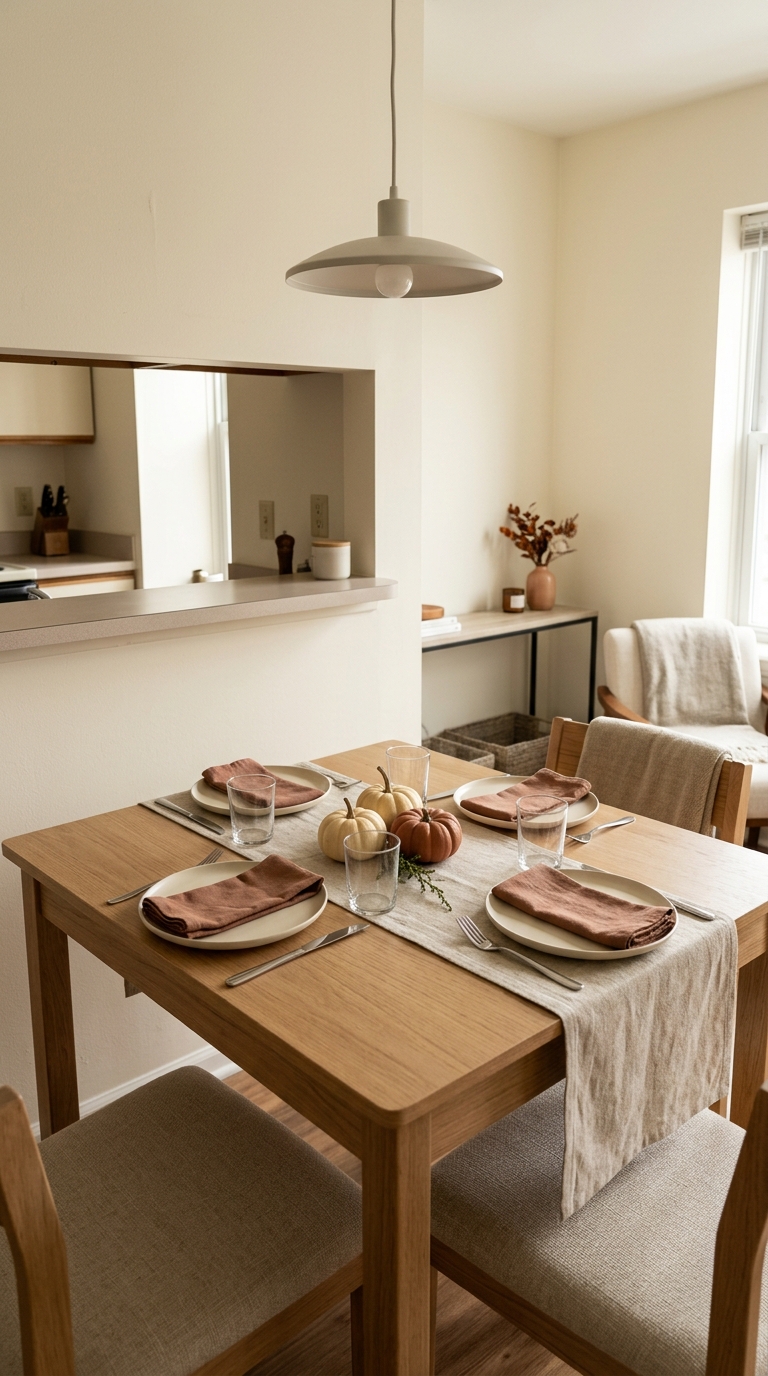
Here’s how to create a Thanksgiving table that looks inviting before dinner and still works when everyone sits down.
Start With the Table You Actually Have
Before choosing decorations, set up a quick version of your real Thanksgiving meal. You don’t need to cook anything. Just bring out the plates, glasses, cutlery, napkins, and a couple of serving dishes similar to the ones you expect to use.
Arrange them as you would for dinner, then sit down.
Can everyone reach their glass comfortably? Is there room for serving spoons? Can someone pass a bowl without knocking over the centerpiece? Do the chairs pull out without catching on nearby furniture?
These small tests reveal more than styling an empty table ever will.
If your table is especially small, decide which items need to stay on it and which can live somewhere else. You might keep each place setting at the table but serve the turkey and sides from a nearby counter or sideboard.
The rule to remember: plan the eating space first, then decorate the space that remains.
7 Thanksgiving Table Decor Ideas for Small Spaces
1. Use a Narrow Runner Instead of Several Layers
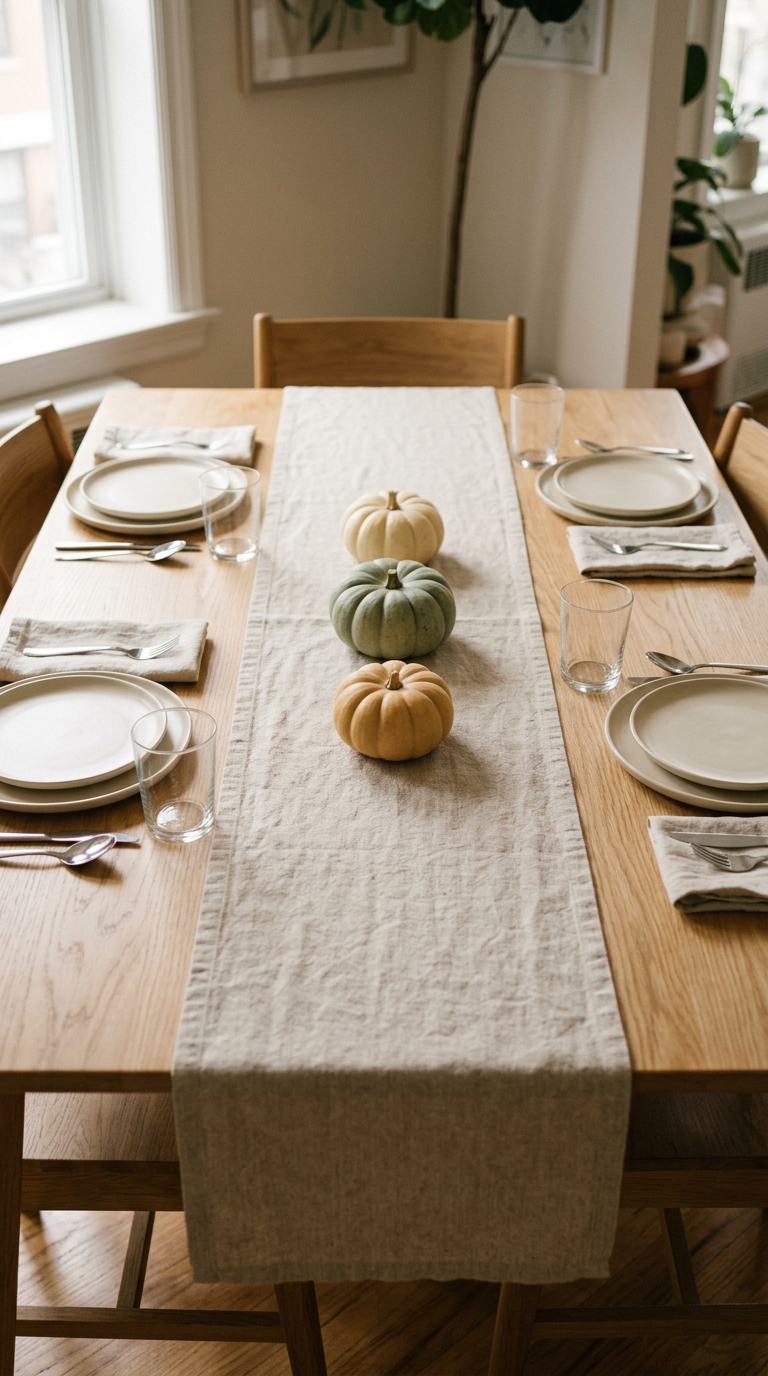
A table runner can add warmth and color without covering the entire surface. Choose one that leaves plenty of exposed tabletop on both sides, rather than layering a full tablecloth, runner, placemats, and decorative fabric together.
For a warm, understated look, try a linen-textured runner in cream, muted rust, olive, or warm brown. Natural wood can also look beautiful on its own, so a runner isn’t essential if your table already has a finish you love.
How to style it: Center the runner lengthwise, then place your centerpiece along its middle. Keep plates and glasses on the uncovered parts of the table.
If your table is so narrow that the runner leaves little space for place settings, skip it. A simple napkin or small centerpiece can provide enough seasonal detail.
2. Choose One Low, Easy-to-Move Centerpiece
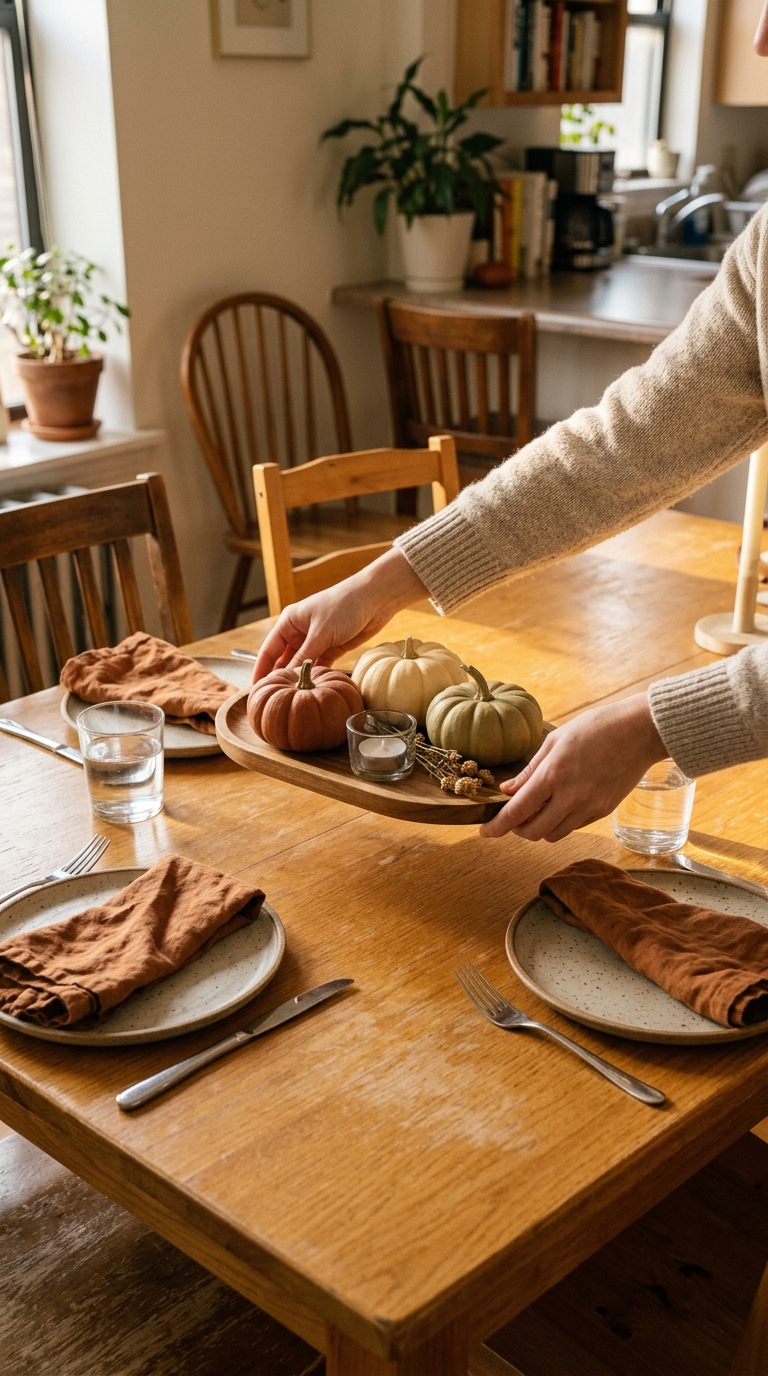
A small table rarely benefits from a large, permanent centerpiece. You need a decoration that looks good before dinner but can move out of the way when serving dishes arrive.
Try a shallow bowl, a small tray with a few seasonal accents, or a low ceramic dish filled with mini pumpkins. Keep the arrangement compact enough that it doesn’t compete with plates and glasses.
A removable centerpiece is particularly useful when you plan to serve family-style, with everyone sharing dishes from the table. You can lift it off in seconds and place it on a nearby console or counter.
Before settling on an arrangement, sit in a chair and look across the table. If it blocks conversation or makes it difficult to see the person opposite you, choose something lower.
3. Arrange Mini Pumpkins and Natural Accents in a Short Line
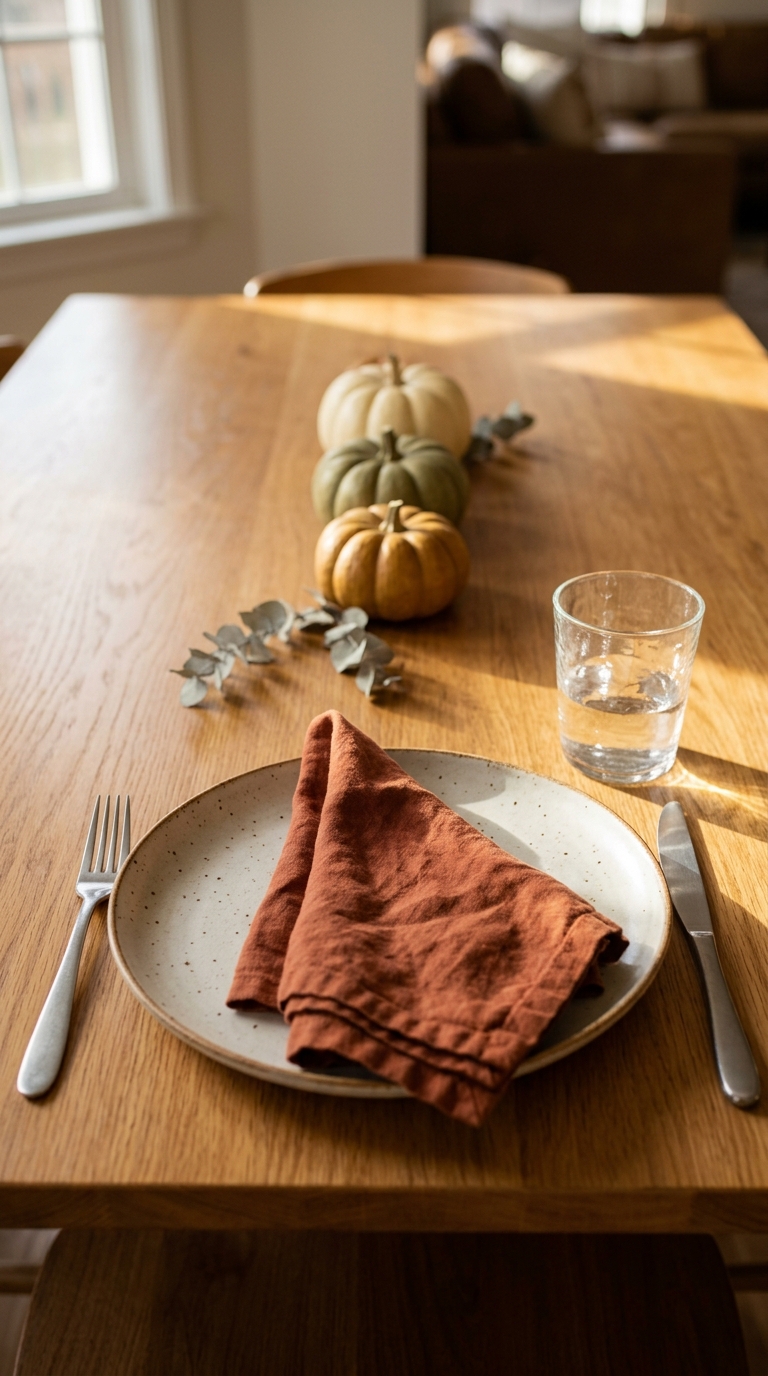
You don’t need a tall arrangement or a large floral display to make the table feel seasonal. A few mini pumpkins, small gourds, or short sprigs of greenery can create a Thanksgiving look while using very little vertical space.
Instead of scattering decorations across the table, group them in a short line down the center or cluster two or three pieces near one end. This gives the arrangement a deliberate shape and helps keep the place settings clear.
For example, place three small pumpkins in different but complementary shades on a narrow runner. Add one short sprig of greenery if there’s room, then stop. The natural variation provides interest without requiring extra objects.
Avoid filling every gap with another pumpkin or decorative accent. The open space is part of what makes the arrangement work.
4. Let Cloth Napkins Add the Color
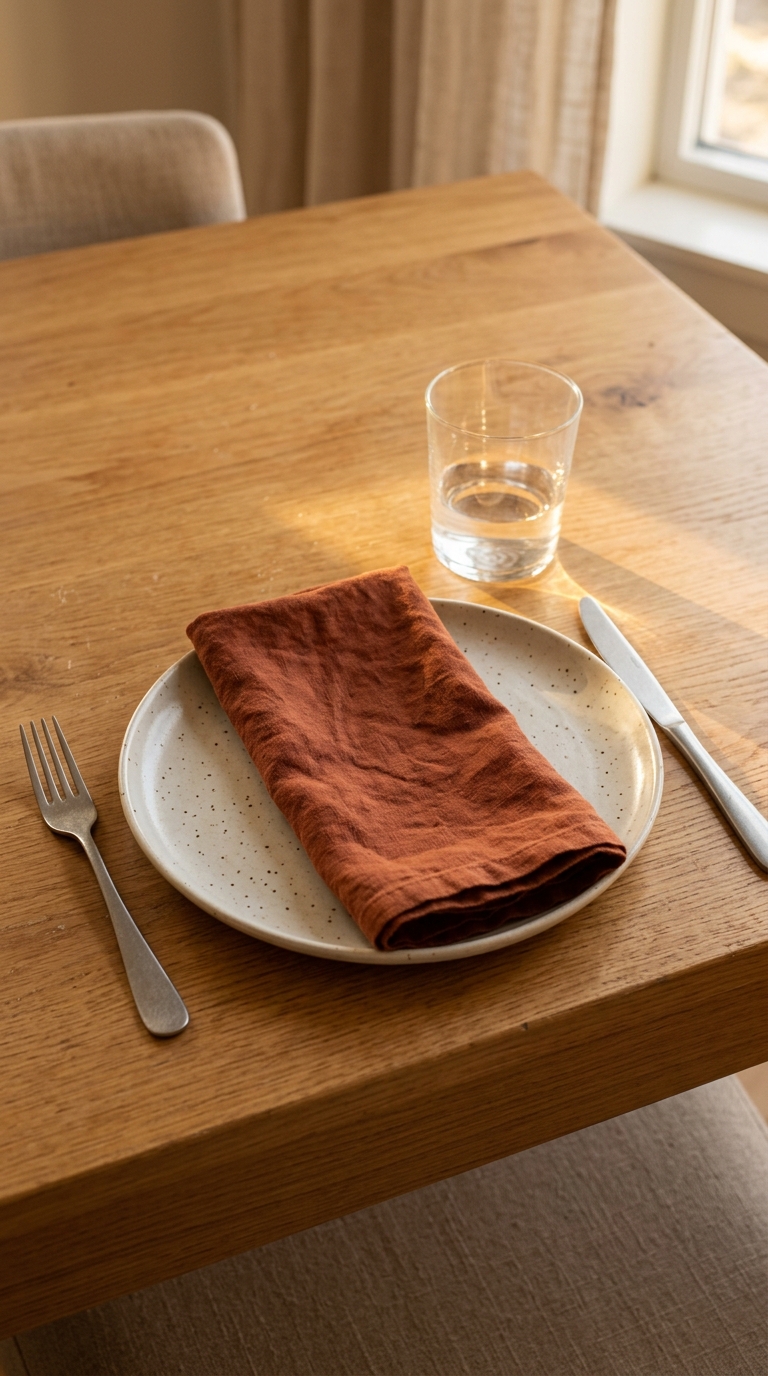
Napkins are practical, but they can also do some of the decorating for you. A warm-colored or textured napkin adds a seasonal detail without requiring another object in the center of the table.
Try cream napkins with earthy plates, rust-colored napkins against white dishes, or muted olive alongside natural wood. You can fold each napkin simply beside the plate or place it on top if that arrangement doesn’t interfere with the cutlery.
You don’t need elaborate folds, napkin rings, or individual decorations at every setting. A straightforward fold can look just as thoughtful.
If you already own neutral cloth napkins, use those and bring in color through a small seasonal detail elsewhere. There’s no need to buy a new set just for one meal.
5. Use Small Place Cards Only If They Help
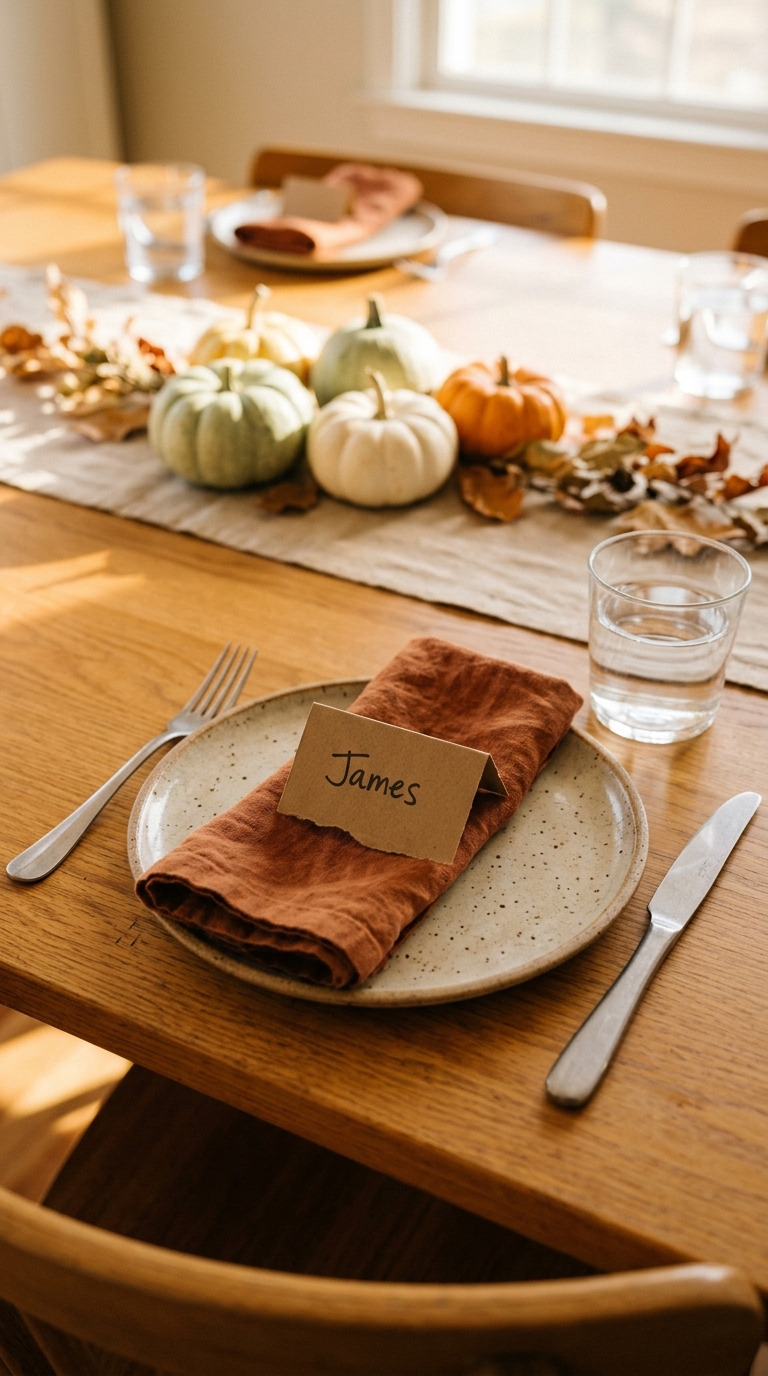
Place cards can make a Thanksgiving table feel personal, especially when you’re gathering people who don’t see one another often. On a small table, however, card holders and extra decorations can take up more room than the cards themselves.
Keep them simple. Write each guest’s name on a small folded card and place it beside the plate or rest it against the napkin. Skip bulky holders, miniature ornaments, and extra favors if they crowd the setting.
If you’re hosting a casual family meal and everyone already knows where they’ll sit, you may not need place cards at all. A thoughtful table doesn’t need every traditional detail.
Choose them because they serve a purpose, not because you feel the table is missing something.
6. Choose Decorations You Can Reuse Beyond Thanksgiving
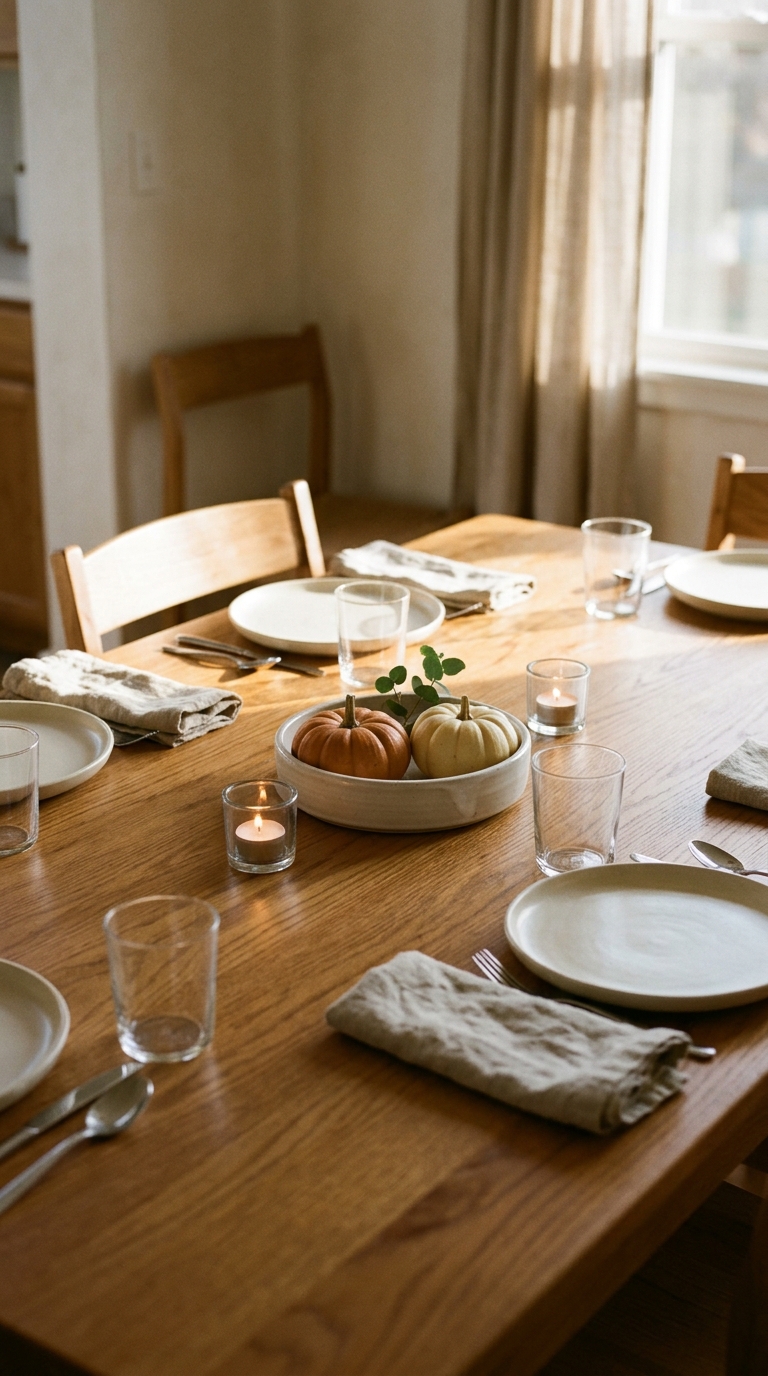
When your home has limited storage, decorations that work for more than one occasion are especially useful.
A small ceramic bowl, a neutral runner, simple candleholders, and warm-colored napkins can all work for ordinary dinners and other seasonal gatherings. You can create a Thanksgiving look by combining these everyday pieces with a few mini pumpkins or a small amount of greenery.
This approach also makes decorating more affordable. You’re buying or using pieces that fit into your home throughout the year rather than storing a separate collection for one holiday.
If you use candles, make sure they sit securely and remain well away from fabric, greenery, paper, and anything else that could catch fire. Never leave a lit candle unattended. For additional guidance, the National Fire Protection Association’s candle safety advice explains how to reduce candle-related fire risks. Battery-operated candles are a practical alternative when the table is busy or children are nearby.
7. Make Everyday Dishes Part of the Design
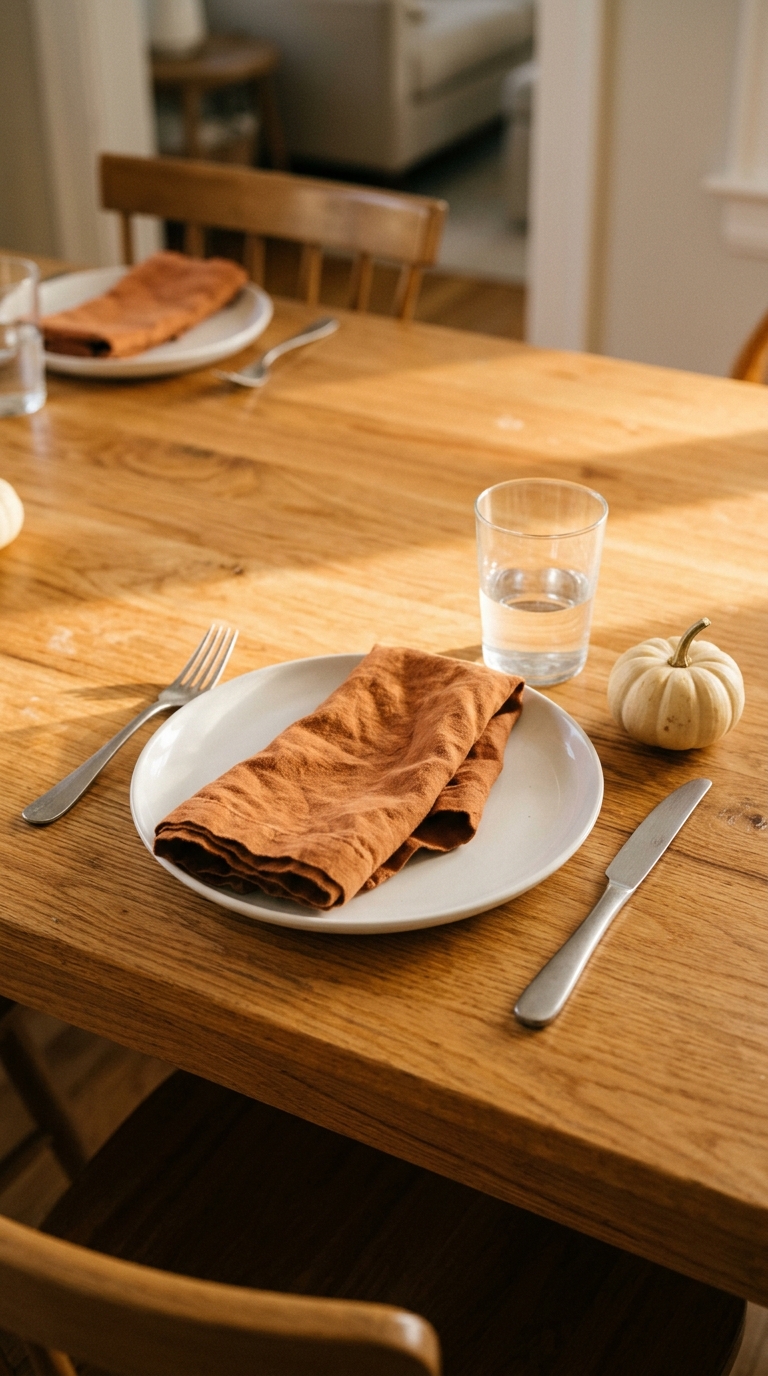
You don’t need a special Thanksgiving dinnerware set to create a festive table. Everyday white, cream, or neutral plates can provide a calm base for seasonal color and texture.
Use the dishes you already have, then add interest with napkins, a small centerpiece, or a runner if the table has room. If your everyday dishes have a pattern or a strong color, let them lead the look and keep the other decorations simple.
For example, white plates, ordinary drinking glasses, cloth napkins, and three mini pumpkins may be all you need. The table can feel coordinated without every piece matching.
Most importantly, set out the dishes you’ll actually use. If you need space for larger dinner plates, don’t sacrifice it for decorative chargers or extra layers that will be removed before the meal.
How to Decorate a Small Round or Narrow Rectangular Table
The shape of your table affects which decorations will feel comfortable. You don’t need a different decorating style for every table, but a few adjustments can help.
For a Small Round Table
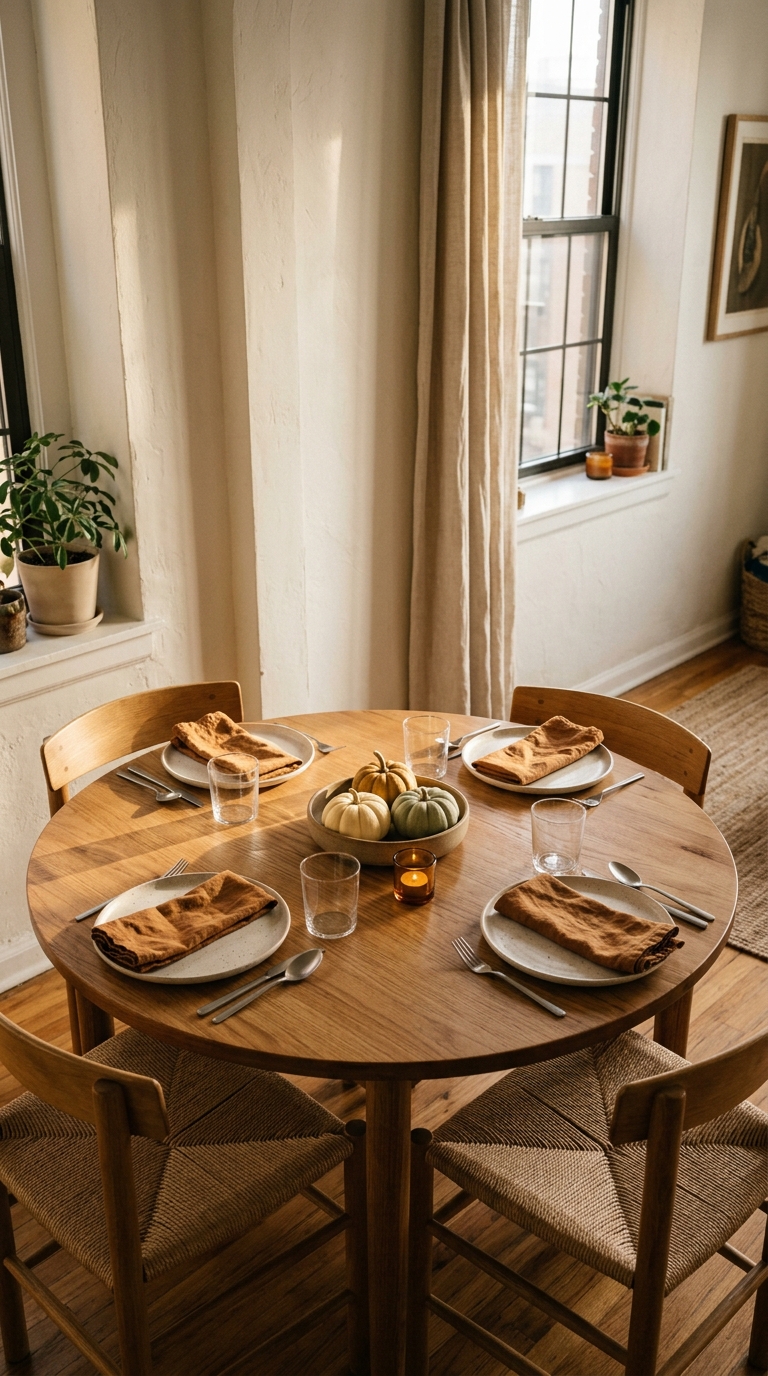
A round table often works best with a compact centerpiece placed near the middle. A shallow bowl or small tray can create a focal point without extending too far toward the place settings.
Avoid a wide arrangement that forces plates toward the edge. Before adding decorations, position the plates and glasses you need, then check how much central space remains.
If there’s barely room for a centerpiece, let the napkins or dishes provide the seasonal color instead.
For a Narrow Rectangular Table
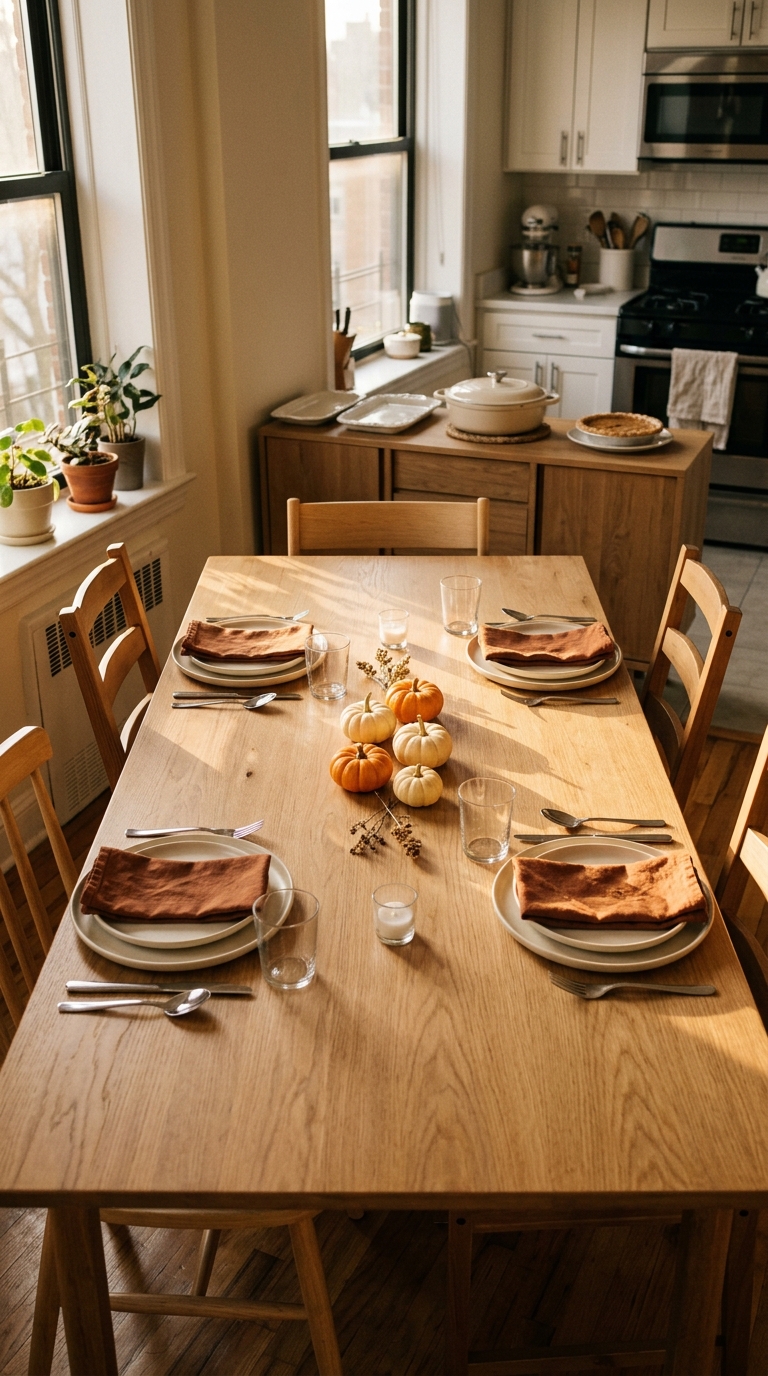
A narrow rectangular table works well with a slim runner and a low arrangement placed lengthwise, provided they leave enough room for plates and glasses. If the table is especially tight, skip the runner and let your dishes and napkins provide the color.
Think about how the table will work at two different moments. Before dinner, a small centerpiece of mini pumpkins can sit along the middle. When the food is ready, move the entire arrangement to a nearby counter or sideboard, leaving the place settings in place. Your table still looks considered, but everyone has more room to eat and pass dishes.
For either table shape, test the setup with real place settings before Thanksgiving Day. The number of people a table can accommodate depends on its dimensions, the size of the chairs, and the room around it—not just whether the plates technically fit.
Where to Put the Food When the Table Is Full

One of the easiest ways to make a small Thanksgiving table more usable is to stop expecting it to hold every serving dish.
If you have a nearby kitchen counter, sideboard, console, or sturdy side table, use it as a temporary serving station. Keep plates, glasses, napkins, and the decorations you’ve chosen at the dining table, then move the larger serving dishes to the separate surface.
For example, the turkey and side dishes can sit on a counter while guests serve themselves, or you can bring over one dish at a time. Drinks can go on a separate cart or side table if that makes them easier to reach.
Make sure the surface is stable and positioned where people can reach it without blocking the route between the kitchen and dining area.
If you’re also working with limited kitchen counter space, see our guide to preparing Thanksgiving dinner in a small kitchen for practical ways to make meal preparation easier.
If you’re planning the wider gathering as well as the table, our guide to hosting Thanksgiving in a small home without feeling cramped covers seating, serving areas, and how to make a compact home work for guests.
Budget-Friendly Thanksgiving Table Decor Using What You Own
Before buying anything new, look at what you already have. You may have enough pieces to create a warm Thanksgiving table with a few simple changes.
- Shop your kitchen: A shallow serving bowl, ceramic dish, or wooden tray might already work as a centerpiece.
- Reuse neutral textiles: A plain runner or cloth napkins can work for Thanksgiving without being holiday-specific.
- Use a few natural accents: Mini pumpkins or a small amount of greenery can add seasonal color without filling the table.
- Borrow instead of buying: If you want a particular serving piece for the day, ask whether a family member has one you can borrow.
- Skip decorations that don’t fit: You don’t need matching plates, chargers, napkin rings, and candleholders for the table to feel finished.
The same idea applies to the rest of your seasonal decorating: making thoughtful swaps and choosing a few focal points can help your home feel festive without adding clutter. See our guide to decorating for fall without making a small home feel cluttered for more ways to work with what you already own.
What to Remove When the Table Still Feels Crowded
Sometimes you arrange everything carefully and the table still feels too full. That doesn’t mean you need a different centerpiece or more clever styling. It may simply mean you’ve asked the table to hold too much.
Start by removing anything that doesn’t need to be there during dinner.
- Take away decorative chargers if the plates fit better without them.
- Remove extra candleholders or small ornaments.
- Move the centerpiece to a nearby surface before serving.
- Skip the runner if it takes up useful space.
- Keep serving bowls on a separate counter or bring them to the table one at a time.
- Use only the decorations that genuinely improve the setting.
Then look at the table from a seated position. Can everyone reach their food and drink? Is there enough room for the dishes you need? Can people talk comfortably across the table?
If the answer is yes, the table is ready. You don’t have to fill every open space to make it look finished.
Frequently Asked Questions
How do you decorate a small table for Thanksgiving?
Start by arranging the plates, glasses, cutlery, and serving pieces you’ll actually use. Then add one or two small details, such as cloth napkins, a narrow runner, or a low centerpiece. Keep the space needed for eating and serving clear.
What is the best centerpiece for a small Thanksgiving table?
A low, compact centerpiece is usually the easiest to live with. A shallow bowl of mini pumpkins, a small tray with a few natural accents, or a short arrangement of greenery can look festive without blocking conversation. Choose something easy to move if you’ll need the center of the table for serving dishes.
How can I decorate my Thanksgiving table on a budget?
Use your everyday dishes, repurpose a bowl or tray as a centerpiece, and bring in seasonal color with napkins or a few natural accents. Borrow any special serving pieces you need instead of buying items you may rarely use again.
Where should serving dishes go if my dining table is too small?
Use a nearby counter, sideboard, console, or sturdy side table as a serving station. Keep the dining table focused on place settings and conversation, and make sure the serving area doesn’t block a walking route.
A Festive Table Should Still Work at Dinner
A small Thanksgiving table doesn’t need a large centerpiece or layers of decorations to feel special. It needs a little planning and enough room for the people who will gather around it.
Start with the plates and serving dishes. Add a narrow runner or cloth napkins if they fit. Choose one low centerpiece, and move it elsewhere if dinner needs the space. Use a separate surface for serving dishes when you can, and remove anything that makes the table harder to use.
Before guests arrive, sit down and test the arrangement one last time.
If you can reach your glass, pass a dish, and see the people across from you, you’ve done enough. The table can look beautiful without being crowded—and the decorations should make the meal feel more welcoming, not harder to enjoy.