15 Indoor Activities for Kids in Small Spaces (No Playroom Needed)
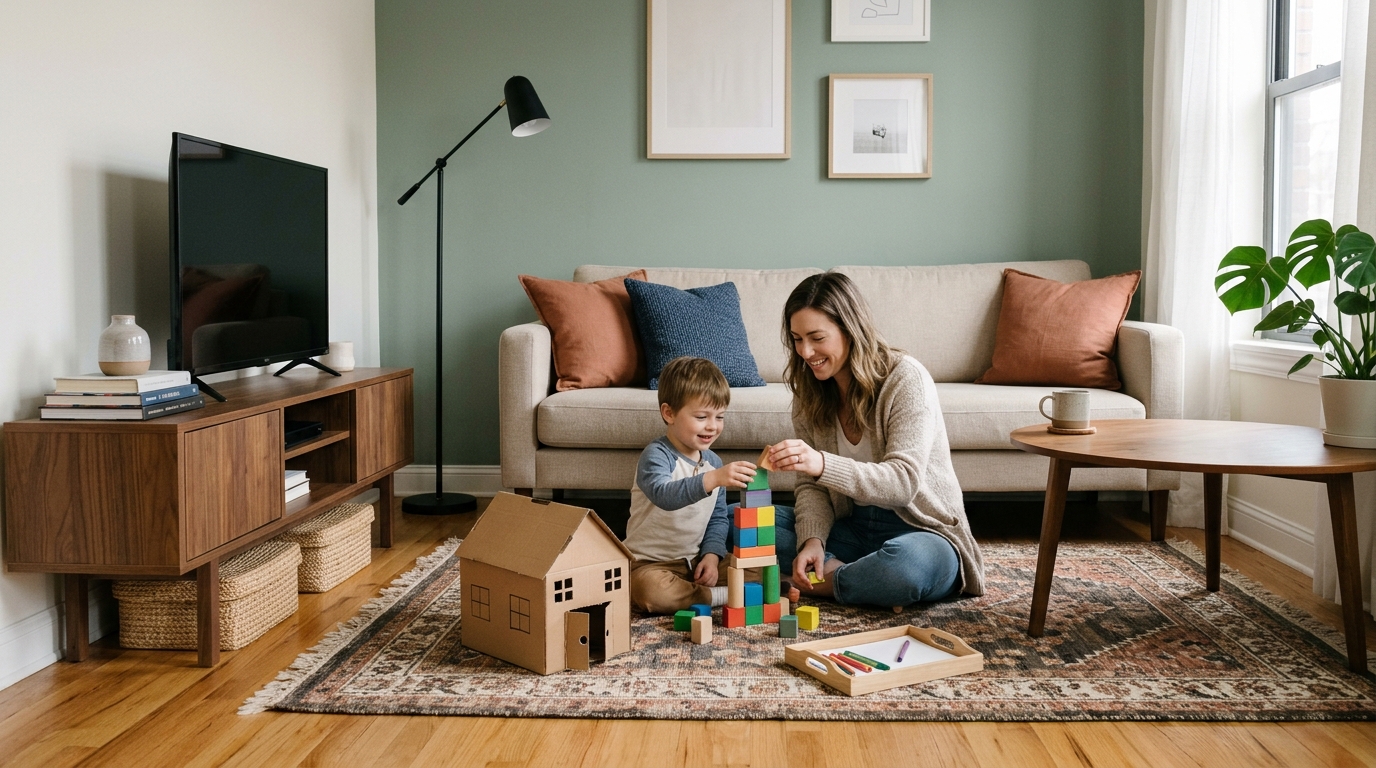
Finding fun indoor activities for kids in small spaces can be challenging when your home doesn’t have a dedicated playroom. Toys, furniture, and everyday family life already compete for space, and the last thing you need is an activity that takes over the entire living room or leaves a huge mess to clean up.
The good news is that these indoor activities for kids in small spaces don’t need a lot of equipment, expensive supplies, or an entire room. A corner of the living room, a kitchen table, or a clear patch of floor can be enough for a little creativity and play.
Whether you’re looking for quiet activities for a rainy afternoon, simple crafts using household materials, or ways to help energetic children burn off some energy, these ideas can work in apartments, small homes, and shared family spaces.
Below, you’ll find 15 practical indoor activities for kids in small spaces, including what you’ll need, how to set each one up, and ways to adapt it for different ages. Most use things you probably already have at home, and many can be packed away when playtime is over.
Why Indoor Activities Matter When Space Is Limited
Children don’t need a large playroom to enjoy meaningful play. They need opportunities to explore, create, move, imagine, and spend time with the people around them.
In a smaller home, the challenge is finding activities that fit into everyday routines without making the space feel even more crowded. That’s why simple, flexible ideas are often more useful than elaborate projects that require lots of supplies or preparation.
The American Academy of Pediatrics explains how play supports children’s development, including skills such as problem-solving, communication, emotional regulation, and social interaction.
The activities below offer a mix of quiet play, creativity, movement, and pretend play. You can choose one based on your child’s energy level, available space, and how much time you have.
4 Quiet Indoor Activities for Kids in Small Spaces
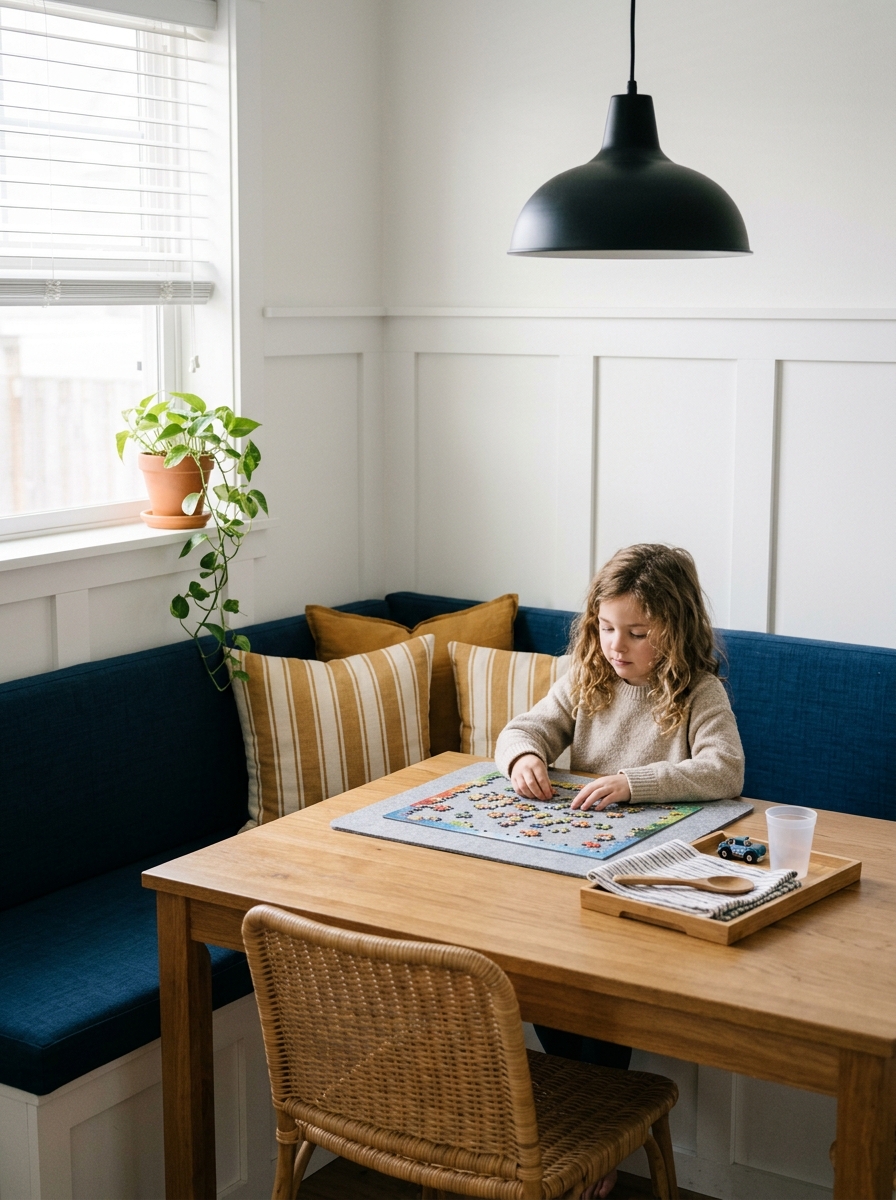
Quiet activities are especially helpful when you need a calmer part of the day. They can work well before bedtime, during a rainy afternoon, or when someone in the family needs a little quiet.
These ideas use small setups that can fit on a coffee table, dining table, or even a floor mat.
1. Create a Puzzle Challenge
What you need:
- An age-appropriate jigsaw puzzle
- A clear tabletop or floor mat
How to do it:
Choose a puzzle that matches your child’s age and current abilities. Younger children may enjoy simple puzzles with large pieces, while older children can work on puzzles with more pieces and detailed pictures.
Instead of putting the entire puzzle in front of your child at once, try making it a small challenge. Ask them to find all the edge pieces first, sort pieces by color, or complete one section at a time.
If several children are playing together, give each child a small section to work on before joining the pieces.
Make it more interesting: Set a timer for a friendly challenge, or let your child choose the picture for the next puzzle session. Keep it relaxed rather than turning every activity into a competition.
Best for: Preschoolers with simple puzzles and school-age children with more complex ones. Younger children need supervision to prevent mouthing or swallowing pieces.
Time: About 10–30 minutes, depending on the puzzle and child’s interest.
2. Play a Round of I Spy
What you need:
- No supplies
How to do it:
Look around the room and choose an object without naming it. Give your child a clue, such as, “I spy something blue,” or “I spy something that has four legs.”
Let them guess until they find the object. Then switch roles and allow your child to choose something for you to identify.
You can make the game easier for younger children by pointing toward the general area or giving a more specific clue. Older children can use clues based on shape, texture, or what an object is used for.
Make it more interesting: Choose a theme for each round, such as things that are soft, objects in the kitchen, or items that begin with a particular letter.
Best for: Preschoolers and school-age children.
Time: About 5–15 minutes.
3. Try a Memory Tray Game
What you need:
- A small tray or plate
- Five to eight familiar household objects
- A tea towel or piece of fabric
How to do it:
Place a few safe, familiar objects on a tray, choosing items that are appropriate for your child’s age. You might use a large wooden spoon, a chunky toy car, a soft toy, or a sturdy plastic cup. A hairbrush can also work for older children if it has no loose or detachable parts.
Give your child a minute to look carefully at everything on the tray. Then cover the objects with the towel and ask them to name as many as they can remember.
For a simpler version, start with just three objects. As your child gets better at the game, add more items or briefly remove one object while they aren’t looking. Ask them to identify what’s missing.
Make it more interesting: Let your child arrange the objects and test your memory instead. Children often enjoy being the one asking the questions.
Best for: Preschoolers and school-age children. Use large, age-appropriate objects for younger children and avoid small items that could be choking hazards.
Time: About 10–15 minutes.
4. Make Shadow Stories
What you need:
- A flashlight or small lamp
- A clear wall
- Your hands or a few familiar objects
How to do it:
Dim the room slightly and shine a flashlight toward a clear wall. Use your hands to create simple shadows, such as a bird, a dog, or a moving character.
Invite your child to make a shadow of their own. Once they get the hang of it, create a short story together. One person can make a character while the other gives it a name, a voice, or a problem to solve.
You don’t need special shadow puppets. Hands and a little imagination are enough.
Make it more interesting: Take turns adding one sentence to the story. For example, one person starts with, “A little bird got lost,” and the next person decides what happens.
Best for: Preschoolers and school-age children, with adult help for younger children.
Time: About 10–20 minutes.
4 Creative Indoor Activities Using Household Materials
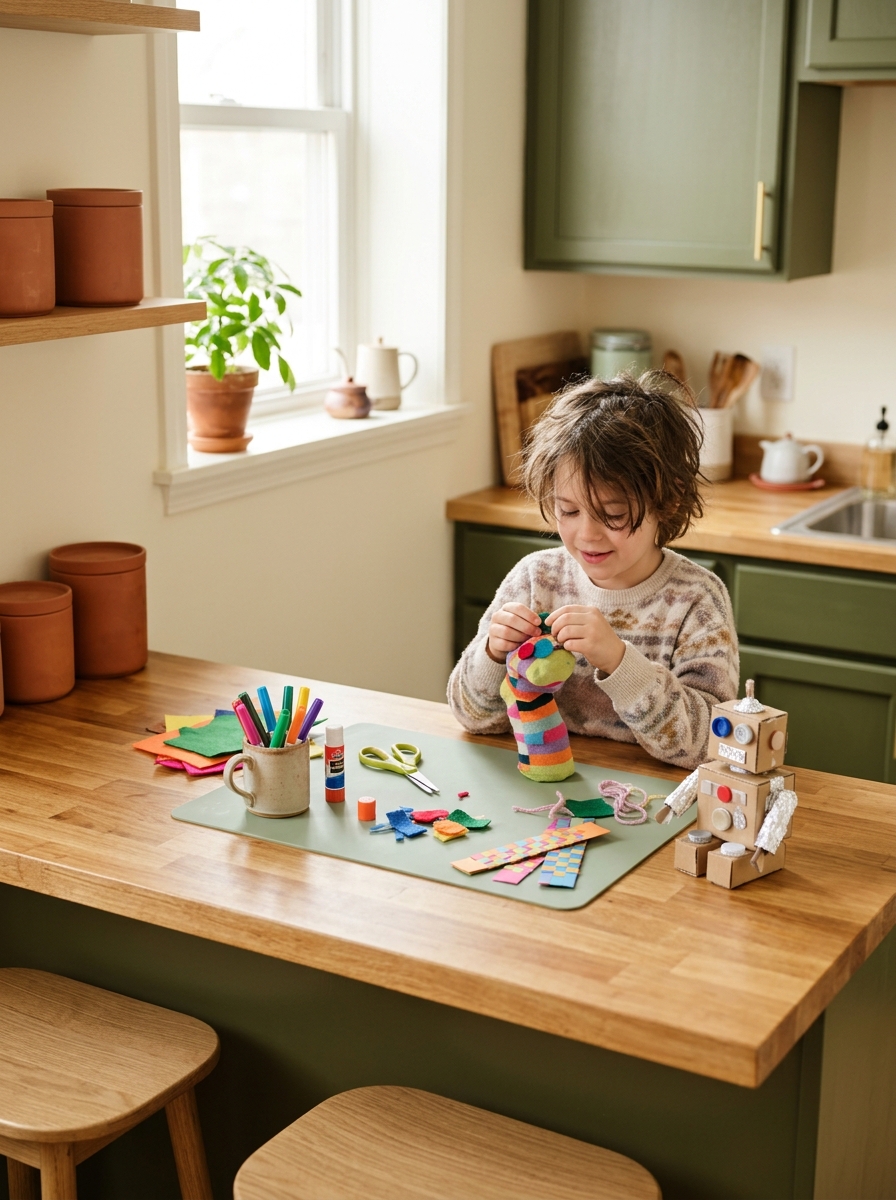
Creative play doesn’t have to mean buying a craft kit or setting up a permanent art station. A few everyday supplies can give children plenty of opportunities to make things, experiment, and use their imagination.
For small homes, the trick is to choose projects that fit on a table and can be cleared away without much effort.
5. Build Something With a Cardboard Box
What you need:
- One clean cardboard box
- Crayons or washable markers
- Paper
- Child-safe tape
How to do it:
Give your child a clean cardboard box and ask what they would like to turn it into. It could become a little house, a pretend car, a shop, a robot, or a small animal.
Let them decorate the box with paper and washable markers. You can help cut openings or shape larger sections, but allow your child to decide what the finished creation should look like.
A small delivery box or cereal box can be enough for a tabletop project. You don’t need a huge appliance box taking up the living room.
Make it more interesting: Ask your child to invent a name for their creation and explain what it does. If they make a shop or vehicle, they can use it later in pretend play.
Best for: Preschoolers and school-age children. Adults should handle cutting and remove staples, sharp edges, and loose packaging pieces.
Time: About 20–40 minutes.
6. Make Sock Puppets
What you need:
- Clean, old socks
- Washable markers
- Paper
- Child-safe glue
- A few pieces of fabric or yarn, if available
How to do it:
Find a few clean socks that are no longer being used. Slip one over your hand and show your child how moving your fingers can make the puppet talk.
Draw a simple face on the sock or attach paper features with child-safe glue. You can make a silly character, a friendly animal, or a puppet with a funny personality.
Once the puppets are ready, encourage your child to make up a short conversation between the characters.
Make it more interesting: Create a mini puppet show using the back of a sofa or a cushion as a simple stage. Keep the performance short so it doesn’t require a large setup.
Best for: Preschoolers and school-age children, with help for younger children when using craft materials.
Time: About 15–30 minutes.
7. Try a Drawing Prompt Challenge
What you need:
- Paper
- Crayons, colored pencils, or washable markers
- A small container or bowl
How to do it:
Write a few simple drawing prompts on small pieces of paper and place them in a bowl. Prompts could include:
- Draw a house on the moon.
- Invent a new animal.
- Design a dream bedroom.
- Draw a meal for a friendly monster.
- Imagine what a city would look like underwater.
Let your child pick a prompt and draw whatever comes to mind. The goal isn’t to produce a perfect picture. It’s to encourage imagination and give them an idea to start with.
Younger children can draw freely from a simple suggestion, while older children can add details or create a short story about their picture.
Make it more interesting: Join in and draw your own version of the same prompt. Comparing the different ideas can be more entertaining than judging whose drawing looks better.
Best for: Preschoolers and school-age children.
Time: About 15–25 minutes.
8. Make Simple Paper Weaving
What you need:
- Two sheets of colored paper
- Child-safe scissors
- Glue stick
How to do it:
Take one sheet of paper and fold it in half. An adult can cut several straight slits from the folded edge toward the open edge, stopping before cutting all the way through.
Open the paper. Cut the second sheet into long strips. Show your child how to weave each strip over and under the slits until the paper is filled with a simple pattern.
You can use two contrasting colors or let your child choose their own combination.
Make it more interesting: Turn the finished weaving into a greeting card, a small decoration, or a colorful piece of artwork for the refrigerator.
Best for: School-age children who can manage the weaving steps. Adults should prepare the base for younger children and supervise all scissor use.
Time: About 15–30 minutes.
4 Indoor Movement Activities That Don’t Need Much Room
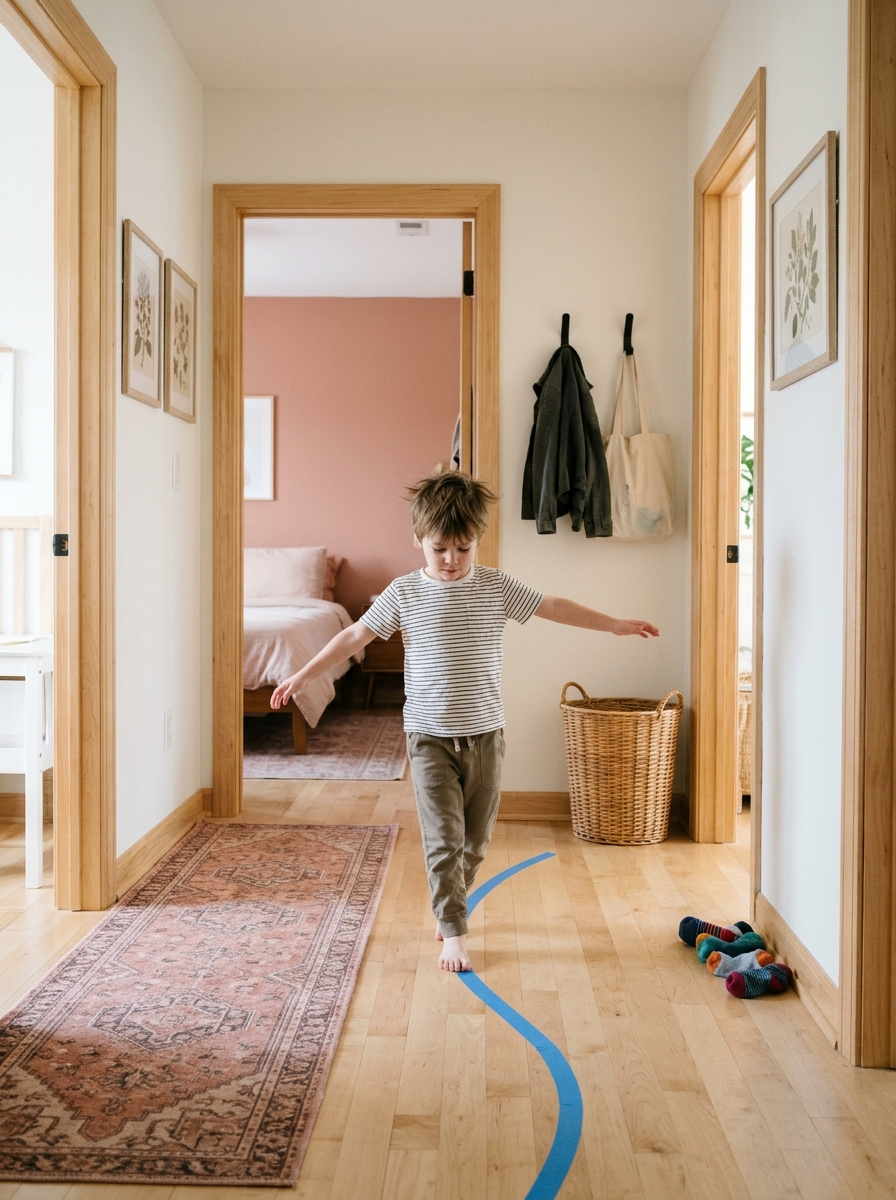
Children sometimes need to move around, even when the weather or limited space keeps everyone indoors. These indoor activities for kids in small spaces provide simple ways to move without needing a large play area.
Before starting, move fragile objects out of the way, check the floor for slipping hazards, and choose movements that suit your room and your child’s abilities.
9. Create a Painter’s Tape Balance Path
What you need:
- Painter’s tape
- A clear section of floor
How to do it:
Use painter’s tape to make a straight line on the floor. Ask your child to walk along it slowly, placing one foot in front of the other.
Once they get comfortable, add a gentle curve or a few short lines that lead in different directions. You can ask them to walk forward, sideways, or backward, depending on their age and balance.
Keep the path simple and short. You only need enough room for a few steps.
Make it more interesting: Pretend the tape is a bridge over a river or a path through a jungle. Ask your child to cross without stepping outside the line.
Best for: Preschoolers and school-age children, with close supervision for younger children.
Time: About 5–15 minutes.
10. Play Freeze Dance
What you need:
- Music
- A small, clear area of floor
How to do it:
Play a favorite upbeat song and invite your child to dance. Pause the music at random moments. Everyone has to freeze in whatever position they are in until the music starts again.
You can make the game easier for younger children by giving them a little warning before stopping the music. Older children may enjoy trying funny poses or balancing on one foot when the music stops.
Make it more interesting: Give each round a movement theme. One round could be dancing like a robot, another like a butterfly, and another like a sleepy bear.
Best for: Preschoolers and school-age children, with an adult nearby to keep the movement area safe.
Time: About 5–15 minutes.
11. Try an Animal Movement Challenge
What you need:
- A small, clear area of floor
- A list of familiar animals, or just your imagination
How to do it:
Call out an animal and ask your child to move like it. They could waddle like a penguin, stretch like a cat, flap their arms like a bird, or take slow steps like an elephant.
You can demonstrate each movement first and let your child guess the animal before trying it themselves.
Keep movements gentle and suitable for the space. There is no need for running, jumping over furniture, or climbing.
Make it more interesting: Let your child choose the next animal and see if you can guess which one they are pretending to be.
Best for: Preschoolers and school-age children.
Time: About 5–15 minutes.
12. Play Sock Basketball
What you need:
- A few pairs of clean socks
- A laundry basket or large empty container
How to do it:
Roll the socks into soft balls and place a laundry basket a short distance away. Let your child take turns tossing the socks into the basket.
Start close to the basket and move it slightly farther away if your child wants a bigger challenge. You can also give each player a few turns and count how many socks land inside.
Use soft, lightweight socks rather than hard balls, and keep the basket on the floor.
Make it more interesting: Give each player a different starting line or try a gentle underhand toss. For younger children, move the basket closer so they can enjoy the game without frustration.
Best for: Preschoolers and school-age children, with supervision.
Time: About 10–15 minutes.
3 Indoor Activities Kids Can Enjoy More Independently
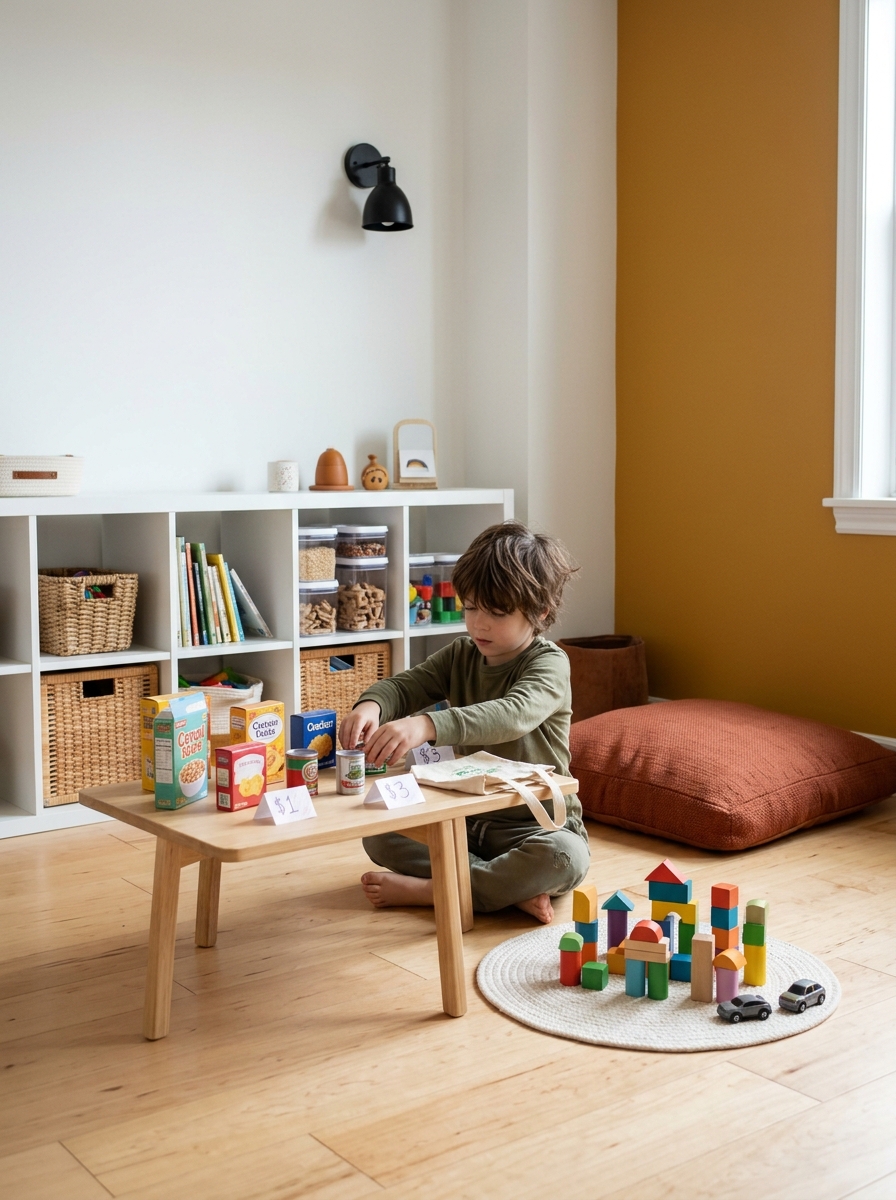
Some indoor activities for kids in small spaces can give children an opportunity to play on their own for a little while. These are not a substitute for supervision, particularly with younger children, but they can encourage imagination, decision-making, and independent play.
Choose materials that are safe for your child’s age and keep the setup within an area you can easily check.
13. Set Up a Pretend Grocery Store
What you need:
- A few clean food containers
- A small basket or reusable shopping bag
- A table or low shelf
- Paper and crayons for making price labels
How to do it:
Use a small table or a corner of the kitchen to create a pretend grocery store. Arrange a few clean, empty food containers as products and let your child decide where everything should go.
They can make simple price labels, pretend to be the shopkeeper, or take a shopping basket and choose what to buy.
If your child is old enough, introduce simple pretend money or let them practice counting a few items.
Make it more interesting: Switch roles. One person can be the customer while the other works at the store. Ask questions such as, “How much are the apples?” or “Can I buy two things?”
Best for: Preschoolers and school-age children. Keep packaging clean, remove sharp edges, and avoid containers with small detachable parts for younger children.
Time: About 15–30 minutes.
14. Create a Sorting and Matching Challenge
What you need:
- A few safe household objects
- Two or three small containers or bowls
How to do it:
Gather a small collection of objects that are safe for your child to handle. For younger children, you might use large blocks, chunky toy pieces, or pairs of socks. Older children can sort larger household items such as plastic cups, books, or toy vehicles.
Ask your child to group the objects by one feature at a time. They could sort by color, shape, size, or type.
Once they finish, change the rule. For example, ask them to sort the same objects from smallest to largest or group items that belong together.
Make it more interesting: Give older children a sorting rule to figure out without telling them what it is. They can examine the groups and guess why the objects were arranged that way.
Best for: Preschoolers and school-age children, using materials appropriate to their age. Avoid small objects for children who still put things in their mouths.
Time: About 10–20 minutes.
15. Build a Mini City With Blocks
What you need:
- Building blocks or large construction pieces
- A small floor mat or clear tabletop
How to do it:
Invite your child to build a tiny city using blocks. They can create houses, roads, shops, a school, or a park.
You don’t need a large collection of building pieces. A few blocks arranged on a small mat can be enough to start.
Once the city is ready, let your child decide what happens there. They might move toy cars along the roads, make up stories about the people who live in the houses, or add new buildings as the story develops.
Make it more interesting: Give your child a simple challenge, such as building a bridge, making a house with three floors, or creating a park where everyone can play.
Best for: Preschoolers and school-age children. Use large blocks for younger children and keep small construction pieces away from children who may swallow them.
Time: About 15–30 minutes.
How to Make Indoor Play Easier in a Small Home
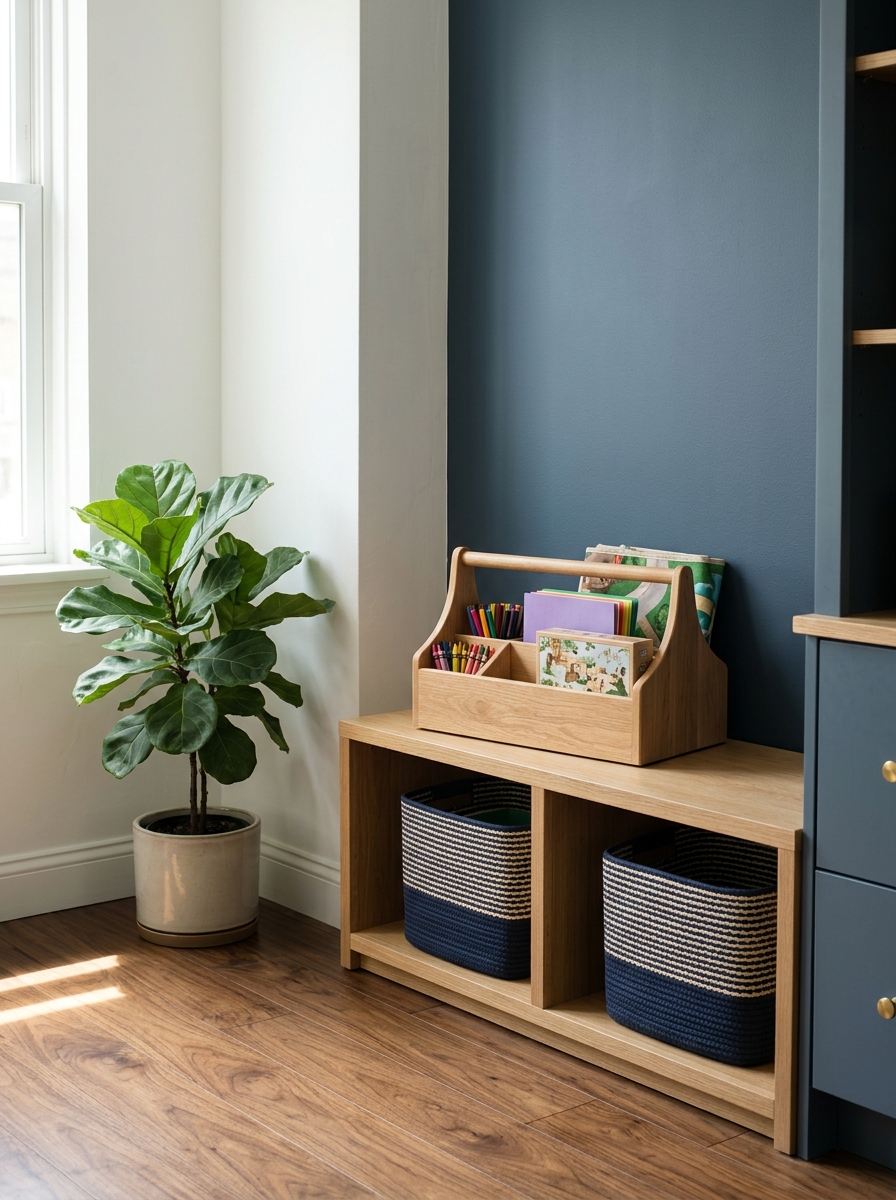
Having plenty of activity ideas is helpful, but the way you organize play matters too. In a small home, a little preparation can make it easier to switch between activities without leaving toys and supplies scattered everywhere.
Here are a few simple ways to make indoor play more manageable.
Use One Small Play Area
You don’t need to dedicate an entire room to children’s activities. Choose one flexible area, such as a corner of the living room, part of the dining table, or a small floor mat.
Use that space for the activity and clear it when playtime is finished. This helps children understand where they can play without turning every room into a playroom.
Keep Activity Supplies Together
Store crayons, paper, puzzles, and other frequently used supplies in one accessible container or drawer.
You can also prepare a small activity basket with a few items for rainy days or quiet afternoons. When everything has a place, setting up and cleaning up becomes much easier.
Rotate Activities Instead of Bringing Everything Out
Children don’t need access to every toy and craft supply at once. Keep a few choices available and put the rest away.
When an activity starts to lose its appeal, swap it for something different. Rotating supplies can make familiar materials feel interesting again without buying more things.
Make Cleanup Part of the Activity
Before starting, show your child where the supplies will go when they’re finished. Younger children can help put large items into a basket, while older children can sort materials and return them to their storage spots.
A short cleanup routine also makes it easier to move from a craft to dinner or from a game to bedtime.
If toys and play materials are taking over your shared space, these toy storage ideas for a small living room can help you create a more manageable setup without needing a separate playroom.
Let Children Choose Between Two Activities
Instead of presenting a long list of options, offer two choices that fit the time and space available.
For example, you could ask, “Would you rather make sock puppets or play a memory game?” Giving children a choice helps them feel involved while keeping the setup manageable for you.
Tips for Keeping Indoor Activities Safe and Manageable
A small space can work well for indoor play, but it’s important to match each activity to your child’s age, abilities, and the room you’re using.
Keep these practical safety points in mind:
- Check the play area first. Move fragile objects, sharp items, hot drinks, and anything that could be knocked over. Make sure children have enough room to move without bumping into furniture.
- Choose age-appropriate materials. Follow age guidance on toys and craft supplies. The U.S. Consumer Product Safety Commission’s toy safety guidance advises keeping small balls and toys with small parts away from children under 3.
- Supervise activities involving small objects. Buttons, beads, tiny building pieces, and other small materials can be choking hazards for young children. Don’t assume an activity is safe just because it uses ordinary household items.
- Handle scissors and cutting tools carefully. An adult should prepare materials that require sharp scissors or cutting. Use child-safe supplies where appropriate and supervise children while they work.
- Keep movement gentle. Make sure the floor is clear and avoid activities that encourage jumping from furniture, climbing shelves, or running through narrow spaces.
- Stay close to younger children. Activities described as independent play still need supervision when children are too young to recognize hazards or follow safety instructions.
- Put materials away after play. Clear away small pieces, packaging, tape, and craft supplies before another child has access to them.
The American Academy of Pediatrics also recommends creating safe spaces where toddlers can explore while caregivers supervise. Its guide to how toddlers learn through play offers more ideas for supporting young children’s play at home.
FAQs About Indoor Activities for Kids in Small Spaces
What are some easy indoor activities for kids in small spaces?
Some easy options include puzzles, I Spy, memory tray games, drawing challenges, sock puppets, freeze dance, and pretend grocery stores. These activities use simple household materials and can fit on a tabletop or in a small section of floor.
How do I keep kids entertained indoors without a playroom?
You don’t need a dedicated playroom. Choose a flexible area in your home, keep a small collection of activity supplies together, and rotate activities rather than bringing everything out at once. Quiet games, simple crafts, and gentle movement activities can all work in shared family spaces.
What can I do with kids indoors when I don’t have many supplies?
Start with things you already own. Paper, crayons, socks, cardboard boxes, clean food containers, laundry baskets, and building blocks can be used for several different activities. Games such as I Spy and freeze dance don’t require any supplies at all.
What indoor activities are good for toddlers in small spaces?
Simple activities such as supervised block play, looking at picture books, sorting large objects, pretend play, and gentle movement games can suit toddlers. Choose materials that are too large to swallow, avoid small detachable parts, and stay close while your child plays.
How can I keep indoor activities from making a mess?
Choose activities with a clear beginning and end, use one small container for supplies, and set up on a washable surface or floor mat when possible. Keep the number of materials limited and make cleanup part of the routine before moving on to something else.
Final Thoughts
You don’t need a large home, a dedicated playroom, or a cupboard full of craft supplies to make indoor play enjoyable. A few everyday items and a little imagination can create plenty of opportunities for children to explore, move, make things, and have fun.
The best indoor activities for kids in small spaces are the ones that fit your family’s routine, suit your child’s age, and don’t make your home harder to manage afterward.
Try one idea at a time, see what your child enjoys, and keep the activities that work for your space. Sometimes a simple game with a laundry basket, a few socks, or a cardboard box is all it takes to turn an ordinary afternoon into something memorable.