How to Prepare Thanksgiving Dinner in a Small Kitchen With Limited Counter Space
If you’re preparing Thanksgiving dinner in a small kitchen, you probably know how quickly the space can get away from you. The turkey is in the oven, potatoes need peeling, vegetables are waiting to be chopped, and the counter you planned to use is already covered with bowls and ingredients. Before long, you’re moving things from one place to another just to make room to work.
You don’t need a bigger kitchen to make Thanksgiving dinner manageable. You need a plan that gives each task enough room, prevents dishes from competing for the same appliances, and keeps your workspace usable throughout the day. If you’re still preparing the rest of your home for the holiday season, these ideas can also help you get your small home ready for the holidays without feeling overwhelmed.
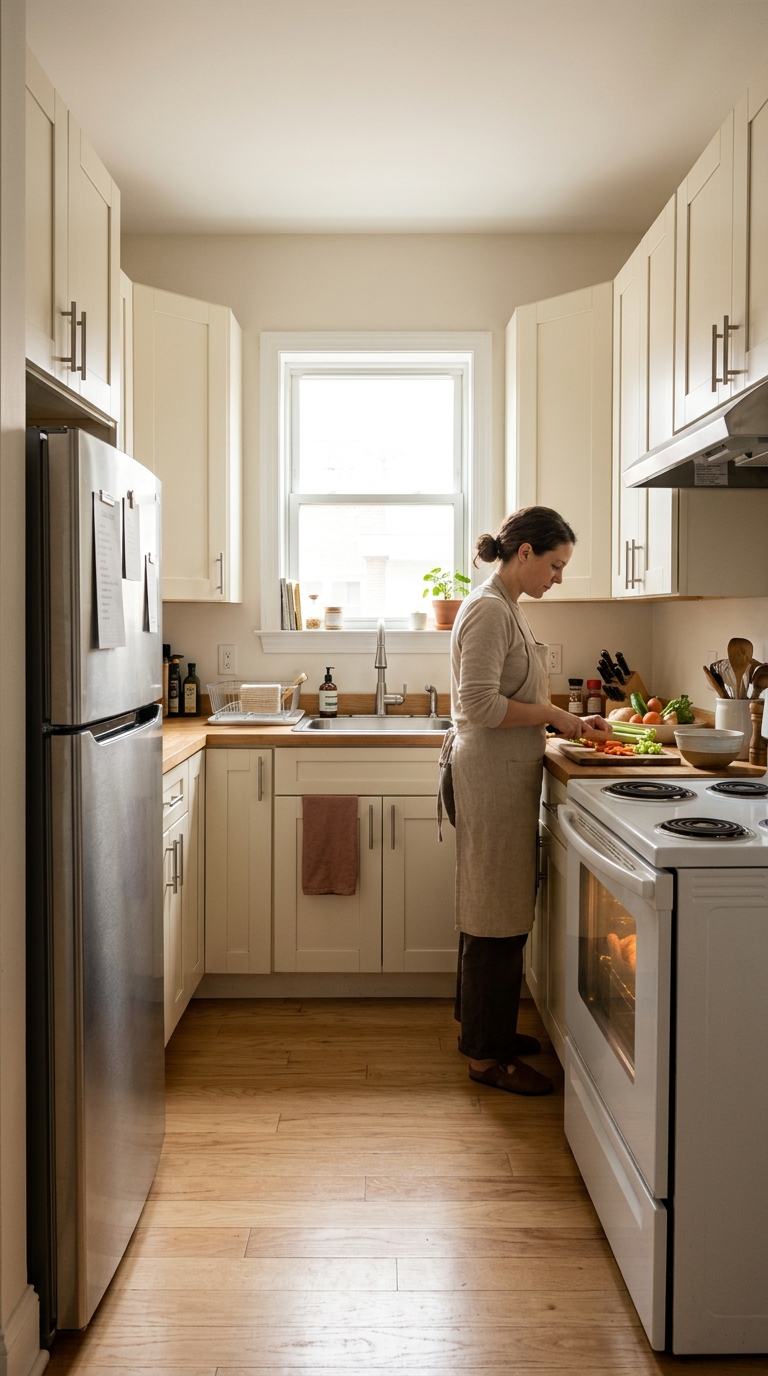
Here’s how to make your small kitchen work for you, even if you have one oven, limited storage, and barely enough counter space for a cutting board.
1. Clear the Counter Before You Bring Out the Food
Before you start peeling potatoes or opening ingredient packages, take a few minutes to reclaim the space you already have.
Look at what is sitting on your counter. The toaster, coffee maker, fruit bowl, mail, and everyday cooking supplies might not seem like much individually, but together they can take up most of your working area.
Put away what you won’t need for Thanksgiving. Move small appliances into cabinets if you have room, relocate unrelated household items, and wash any dishes that are already sitting around.
You don’t have to empty your entire kitchen. The goal is to create one clear, clean area where you can chop, mix, and assemble ingredients comfortably.
Keep your cutting board, knife, and a mixing bowl within reach, but leave other utensils and ingredients stored until you need them. Bringing everything out at once makes even a reasonable counter feel tiny.
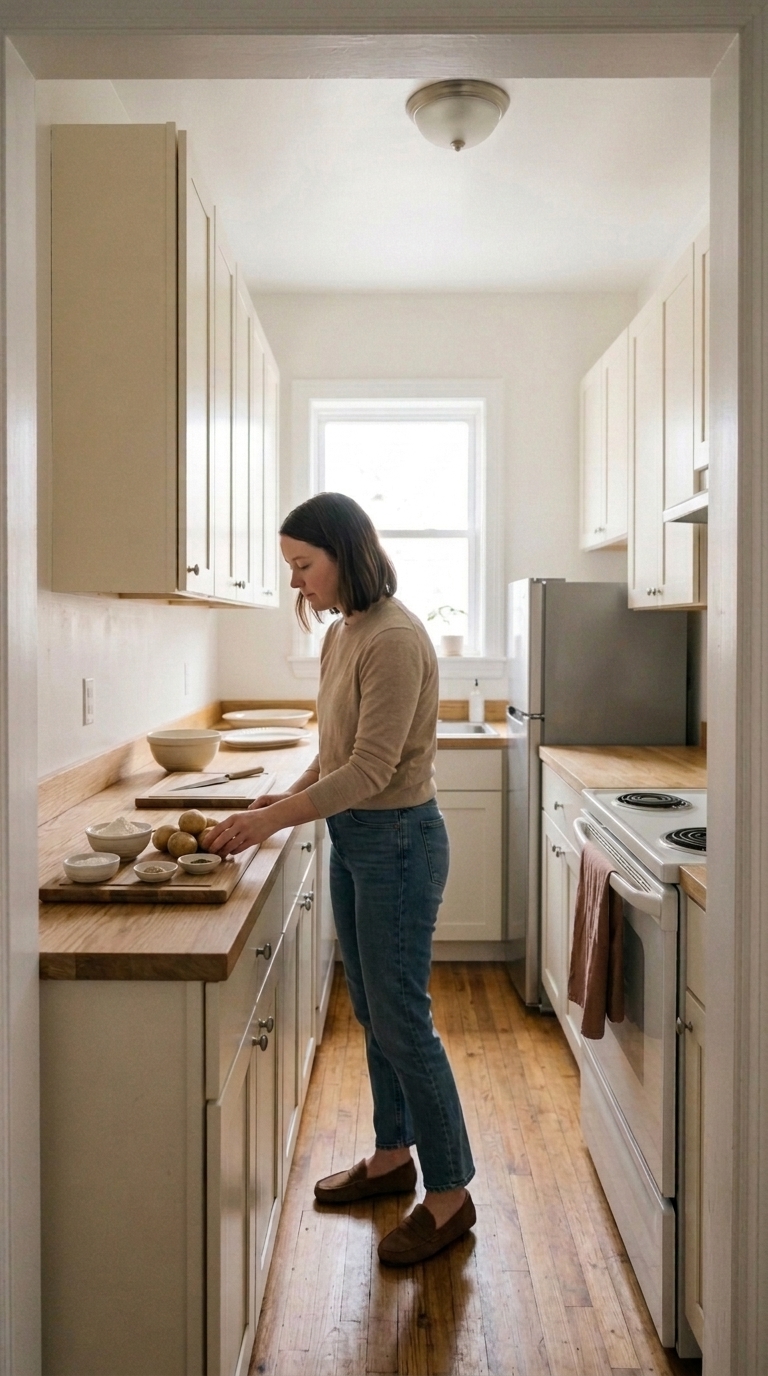
Work on one task at a time. When you finish preparing the vegetables, put away what you no longer need before moving on to the next dish.
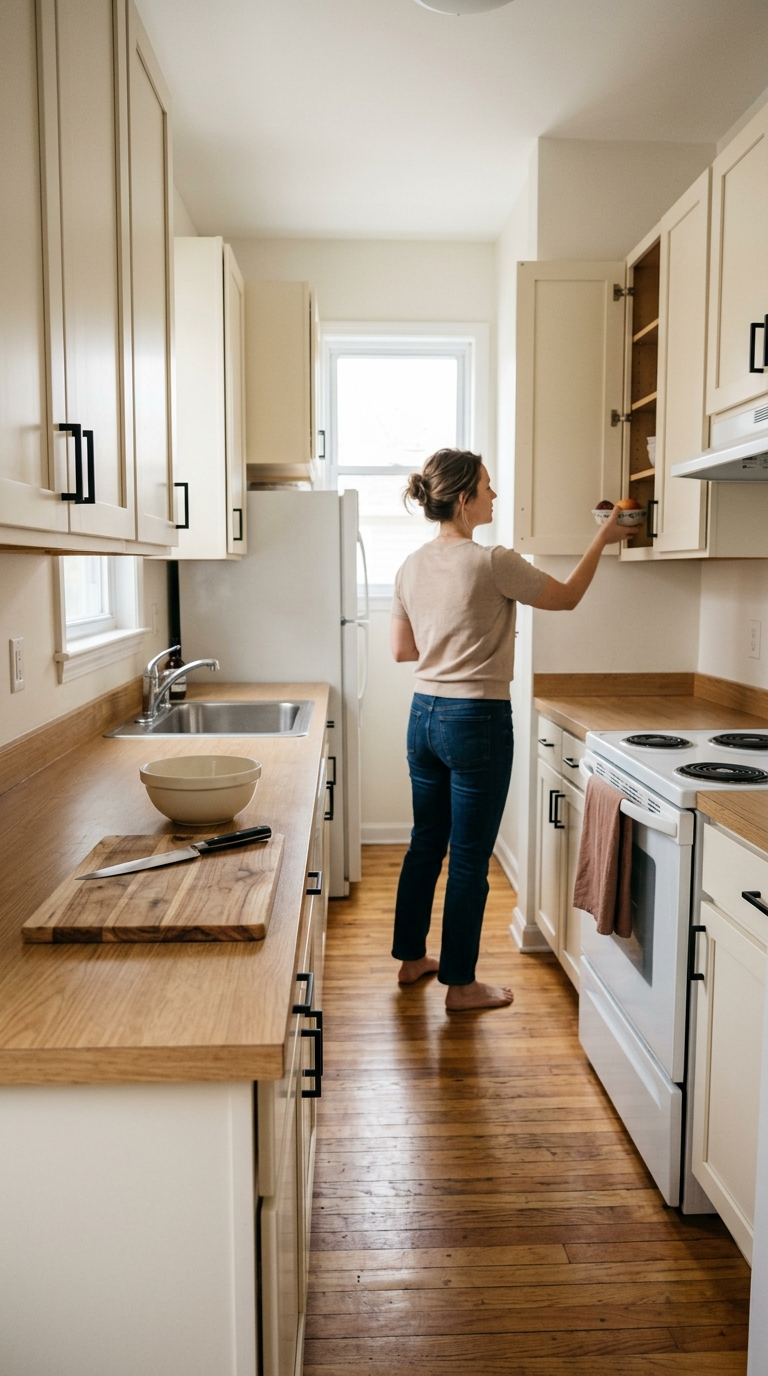
If your kitchen tends to feel crowded even during everyday cooking, our small rental kitchen organization ideas offer more ways to make limited space work harder.
2. Give Yourself a Second Work Surface
Sometimes, clearing the counter still isn’t enough. If you have a small kitchen, another work surface can make a noticeable difference without requiring a permanent renovation.
A sturdy kitchen cart, cleared dining table, or small folding table can take pressure off your main counter. The trick is deciding what belongs where before cooking gets busy.
For example, reserve your main counter for chopping and mixing. Use a separate surface for clean serving bowls, plates, and utensils. A cart can hold shelf-stable ingredients and supplies you’ll need later.
That way, you’re not trying to chop onions beside a stack of serving plates while searching for somewhere to put the gravy boat.
Be thoughtful about food safety. Clean the table appropriately before using it, and use a food-safe surface if you’ll be preparing food directly on it. Keep raw turkey and its juices away from ready-to-eat ingredients, and never place contaminated utensils or cutting boards on a clean serving area.
Make sure any extra table or cart is stable and doesn’t block a doorway or walkway. More workspace should make cooking easier, not create another obstacle.
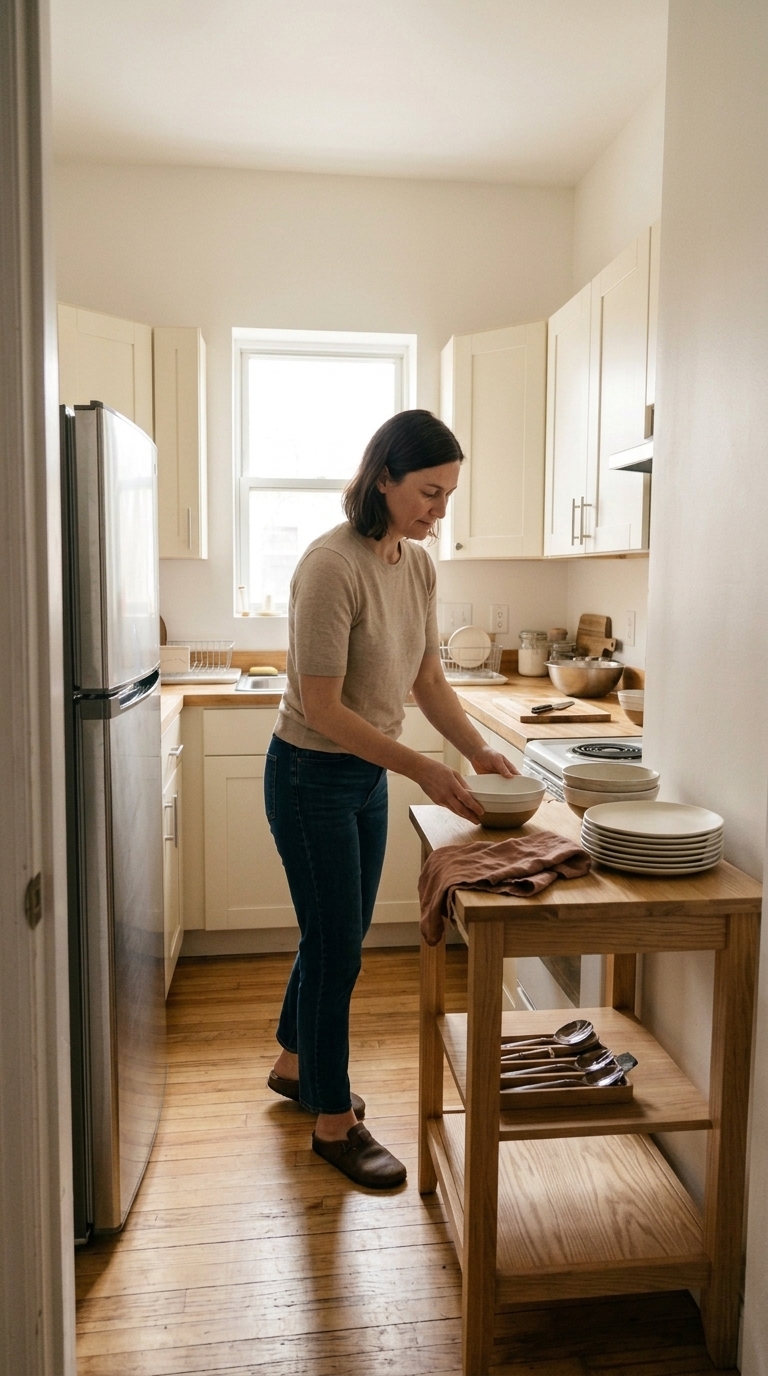
If you need a more permanent solution for everyday cooking, our guide to adding counter space to a small kitchen with an IKEA KALLAX explores one possible option. For Thanksgiving, though, a temporary surface may be all you need.
3. Get Your Ingredients and Serving Dishes Ready Before Cooking
Once your workspace is ready, resist the temptation to start cooking immediately. A little preparation can save you from searching through cabinets while a pot is boiling on the stove.
Read through your recipes and gather the tools and ingredients for each dish. If you’re making mashed potatoes, for instance, check that you have the potatoes, peeler, pot, masher, and other ingredients ready.
You don’t have to leave everything on the counter. Keep refrigerated ingredients chilled until needed, and group suitable shelf-stable ingredients together in a small tray or basket.
Do the same with your serving dishes. Decide which bowl will hold the vegetables, which platter you’ll use for the turkey, and where the gravy and other sides will go. If you’re short on serving dishes, some foods may be served in their cooking vessels, provided those vessels are suitable for serving.
This simple step prevents the last-minute scramble when dinner is almost ready and you’re opening every cabinet looking for a serving spoon.
Check your refrigerator, too. Make room for ingredients that need chilling and for leftovers later. Avoid packing it so tightly that cold air cannot circulate.
With your ingredients and serving supplies organized, you can focus on the next challenge: getting everything cooked without competing for the same appliances.
4. Plan Around Your Oven and Stovetop
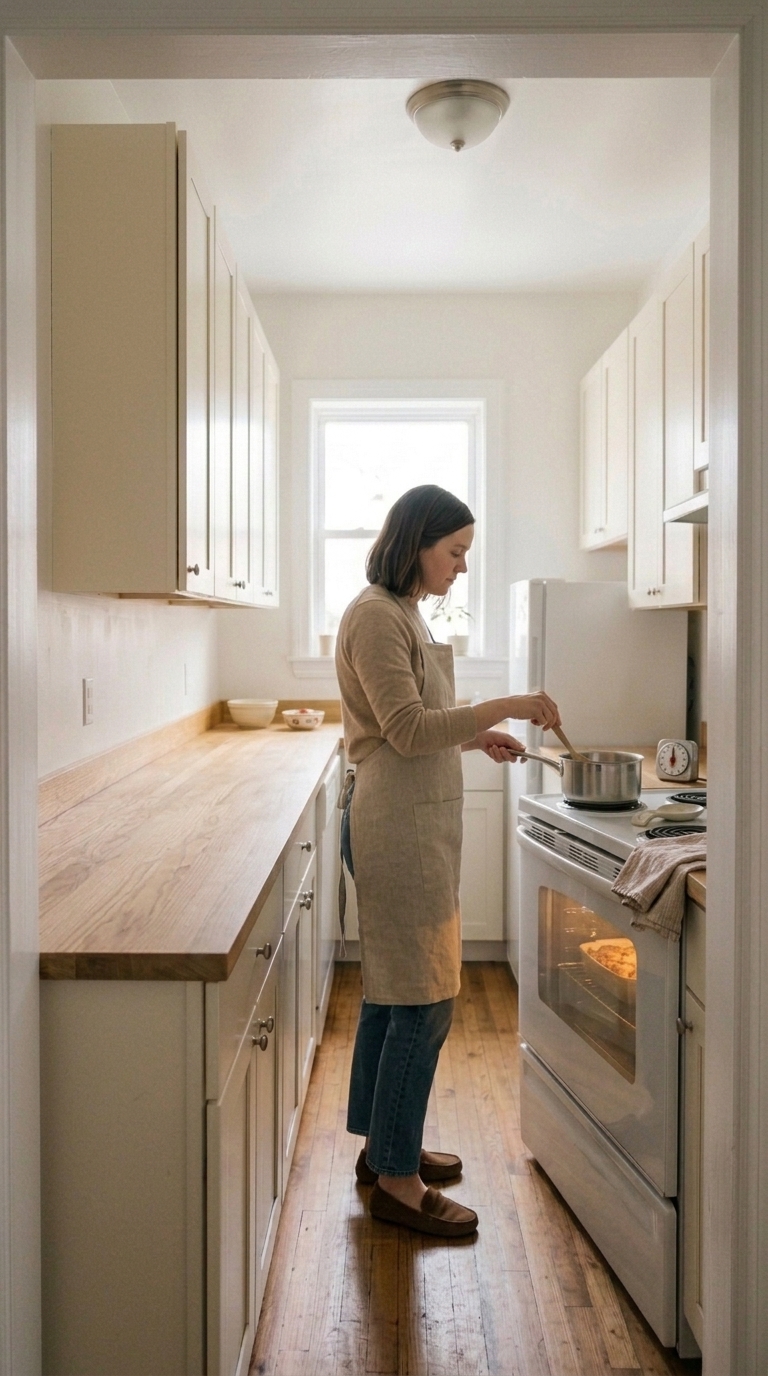
When planning Thanksgiving dinner in a small kitchen, limited oven space can be just as challenging as limited counter space. The turkey may need the oven for hours, while casseroles, sweet potatoes, and rolls all seem to need it at the same time.
Instead of figuring it out as you go, write down what needs to cook, how long it takes, and which appliance it requires.
Here’s a simple example:
| Dish or Task | Possible Plan |
|---|---|
| Cranberry sauce | Prepare ahead and refrigerate |
| Vegetable preparation | Chop ahead and store safely |
| Casserole | Assemble ahead if the recipe allows |
| Turkey | Schedule around its cooking time |
| Mashed potatoes | Cook on the stovetop closer to serving |
| Gravy | Prepare near serving time |
| Rolls | Heat when the oven becomes available |
Your schedule will depend on your recipes, oven temperature, and menu. The point is to spot conflicts before they happen.
Choose a few dishes you can prepare ahead. Sauces, desserts, and some side dishes may be suitable, depending on the recipe. You can also measure ingredients and organize serving supplies the day before.
If you have one small oven, consider whether every side dish really needs to be baked. A stovetop vegetable dish or another simple alternative may save you from juggling several casseroles.
Remember the turkey’s resting time, too. Once it has finished cooking, that period may give you a chance to finish or reheat other dishes. Use a food thermometer rather than relying on a guessed cooking time, and leave some flexibility in your schedule.
Thanksgiving dinner doesn’t have to be ready down to the minute. A little breathing room is better than a schedule so tight that one delayed dish throws off the entire meal.
5. Keep Dirty Dishes From Taking Over
You clear the counter, prepare the ingredients, and start cooking. Then the mixing bowls pile up, the sink fills with utensils, and somehow you’re back where you started.
The easiest way to prevent that is to clean in short bursts while food is cooking.
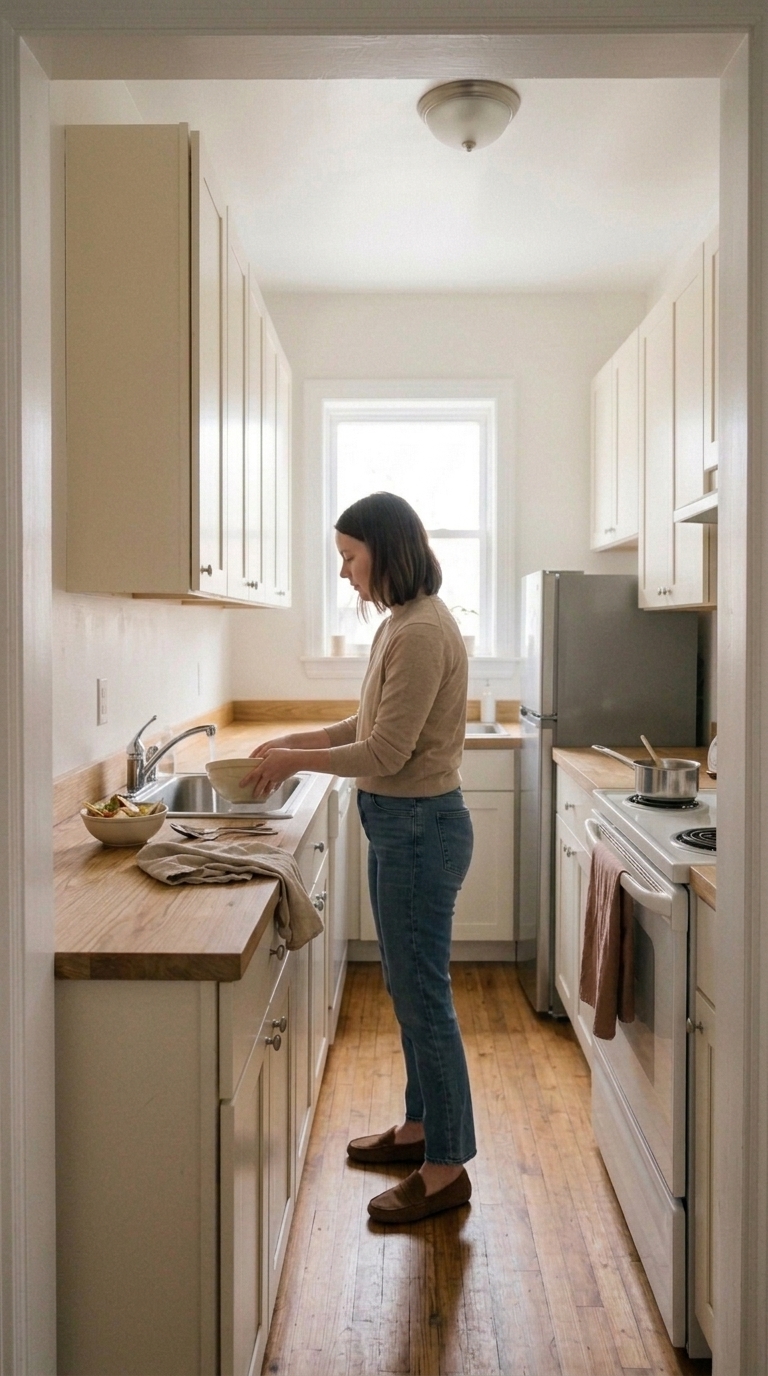
If something is simmering or baking, use a few minutes to wash utensils you’ve finished with, wipe down the appropriate work surface, and put ingredients away. Keep vegetable scraps in a small bowl while chopping so you don’t have to make repeated trips to the trash.
You don’t need to wash every dish immediately. Focus on what you’ll need again and what is taking up valuable space. Washing your cutting board and knife after preparing vegetables, for example, gives you a clean place to work on the next task.
If you have a dishwasher, load suitable items as you go. If you wash by hand, leave enough room to do it comfortably.
The goal isn’t to keep the kitchen spotless all day. It’s to stop dirty dishes from taking over the surfaces you still need.
6. Set Up a Serving Area Outside the Kitchen
As dinner gets closer, the cooking itself may not be the only thing making your kitchen feel crowded. Guests come in looking for drinks, someone asks where the plates are, and another person wants to help just as you’re trying to finish the gravy.
If possible, create a simple serving area away from your main cooking space.
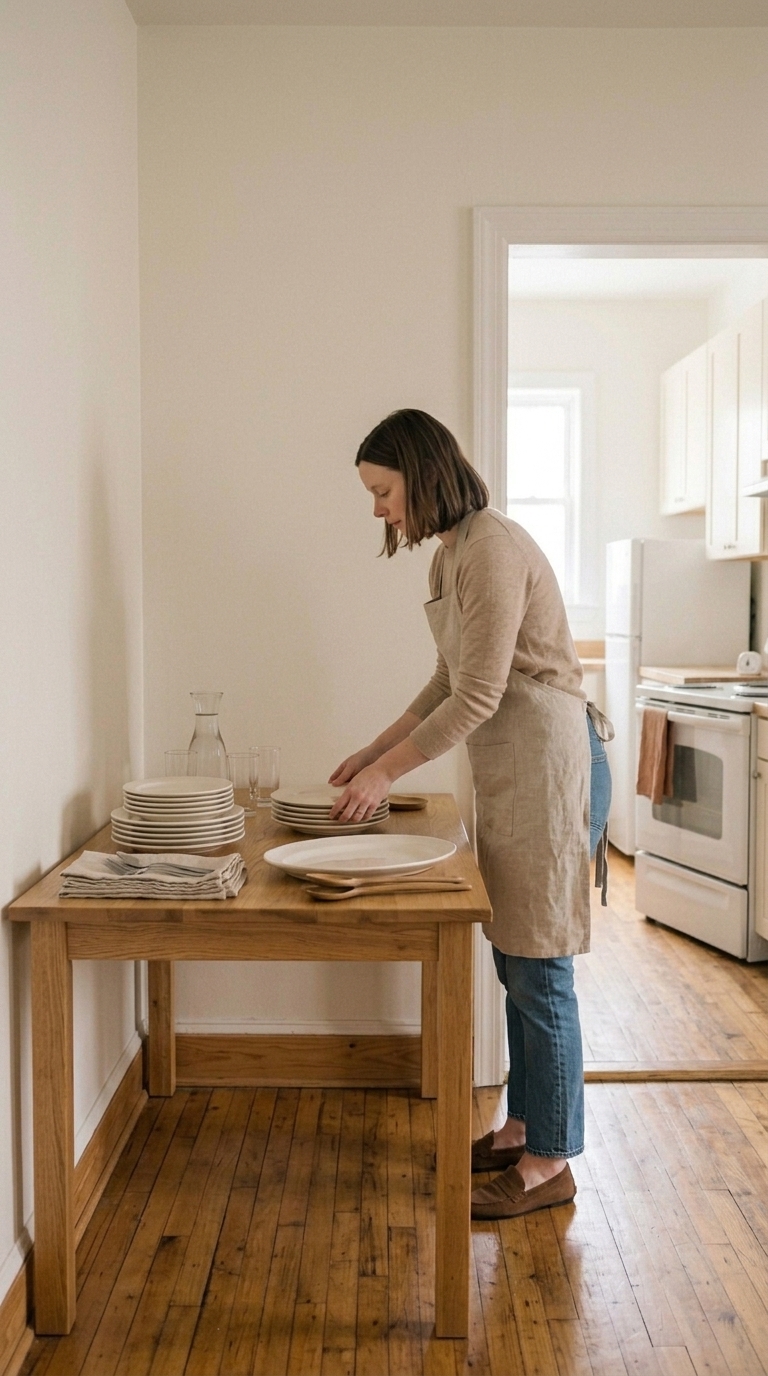
A cleared dining table or sideboard can hold plates, napkins, cutlery, and serving dishes. You can also set up a small drinks area so guests don’t need to keep entering the kitchen for water or other beverages.
If you’re also working out where everyone will sit and how to serve the meal in a compact home, our guide to hosting Thanksgiving in a small home without feeling cramped covers the wider hosting setup.
For a buffet, arrange the plates first, followed by the food and serving utensils. Keep the route clear so people can help themselves without standing in front of the stove or blocking the sink.
No extra table? Use one end of your existing dining table for serving and keep your main preparation area clear until the food is ready.
Place hot dishes on stable, heat-safe surfaces, away from table edges and places where children or pets might reach them.
You don’t need a fancy buffet setup. You simply need a place for the meal to land that doesn’t interfere with the person still cooking.
7. Keep Food Safe While the Kitchen Is Busy
When several dishes are being prepared in a small space, clean serving supplies and ready-to-eat foods can end up too close to raw ingredients. This is one area where it’s worth slowing down, even when you’re in a hurry.
Follow the USDA’s Thanksgiving food safety guidance, and keep these essentials in mind:
- Keep raw turkey separate. Use separate plates, utensils, and cutting boards for raw poultry and ready-to-eat food.
- Clean between tasks. Wash your hands and properly clean utensils and surfaces that have touched raw poultry.
- Check the turkey’s temperature. Use a food thermometer to confirm it reaches 165°F in the appropriate places, including the thickest part of the breast and the innermost parts of the thigh and wing.
- Hold food at safe temperatures. Keep hot food at 140°F or above and cold perishable food at 40°F or below.
- Refrigerate leftovers promptly. Perishable food should not sit at room temperature for more than two hours, or one hour when the temperature is above 90°F.
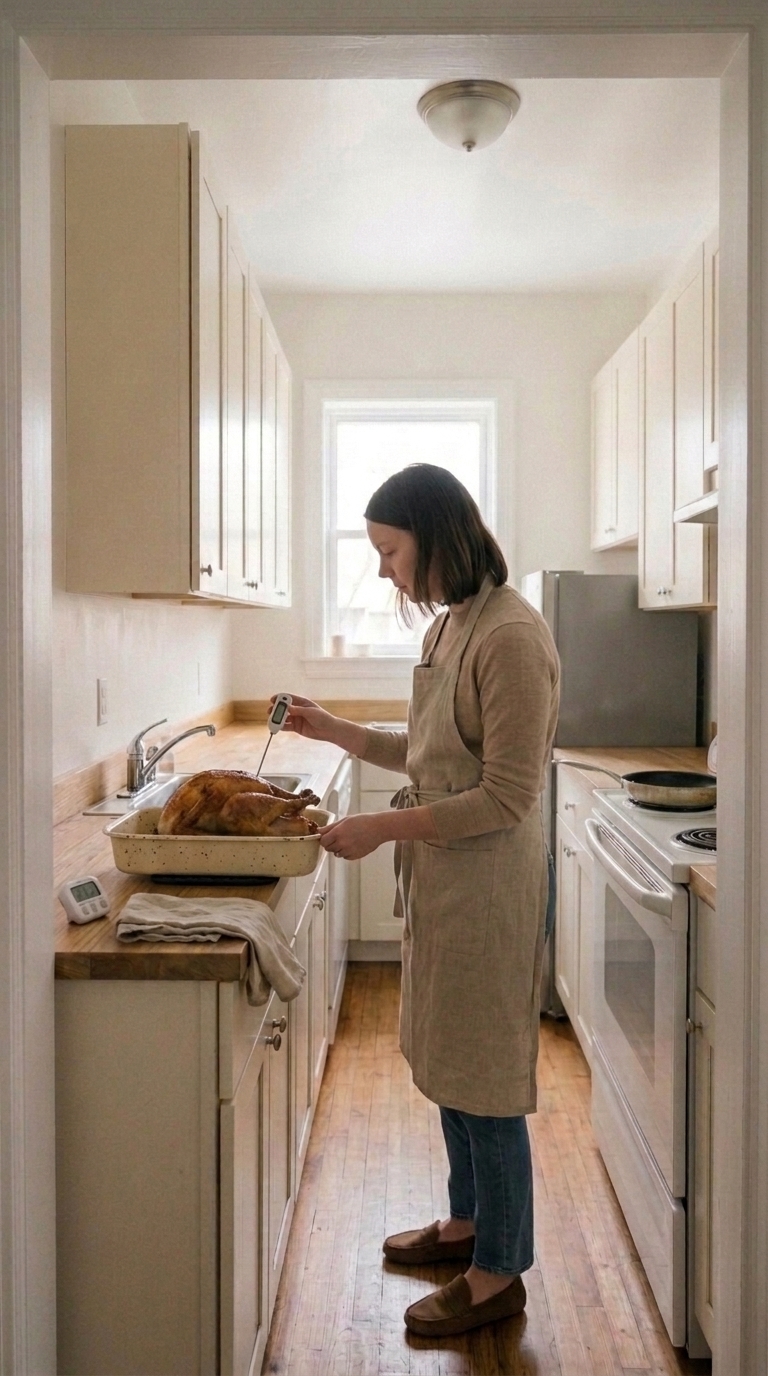
If your counter is too crowded to handle raw poultry safely, stop and clear enough space before continuing. Saving a minute isn’t worth risking cross-contamination.
8. Make Room for Leftovers Before Dinner
You’ve planned the cooking, cleared the counter, and got dinner on the table. Then you realize the refrigerator is full and there’s nowhere to put the leftovers.
It’s an easy problem to overlook, so prepare for it before Thanksgiving begins.
Check your refrigerator a day or two ahead. Remove expired food, organize what you’ll need, and make space for leftovers. If suitable drinks can be stored elsewhere safely, moving them may free up valuable room.
Gather a few clean, shallow food-storage containers, too. You don’t need a matching set; suitable containers you already own will do.
After dinner, carve the turkey and divide the meat and other leftovers into smaller portions. Store the turkey separately in shallow containers so it cools more quickly, and refrigerate perishable food promptly. The USDA advises refrigerating perishable leftovers within two hours and generally using refrigerated cooked leftovers within three to four days. Follow its leftovers and food safety guidance for storage and reheating.
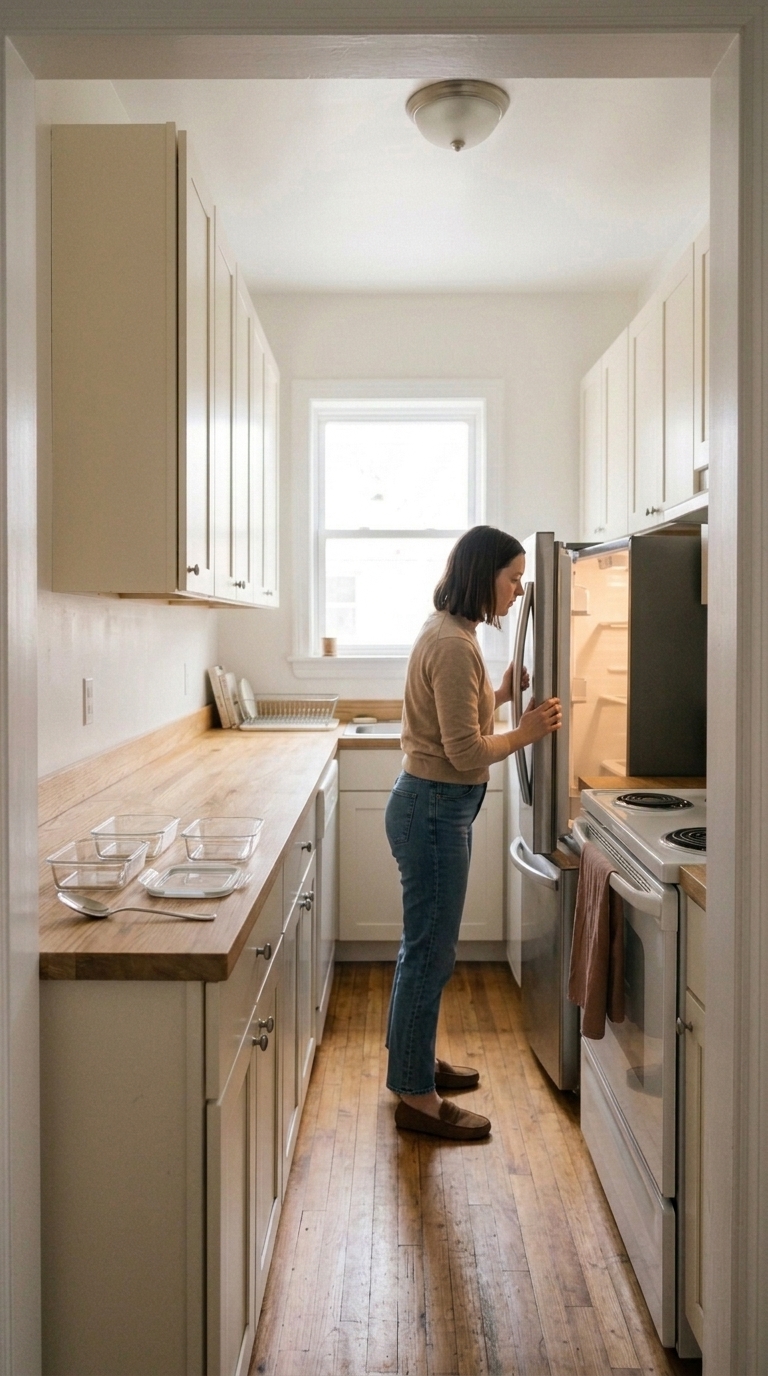
Planning for leftovers means you won’t be trying to squeeze a large roasting pan between the milk and everything else in the refrigerator.
Your Small-Kitchen Thanksgiving Prep Plan: The Day Before and the Day Of
The easiest way to avoid a crowded kitchen on Thanksgiving is to organize as much as you safely can before cooking begins. You don’t need to prepare every dish a day ahead. You just need to make fewer decisions while the oven is running and everyone is getting hungry.
The Day Before Thanksgiving
1. Clear and clean your workspace.
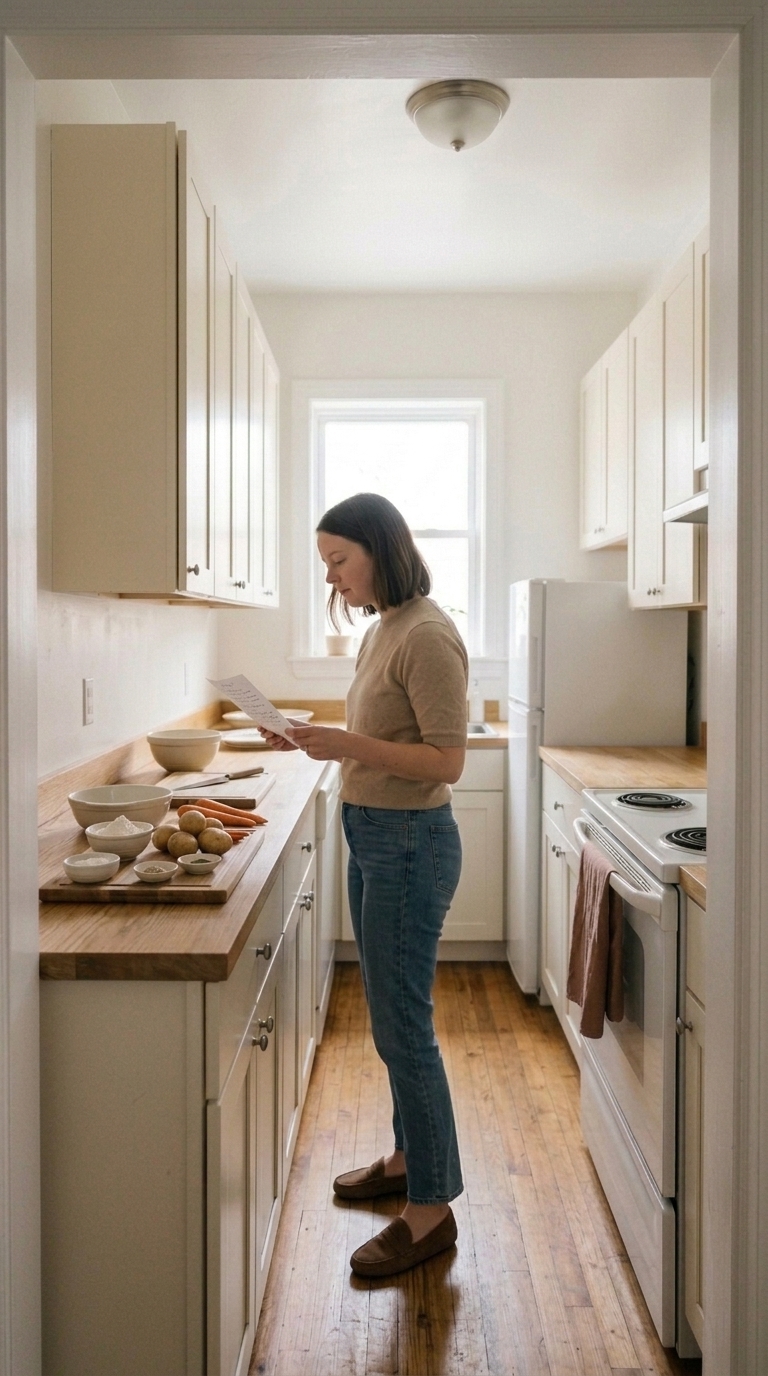
Put away small appliances you won’t need, remove everyday clutter, wash dirty dishes, and wipe down your main counter. Prepare any extra work surface you plan to use.
2. Check your menu and cooking times.
Write down each dish, its cooking temperature, approximate cooking time, and required appliance. Identify what can be prepared ahead and what must be finished just before serving.
3. Prepare what you safely can.
Make suitable make-ahead dishes according to their recipes. Measure dry ingredients, gather seasonings, and prepare vegetables if you can store them safely. Refrigerate perishable ingredients promptly rather than leaving them out overnight.
4. Organize your refrigerator and check the turkey.
Make room for the turkey, prepared dishes, ingredients, and eventual leftovers. If the turkey is frozen, allow approximately 24 hours of refrigerator thawing for every 4 to 5 pounds of turkey. Keep it in a container to catch any juices, and make sure your refrigerator stays at 40°F or below. Never thaw a turkey on the counter.
5. Set out serving supplies and cleanup essentials.
Choose your platter, serving bowls, utensils, plates, and napkins. Check that you have dish soap, clean towels, trash bags, and food-storage containers. Clear the sink and empty the trash if needed.
Thanksgiving Morning
1. Start with the turkey and your cooking schedule.
Follow a reliable recipe and the turkey’s weight and cooking instructions. Use a food thermometer to check doneness rather than relying on the clock alone, and allow extra time in case it takes longer than expected.
2. Set up only what you need for the first tasks.
Bring out the ingredients and utensils for your first preparation job. Keep the remaining ingredients stored until needed so your counter doesn’t become crowded before cooking has really started.
3. Prepare dishes in a planned order.
Prioritize dishes that need the longest cooking time or have limited appliance options. Use the stovetop for suitable sides when the oven is occupied, and reheat make-ahead dishes according to their instructions.
4. Reset the kitchen between tasks.
While food cooks, wash utensils you’ve finished using, put ingredients away, wipe appropriate surfaces, and clear the sink. Restore the space you need for the next job rather than trying to clean the whole kitchen at once.
The Final Hour Before Dinner
1. Finish the last-minute dishes.
Prepare gravy and other final stovetop dishes according to your menu. Use the oven’s available time for sides that need finishing or reheating.
2. Set up the serving area.
Place plates, napkins, and serving utensils where guests can reach them. Keep the route between the kitchen and dining area clear.
3. Check food temperatures.
Make sure the turkey reaches 165°F in the appropriate places. Keep hot food at 140°F or warmer and cold perishable food at 40°F or colder. Refrigerate perishable food within two hours, or within one hour when the temperature is above 90°F.
4. Clear one last working space.
Put away anything you no longer need and clear the counter used for final preparation. Leave your kitchen ready for serving and the first round of cleanup.
You don’t have to follow these steps to the minute. Adjust the schedule to your menu, appliances, and serving time. The aim is to avoid doing every task at once—and to give yourself enough room to enjoy the meal you worked so hard to prepare.
Frequently Asked Questions
How can I prepare Thanksgiving dinner with almost no counter space?
Clear everyday items off your counter, work on one task at a time, and use a separate stable surface for suitable tasks such as staging clean serving dishes. Prepare ingredients in batches and put things away when you finish using them.
What if my small kitchen has only one oven?
Plan the menu around the oven’s capacity. Prepare suitable dishes ahead, choose some stovetop sides, and schedule oven-dependent dishes in a workable order. Allow extra time because cooking times vary, and follow safe food-holding and reheating instructions.
Can I use my dining table as extra workspace?
Yes, for appropriate tasks, provided the table is stable and clean. Use a suitable food-safe surface for food preparation, keep raw poultry separate from ready-to-eat foods, and avoid placing hot cookware on surfaces that are not heat-resistant.
How do I stop the kitchen from becoming messy while cooking?
Clean in short bursts while food cooks, put ingredients away after use, and wash utensils between tasks when practical. Keep the sink and main preparation surface available for the next job instead of leaving all the cleanup until the end.
What if my refrigerator is too small for all the leftovers?
Make space before cooking, use shallow containers, and refrigerate perishable food within the recommended time limits. If you share leftovers with guests, make sure they can keep the food at safe temperatures during transport.
Make Your Small Kitchen Work for You
Thanksgiving dinner in a small kitchen doesn’t have to become a battle for counter space. When you prepare in stages, plan around your oven, and decide where food and serving supplies will go, even a small kitchen can handle a holiday meal more comfortably.
Keep your menu realistic, give yourself extra time, and don’t worry about making everything perfect. Your kitchen doesn’t need to be bigger, and your Thanksgiving doesn’t need to be complicated. It just needs a plan that works for the space you have.