How to Make Hanukkah Special in a Small Home
Hanukkah decorating ideas for small spaces don’t have to involve filling every shelf with decorations or rearranging your entire home. When your dining table doubles as a workspace, your living room has limited floor space, or your kitchen is already busy, even a little extra holiday clutter can feel like too much.
But a small home can still feel warm, festive, and ready for meaningful traditions. You don’t need a dedicated dining room, a large mantel, or a separate area for every activity. You simply need to decide what matters most and make room for it.
The goal isn’t to recreate a large holiday setup in a smaller space. It’s to create an atmosphere that feels special while allowing everyday life to continue comfortably.
From choosing a focal point to organizing family activities and making the most of your existing decor, these ideas can help you celebrate Hanukkah without feeling overwhelmed by the preparations.
1. Start With What Makes Hanukkah Special to Your Household

Before buying decorations or moving furniture, think about what you want the celebration to feel like.
For some households, the highlight is lighting the hanukkiah (Hanukkah menorah) together each evening. Others look forward to family meals, dreidel games, songs, stories, traditional foods, gifts, or visits with relatives and friends. Many enjoy a combination of these traditions.
There is no need to include everything to make the holiday meaningful. Jewish households observe Hanukkah in different ways, and your plans can reflect your family’s traditions, preferences, and circumstances.
Try asking yourself three questions:
- Which traditions do we most want to make time for?
- Where will we gather, eat, or participate in activities?
- What would make our home feel festive without making it harder to use?
Your answers will help you decide what deserves space.
For example, if evening candle lighting and family games are the priorities, you may need a suitable place for the hanukkiah and a small container for game supplies more than an elaborate dining table display.
Start with the experience you want to create. Let the decorations support it rather than determine how the celebration should look.
2. Choose One Place to Be Your Hanukkah Home Base

You don’t have to decorate every room to make your home feel ready for Hanukkah. Choose one area where a few thoughtful details can establish the atmosphere.
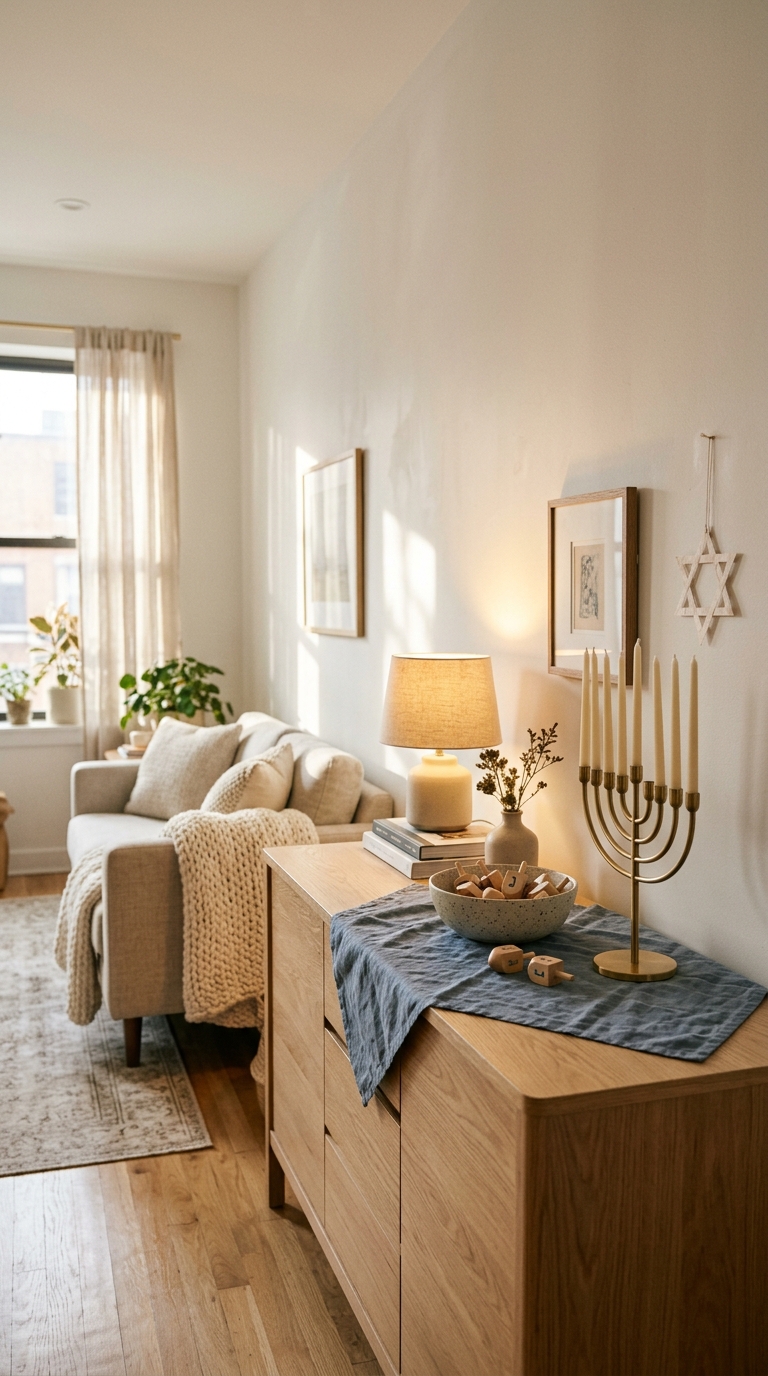
Depending on your layout, this might be a sideboard, a small console, a section of the dining table, a shelf, or another suitable surface. Choose somewhere that fits naturally into your household’s routines without obstructing daily activities.
Begin with one or two elements that matter to you. A meaningful decorative piece, a seasonal textile, or a small grouping of decorations can create a focal point without taking over the room.
If your apartment doesn’t have a spare surface, look at what you already use. Could a small decorative tray temporarily replace a collection of everyday objects? Could a seasonal cushion cover add color without requiring another piece of furniture?
Keep the arrangement proportionate to the available space. A narrow console doesn’t need several large objects, and a small table may look better with one carefully chosen detail than a crowded collection.
Remember that the hanukkiah’s ritual placement requires separate consideration. Your decorative focal point and your candle-lighting area don’t necessarily need to be the same place.
3. Clear Space Before You Add Decorations
Before bringing seasonal items into your home, give yourself a little breathing room.
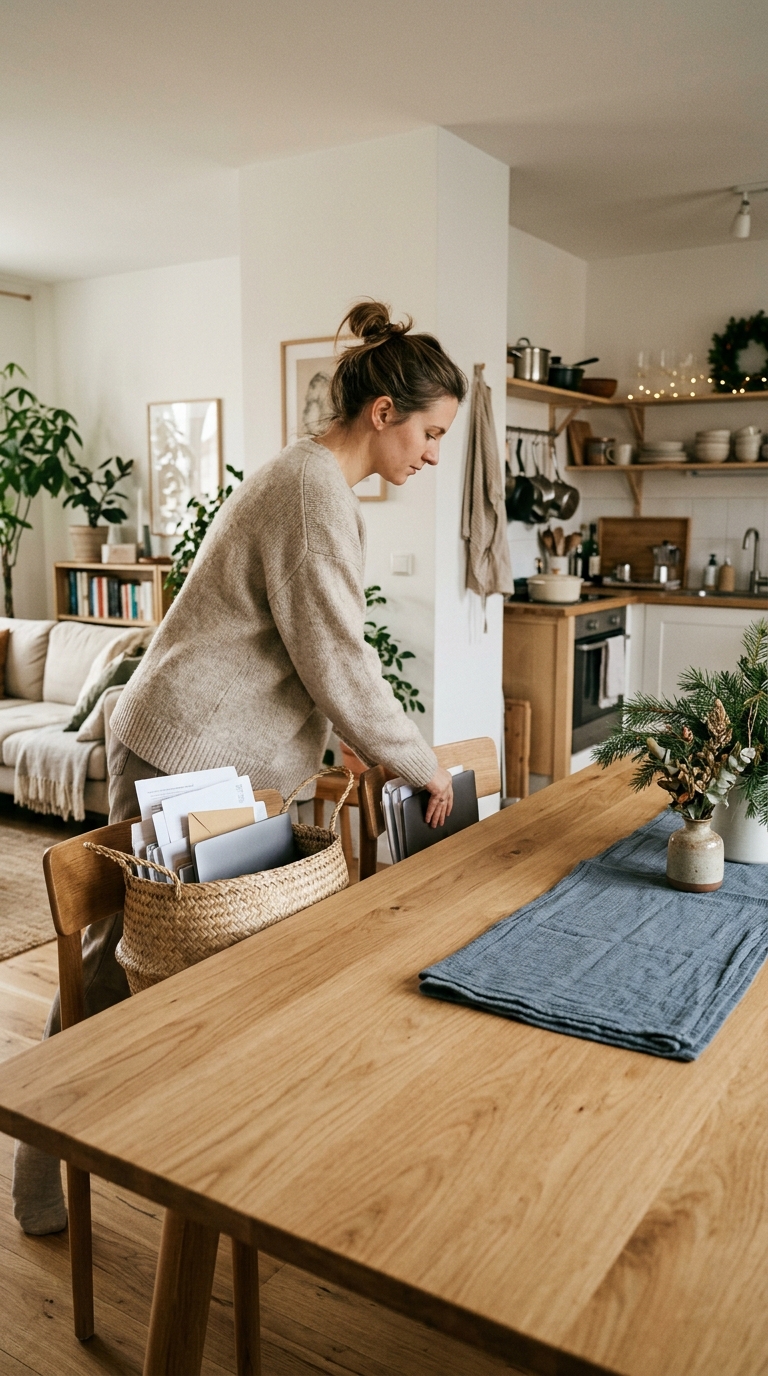
In a small apartment, decorations often compete with things that already have a purpose: mail on the console, appliances on the kitchen counter, books on the coffee table, or bags near the entrance.
You don’t need to organize every drawer or deep-clean every room. Focus on the surfaces and pathways that will support your celebration.
Try this simple approach:
- Choose the area you want to prepare first.
- Remove objects that don’t need to stay there.
- Put everyday items in their usual homes or temporarily relocate them.
- Check that the surface is still useful for its normal purpose.
- Add only the seasonal pieces that genuinely improve the space.
For example, if you want to decorate the dining table, clear away paperwork and work supplies before adding a runner or centerpiece. If the living room will host family activities, make enough room to sit comfortably and move around without stepping over storage baskets.
Avoid solving every space problem by buying another organizer. Sometimes the most useful change is simply removing items that don’t need to be there.
If your home tends to feel cluttered again shortly after cleaning, read our guide to why your home still feels cluttered after cleaning. It explores how visible items, crowded surfaces, and everyday habits can make a room feel busy even when it’s clean.
4. Give the Hanukkiah a Safe, Thoughtful Place

The hanukkiah is a meaningful part of Hanukkah, so its placement deserves more consideration than an ordinary decorative display.
In a small home, the available options may be limited. You might have narrow windowsills, little spare counter space, curious children, pets, or curtains close to the most convenient surface.
Start with safety and your household’s religious practices rather than choosing a location simply because it looks attractive.
Choose a stable, heat-resistant surface where the hanukkiah can stand securely and cannot easily be knocked over. Keep burning candles at least 12 inches (30 centimeters) away from anything that can burn, including curtains, paper decorations, hanging textiles, and other combustible materials. Make sure the location is away from busy walkways, food-preparation areas, and places where children or pets could reach or disturb the candles.
If children or pets live in the home, consider their reach and movement. A surface that seems out of the way when the room is quiet may become vulnerable when everyone gathers for the evening.
Some Jewish traditions favor placing Hanukkah lights near a window or doorway. Appropriate placement can depend on religious practice and the home’s circumstances, so consult a trusted Jewish educational or religious authority if you’re unsure how to accommodate your space.
Never leave burning candles unattended, and never leave them burning overnight or when leaving your home. Plan the lighting so an adult can supervise the candles safely for the period required by your tradition. Keep matches and lighters away from children. Don’t move a lit hanukkiah, and make sure the candles and their holders remain stable throughout the lighting.
For additional guidance, see the National Fire Protection Association’s candle safety recommendations. If you cannot identify a safe place for open flames, don’t improvise an unsafe setup. Ask a trusted religious authority about appropriate options for your circumstances.
Electric Hanukkah displays can add decorative light elsewhere in the room, but they should not automatically be treated as a replacement for the religious candle-lighting practice. Follow the guidance appropriate to your tradition.
A safe, appropriate arrangement matters more than a picture-perfect display.
5. Use Light to Create a Festive Atmosphere
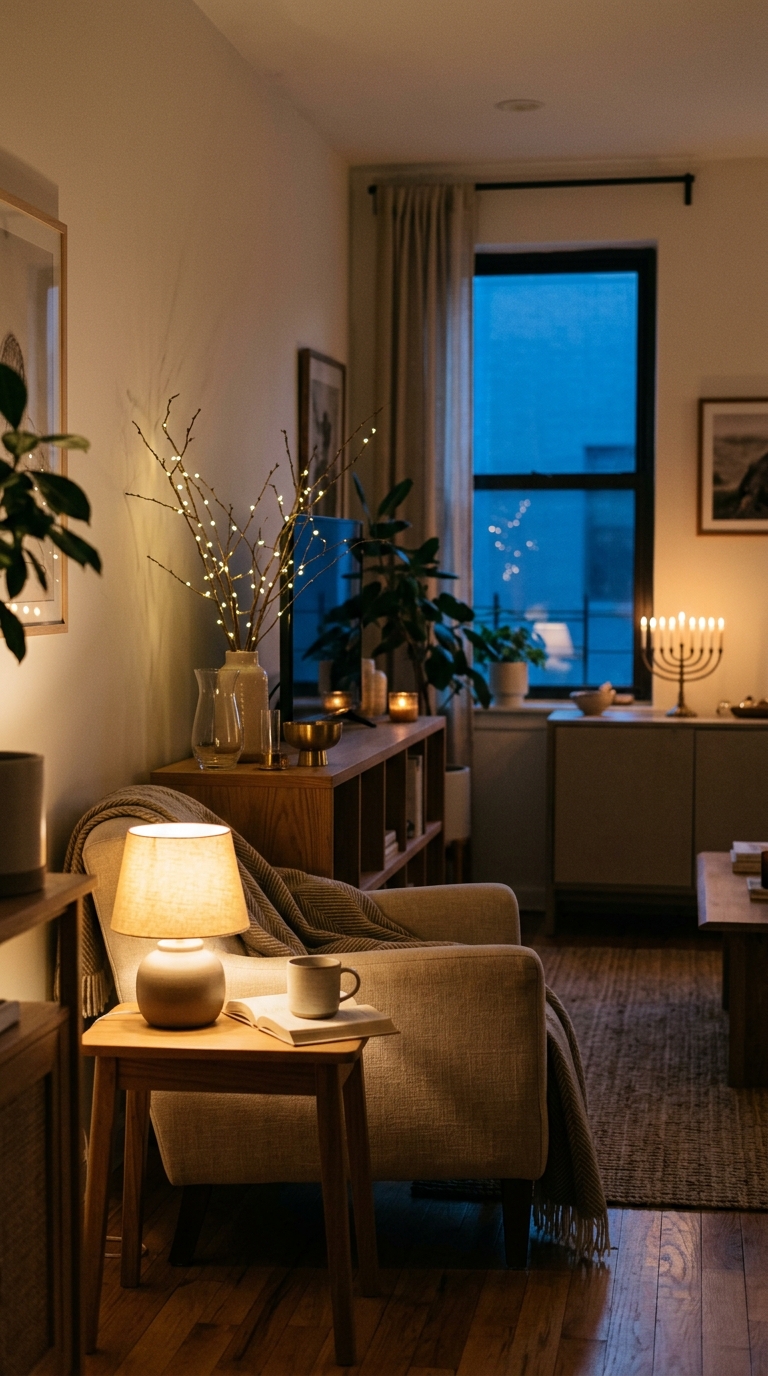
When floor space and surfaces are limited, lighting can change the mood of a room without adding much clutter.
Start with the lights you already own. A warm table lamp, a floor lamp beside the sofa, or softer evening lighting may make the living room feel more inviting. Battery-operated decorative lights can introduce a gentle seasonal glow, too.
If your home has a neutral color scheme, you don’t need to replace everything with themed decorations. A few blue or white accents, a reflective ornament, or a small seasonal display may be enough to make the room feel different from an ordinary evening.
Think about how light works throughout the room. A lamp beside a reading chair can make a corner feel welcoming, while a small illuminated decoration on a shelf can draw attention to an otherwise overlooked area.
Choose lighting that suits the room’s function, too. You still need enough light to prepare food, play games, read, or move around comfortably.
Keep electric lights and cords safely positioned, away from walkways and places where they might be pulled or knocked over. Never place string lights or paper decorations close to open flames.
6. Decorate With Meaning, Not Quantity
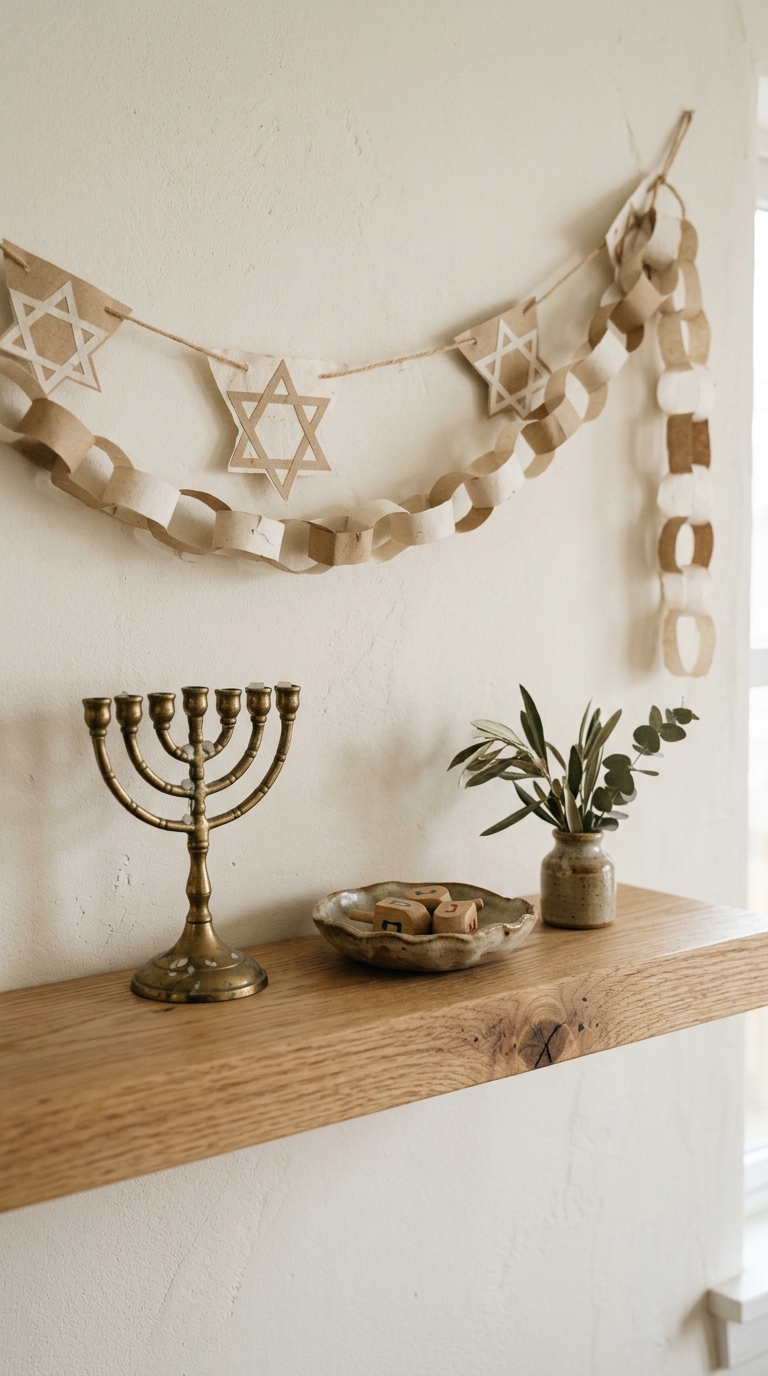
It’s easy to assume that a festive home needs a collection of new decorations. In reality, a few meaningful pieces can make a space feel more personal than a room filled with items chosen simply because they match.
Start with what you already own. You might have a family keepsake, a favorite serving dish, handmade artwork, a meaningful decorative object, or a textile that works with your existing colors.
Choose pieces that support the traditions and atmosphere you want to create.
For example, a small display might include a favorite decorative item and a simple textile. Another household might prefer children’s artwork or a handmade decoration that becomes part of the family’s celebration each year.
If you enjoy crafting, consider a small project using materials you already have. Paper decorations, simple artwork, or a handmade dreidel-themed display can provide a creative activity without requiring a permanent addition to your home. Keep combustible crafts well away from burning candles.
Before buying something new, ask yourself whether it adds meaning, supports a tradition, or serves a practical purpose. If it does none of those things, you may not need it.
7. Work With the Colors Already in Your Home

Blue and white are familiar Hanukkah decorating colors, but you don’t have to redesign your entire room around them.
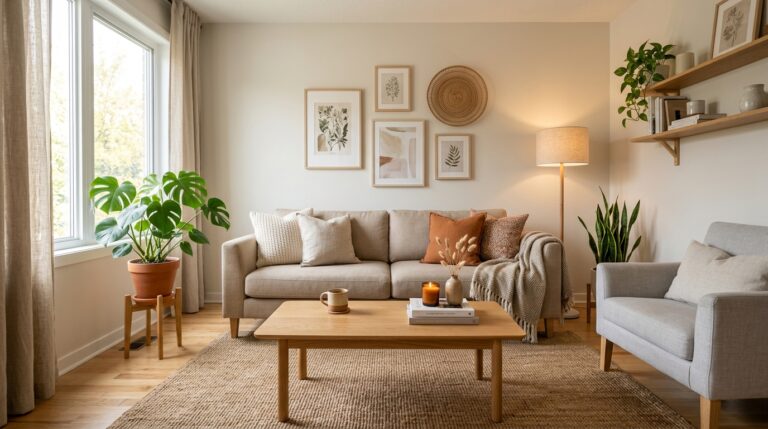
If your home already features cream walls, warm wood, gray upholstery, or neutral bedding, use those existing colors as the foundation. A small amount of blue, white, silver, or another complementary color can provide a seasonal connection without making the decor feel out of place.
For example, you might pair navy with cream, blue with natural wood, or white with metallic accents. If your home has a warmer palette, a few blue details can provide contrast without overwhelming the room.
You can introduce color through items that are easy to store, such as a table runner, cushion cover, tea towel, or small decorative object.
There’s no need to buy matching sets for every room. A consistent accent color in one or two places can be enough to create a sense of connection.
Think about what you already have before shopping. A plain white serving bowl, a blue vase, or a favorite piece of fabric might work beautifully without being specifically marketed as Hanukkah decor.
8. Keep the Dining Table Functional
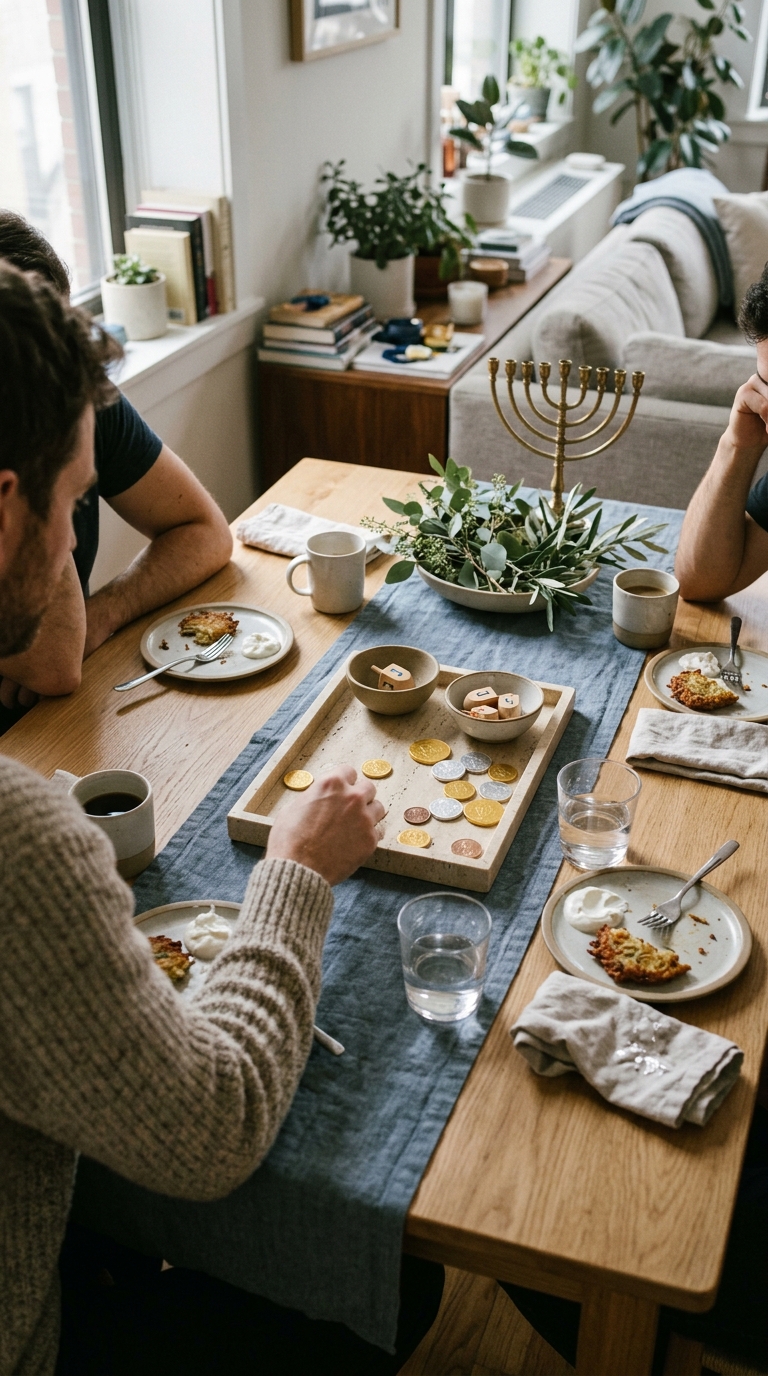
In a small home, the dining table may serve several purposes throughout the day. It might be where you work, help children with activities, prepare items for the next day, and eat meals.
During Hanukkah, it may also become the place where everyone gathers.
That makes flexibility more useful than an elaborate centerpiece.
Start with a clear surface and decide what needs to remain on the table during meals. If you want to add a runner, choose one that leaves enough room for plates and serving dishes. If you prefer a centerpiece, keep it low and compact so people can see one another and pass food comfortably.
A small tray can help contain decorative items. When you need the full table for a meal, lift the tray and move it to a suitable storage spot.
You can also use existing serving pieces as part of the overall presentation rather than adding separate decorations that will need to be moved later.
If you’re hosting relatives or friends, think about seating before decorating. Extra chairs, serving dishes, and food need room, too.
A beautiful table is useful only if people can comfortably eat at it.
9. Create a Small Station for Eight Nights of Activities
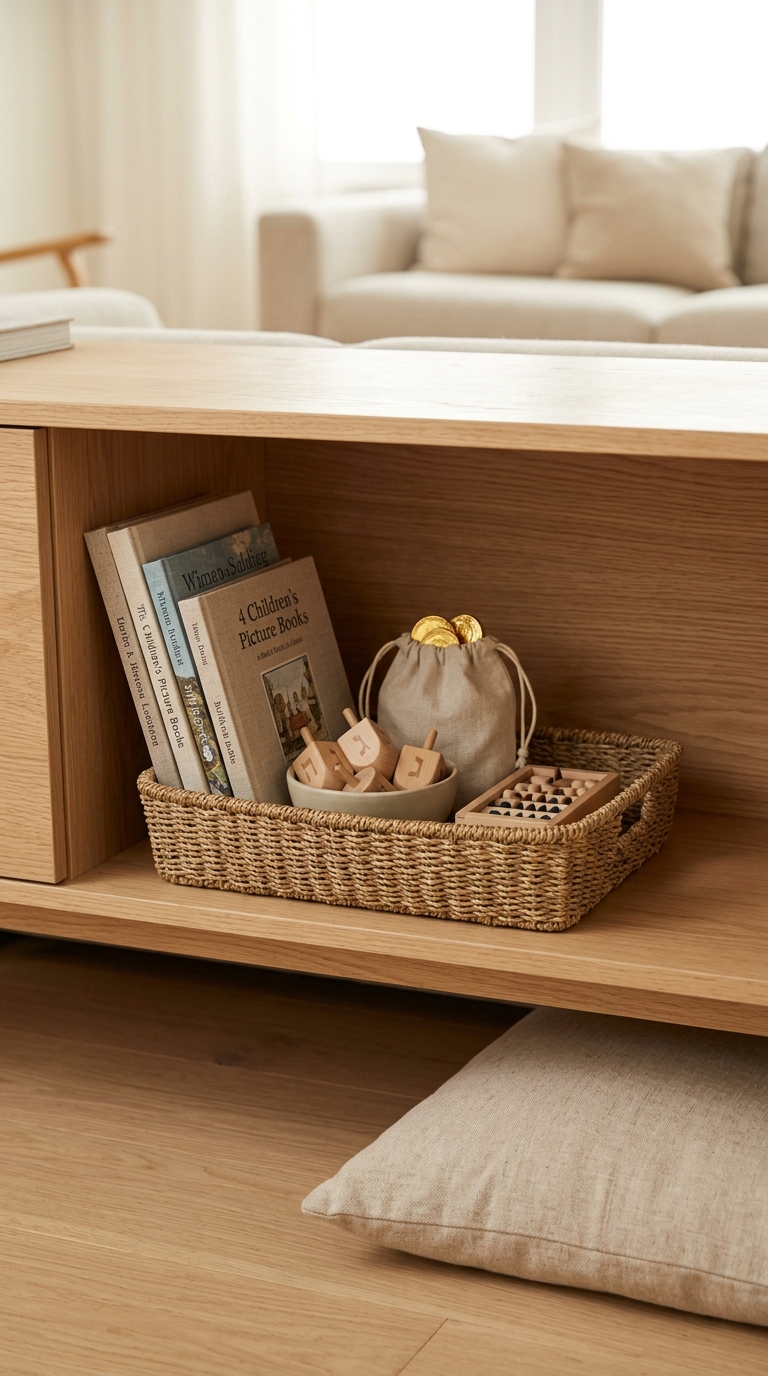
Hanukkah lasts eight nights, and you may want to make space for activities that everyone can return to throughout the celebration.
Rather than spreading supplies around the living room, give them one designated home.
A small basket, lidded box, drawer, or storage ottoman can hold items such as dreidels, age-appropriate games, gelt, storybooks, craft materials, or other supplies your household uses.
Choose items that suit your family. You don’t need a new activity for every night, and you don’t need to buy everything at once.
You might alternate between playing a game, reading a story, sharing a favorite food, making a simple craft, or spending time with visiting relatives. Some evenings may involve a larger gathering, while others may be quiet and familiar.
The station can remain compact because the point is to make activities accessible, not to create a dedicated playroom.
If the dining table doubles as a workspace, a portable basket is especially useful. Bring it out when it’s time for an activity and return it to storage afterward.
Keep small items appropriate to the ages of children in the household, and store choking hazards and other unsafe items out of reach.
10. Make Your Small Home Comfortable for Guests
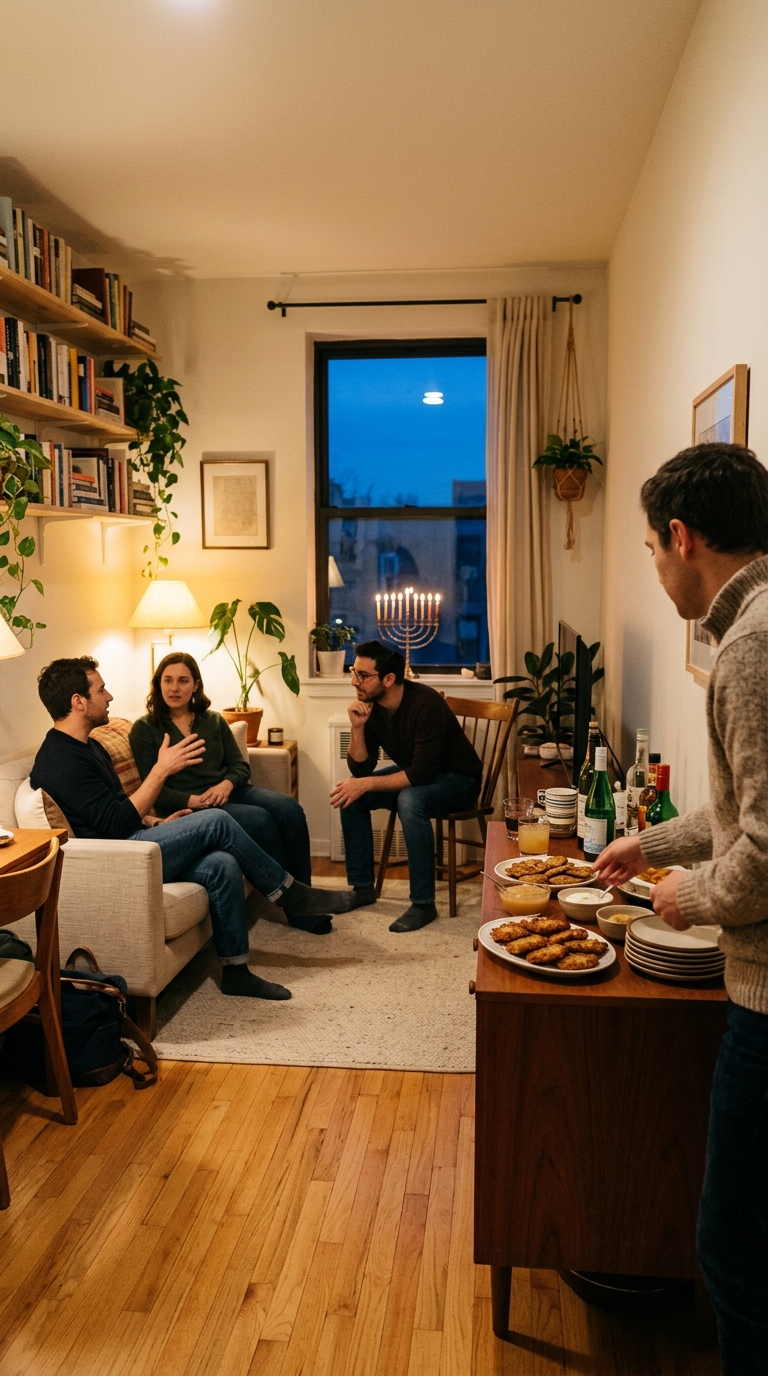
If you’re inviting people over for Hanukkah, you don’t need to transform your home into a formal entertaining space.
Start by deciding where people will sit, where food will go, and which areas need to remain clear. These decisions will help you determine what furniture or decorations, if any, should move.
A side table can hold drinks, while a section of the kitchen counter can be reserved for serving food. Existing chairs can be brought together, and movable furniture can be repositioned if doing so improves circulation.
Keep the main walking routes open, particularly between the entrance, seating, and food areas. Avoid filling available seats with decorative cushions, baskets, or displays.
If the gathering is informal, you may not need a fully set dining table. A flexible arrangement that suits the meal and the people attending may work better.
You can also ask guests to contribute a dish or help with a simple task if that fits your plans. Hosting doesn’t have to mean preparing every detail alone.
For more practical advice on seating, serving areas, and circulation, see our guide to hosting Thanksgiving in a small home without feeling cramped. Although the occasion is different, the same space-planning ideas can help you welcome guests comfortably.
11. Keep Gifts and Supplies From Taking Over
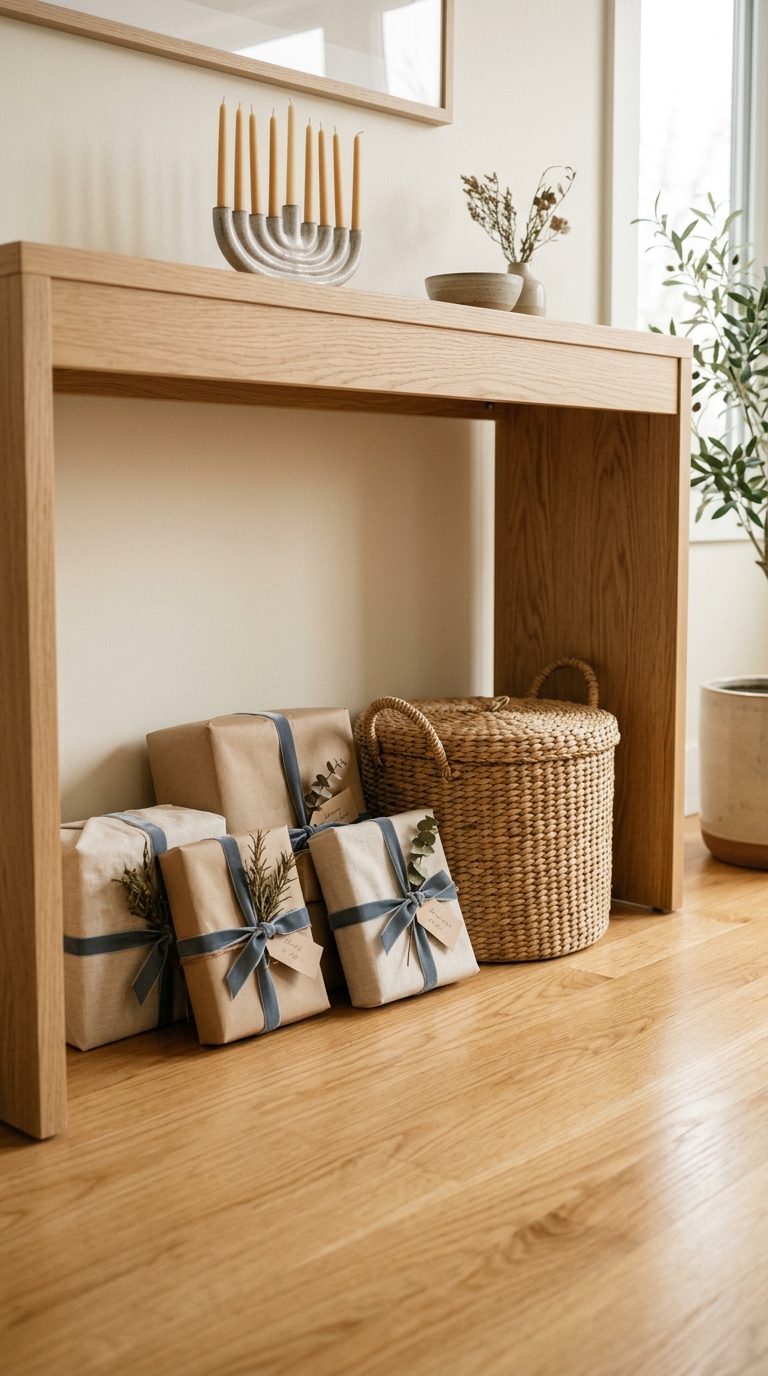
If your household exchanges gifts during Hanukkah, decide where they’ll go before the packages begin accumulating.
In a small living room, gifts can quickly take over the floor, cover useful surfaces, or make it difficult to move around.
Choose one designated area that doesn’t interfere with seating or everyday activities. Depending on your layout, this might be a corner, a space beneath an existing table, or a basket or container that can be put away when it isn’t needed.
If gifts are exchanged over several evenings, keep the remaining packages together in a suitable storage spot rather than leaving everything in the main living area.
You can also reuse gift bags and wrapping materials you already own, provided they’re in good condition. There’s no need to buy a new storage system solely for seasonal supplies.
Not every household exchanges gifts every night, and traditions vary. Adapt the arrangement to the way your household actually celebrates.
12. Choose Rental-Friendly Decorations That Are Easy to Remove
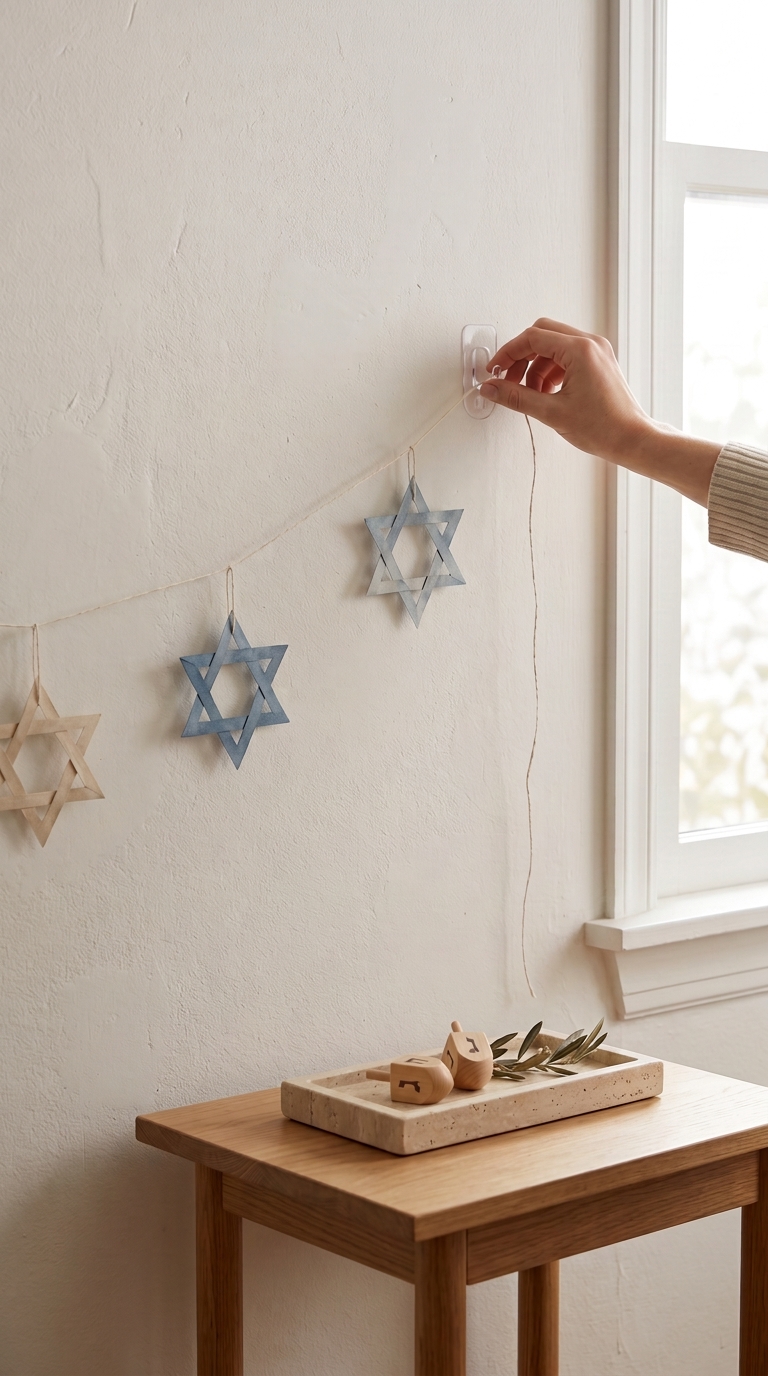
If you rent your home, or simply don’t want to make permanent changes, focus on decorations you can move, reuse, and store.
Tabletop displays, seasonal textiles, freestanding artwork, and portable electric lighting can provide a festive touch without requiring permanent installation.
A small wreath, a decorative tray, or a cushion cover can change the feel of a room without taking up much space.
If you want to hang artwork or garlands, check the manufacturer’s instructions for adhesive products and make sure the method is suitable for your wall finish. Review your lease requirements where relevant, and don’t assume every removable product will leave every surface undamaged.
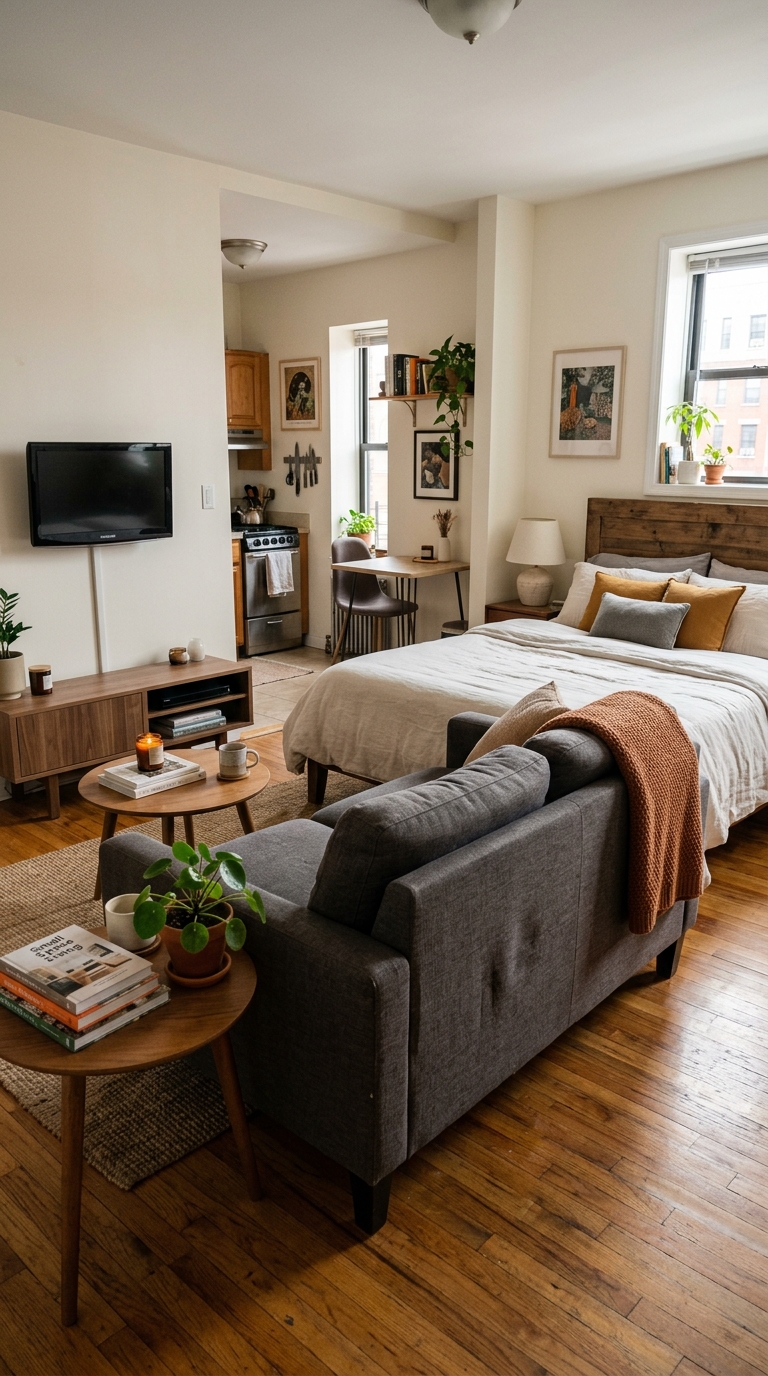
In a studio apartment, one small display and a textile change might be enough. In a larger apartment, you may have room for an additional accent elsewhere.
Portable decorations also make storage easier. You can gather them together after the holiday rather than leaving permanent fixtures or repairing avoidable damage.
13. Add Small Seasonal Touches Where They Make Sense
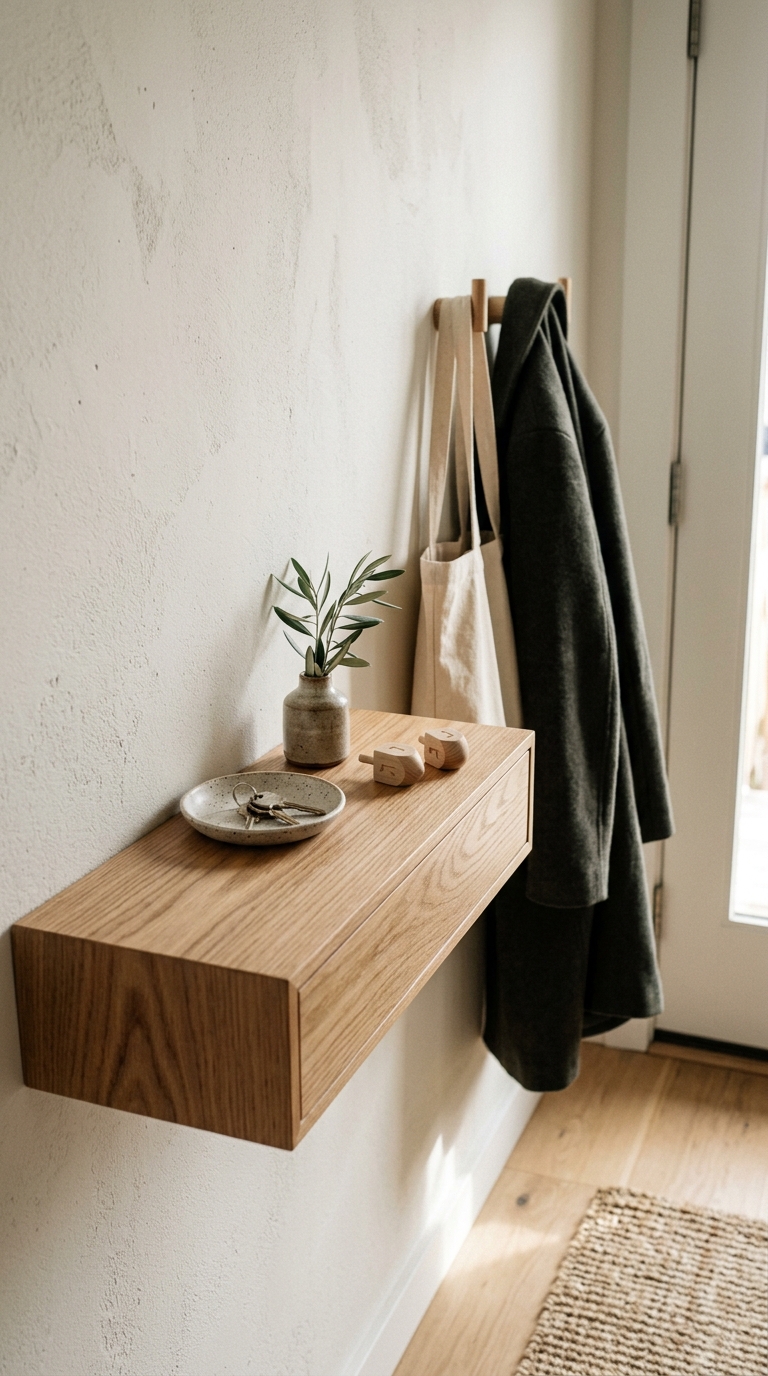
Once your main area is ready, decide whether another room would benefit from a small seasonal detail.
Living room: Add a small focal display, a seasonal textile, or a change in lighting.
Kitchen: Use a seasonal towel or a small decorative detail in an area that doesn’t interfere with food preparation.
Dining area: Keep the centerpiece compact and easy to remove when it’s time to eat.
Entryway: A small tray or simple decoration can make the entrance feel welcoming while leaving space for shoes, coats, and bags.
Bedroom: If you’d enjoy a quieter seasonal touch, consider a cushion cover or another small item that fits your existing decor.
Bathroom: A single seasonal towel or similarly simple detail is optional, not a requirement.
You don’t have to decorate every room. If adding decorations makes a room harder to use, skip them. A clear kitchen counter may be more valuable than a themed display, and an uncluttered entryway may be more welcoming than another arrangement.
14. Store Everything So Next Year Is Easier
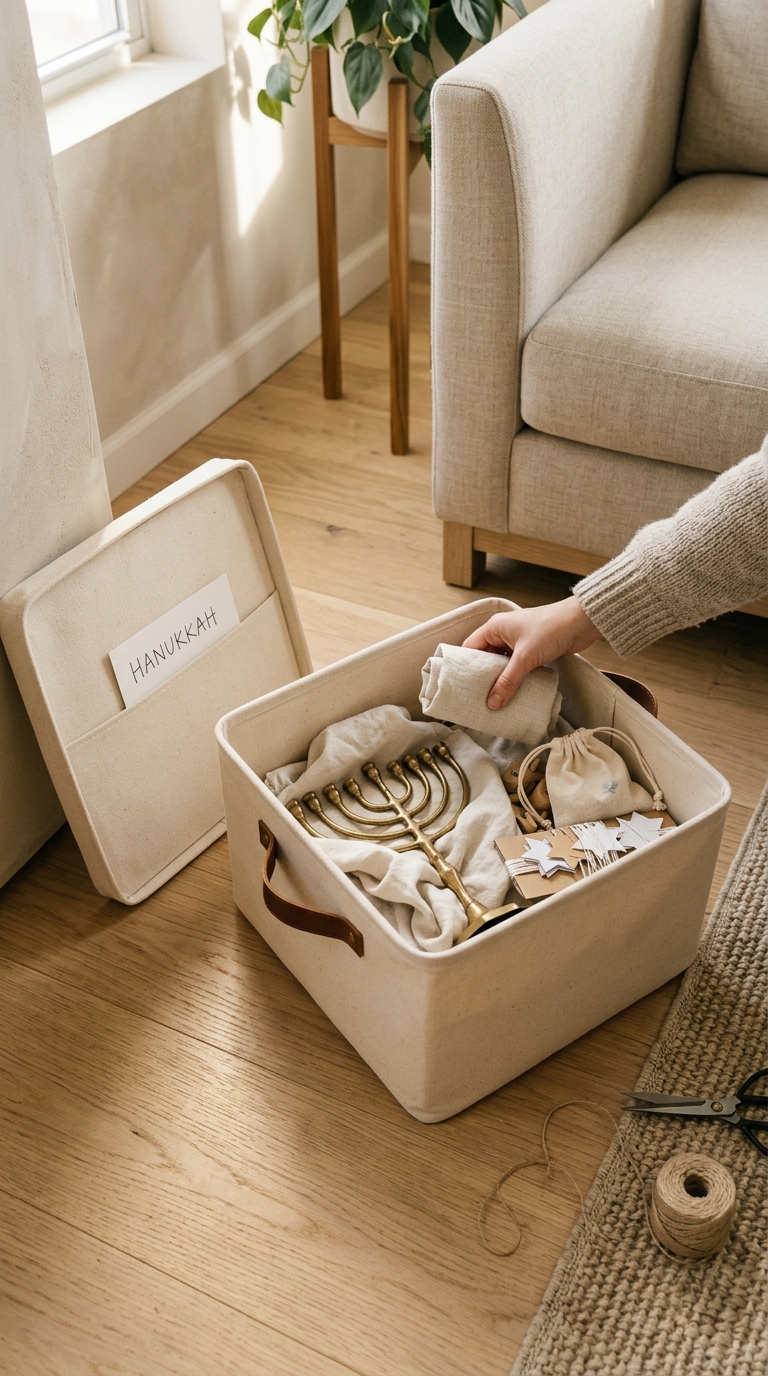
When Hanukkah ends, make putting away the decorations part of the plan rather than leaving it for an unspecified later date.
Gather your seasonal items and group them by type. Decorations can go together, while activity supplies, textiles, and gift-wrapping materials can be stored separately if that makes them easier to find.
Use containers you already own where possible. A small lidded box, drawer, or suitable storage bin may be enough for a modest collection.
Before storing anything, check that it is clean, dry, and in good condition. Wrap fragile items appropriately, and follow the manufacturer’s storage guidance for electric lights and other equipment.
If closet space is limited, consider an existing high shelf, under-bed storage, or another suitable location that won’t interfere with daily use. Label the container so you can find it next year without searching through unrelated boxes.
This is also a good time to decide whether anything needs repairing or whether an item no longer suits your household.
Frequently Asked Questions
How can I celebrate Hanukkah in a small home?
Focus on the traditions that matter most to your household. Create a suitable place for candle lighting, keep activity supplies together, and use one or two intentional decorative areas instead of filling every room.
How do I decorate a small apartment for Hanukkah?
Start with your existing furniture and color scheme. Add a few meaningful pieces, a seasonal textile, or suitable decorative lighting, and keep surfaces and walkways available for everyday use.
Where should I put a hanukkiah in a small home?
Choose a stable, heat-resistant location away from combustible materials and household traffic. Religious placement practices vary, so consider your tradition and consult a trusted religious authority if you need guidance. Never leave burning candles unattended.
How can I make Hanukkah feel special without buying lots of decorations?
Use meaningful objects you already own, enjoy familiar traditions, and create simple activities for the eight nights. A warm atmosphere and time spent together don’t require a large collection of seasonal products.
What are good Hanukkah ideas for a small space?
Consider a compact focal display, a portable activity basket, a flexible dining table, a few seasonal textiles, and decorations that can be stored easily after the holiday.
How do I store Hanukkah decorations in a small apartment?
Group items by type, use compact containers you already own, label them clearly, and choose a suitable storage location such as a closet shelf or under-bed space.
Make Room for What Matters
A small home doesn’t have to limit the feeling of Hanukkah. It may simply encourage you to be more intentional about what you bring into the room.
Start with the traditions you want to enjoy, create enough space for the people and activities that matter, and choose decorations that support those moments rather than compete with them.
You don’t have to decorate every surface, buy new things for every evening, or rearrange your entire home to make the celebration meaningful.
Make room for what matters, keep your home comfortable and safe, and let the decorations play their part.
The goal isn’t a perfect holiday home. It’s a home where you can enjoy the holiday.