How to Store Toys in a Small Living Room Without a Playroom
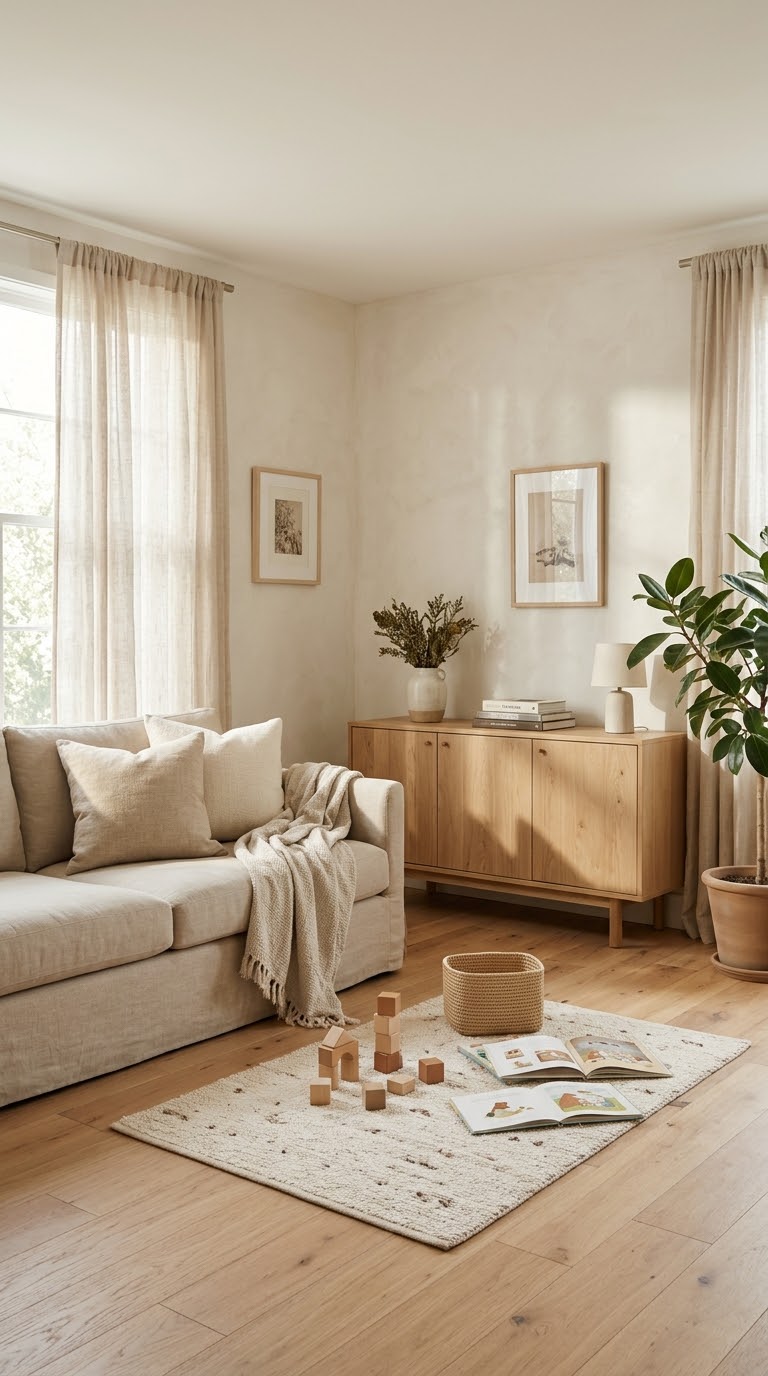
When you have children, toy storage in a small living room can quickly become a daily challenge. Building blocks end up under the sofa, stuffed animals occupy the coffee table, and toy cars somehow find their way into every corner. You tidy one area, only to discover that another has become a play zone.
It becomes even more challenging when your home doesn’t have a separate playroom. Your living room still needs to be somewhere you can relax, watch television, entertain guests, and spend time together as a family. But your children need somewhere to play, too.
The solution isn’t necessarily to buy another cabinet or squeeze a large toy organizer into an already crowded room. Often, you can make better use of furniture you already own, give children’s belongings a defined place, and create a small play area that works with the rest of your living room.
Here are nine practical ways to make room for toys without giving up the comfort and functionality of your shared family space.
1. Decide Which Toys Actually Need to Stay in the Living Room
Before rearranging furniture or looking for storage containers, take a moment to consider how your family uses the living room.
Which toys do your children reach for every day? Where do they naturally prefer to play? Is there a corner beside the sofa that is always covered in building blocks, or do they usually spread their toys across the floor near the television?
These everyday habits can help you decide where toy storage should go.
Start by gathering the toys currently scattered around the room. Separate everyday favorites from occasional toys, broken items, and things your children have outgrown. Toys that are rarely used don’t necessarily need to occupy valuable living-room space.
Next, decide how much room you can comfortably dedicate to play. You might only have enough space for a small rug and one section of an existing cabinet, and that’s perfectly fine.
The aim isn’t to remove everything your children enjoy. It’s to keep the toys they regularly use within reach while finding somewhere else for the rest.
This is also a good opportunity to address other items contributing to the clutter. If your living room always feels crowded despite regular cleaning, these common reasons your home still feels cluttered may help you identify what else needs attention.
2. Create a Small Play Zone Without Building a Separate Room
Children don’t need an entire room to have a comfortable place to play. A small section of your existing living room can work just as well when it is arranged thoughtfully.
One of the easiest ways to establish this area is with a rug you already own.
Place it beside the sofa, in an unused corner, or near an existing bookshelf. This gives children a recognizable place to sit, build with blocks, look through books, or play with their favorite toys.
If you have a little room beside the rug, you can keep a small selection of toys nearby so children don’t have to walk across the living room whenever they want something.
Think about the furniture arrangement, too. For example, if the sofa already creates a natural boundary between the main seating area and an unused corner, you can use that corner for play instead of introducing a room divider.
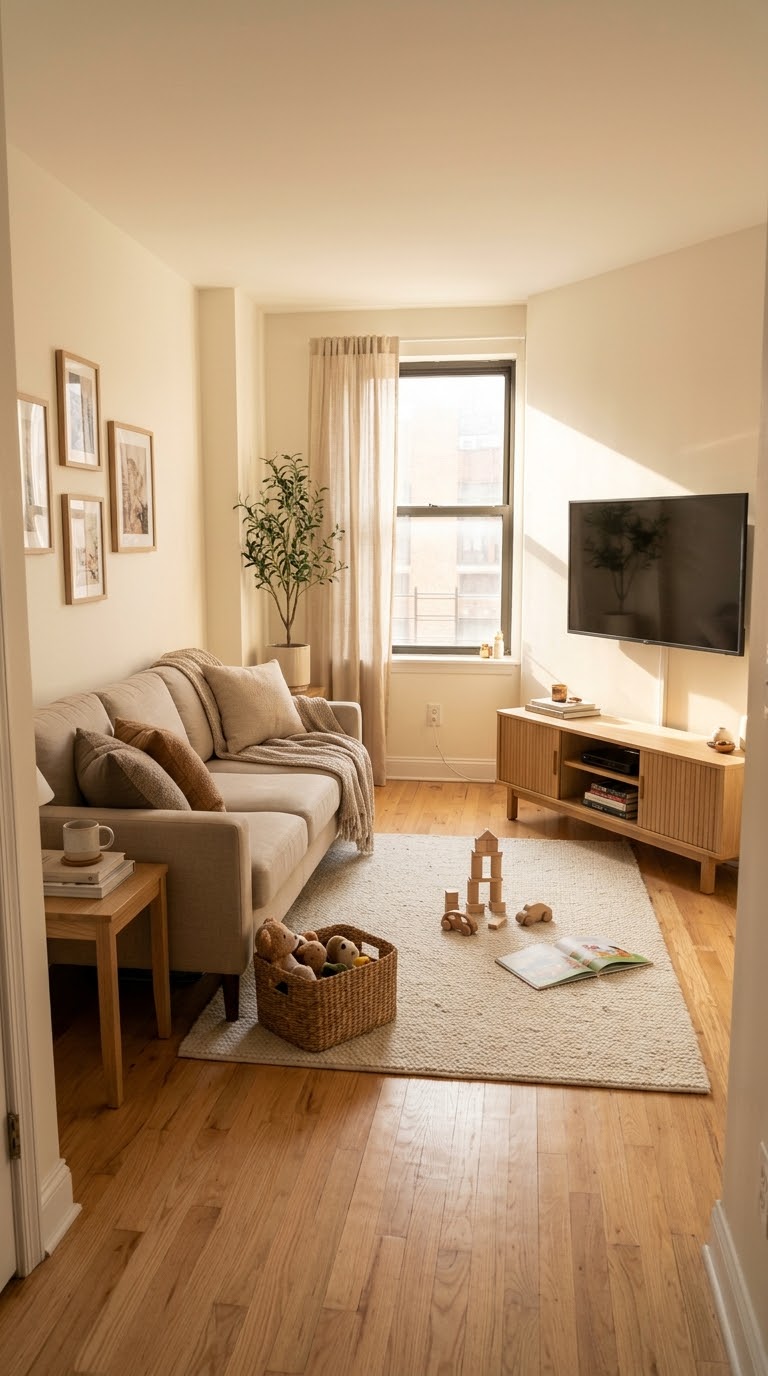
Just make sure the area doesn’t block doorways or the routes people regularly use to move through the room. Leave enough room for children to play without allowing toys to spill into the main walkways.
You can also look at how to arrange furniture in a small living room for more ideas on making the existing layout work harder.
3. Turn an Existing Sideboard or Cabinet Into Toy Storage
Before bringing another storage unit into your living room, check whether a cabinet or sideboard you already own has unused space.
A suitable sideboard can hold quite a few children’s belongings without making the room look like a dedicated playroom.
For example, you could use one lower drawer for coloring books and crayons, another compartment for puzzles, and a separate section for larger toys.
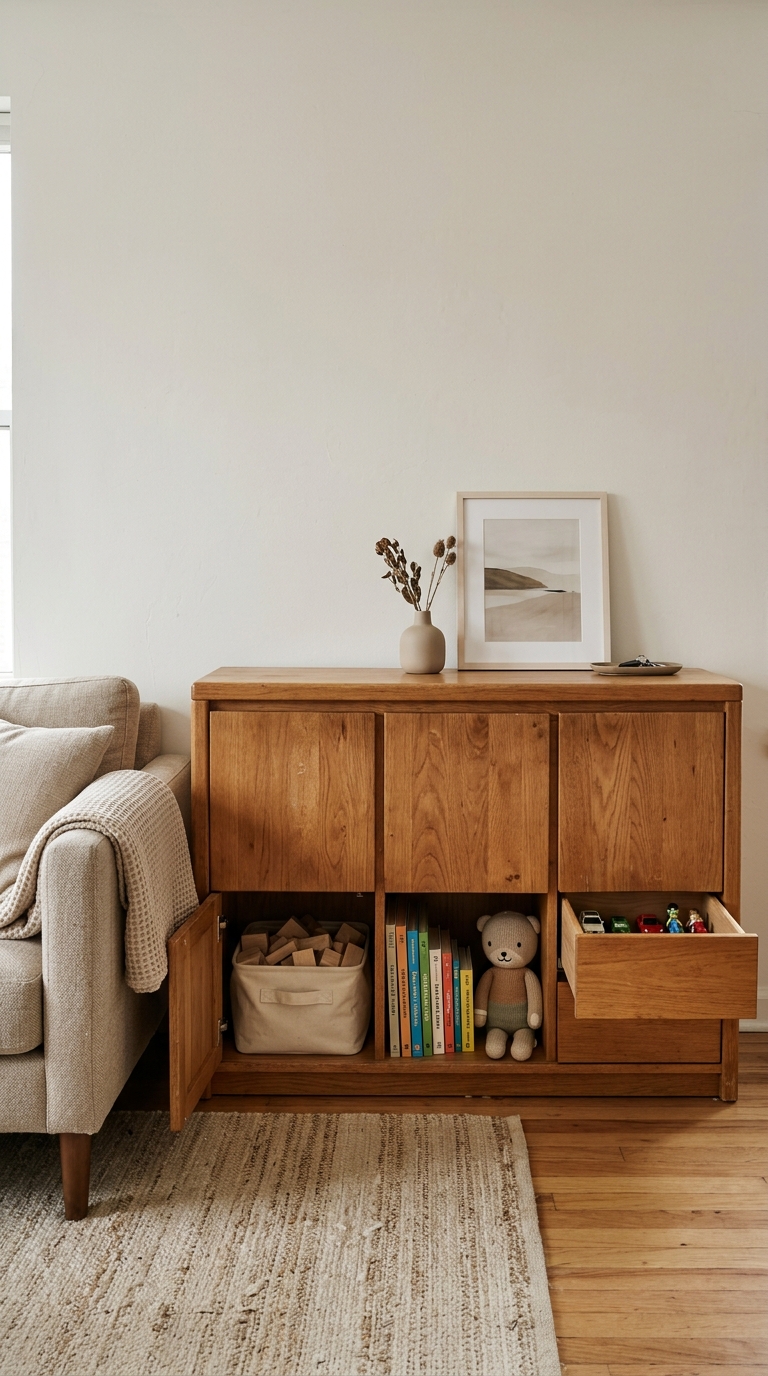
If the furniture has doors, you can close them when playtime is over, keeping the room looking relatively calm even when it contains several different toy collections.
There is one important consideration: accessibility. Everyday toys should be stored somewhere children can reach without climbing, pulling on furniture, or disturbing electronics and other household items.
If your television console contains cables, electrical equipment, or fragile accessories, don’t turn those compartments into an unrestricted play area. A separate low cabinet or sideboard may be a better option.
Also, secure the furniture and television appropriately. Avoid placing favorite toys on top of cabinets or high shelves where children might be tempted to climb.
The advantage of using existing furniture is that you give belongings a proper home without sacrificing additional floor space.
4. Make Your Coffee Table or Ottoman Work Harder
Sometimes, a piece of furniture you already use every day can provide a little extra storage.
If you own a storage ottoman, consider using it for larger soft toys, dress-up accessories, or children’s blankets. These items can be returned to the ottoman after playtime instead of remaining scattered around the sofa.
An open coffee table with a lower shelf can also provide a convenient place for picture books, a few board games, or other items your children use regularly.
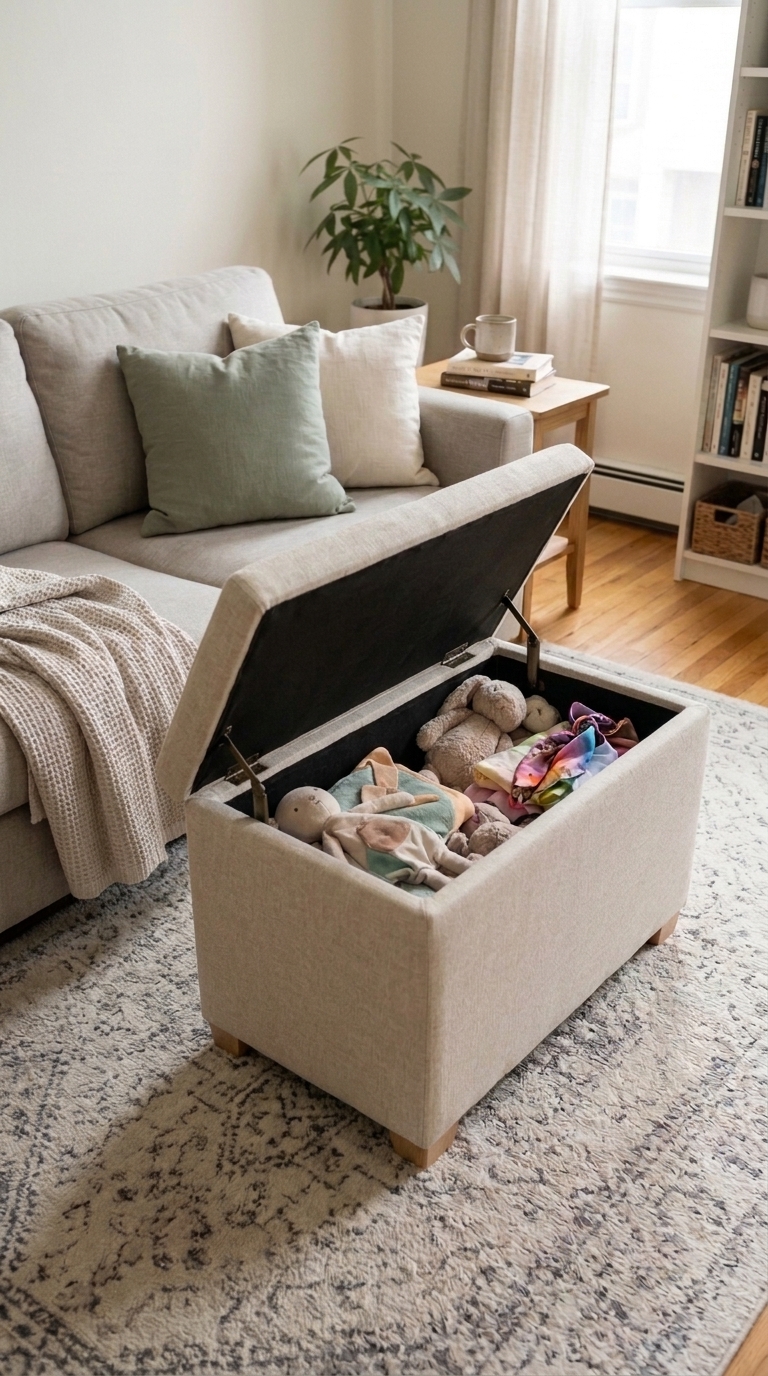
The key is to choose belongings that make sense for the available space.
For instance, if your coffee table is already crowded with drinks, magazines, and everyday household items, filling its lower shelf with toys might create another area that constantly needs clearing.
You also need to consider safety when choosing furniture with storage compartments. Heavy hinged lids can fall unexpectedly, and some storage designs are unsuitable for young children to open independently.
If you already have a suitable ottoman, use it thoughtfully. There is no reason to purchase one simply because it has hidden storage.
5. Give an Existing Bookshelf a Purpose Beyond Displaying Books
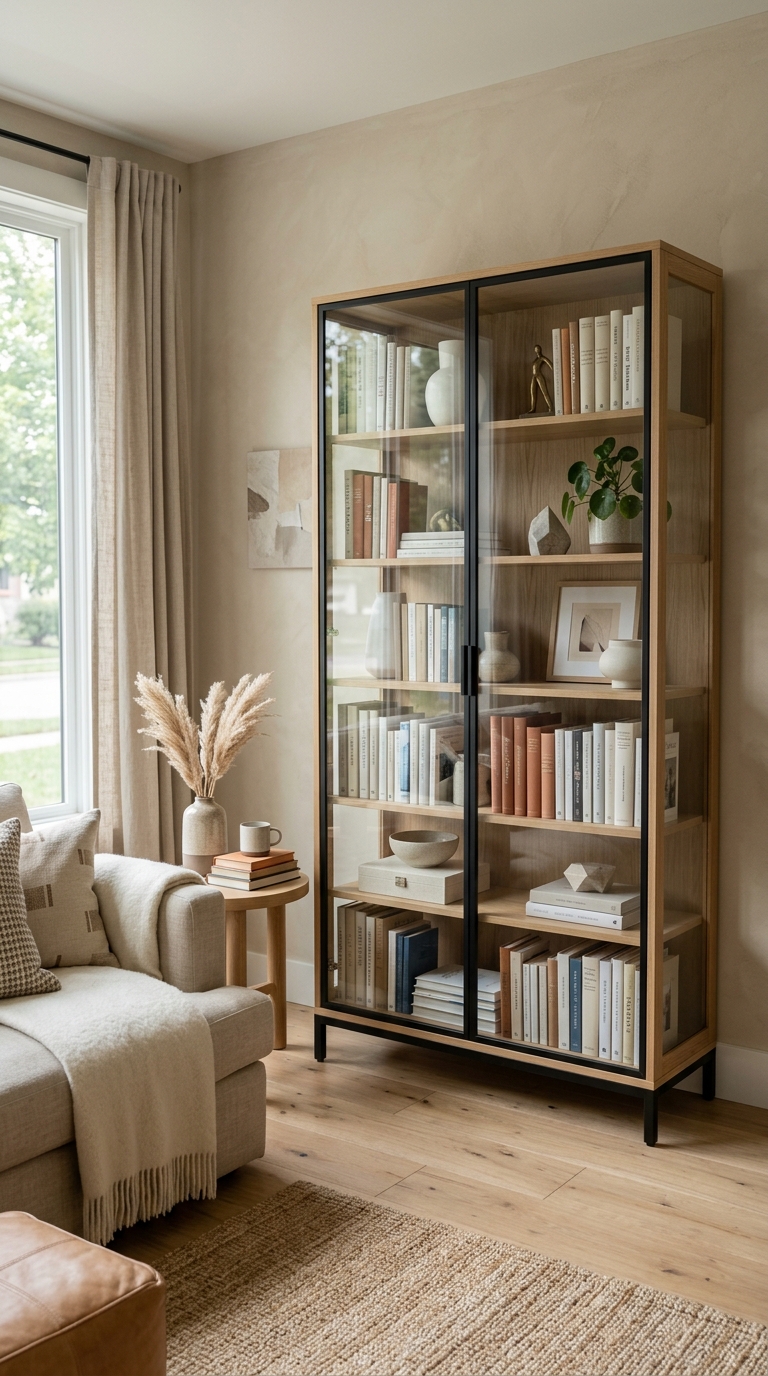
A bookshelf doesn’t have to be used exclusively for adult books and decorative accessories. If you have one in your living room, some of its lower sections could provide useful storage for children’s belongings.
Start by deciding which shelves should be available to the children and which should remain for adult use.
Lower, accessible sections can hold picture books, larger building toys, or a few favorite playthings. You could also use one or two existing fabric bins to group smaller collections that might otherwise become scattered.
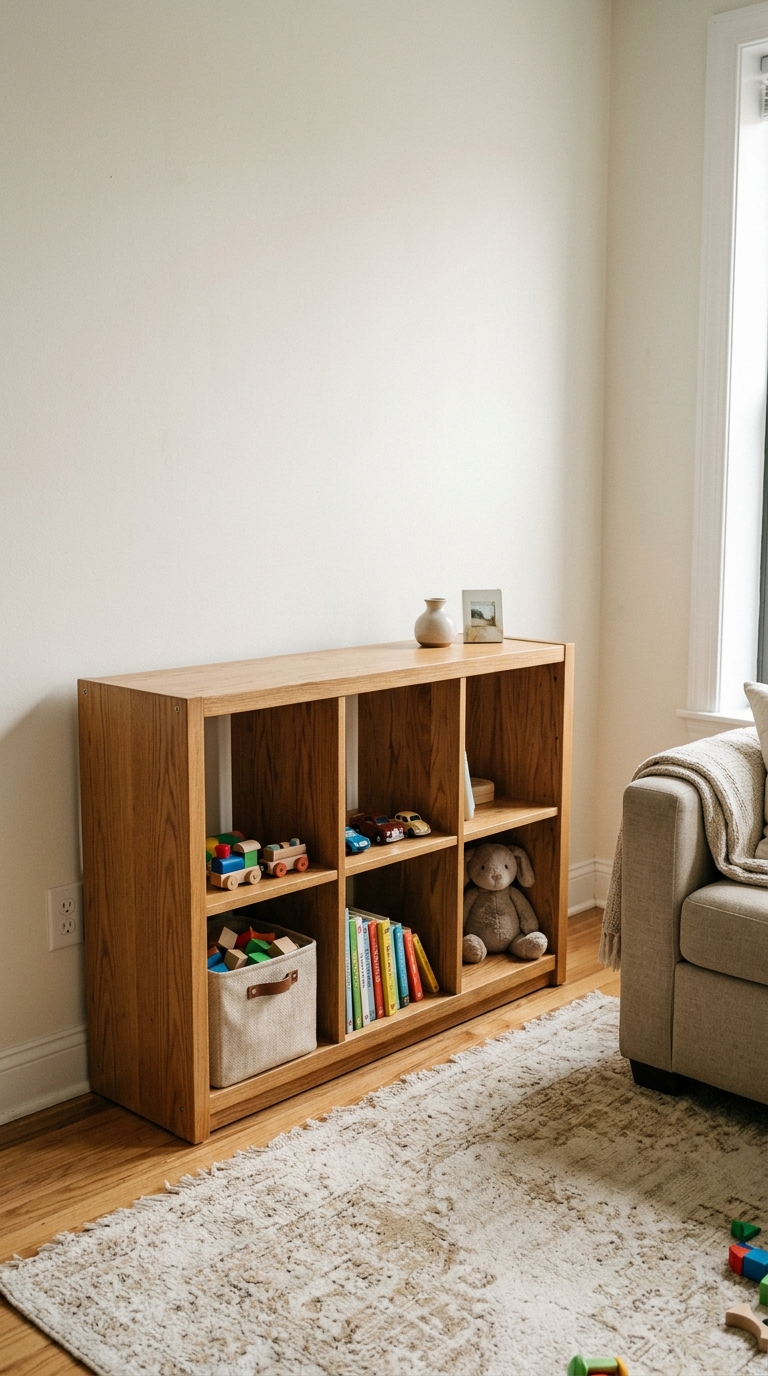
Try not to fill every compartment with a separate container. Children are more likely to use the storage independently when they can easily see where their toys belong.
For example, a low shelf with one open section for books and another for building blocks may be easier to maintain than several boxes filled with mixed toys.
If you have an IKEA KALLAX or similar cube unit, you can also explore how to use an IKEA KALLAX as a room divider in a small apartment. However, you don’t need to turn your bookshelf into a divider to make it useful for toy storage.
Whatever furniture you use, secure it appropriately to prevent tipping. Keep heavier belongings on lower shelves and avoid placing tempting toys high up where children might try to climb to reach them.
6. Look for Overlooked Storage Spaces
When a living room is small, it is easy to assume there simply isn’t enough room for everything. But before deciding that you need another storage unit, look at the spaces you may not be using effectively.
For example, if your sofa has enough clearance underneath, a shallow storage tray could hold activity books or other flat items that children can safely retrieve.
An existing storage bench might also accommodate a few toys, while an unused drawer in a side table could hold coloring materials or small collections.
You can even use a suitable corner beside existing furniture for a container holding toys that children regularly use.
However, don’t turn every available gap into storage. A container that sticks into a walkway or sits in front of a frequently used doorway can make an already small room feel even more cramped.
Be selective about what goes into overlooked spaces, too. Avoid pushing small toys underneath furniture where they can become difficult to retrieve or create hazards for younger children.
Sometimes the best way to make a small living room feel more spacious is to leave certain areas completely clear.
7. Group Toys According to How Your Children Play
Toys can quickly spread throughout the living room when children move from one activity to another without putting away what they were using before.
They might start building a tower with blocks, bring out toy cars, and then decide they want to play with dolls. Before long, several different collections are mixed together.
Rather than trying to organize every individual toy, group belongings according to how your children use them.
You could create a few simple categories:
- Building toys: Blocks, construction sets, and larger building pieces.
- Vehicles: Toy cars, trucks, and other play vehicles.
- Pretend-play toys: Dolls, toy food, and play accessories.
- Books and puzzles: Picture books, age-appropriate puzzles, and activity books.
- Soft toys: Stuffed animals and other soft play items.
Give each category a designated place using your existing drawers, shelves, or suitable containers.
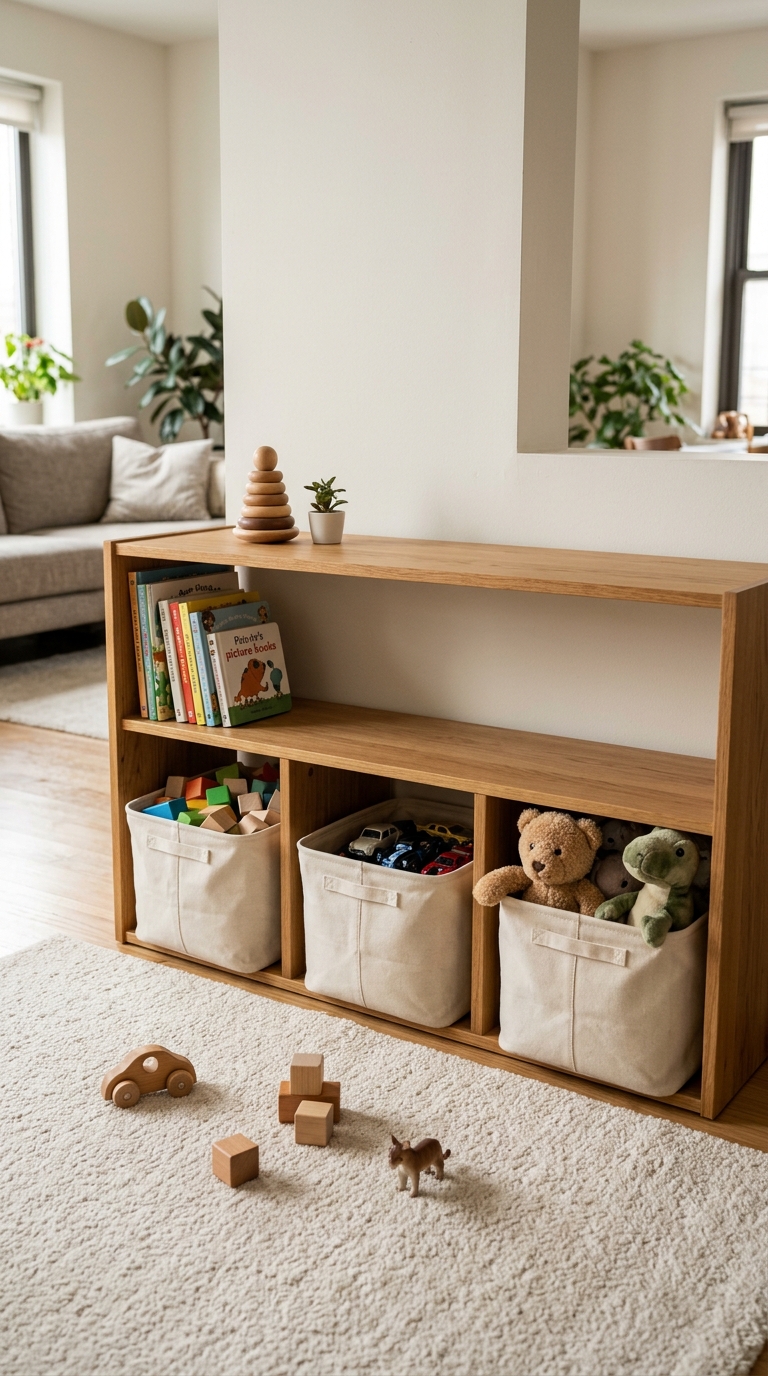
The important thing is to keep the system simple enough for children to understand. A young child is more likely to put building blocks away when there is one obvious place for them than when they have to sort several different types of blocks into tiny compartments.
You don’t need matching containers, elaborate labels, or a perfectly arranged shelf. What matters is that children can find what they want and have a reasonable idea of where it belongs afterward.
8. Rotate Toys Instead of Keeping Everything Out
Even a well-organized living room can become overwhelmed when every toy your children own is available at the same time.
This is where toy rotation can make a difference.
Instead of keeping everything in the living room, choose a manageable selection for everyday play and store the remaining toys somewhere suitable, such as a bedroom closet or another designated storage area.
For example, you might keep building blocks, a few vehicles, picture books, and favorite soft toys in the living room. Other toys can stay out of sight until your children are ready to use them.
When interest in some of the available toys begins to fade, you can exchange a few for items that have been stored away.
There is no need to follow a strict weekly schedule. Some families prefer rotating toys every few weeks, while others simply do it when the children seem ready for something different.
Keep frequently used favorites available, too. Toy rotation should make the room easier to manage, not turn playtime into a constant process of asking for permission to access belongings.
The benefit is simple: fewer toys competing for limited space means less to organize, less to put away, and more room for children to enjoy the living room.
9. Make Cleanup Simple Enough to Repeat Every Day
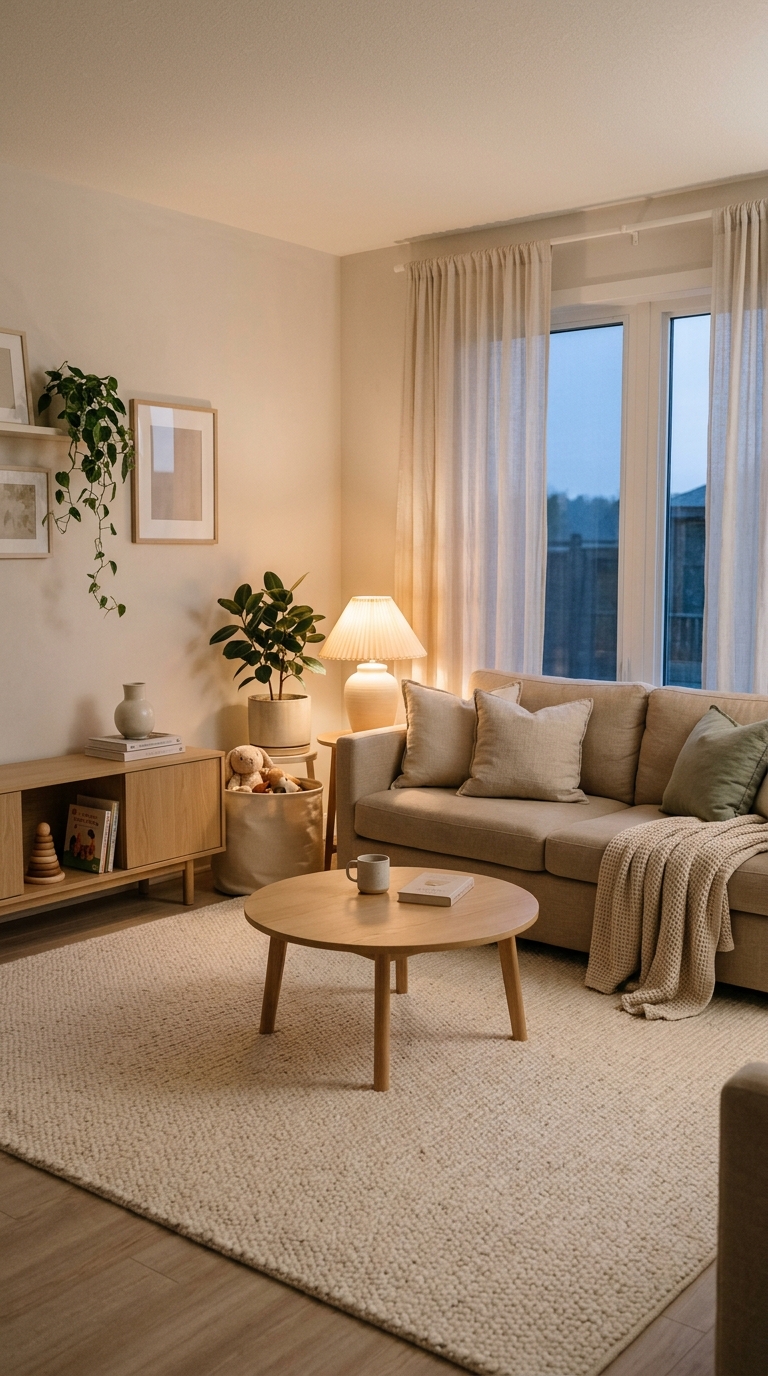
A storage arrangement can look wonderful when it is first organized, but it won’t stay that way if putting toys away becomes too complicated.
Think about what happens at the end of an ordinary day. Are you left sorting through several mixed containers, picking up individual pieces, and trying to remember where everything belongs?
If so, your storage system may need simplifying.
Start by giving frequently used toys an obvious home. Keep containers accessible, avoid unnecessary sorting categories, and make sure children can put their belongings away without having to move several other things first.
You can also introduce a small cleanup routine before bedtime or before moving on to another family activity.
For example, children could return their building blocks to one container, put their toy cars in their designated section, and bring picture books back to the shelf.
Younger children may need help, while older children can gradually take on more responsibility.
If toys frequently travel between the living room and bedrooms, a designated basket for items that belong elsewhere can also make the process easier. Just remember to return those items to their proper homes rather than allowing the basket to become another permanent collection of clutter.
The goal isn’t to have a perfectly tidy living room every hour of the day. It’s to make restoring the space manageable enough that everyone can participate.
Keep Toy Storage Safe in a Family Living Room
When children share a living room with adults, storage needs to be practical without introducing unnecessary safety risks.
A few precautions are worth keeping in mind:
- Secure tall furniture: Bookcases, cabinets, and other unstable furniture should be anchored to the wall using appropriate hardware. Television stands and televisions also need suitable protection against tipping.
- Choose toy containers carefully: Avoid storage chests with freely falling hinged lids. Open containers and storage with lightweight, removable lids can be safer alternatives, provided they are stable and appropriate for your children’s ages.
- Check small parts: Follow the age recommendations on toy packaging. Small parts can pose choking hazards for children under three. Older children who still put objects in their mouths may also be at risk.
- Keep heavy items low: Place heavier belongings on lower shelves and avoid positioning toys where children might climb to reach them.
- Keep walkways clear: Storage containers should not obstruct doorways or create tripping hazards.
- Inspect furniture regularly: Check for loose shelves, damaged hinges, sharp edges, and other potential hazards.
The American Academy of Pediatrics’ Toy Box Safety guide explains the risks associated with hinged toy-box lids and recommends safer storage designs, including open shelves and containers with removable lids.
For additional guidance, the U.S. Consumer Product Safety Commission’s furniture tip-over safety advice explains why furniture and televisions should be properly secured in homes where young children live.
These precautions are especially important because a storage solution should make everyday family life easier, not create another hazard.
Frequently Asked Questions About Toy Storage in a Small Living Room
1. How do you store toys in a small living room without a playroom?
Start by keeping only the toys your children use regularly in the living room. Use accessible sections of existing furniture, such as a low cabinet, bookshelf, or storage bench, and create a small play area with a rug if space allows. Store less frequently used toys elsewhere to prevent the room from becoming overcrowded.
2. How can I keep toys out of sight in a small living room?
Use furniture with doors or drawers to keep toys out of view when playtime is over. A sideboard, suitable TV console, or existing storage ottoman can help, provided the storage is safe and accessible. You can also use a few fabric bins on lower shelves to keep smaller collections together.
3. How many toys should I keep in the living room?
There isn’t one ideal number because it depends on your available space, your children’s ages, and the toys they actually enjoy using. A better approach is to keep a manageable selection of everyday favorites and store the rest elsewhere. If toys regularly spill into walkways or make cleanup difficult, it may be time to reduce the number kept in the room.
4. Is it safe to store toys in a storage ottoman?
It depends on the ottoman’s design and how it is used. Avoid models with heavy hinged lids that can fall and trap a child’s fingers or head. Make sure the ottoman is stable, doesn’t tip easily, and is appropriate for your children’s ages. Open storage or a design with a lightweight removable lid may be a safer alternative.
A Small Living Room Can Still Be a Place for Everyone
You don’t need a separate playroom to give your children somewhere comfortable to play. A little planning, better use of existing furniture, and a manageable approach to organizing toys can make a meaningful difference.
Start with the space you already have. Give everyday toys a clear home, keep frequently used items accessible, and store the rest elsewhere when possible.
Most importantly, choose an arrangement that works for your family’s everyday routine.
Your living room will probably look lived-in sometimes, especially when children are playing. That’s part of having a family home. What matters is being able to bring the room back together without feeling that toys have permanently taken over.