How to Use an IKEA KALLAX as a Room Divider in a Small Apartment
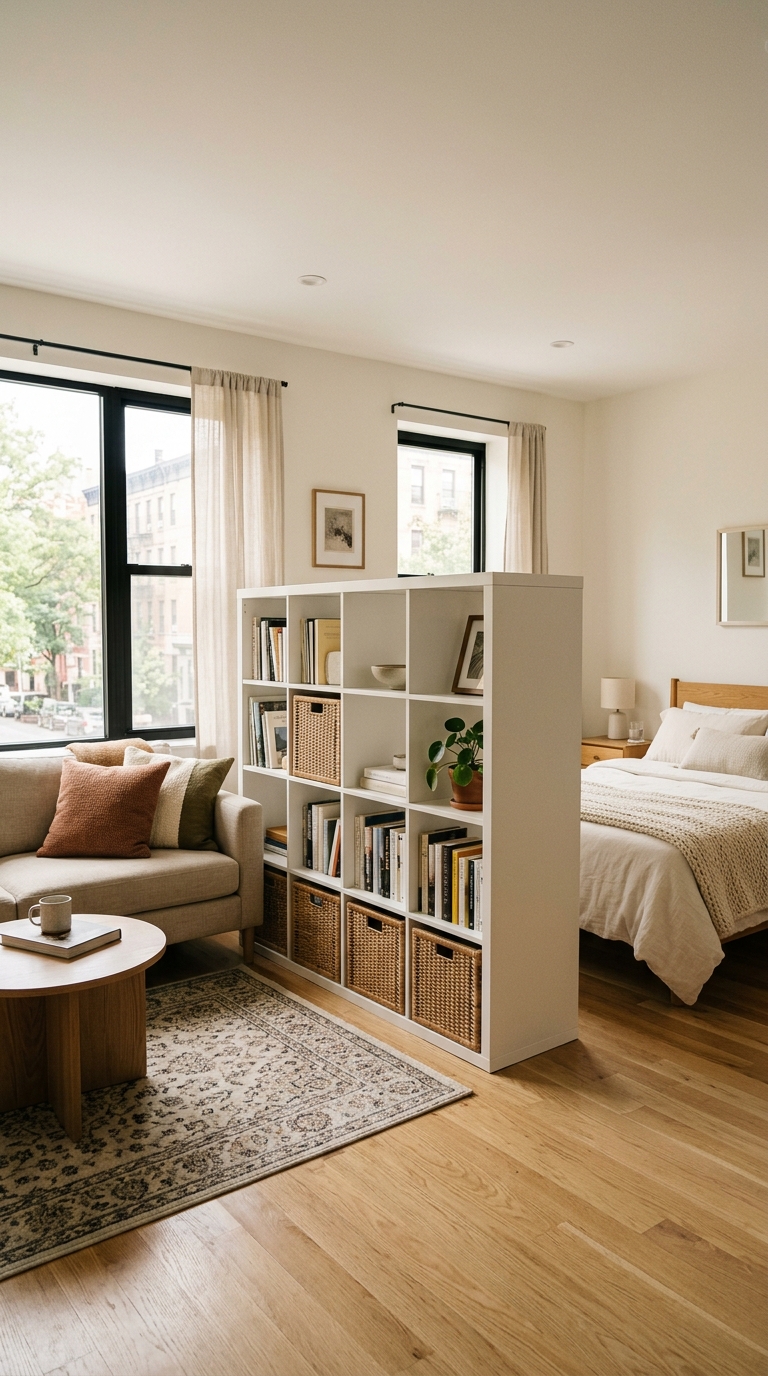
If you live in a small apartment, you probably know the feeling of wishing you could create just one more room without actually losing the openness of the space. Maybe your bed sits only a few steps from the sofa, your desk is tucked into a corner of the living room, or your front door opens directly into the main living area. You want some separation, but building a wall isn’t exactly an option. That’s where a KALLAX room divider for a small apartment can make sense. It can create visual boundaries while giving you storage at the same time.
But there is an important catch: a KALLAX is still a fairly substantial piece of furniture.
Put it in the wrong place and you can lose precious floor space, block natural light, or make an apartment that already feels small feel even smaller. Fill every opening with baskets and decorations, and the divider can become a new source of visual clutter.
So the goal isn’t simply to put a KALLAX in the middle of your apartment and call it a room divider. The goal is to use it in a way that makes the space work better than it did before.
Is a KALLAX a Good Room Divider for a Small Apartment?
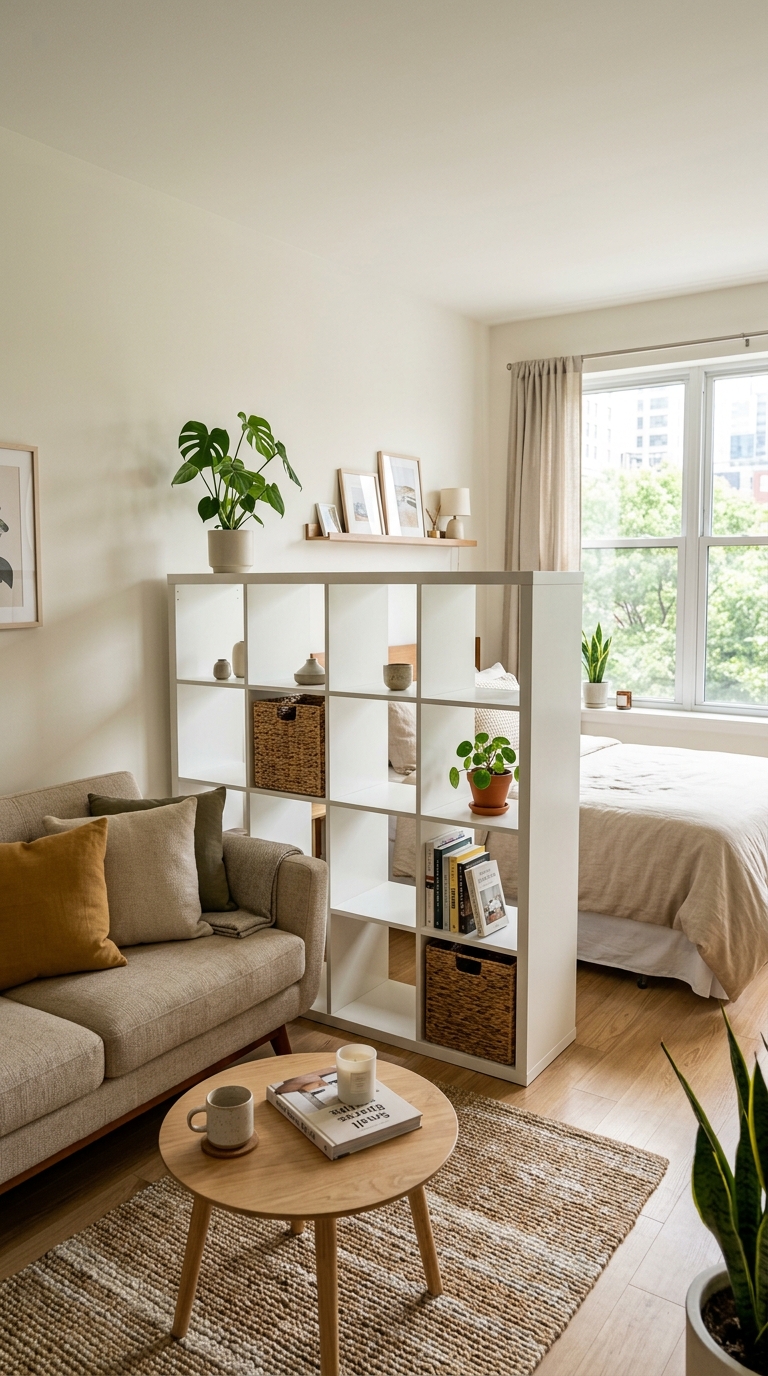
A KALLAX works particularly well when you need a room to perform more than one job.
A studio apartment, for example, might need to function as a bedroom, living room, workspace and sometimes even dining room. A KALLAX can help visually separate two of those functions without completely closing one area off from another.
If you’re working with a studio layout, it can also help to think about how your bed and sofa relate to each other before introducing another piece of furniture. Our guide to studio apartment layouts with a bed and couch goes into that broader layout problem, which is worth solving before you decide where the divider should go.
That’s the main advantage.
Unlike a solid wall, an open KALLAX allows some light and sightlines to pass through its cubbies. At the same time, you gain storage for books, baskets, clothing, office supplies or everyday things that tend to accumulate in a small home.
Know What a KALLAX Can and Can’t Do
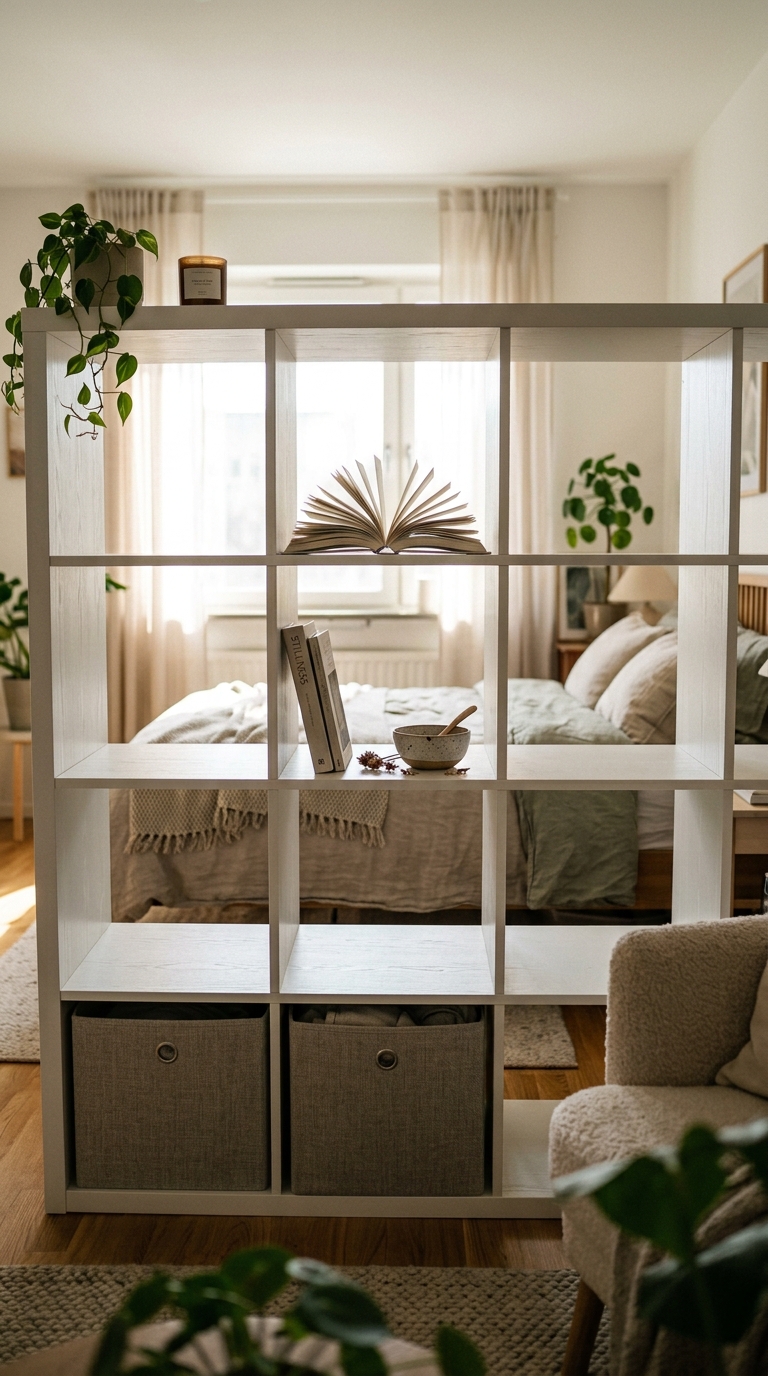
But it’s important to be realistic about what it can accomplish.
A KALLAX creates visual zoning, not a true wall. It won’t give you complete privacy, block sound from a sleeping area, or make a studio apartment behave like a two-bedroom home.
Think of it as creating a boundary rather than building a room.
That distinction matters because the best divider is not necessarily the one that gives you the most separation. In a small apartment, you still need the whole space to feel connected and easy to move through.
And if you’re already struggling with too many belongings in too little storage, a KALLAX can be helpful—but only if the storage is actually controlled. Otherwise, you’re simply adding another surface for things to collect. If that sounds familiar, our guide on how to organize a small home when everything feels like it has nowhere to go can help you think about the storage problem before adding more of it.
Choose the Right KALLAX Before You Plan the Layout
Before thinking about baskets, plants or pretty arrangements, think about dimensions.

One of IKEA’s common KALLAX configurations is approximately 57⅞ inches wide, 57⅝ inches high and 15⅜ inches deep. KALLAX isn’t limited to one configuration, though. IKEA sells different sizes and layouts, so don’t assume the larger square unit is automatically the best choice for a small apartment. A 2×4 unit, for example, can give you a different footprint depending on how it’s positioned, which may work better in a tight studio. The right configuration depends on the width of your room, the direction people need to walk, and how much storage you actually need. IKEA describes this configuration as suitable for use as a room divider, while also offering inserts and boxes for changing how much of the storage remains open.
That 15⅜-inch depth can sound surprisingly slim when you’re looking at the measurements, but remember that the shelf isn’t the only thing occupying space.
People still need to walk around it, open doors, pull out chairs and move through the room comfortably.
Test the Footprint Before You Buy

This is why I would measure the entire area around the proposed divider, rather than simply measuring the wall and asking whether the KALLAX will fit.
Use painter’s tape on the floor to mark the footprint. Then walk through the room normally. Try carrying laundry from one area to another. Pull out a chair. Open the bedroom door. Walk from the sofa to the kitchen.
You may discover that the shelf technically fits but makes everyday life awkward.
That’s an important difference.
A small apartment doesn’t have much spare circulation space to begin with, so a few inches can matter more than you expect.
Also consider the size of the KALLAX you actually need. A larger configuration may provide stronger separation and more storage, but that doesn’t automatically make it better. If a smaller unit creates enough definition while preserving more openness, it may be the smarter choice.
Measure for function first.
You can worry about making it beautiful afterward.
Where Should You Put a KALLAX Room Divider?
Once you’ve established that the furniture can physically fit, think about what you want the divider to accomplish.
The easiest mistake is assuming a room divider belongs in the center of the room. Sometimes it does. Often it doesn’t.
Instead, look at the zones that already exist.
Behind the Sofa
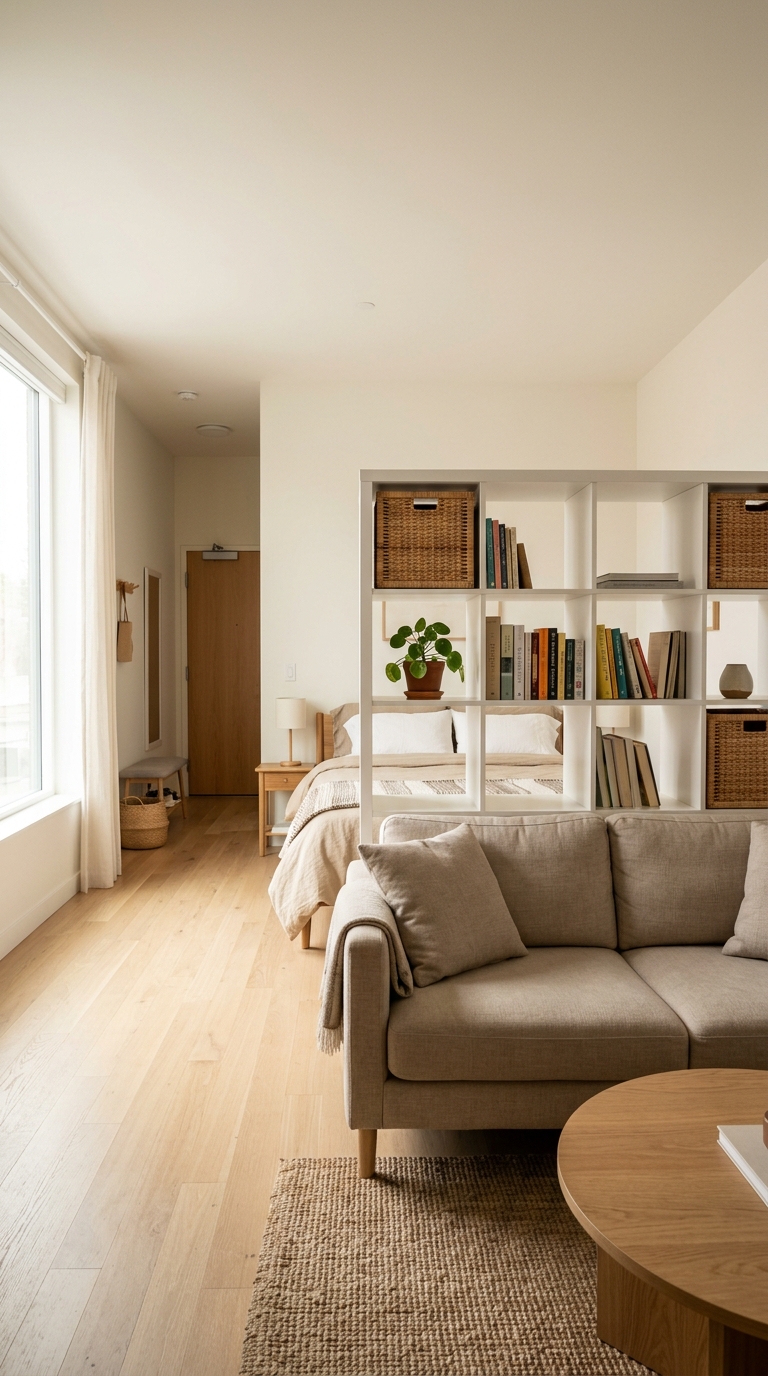
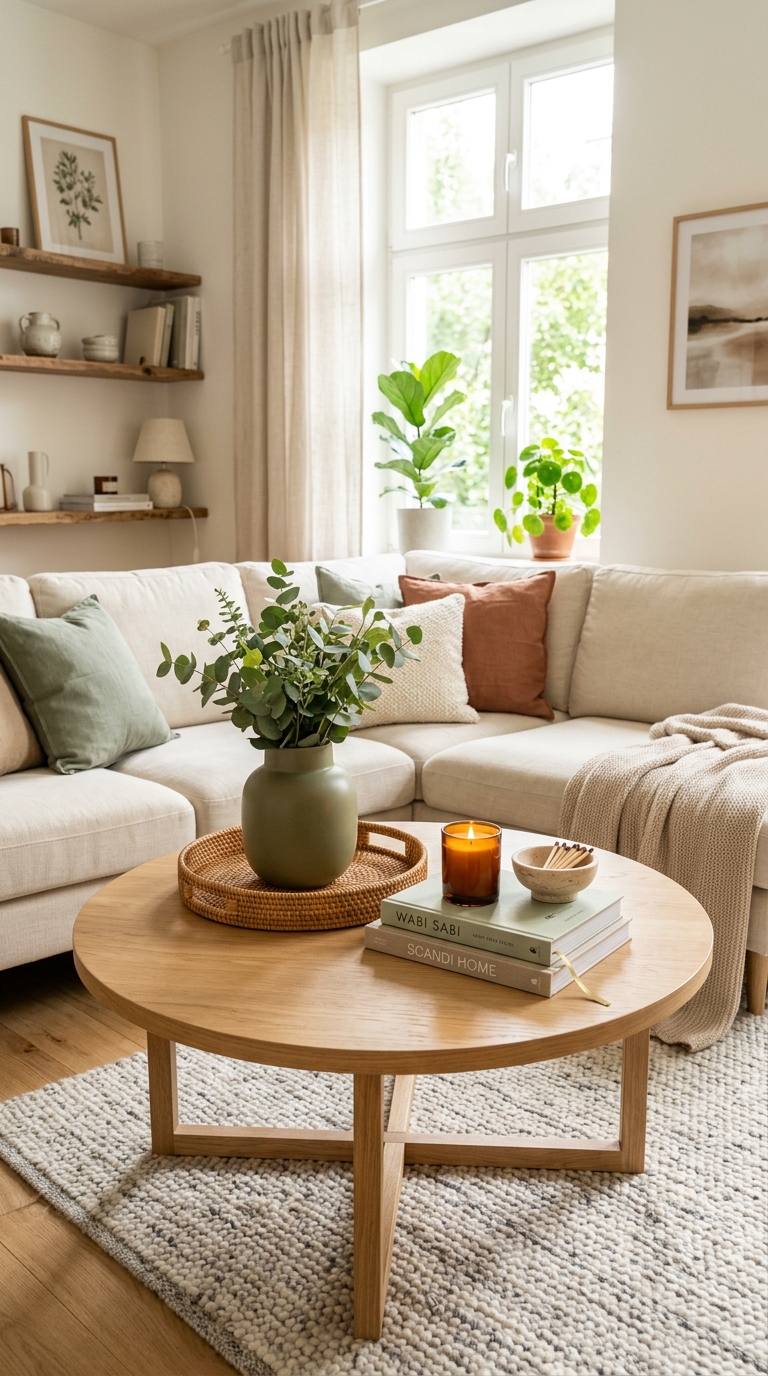
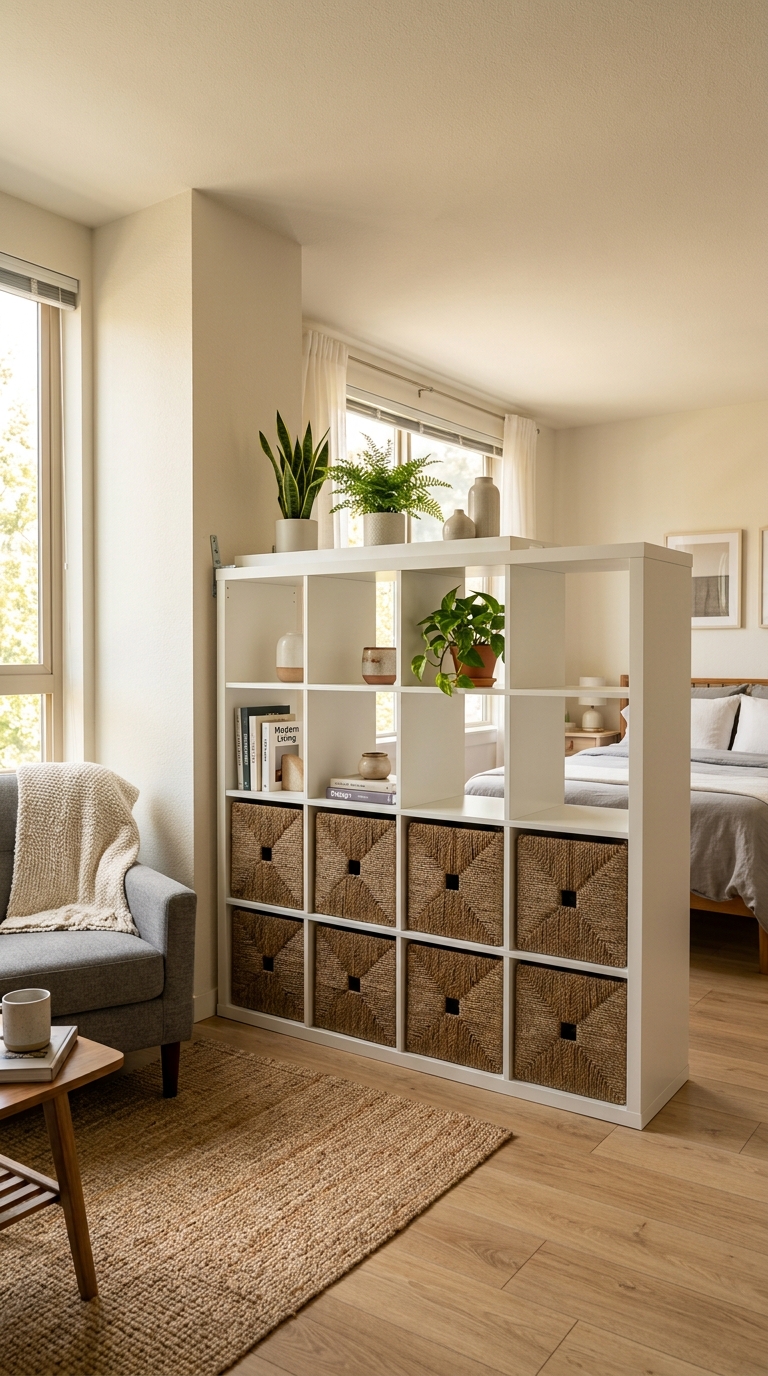
Placing a KALLAX behind a sofa can create a subtle boundary between the living area and another part of the apartment. It can also give you useful storage without requiring another large piece of furniture.
This can work particularly well when the sofa already acts as a natural boundary.
If you’re rearranging the whole living room to make this work, don’t overlook the circulation around the sofa and other furniture. Our guide on making a small living room work with the furniture you already have covers that larger layout question and can help you test the arrangement before committing to the divider.
Between the Bed and Living Area
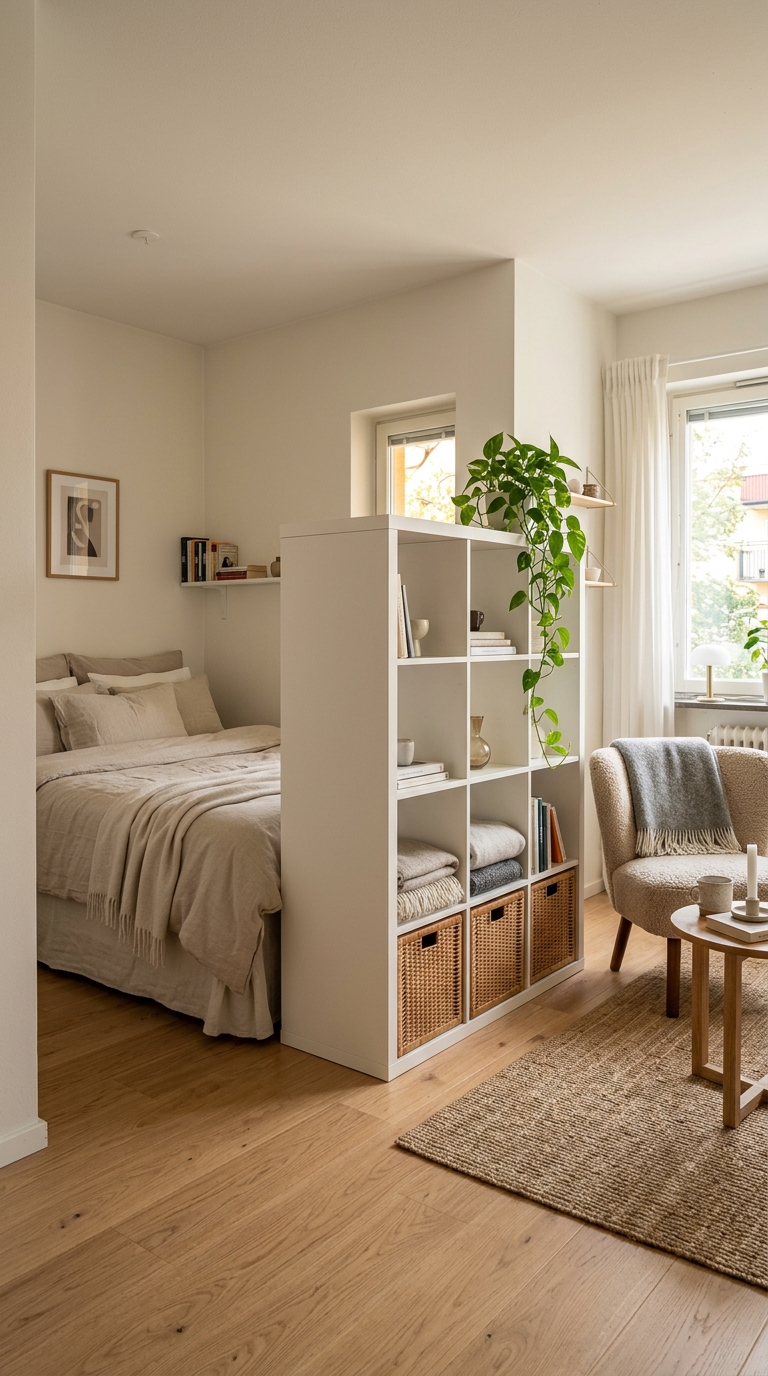
For a studio apartment, this is one of the most practical uses.
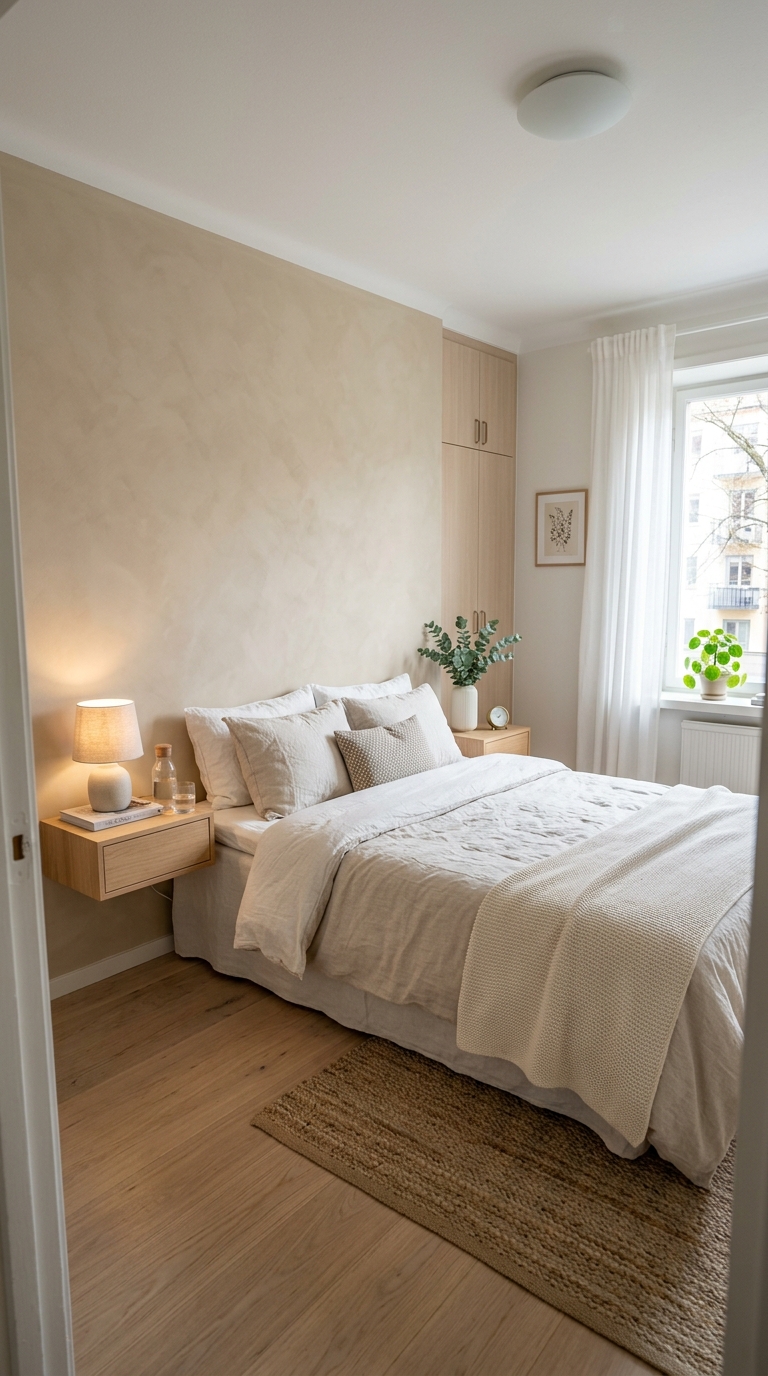
Rather than walking into the apartment and immediately seeing the bed, the KALLAX can give the sleeping area some visual definition while keeping it connected to the rest of the room.
You don’t need complete privacy for the space to feel more like a bedroom.
Between a Desk and the Rest of the Room
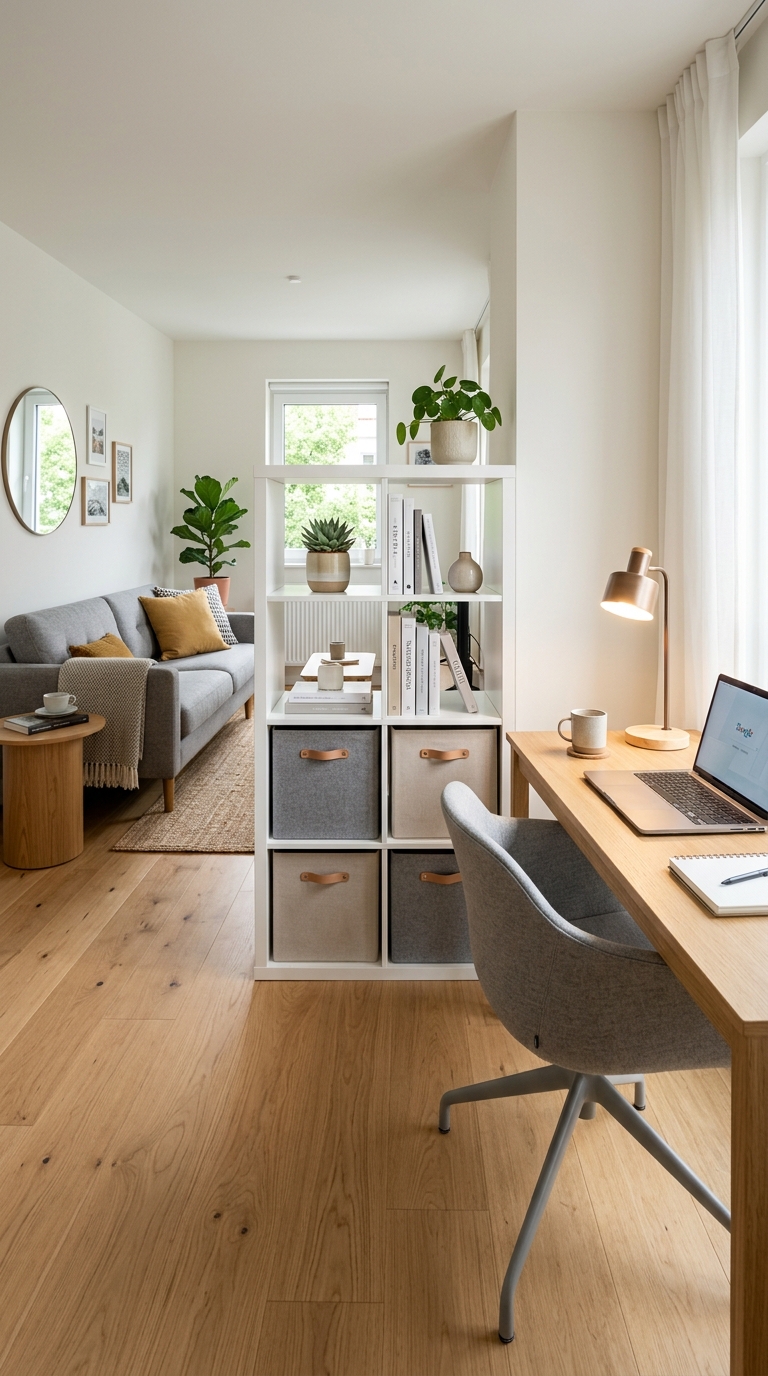
If your workspace is in the living room, a KALLAX can create a visual stopping point between work and relaxation.
That can be especially useful when the apartment has no separate office area. The shelf doesn’t need to completely hide the desk. It simply needs to make the two areas feel intentional rather than accidental.
Near the Entry
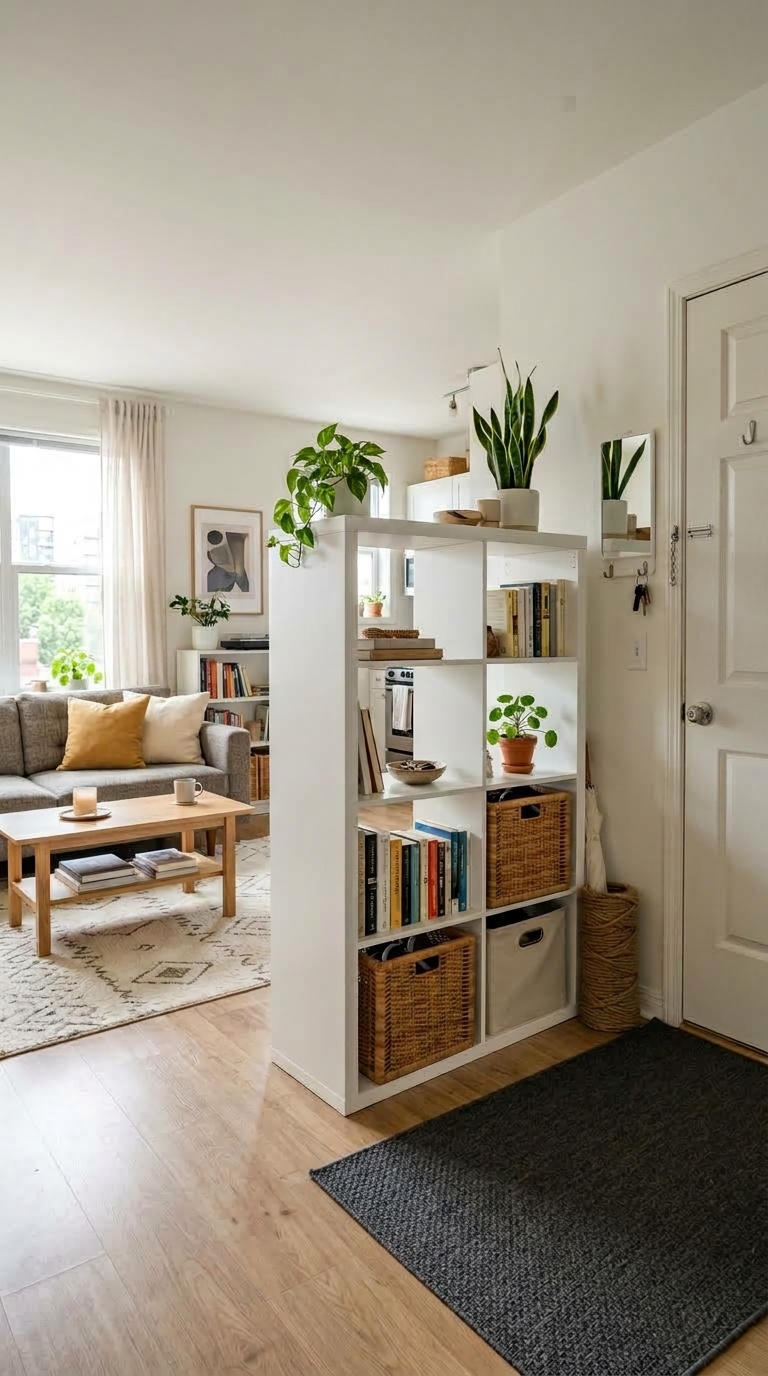
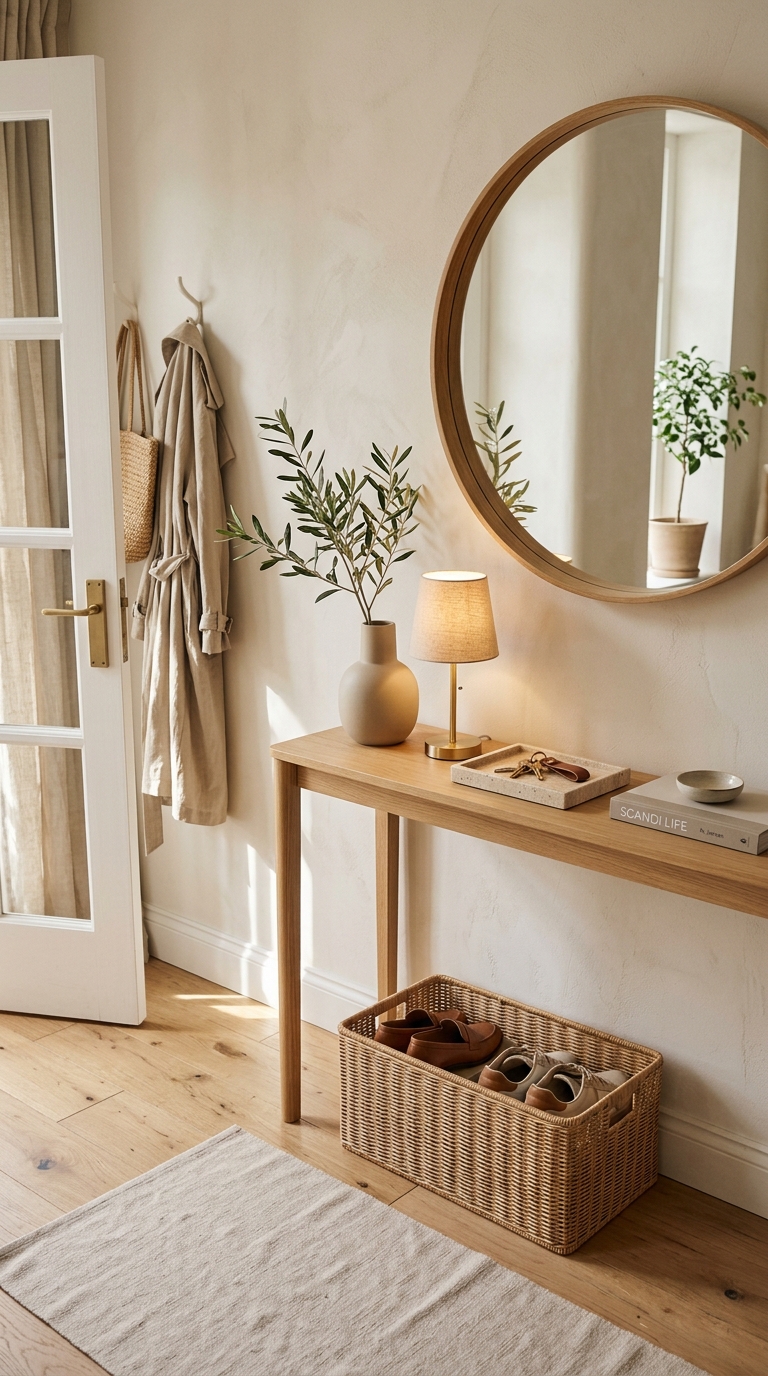
If your apartment doesn’t have a real entryway, a KALLAX can sometimes create one.
Positioned carefully, it can separate the front door from the living area while providing somewhere for baskets, bags or other everyday items.
The key word here is carefully.
Don’t sacrifice the natural route through the apartment just to create a defined entryway. If everyone has to squeeze around the shelf every time they come through the door, the divider isn’t solving the problem.
It’s creating another one.
Don’t Let Your Room Divider Steal Your Natural Light
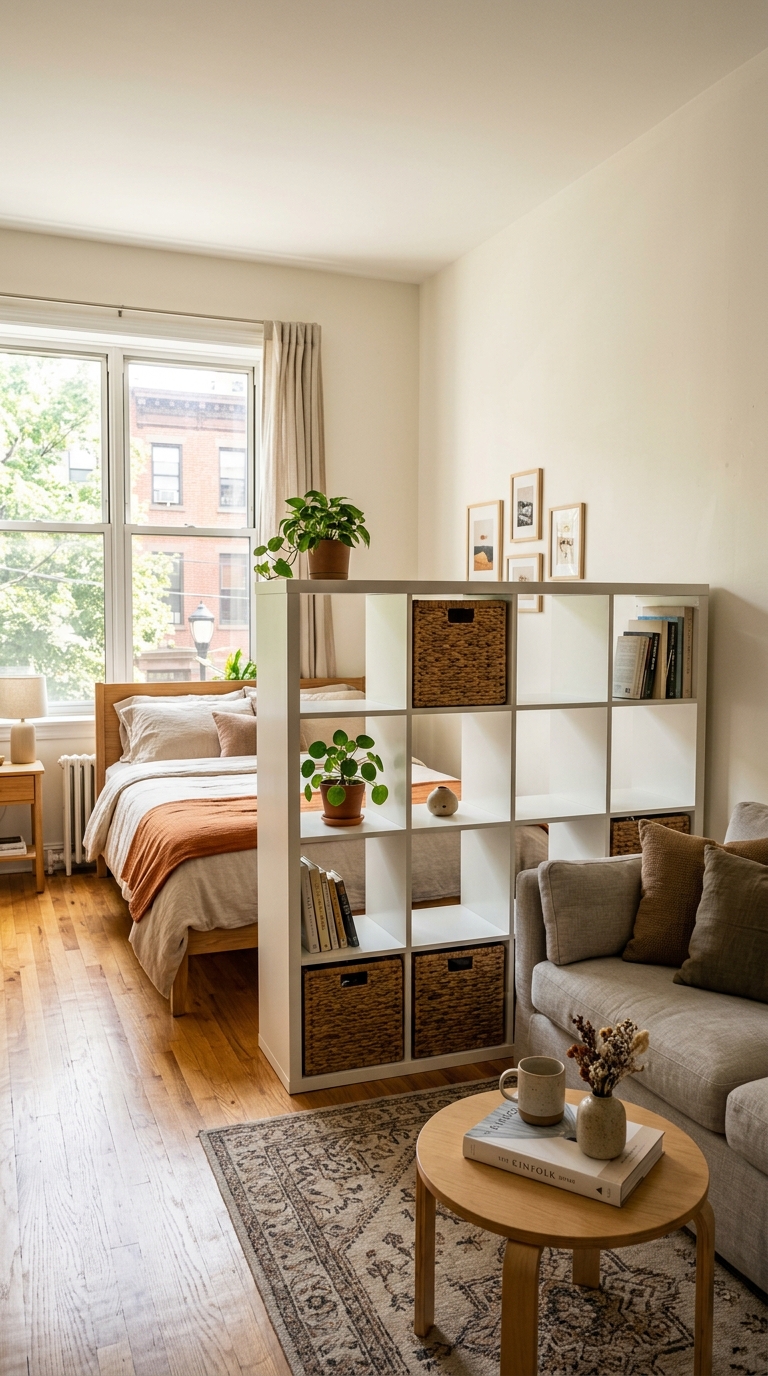
This is one of the biggest things to think about before choosing a KALLAX.
A divider can make two areas feel more separate, but it can also turn one side of the apartment into the darker side.
If your main window is the only significant source of daylight, look carefully at where that light travels throughout the room.
An open KALLAX has an advantage here because light can pass through the cubbies. But that doesn’t mean you should automatically fill every opening with storage.
Sometimes the best-looking KALLAX is the one that isn’t completely full.
Leave some sections open.
Use a few plants, books or decorative pieces rather than turning every cube into a storage container. If you need to hide less attractive items, use selected baskets or inserts instead of closing off the entire unit. IKEA also offers KALLAX inserts and boxes that can turn some of the open cubbies into more concealed storage.
The goal is to soften the boundary without creating a solid visual wall.
Before putting the KALLAX near a window, ask yourself a simple question:
Which part of this apartment needs the daylight most?
If the answer is your workspace, for example, you may not want to put a tall, heavily filled divider between the desk and the window just because it creates a prettier bedroom zone.
A beautiful layout that makes the room dark isn’t necessarily a better layout.
How to Style Both Sides Without Making the Apartment Look Cluttered
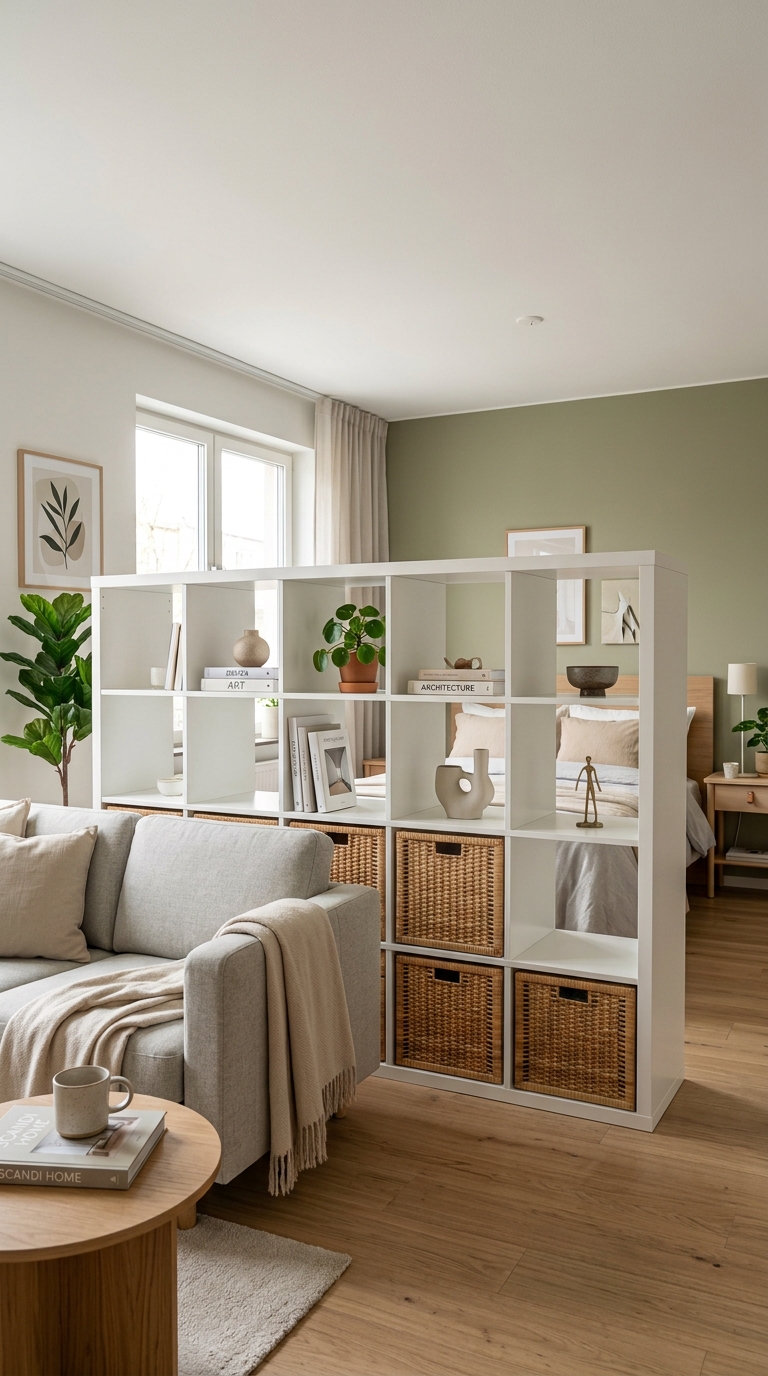
A KALLAX used as a room divider has one problem a normal bookshelf doesn’t: both sides are visible.
That means you can’t simply style the front and forget about the back.
Instead, give each side a purpose.
The living-room side might hold a few books, a plant, decorative objects and one or two baskets.
The bedroom side might be quieter, with more concealed storage and fewer decorative pieces.
If the other side faces a desk, you might use a few cubes for office supplies or paperwork while keeping the rest visually calm.
This makes the KALLAX feel like part of both spaces rather than a bookshelf that happens to be standing in the middle.
And please don’t feel obligated to fill every cube.
Having storage doesn’t mean you have to use every inch of it. Empty space allows the eye to rest, lets light move through the unit and keeps the divider from becoming the visual focus of the entire apartment.
A good mix might include open cubes, a few baskets or inserts, some books and several spaces that are deliberately left alone.
If you already know that open shelving makes you want to keep adding things, use more concealed storage instead. The purpose of the KALLAX is to make your apartment easier to live in—not to give you sixteen new places to display everything you own.
If you’re prone to that feeling of having a tidy room that somehow still looks visually busy, you may also find our guide on why a home can still feel cluttered after cleaning useful. Storage only helps when it reduces visual noise rather than simply giving clutter somewhere else to sit.
4 Practical Ways to Use a KALLAX as a Divider
The same shelf can solve very different problems depending on how you use it.
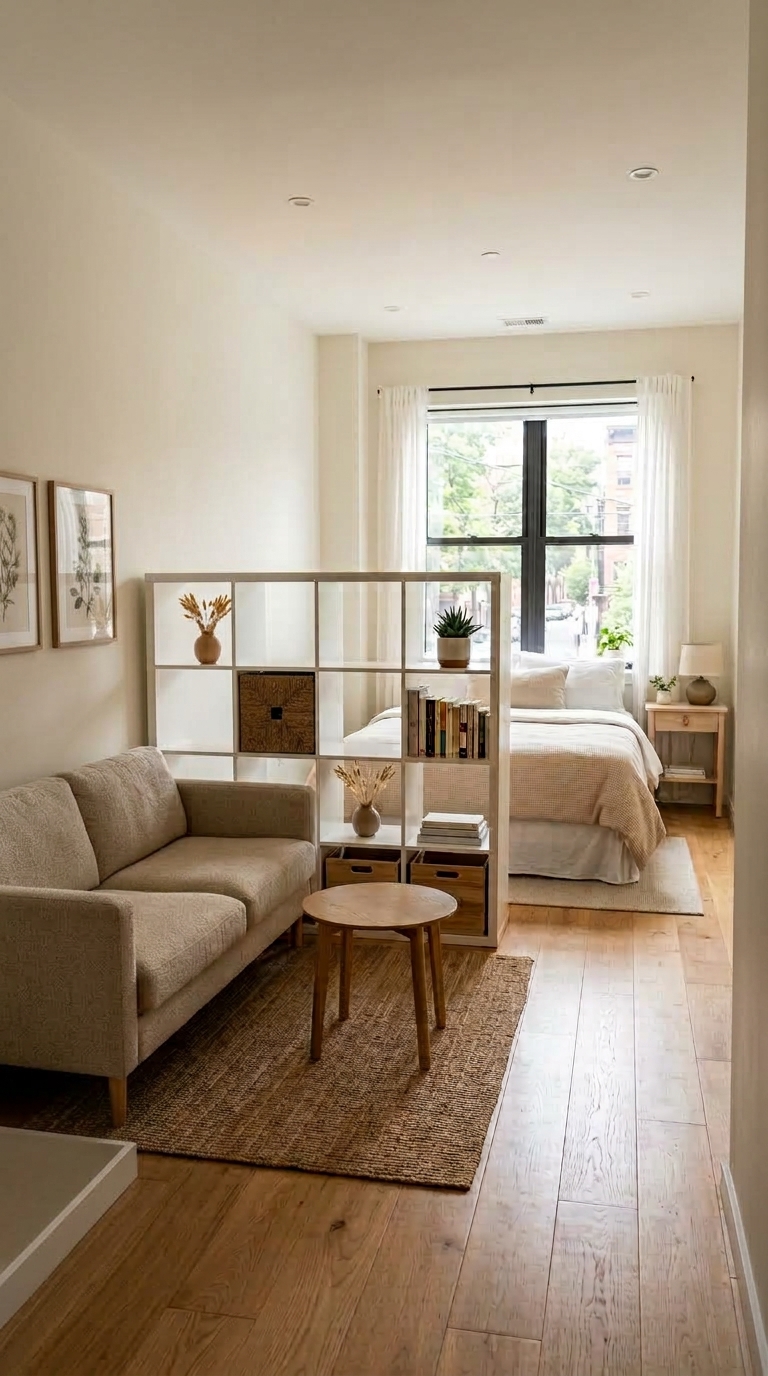
1. Separate the Bed from the Living Room
This is one of the most practical arrangements for a studio apartment.
Use the KALLAX to make the sleeping area feel distinct while leaving enough openness for daylight and airflow. Keep the bedroom-facing side relatively calm and use selected cubes for practical storage.
The result doesn’t need to look like a separate bedroom. It just needs to feel like a space with a different purpose.
2. Create a Living Area Behind the Sofa
If your sofa floats in the room, a KALLAX can reinforce that boundary and provide storage behind it.
This can work particularly well when the back of the sofa otherwise looks unfinished or when you need additional storage without adding another cabinet.
Just make sure the shelf doesn’t make the walkway behind the sofa uncomfortably narrow.
3. Give Your Home Office Its Own Zone
A desk doesn’t necessarily need four walls to feel separate.
A KALLAX can create a visual boundary between your workspace and the rest of the apartment, especially when you work from home and want the desk to feel less like it’s sitting in the middle of your living room.
Use the storage for office essentials, but resist the temptation to turn every cube into an open filing cabinet.
4. Create a Small Entry Zone
In an apartment where the front door opens directly into the main room, a KALLAX can help create a transition between “coming home” and “living space.”
Use baskets for small items, a few practical storage sections and enough open space to keep the area from feeling like a wall.
The important thing is that the divider should support the entry—not make it harder to enter.
Don’t Skip the Safety Part
There is one part of using a KALLAX as a room divider that shouldn’t be treated as an afterthought: stability.
IKEA’s product information warns about a tipping hazard and states that the unit must be securely anchored using suitable screws and plugs for the particular home.
That’s especially important when a KALLAX is being used as a room divider, because it may be positioned away from a wall.
Don’t assume that because the unit is heavy, it doesn’t need to be secured.
Follow the manufacturer’s instructions and use appropriate hardware for your particular wall. If you’re renting and aren’t permitted to make the necessary attachment, check your lease or ask your landlord before installing it.
It’s also worth thinking about what you put inside the unit. Avoid creating a top-heavy arrangement simply because the upper cubes are the easiest ones to decorate. Check the manufacturer’s specifications for the particular KALLAX version you own before loading the shelves.
A room divider should make your apartment more functional, not introduce a safety problem that wasn’t there before.
When a KALLAX Is Actually the Wrong Choice
As useful as a KALLAX can be, there are small apartments where I wouldn’t recommend using one as a divider at all.
If the room is already so tight that placing the shelf would interfere with the main walking route, stop there.
If it blocks the only useful source of natural light, reconsider.
If what you really need is privacy rather than visual separation, an open shelf may leave you disappointed.
And if you don’t need the storage, there’s no reason to add a bulky piece of furniture simply because you’ve seen beautiful KALLAX room-divider setups online.
A curtain may make more sense when you need something lightweight and flexible. A folding screen can work when you want a visual boundary without adding storage. Sometimes the smartest choice is to leave the room open and use the existing furniture to define the zones.
That’s worth remembering because Pinterest and Instagram can make almost any furniture arrangement look effortless.
The photograph doesn’t show the awkward walkway outside the frame. It doesn’t show how often someone has to move a chair to get past the divider. And it certainly doesn’t show the window that no longer lights the room properly.
Your apartment has to work in real life.
KALLAX Room Divider FAQs
Can a KALLAX really divide a studio apartment?
Yes, but it creates visual separation rather than a true room. It can make a sleeping, living or work zone feel distinct while keeping the apartment open. If you need soundproofing or complete privacy, another solution such as a curtain or solid partition may work better.
Does a KALLAX make a small apartment feel smaller?
It can, especially if it blocks a walkway, sits too close to other furniture or is filled in every cube. Keeping some sections open and protecting the main circulation path can help the divider feel lighter.
Should I fill all the KALLAX cubes when using it as a room divider?
No. Leaving some cubes open can help light and sightlines pass through the unit and reduce visual clutter. Use baskets, inserts and decorative items selectively rather than treating every opening as storage that needs to be filled.
Can I use a KALLAX as a room divider in a rental apartment?
You can, but stability needs to be considered before installation. IKEA recommends securing the unit, so renters should check their lease and determine whether the required attachment is allowed. If you cannot safely secure the unit, choose a divider that suits your rental restrictions instead.
The Best KALLAX Divider Is the One That Makes Your Apartment Work Better
A KALLAX can be a clever solution for a small apartment because it does more than one job. It can separate a sleeping area from a living room, give a home office some definition, create an entry zone and provide storage without requiring an actual wall.
But the shelf itself isn’t what makes the arrangement successful.
The layout does.
Measure before you buy. Think about how people move through the room. Protect the natural light. Leave some of the cubes open. Give both sides a purpose, and don’t be afraid to decide that a KALLAX isn’t right for your particular space.
The goal isn’t to make your apartment look like it has more rooms.
It’s to make the one you have work beautifully for the life you’re actually living in it.