Small Apartment Entryway Shoe Storage Ideas
Finding Small Apartment Entryway Shoe Storage Ideas is the easiest way to take back control of your space. Your entryway is the first thing you see when you walk into your home, so it should feel clean, calm, and organized. But in small apartments, shoes often end up piling up near the door, quickly turning the space into clutter.
When footwear spreads across the entryway, it blocks walking space and makes the entire area feel tighter than it actually is. Even a simple hallway can start to feel crowded and stressful when there is no proper storage system in place.
The good news is that you do not need a bigger entryway to fix this. With the right storage ideas, you can keep shoes organized, free up floor space, and create a more welcoming first impression every time you walk through the door.
The Concealed Slim-Line Drop Zone Layout
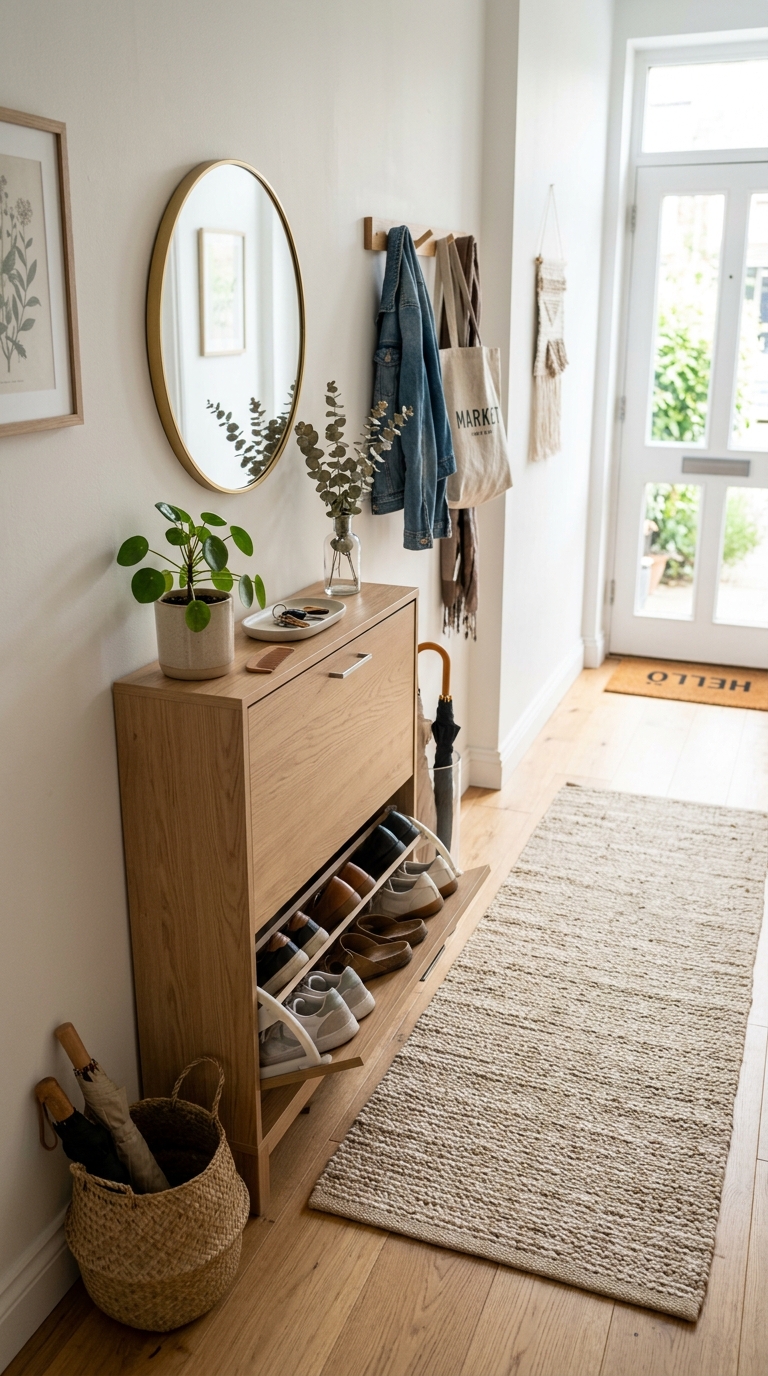
In a very narrow hallway, regular shoe racks often take up too much space. When shoes are stacked on open shelves, they usually stick out into the walking path and make the entryway feel tighter. This can make even a small hallway uncomfortable to walk through.
The concealed slim-line drop zone layout solves this problem by keeping storage flat against the wall. Instead of bulky racks, it uses a thin, wall-hugging shoe cabinet that blends into the space. Shoes stay hidden inside, while the walkway stays clear and open.
This creates a cleaner entryway that feels organized, even in very tight apartment layouts.
Step-by-Step Tipping Cabinet Installation Layout
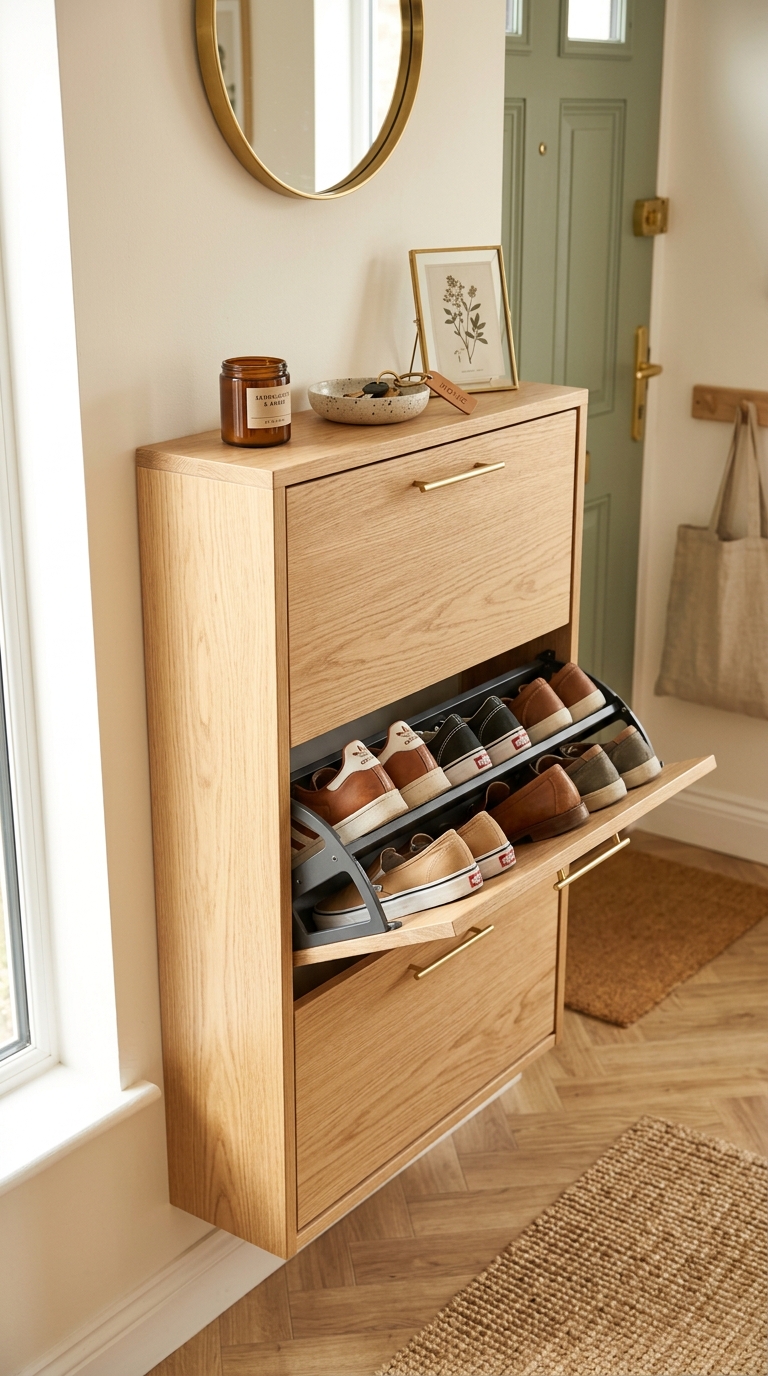
To set up this layout in a small apartment entryway, choose a slim tipping cabinet with a depth of under eight inches. This ensures it does not block your doorway or walking path. Position the cabinet flat against the wall and make sure it does not interfere with the door swing.
These cabinets open by tilting forward, allowing shoes to be stored vertically inside instead of spreading across the floor. This keeps footwear neatly hidden while freeing up valuable floor space in narrow hallways.
A closed cabinet instantly reduces visual clutter. It hides shoes, loose laces, and mismatched pairs, making the entryway look cleaner and more organized.
The top surface can also be used as a small display area. You can place a tray for keys, a small candle, or a simple decorative item to make the space feel more welcoming without adding clutter.
The Double-Duty Biophilic Entryway Shoe Storage Layout
Many small entryways feel cramped because they rely on bulky storage pieces or leave the space completely empty. Tall plastic cabinets or oversized bins near the door can also block natural light and make the area feel closed in.
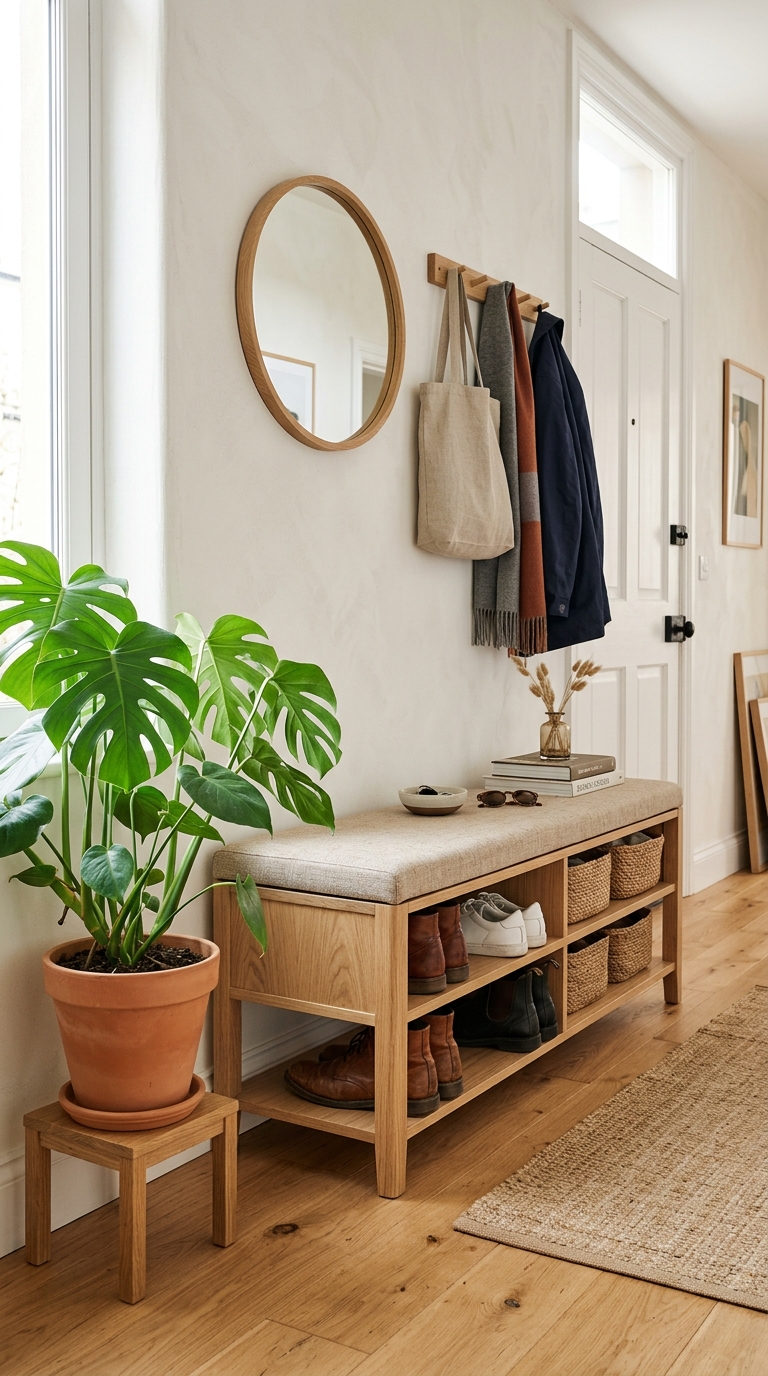
The double-duty biophilic entryway shoe storage layout solves this by combining seating and storage in one simple piece. It uses a slim wooden bench with open shelving underneath for shoes.
This design keeps the entryway functional without adding visual weight. The open lower shelves store shoes neatly, while the bench gives you a place to sit when putting them on. Because the structure is low and open, it still allows light to flow through the space, keeping the entryway bright and welcoming.
Selecting Sustainable Wood Materials and Bins
To execute this comfortable configuration smoothly on a budget, choose a low-profile storage bench made from natural materials like light oak or bamboo, such as a minimalist entryway bench for small spaces. Position the unit flat against your main drywall pathway, directly underneath an eye-level accent mirror.
The lower section of the bench should feature open slat shelves or deep, built-in cubby tracks. This allows you to store shoes neatly while keeping the walkway clear. Keeping the lower racks open to the air helps shoes dry faster and prevents odors after rainy days.
The wooden bench adds a warm, natural feel to the entryway and keeps the design simple and functional. The top surface can be used as a seating area when putting on or removing shoes. Adding a small cushion or woven basket can improve comfort without clutter.
Overall, this layout keeps the entryway organized, functional, and visually calm, even in a small apartment.
The Suspended Floating Wall-Peg Matrix
Keeping shoes directly on the floor in a narrow hallway quickly reduces walking space and makes the entryway feel cluttered. It also makes cleaning more difficult because you always have to work around scattered footwear.
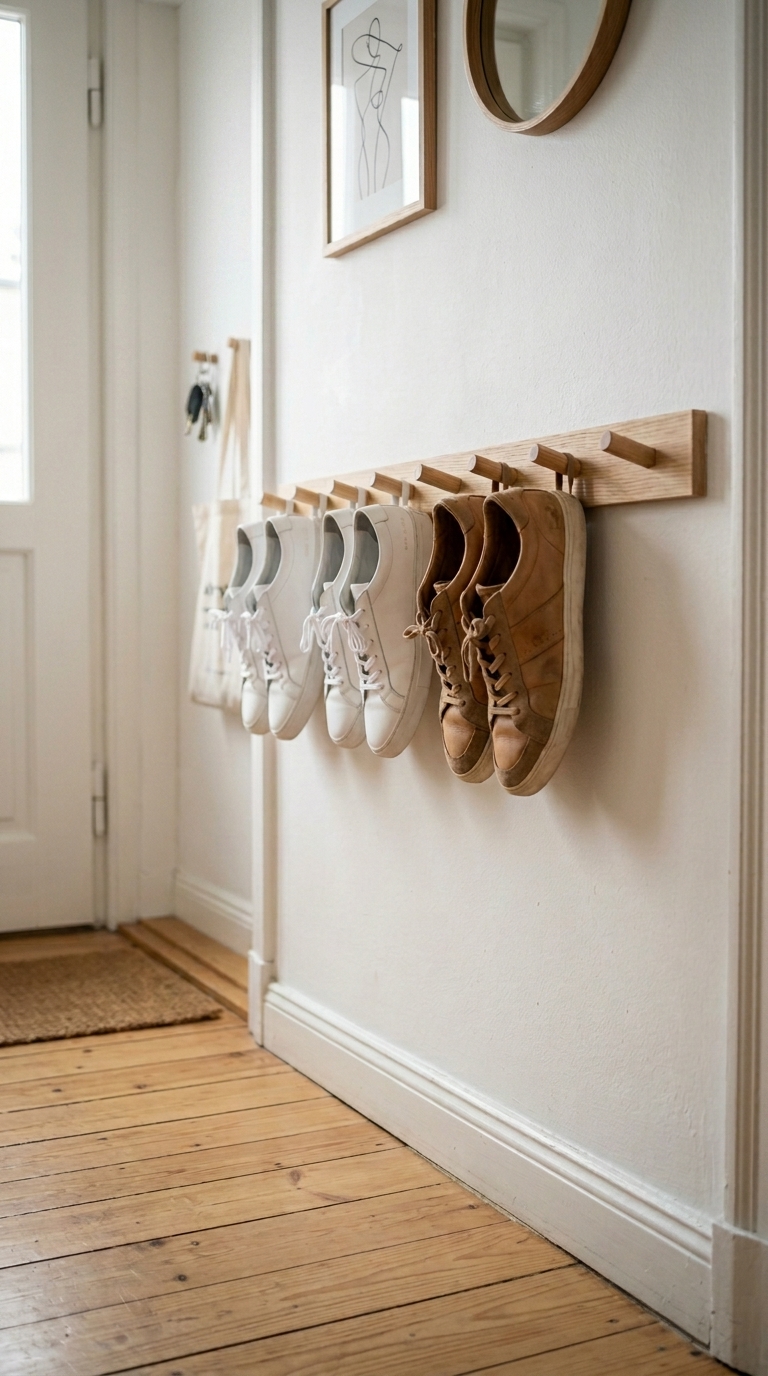
The suspended floating wall-peg matrix solves this by lifting shoes off the floor and using vertical wall space instead. A simple wall-mounted peg rail or hooks are installed above the baseboard level, creating a clean storage line along the wall.
Shoes are then hung or supported by the heel so they stay aligned neatly against the wall. This frees up the entire floor area, making the hallway feel wider and easier to move through.
This setup also improves cleaning since the floor remains clear. It’s a simple, low-cost way to maximize vertical storage while keeping your entryway organized and open.
Small Apartment Entryway Shoe Storage Ideas For Narrow Hallways
Many apartment entryways are long and narrow, which makes it difficult to use bulky furniture like wide cabinets or large benches. When storage takes up too much space, the hallway quickly feels tight and harder to walk through.
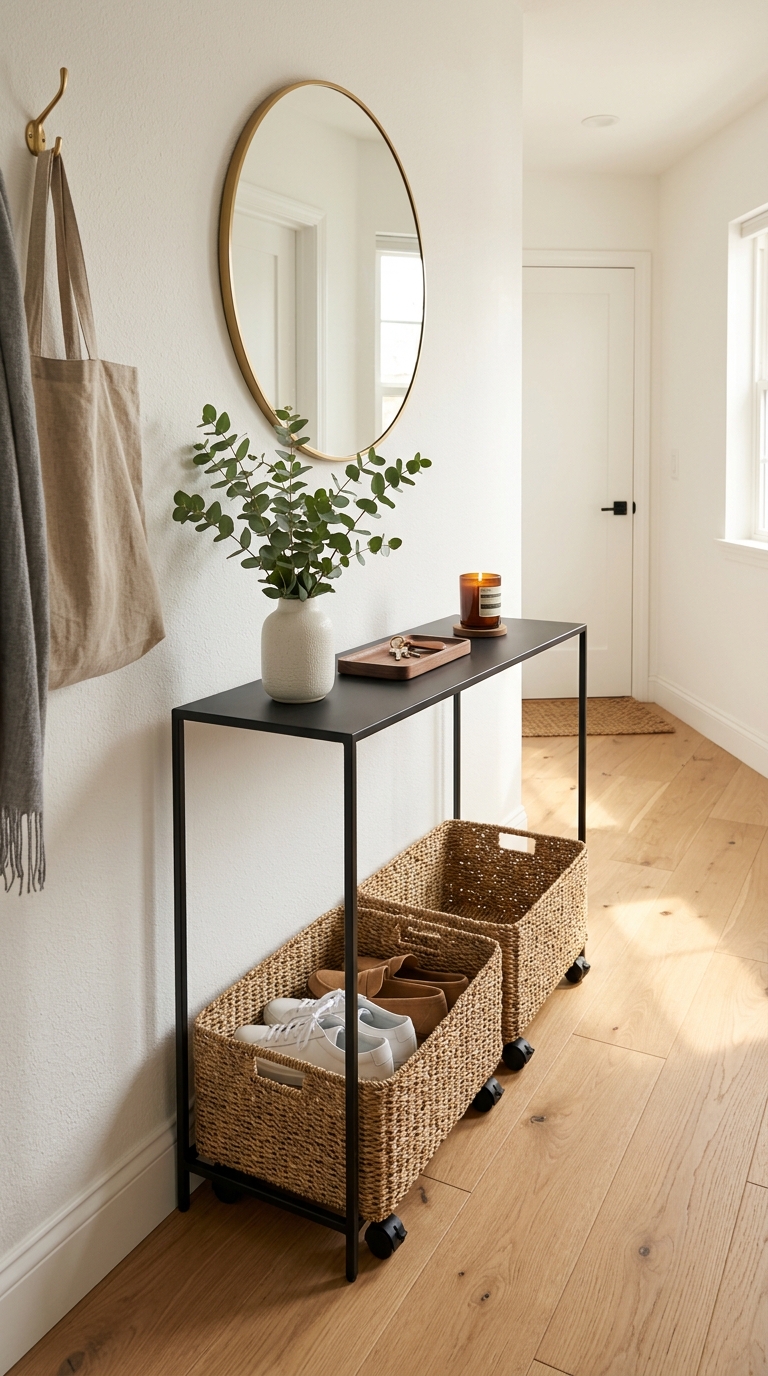
The solution is to use slim, flexible storage that can move when needed. A narrow console table combined with under-table storage baskets works well in these tight spaces.
Use low-profile woven baskets made from materials like jute or wicker. Place them under the console table to store everyday shoes neatly while keeping the floor clear. For extra flexibility, you can use lightweight rolling baskets so they can be pulled out easily when needed.
This setup keeps shoes organized without blocking the walkway. It also maintains an open, airy feel in the hallway, even in very small apartments.
The natural woven textures also add warmth to the space, making the entryway feel more inviting and less cluttered.
Small Apartment Entryway Shoe Storage Ideas for Empty Corners
Most small apartment entryways have an unused corner near the door swing path. This space is often ignored because it feels too small or awkward for regular furniture.
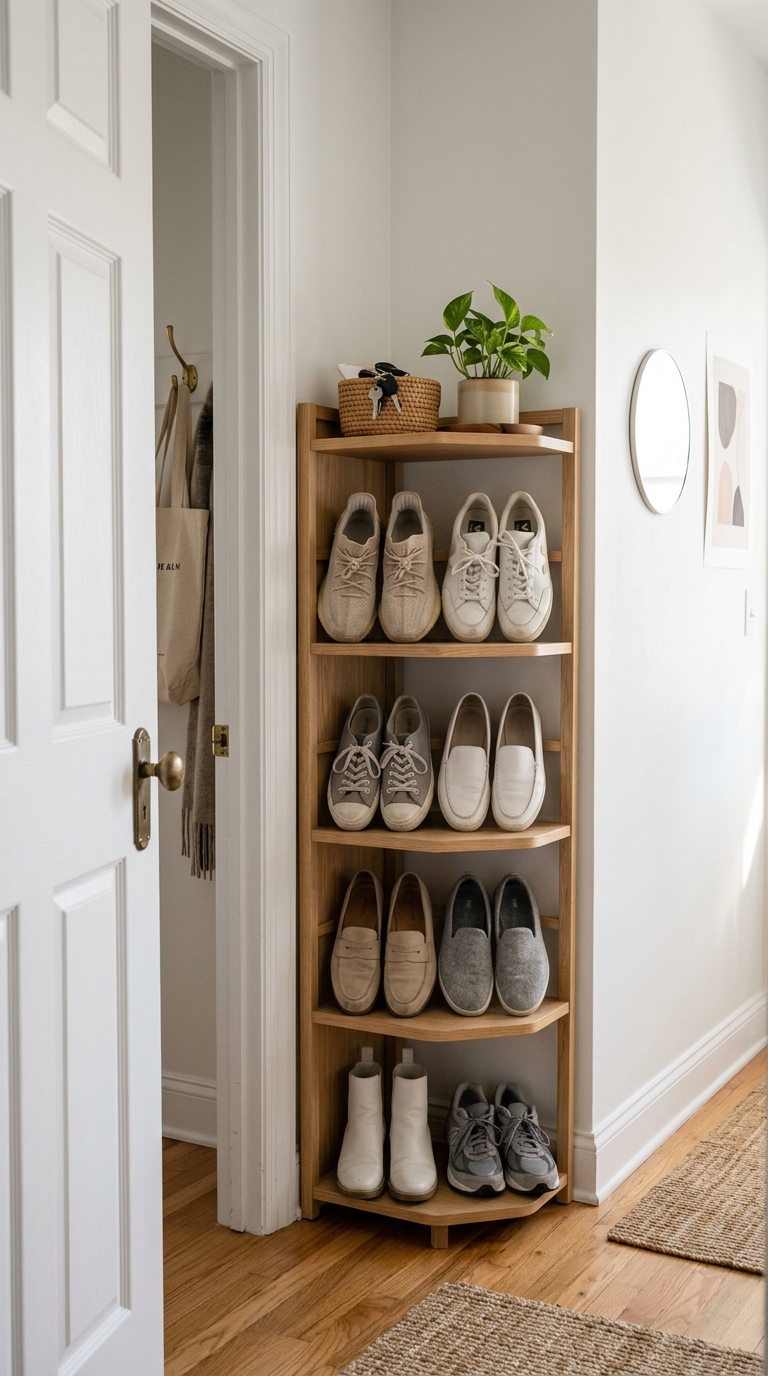
Instead of leaving it empty, you can turn it into useful storage. Corner shelves or slim triangular wall units are ideal because they fit into tight spaces without blocking the walkway.
Install a narrow corner shelf unit or use floating corner shelves stacked vertically. This keeps shoes stored neatly inside the corner instead of spreading them across the floor.
The biggest advantage of corner storage is that it does not interfere with the main walking path or the door movement. Everything stays tucked away, making the entryway feel more open and organized.
You can use the lower shelves for shoes and the upper shelves for small decorative items like a tray or a plant. This keeps the space functional while still looking clean and visually balanced.
Establishing an Intentional Foundation for Your Home
You do not need expensive custom storage or a full mudroom to improve your entryway. With simple changes like slim cabinets, wall-mounted hooks, corner shelves, and open bench storage, you can turn a narrow hallway into a more organized and functional space.
Take a few minutes to look at your entryway and identify unused floor and wall areas. Apply the small apartment entryway shoe storage ideas that best fit your layout and daily routine.
If your bedroom storage is also becoming difficult to manage, you can explore our guide on small bedroom clothes storage ideas to help reclaim more space in your home.
Once your shoes have a proper storage system, your entryway instantly feels cleaner, more open, and easier to walk through. The space becomes more welcoming every time you step inside.
Troubleshooting Your Small Apartment Entryway Shoe Storage Ideas
How do you prevent wet or muddy shoes from damaging hardwood entryway floors?
Use a waterproof tray near the entrance to catch moisture before it reaches the floor. Adding a rubber mat or a shallow tray with stones helps shoes drain and dry without touching the wood surface. This keeps your entryway floor protected from stains, warping, and water damage.
What is the best way to eliminate odors in entryway shoe storage cabinets?
Good airflow is key. Avoid sealing wet shoes inside closed cabinets for long periods. You can also place activated charcoal or cedar sachets inside the cabinet to absorb moisture and reduce odors naturally. This keeps the entryway smelling fresh.
How can you make a small apartment entryway feel brighter with shoe storage?
Use light-colored storage furniture and add a large mirror above the shoe storage area. Mirrors reflect light and make narrow or dark hallways feel more open. Light wood tones like oak or birch also help brighten the space visually.
Can you store boots in a slim tipping cabinet?
Yes, but you may need to adjust the interior space. Removing or shifting internal dividers creates more room for taller or bulkier boots. This allows them to fit without pushing the cabinet outward into the walkway.
How many shoes should you store in a small entryway?
A small entryway should only store everyday shoes you actually use, usually 2–4 pairs per person. Extra seasonal shoes should be stored elsewhere to avoid clutter and keep the space functional.
What is the best shoe storage for a very small apartment?
Slim cabinets, wall-mounted racks, and under-bench storage work best. These options use vertical space instead of taking up valuable floor area, which is critical in narrow hallways.
How do you organize shoes in a small entryway with no closet?
Use vertical storage like wall hooks, floating shelves, or a narrow console table with baskets underneath. Keeping shoes off the floor helps maintain a clear walking path.
Should shoes be stored in closed or open storage?
Closed storage looks cleaner and reduces visual clutter, but open storage improves airflow and helps shoes dry faster. A mix of both works best depending on your space.
How do you keep a small entryway from looking cluttered?
Limit visible items. Keep only daily shoes in the entryway and store the rest elsewhere. Use matching baskets or a single storage system to avoid visual chaos.
Where should shoe storage be placed in a narrow hallway?
The best placement is along one wall or in unused corner space. Avoid placing storage directly in the walking path or near door swing areas.
What is the easiest shoe storage idea for renters?
Freestanding slim shoe racks or under-bench baskets are best for renters because they require no drilling and can be moved easily.
How do you store winter boots in a small entryway?
Store them in deeper bottom compartments, under benches, or inside taller cabinet sections. Keep them separated from daily shoes to save space.