Small Entryway Layout Ideas: 7 Ways to Maximize a Narrow Foyer
Designing smart small entryway layout ideas can completely transform how your home feels. The entryway is the first space you and your guests see when entering the front door.
In many apartments, this area is a narrow hallway or compact foyer. It usually has very little storage space. Without proper organization, shoes, bags, keys, and mail can quickly create clutter.
Fortunately, you do not need a large foyer or expensive renovation to improve it. With the right furniture and layout choices, even a small entryway can feel organized and welcoming.
These small entryway layout ideas help you maximize storage and improve traffic flow. They also make a narrow foyer feel larger while keeping everyday essentials easy to access.
Floating Console Ideas for Small Entryway Layouts
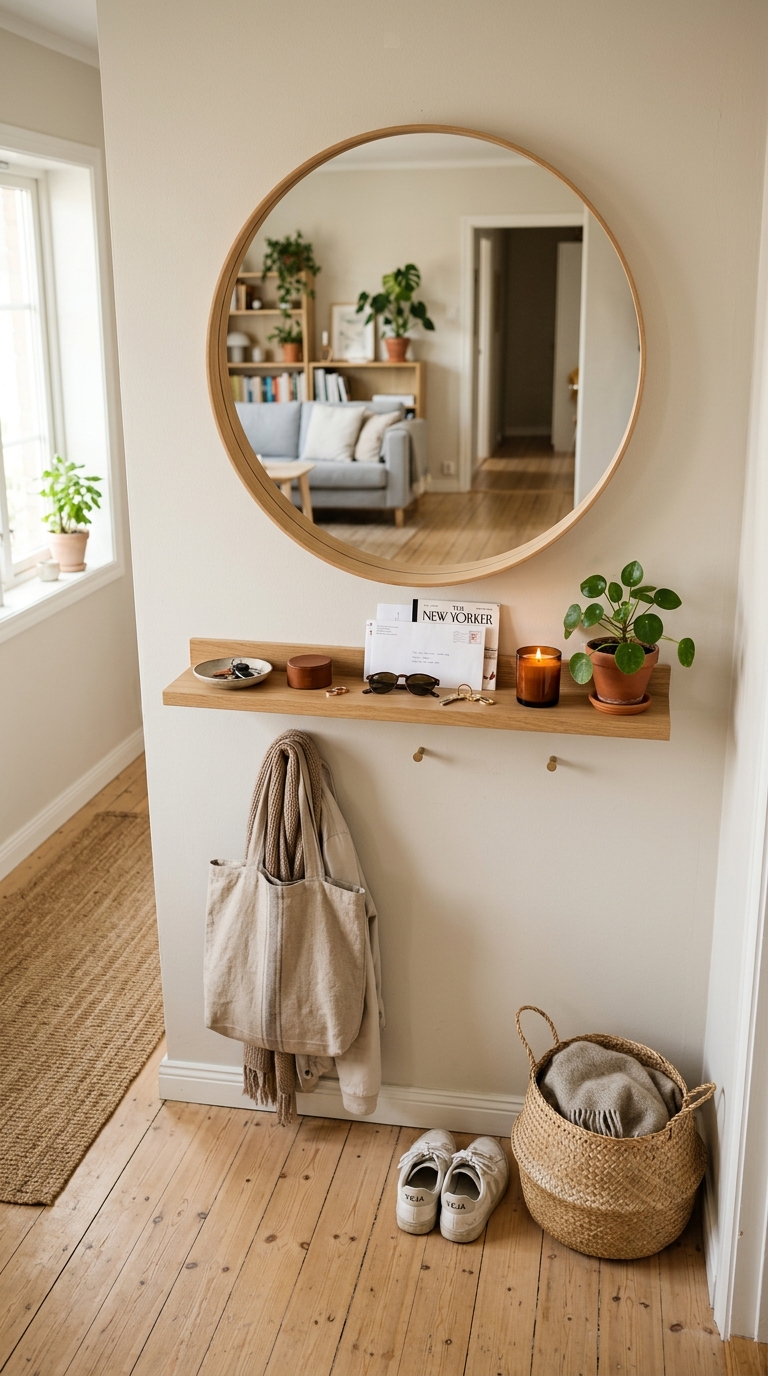
A common mistake in small entryways is using a bulky console table. It takes up valuable floor space. In a narrow foyer, this can make the area feel tight and difficult to move through.
A floating console is a better solution. It keeps storage off the floor. Mounting a slim shelf on the wall creates a simple drop zone for keys, mail, and daily essentials.
Because the floor stays open and visible, the entryway feels larger. It also looks cleaner and less crowded overall.
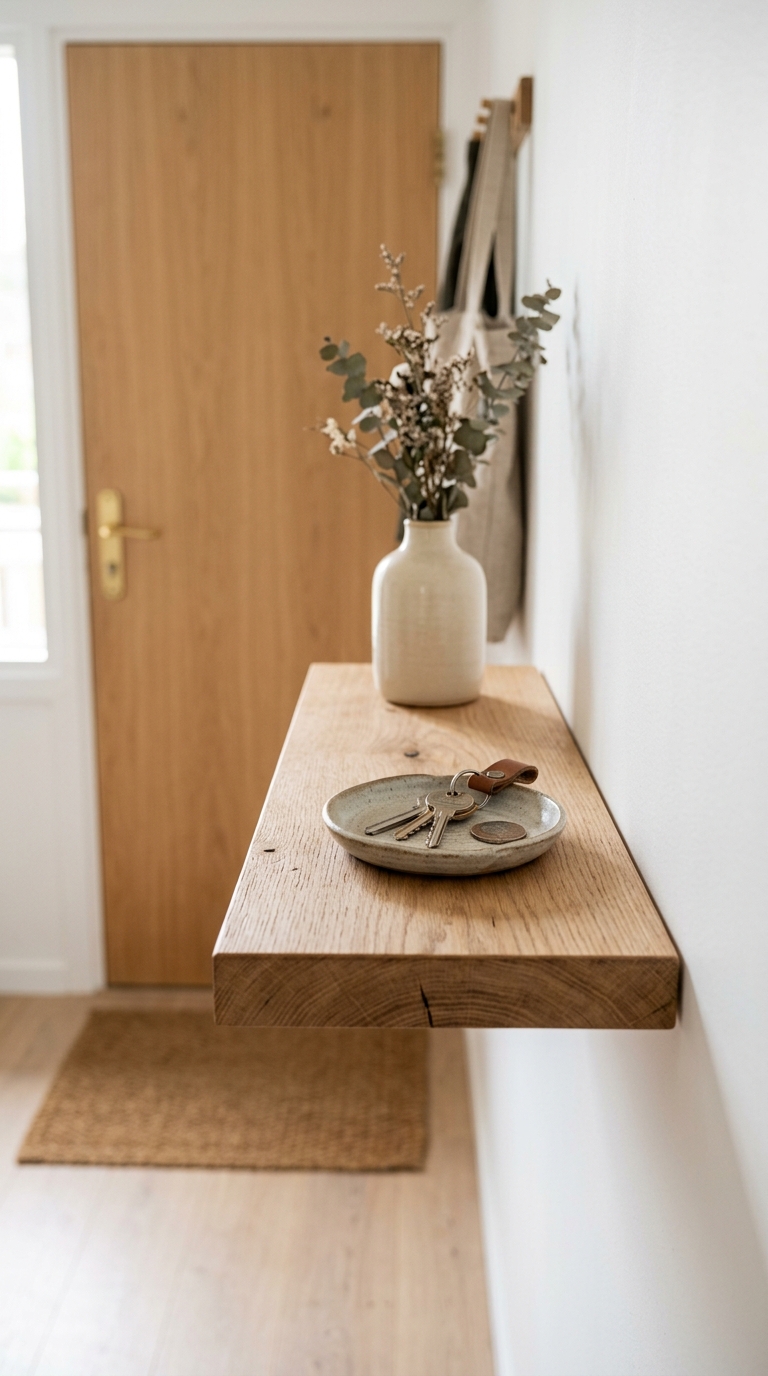
To create this layout on a budget, choose a slim floating shelf that matches your home’s style. Mount it near the front door at a comfortable height for everyday use. This simple shelf provides a convenient place for keys, wallets, sunglasses, and incoming mail without taking up valuable floor space.
Keeping the area underneath the shelf open helps a narrow entryway feel larger and less crowded. You can also place two matching woven baskets below the shelf to store shoes, umbrellas, or other daily essentials neatly out of sight.
This simple setup reduces clutter, improves organization, and transforms an unused wall into a functional entryway drop zone without the need for bulky furniture.
The Vertical Pegboard Matrix Small Entryway Layout Ideas
One of the best small entryway layout ideas for a narrow foyer is using vertical wall space instead of valuable floor space. Traditional coat racks can feel bulky in a compact entryway and often take up room that could be used for walking or storage.
A wall-mounted pegboard creates a flexible storage system without crowding the floor. By turning an empty wall into an organized storage zone, you can keep everyday essentials within reach while maintaining an open and uncluttered entryway.
Hooks, shelves, and small baskets can be added to the pegboard to hold coats, bags, keys, hats, and other daily items. This keeps frequently used belongings neatly organized while helping a small entryway feel more functional and spacious.
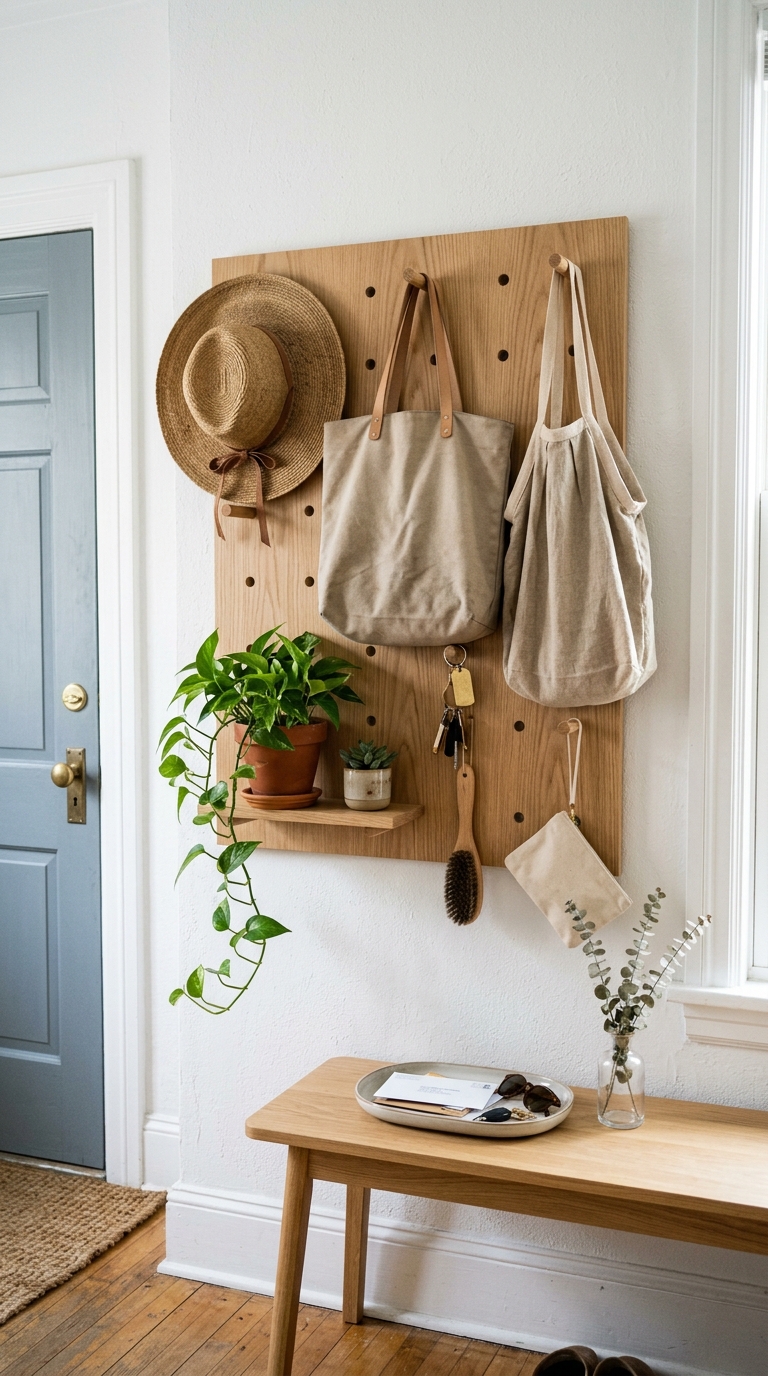
To create this layout on a budget, choose a modular pegboard in a finish that matches your entryway style, such as natural birch wood or matte white. Mount it securely to the wall near your front door, making sure it remains easy to access when coming and going.
Add hooks, shelves, and storage accessories that fit your daily needs. Keep frequently used items, such as keys, bags, and umbrellas, within easy reach. Larger accessories like hats or reusable shopping bags can be stored higher up to keep the area organized.
One of the biggest advantages of a pegboard system is its flexibility. As your storage needs change throughout the year, you can easily move hooks and accessories to create a new arrangement. Lightweight summer items can be swapped out for coats, scarves, and other seasonal essentials without installing additional storage.
This simple wall-mounted solution helps maximize vertical storage, while dedicated shoe storage systems can keep the floor clear and organized.
The Low-Profile Shoe Bench Base Configuration
One of the most practical small entryway layout ideas is adding a low-profile shoe bench near the front door. Leaving shoes scattered across the floor can quickly make a narrow foyer feel cluttered and difficult to navigate.
Instead of using a bulky storage cabinet, choose a slim bench with built-in shelving underneath. This provides a comfortable place to sit while putting on or removing shoes and keeps everyday footwear neatly organized in one location.
By combining seating and storage in a single piece of furniture, this layout helps maximize space while maintaining a clean and welcoming entryway.
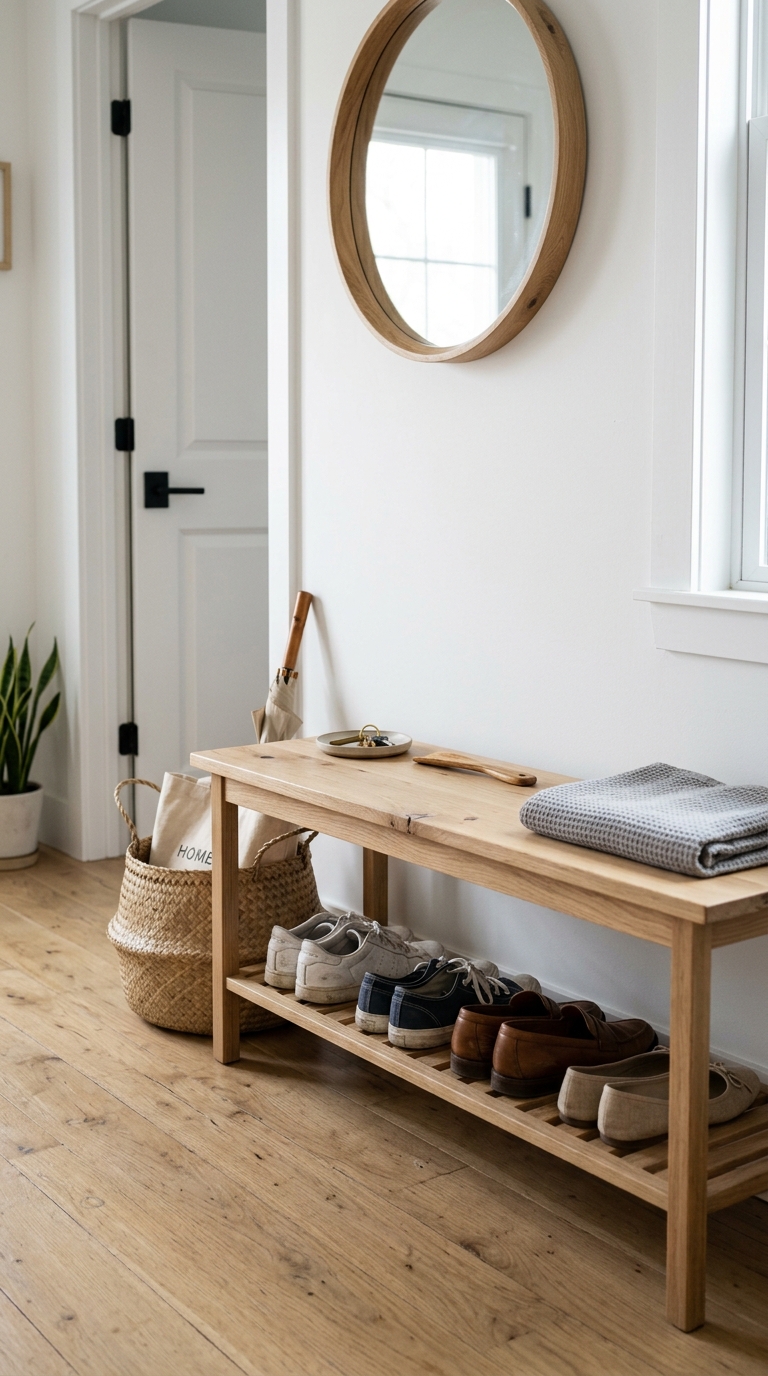
To create this layout on a budget, look for a slim entryway bench with a depth of around twelve inches or less. Place it against the longest wall in your entryway, ideally below a floating shelf or wall-mounted organizer. This setup creates a dedicated drop zone while keeping the walkway clear.
If you need inspiration, you can browse space-saving entryway benches on Amazon to find styles that fit your space, budget, and storage needs. This helps you compare different designs, sizes, and materials before choosing the right option for your home.
The bench also provides a convenient place to sit while putting on or removing shoes without crowding a narrow foyer. The open shelving underneath can be used to store several pairs of everyday shoes neatly out of sight. Keeping footwear organized below the bench helps reduce clutter and makes the entryway feel more open and welcoming.
By combining seating and storage in one piece of furniture, this layout maximizes functionality while maintaining a clean and organized entrance.
The Strategic Mirror Layout for Small Entryways
Narrow entryways often feel dark and cramped because they lack natural light. When left plain, a small foyer can feel even tighter and less welcoming.
A large wall mirror is one of the simplest ways to fix this. By reflecting light around the space, it makes a narrow hallway appear wider, brighter, and more open.
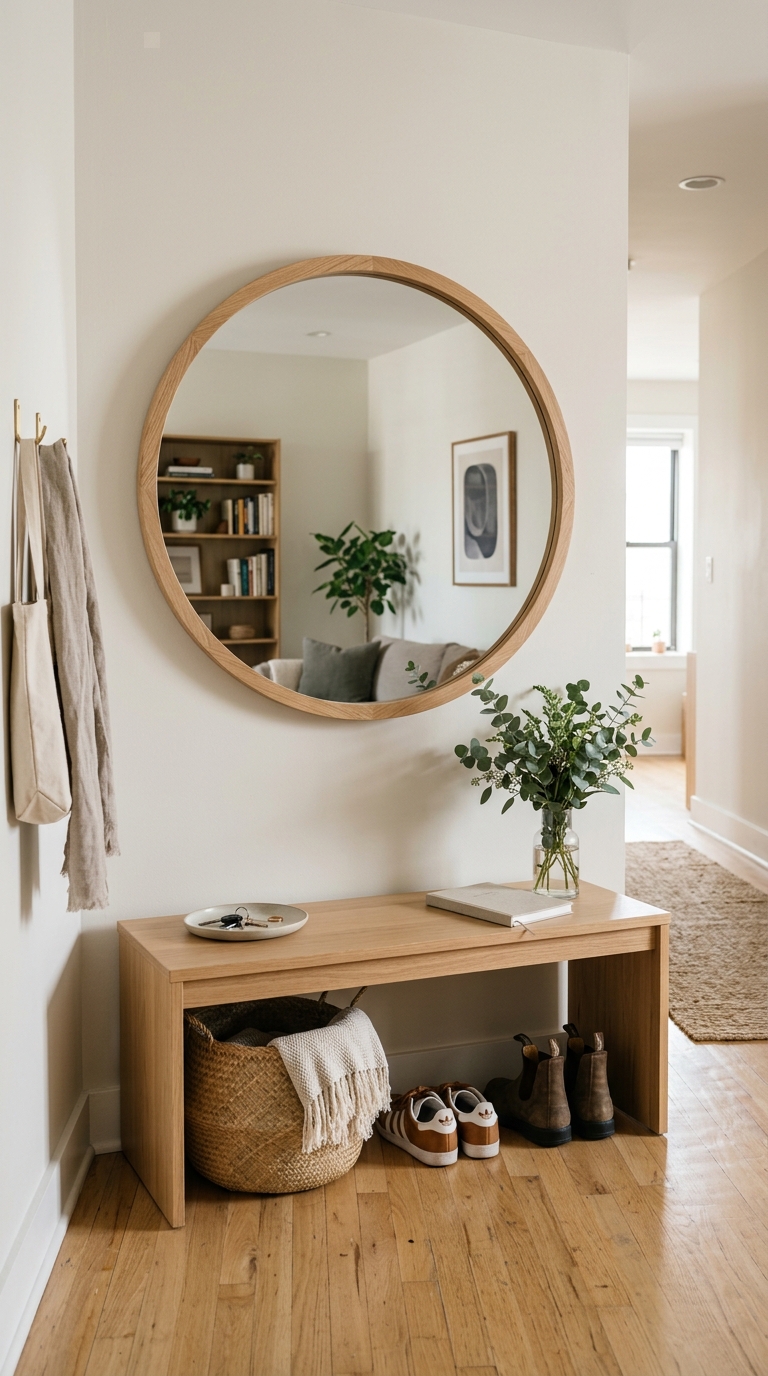
To create this layout on a budget, choose a large round or rectangular mirror with a thin, simple frame in wood, black, or neutral tones. Mount it at eye level above a shoe bench or floating console shelf to anchor the entryway design.
For the best effect, place the mirror where it can reflect natural light from a nearby window or doorway. This helps brighten a narrow entryway and reduces the dark, closed-in feeling common in small hallways.
A large mirror also makes a small foyer feel more open by reflecting the surrounding space, creating the illusion of added depth. This simple design choice improves both lighting and visual space while also giving you a practical spot to check your appearance before leaving the house.
Overall, a well-placed mirror is one of the easiest and most effective ways to make a small entryway feel brighter, larger, and more welcoming.
Modern Corner Small Entryway Layout Ideas
Most small entryways have an unused corner space near the front door that often goes wasted. This tight corner is usually left empty because it feels awkward or hard to fit furniture into.
However, this corner can actually become a useful storage zone. Instead of pushing furniture into the main walkway, using the corner allows you to keep the entryway more open and easier to move through.
A small corner shelf, narrow cabinet, or floating corner unit can turn this unused space into a practical drop zone for shoes, bags, or everyday essentials. This helps reduce clutter while keeping the main entry path clear and organized.
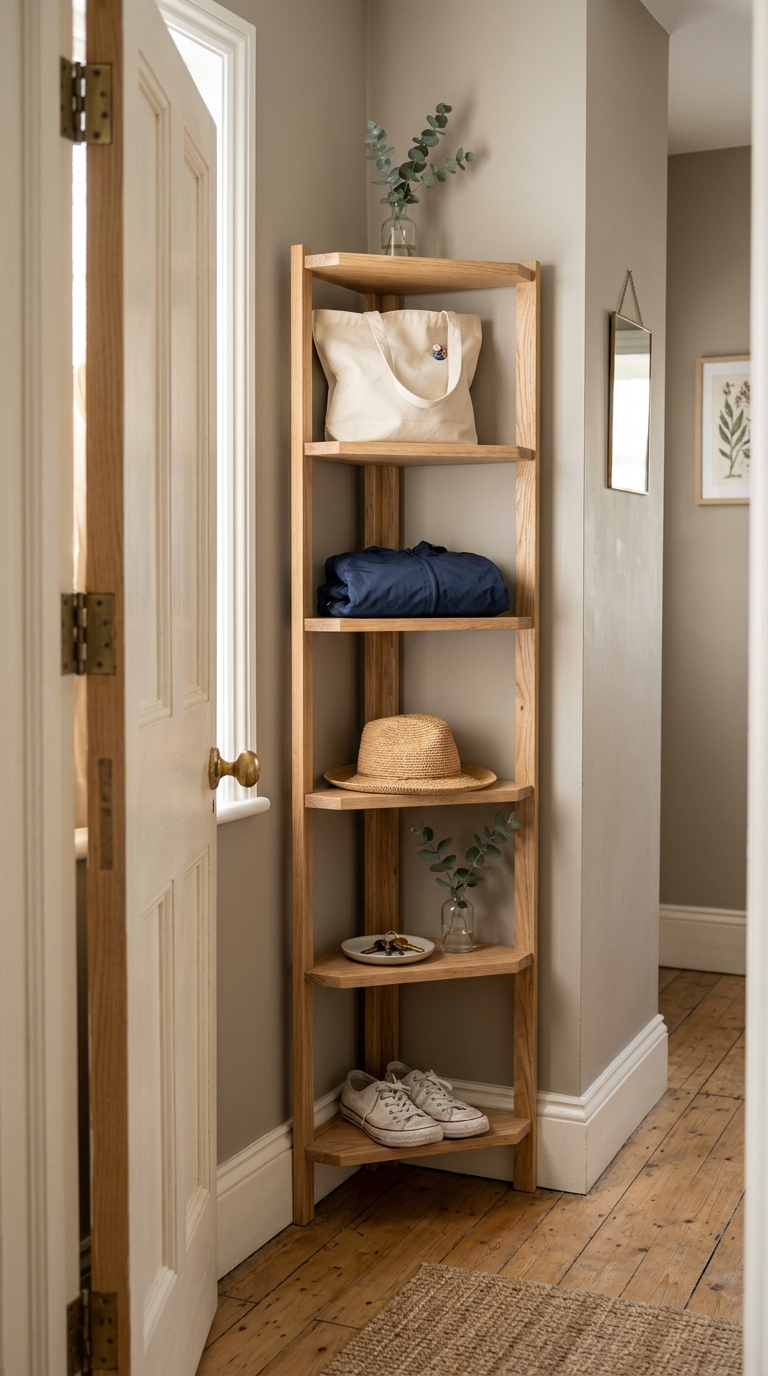
To create this corner layout on a budget, choose a slim corner shelf unit or a tall vertical storage rack designed for tight spaces. Place it neatly into the unused corner near your front door, making sure it does not block the door from opening fully.
This setup turns an empty corner into a useful storage zone for everyday items like umbrellas, tote bags, and pet leashes. Keeping these essentials in one place helps reduce clutter around the main entryway and keeps the space easier to navigate.
Using corner storage also improves the overall look of your entryway. Instead of seeing items scattered near the door, attention naturally shifts to cleaner, more organized focal points like a mirror or console shelf. This makes a small entryway feel more structured, open, and welcoming.
The Floating Basket Wall Storage Layout
Small items like gloves, sunglasses, keys, and leashes can quickly create clutter in a narrow entryway. Standard hooks often become overcrowded, making the space look messy instead of organized.
A floating basket wall layout solves this by using lightweight baskets mounted at different heights on the wall. Each basket creates a designated spot for specific items, helping you keep everyday essentials organized and easy to find.
This system works especially well in small entryways because it keeps surfaces and floors clear while making use of vertical wall space. It also helps reduce visual clutter by grouping small items into simple, hidden storage zones.
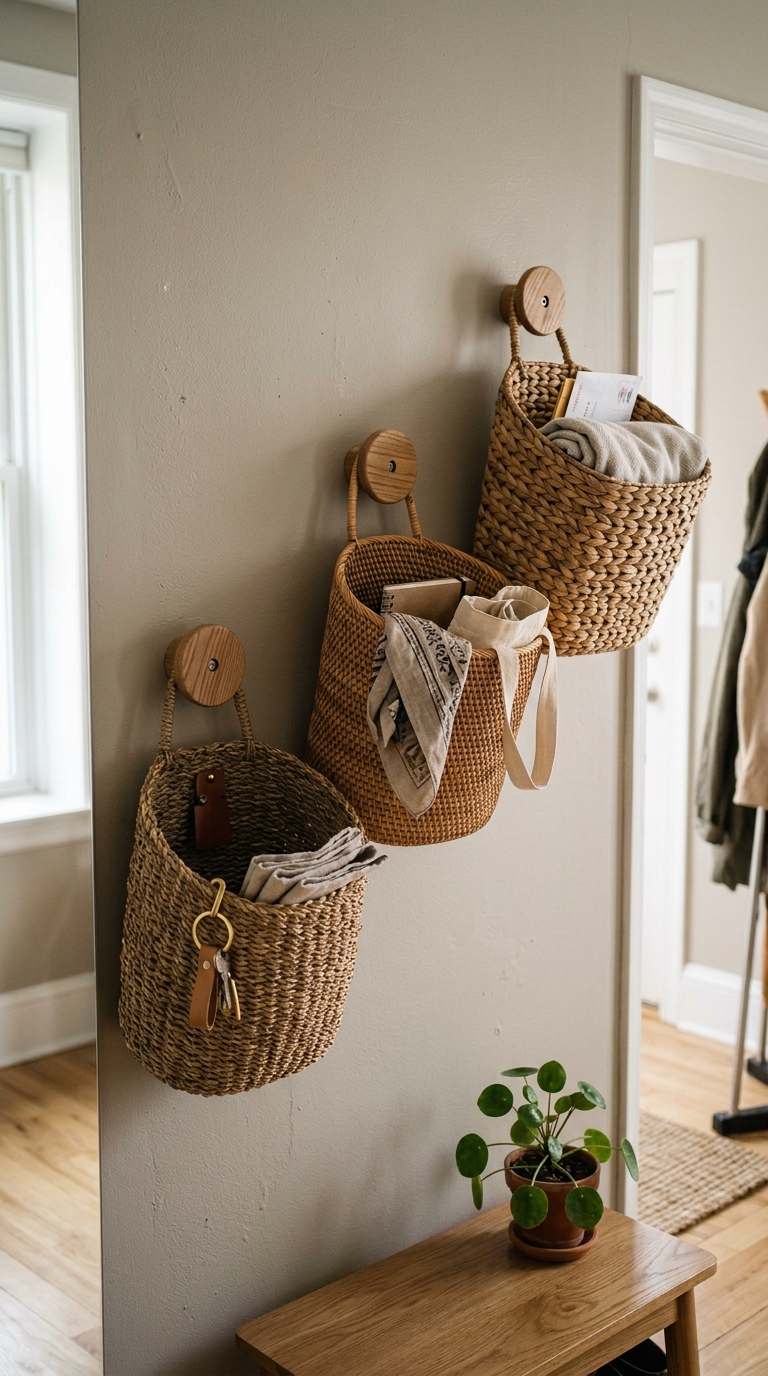
To create this storage system on a budget, choose a set of matching woven baskets made from seagrass or jute with sturdy handles. Install three strong wall hooks into wall studs and place them at different heights to create a simple vertical arrangement.
Hang one basket on each hook so each container has its own dedicated space. This creates a clear storage system that uses vertical wall space instead of taking up floor area.
Woven baskets are ideal for keeping small items organized and out of sight. You can store items like dog leashes, keys, sunglasses, hats, and mail in separate baskets so everything stays easy to find and neatly contained.
This setup helps reduce clutter in a narrow entryway while adding a natural, textured look that makes the space feel more organized and visually balanced.
Minimalist S-Hook Rail Ideas for Small Entryway Layouts
Traditional coat racks often take up too much space in a narrow entryway. Once you add multiple jackets, bags, and daily items, the area can quickly feel crowded and difficult to move through.
An S-hook rail system is a simple space-saving alternative. A slim wall-mounted rail with movable hooks allows you to hang coats, bags, and everyday essentials neatly against the wall without blocking the walkway.
Because the hooks can slide or be rearranged, you can adjust the spacing depending on how many items you need to store. This makes it easier to keep your entryway organized during different seasons, while still maintaining a clean and open look.
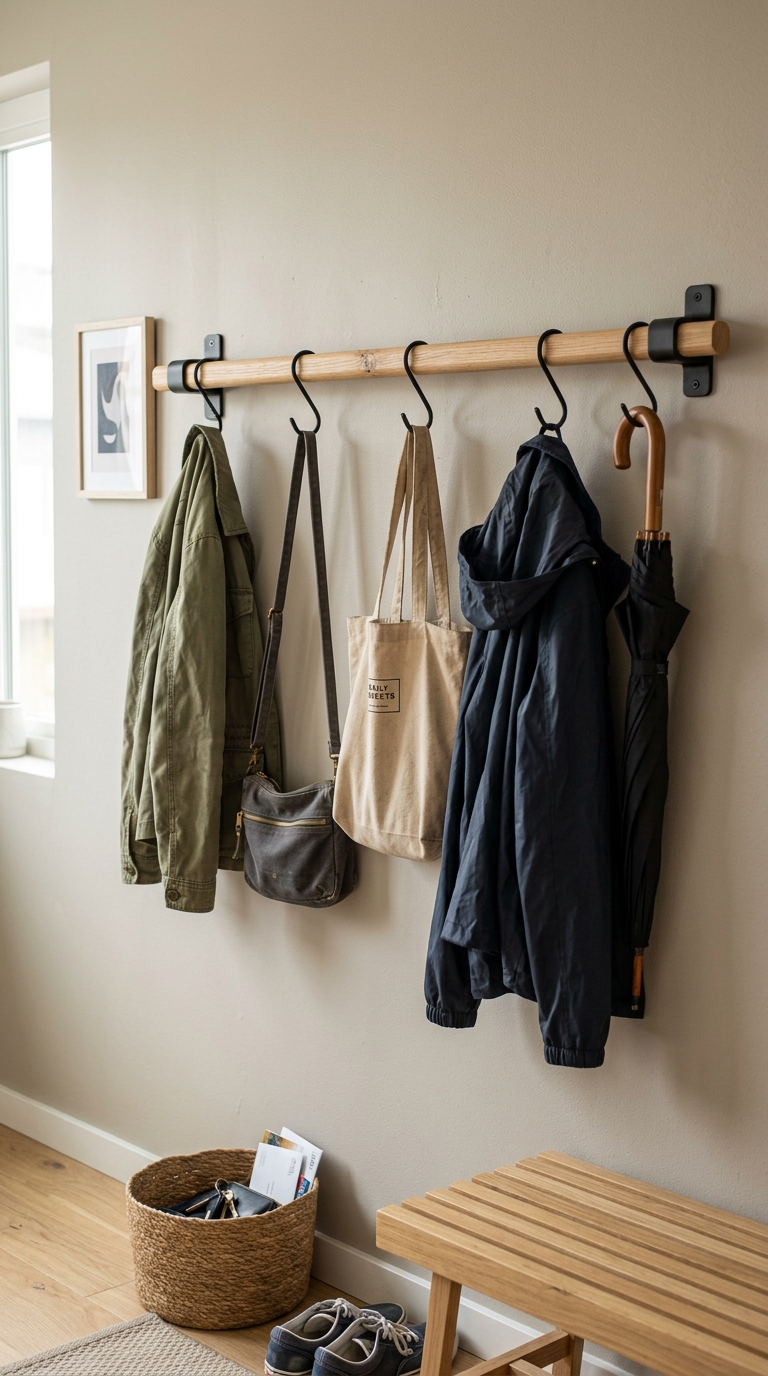
To create this layout on a budget, choose a slim wooden or metal wall-mounted rail and install it securely into wall studs above your shoe bench or entryway storage area.
Add a set of S-hooks that can slide freely along the rail. This makes it easy to hang everyday items like bags, light jackets, umbrellas, and cardigans without crowding the space.
Because the hooks can move left or right, you can adjust the spacing whenever needed. This helps prevent items from overlapping and keeps the entryway looking neat and organized, even in a narrow hallway.
Overall, this simple setup increases storage space while keeping the floor clear and maintaining a clean, modern entryway design.
Designing a Welcoming First Impression
Improving a small entryway does not require a large space or expensive renovation. By using wall-mounted storage and smart furniture placement, you can apply these small entryway layout ideas even in very tight hallways.
Start by clearing the floor area and focusing on vertical storage solutions that keep the walkway open. This simple change immediately makes the entryway feel more spacious and easier to move through.
If your coats and clothing are taking up too much space near the entrance, you may also find our guide on tiny closet hanging layout ideas helpful for creating additional storage inside your bedroom or wardrobe.
Once your essentials have a proper place, your entryway becomes more than just a passage. It turns into a calm, organized space that creates a positive first impression every time you walk through the door.
Frequently Asked Questions About Small Entryway Layout Ideas
How do I stop a narrow entryway from feeling dark and cluttered?
A narrow entryway often feels dark when too much furniture blocks light and walking space. To fix this, keep the floor area as open as possible and use wall-mounted storage like shelves and hooks instead of bulky cabinets.
Adding a large mirror above your entry zone can also help reflect natural light and make the space feel brighter and more open.
What is the ideal depth for furniture in a small entryway?
For a small apartment entryway, furniture should ideally be around 10 to 12 inches deep. Anything deeper than this can make a narrow hallway feel tight and difficult to move through.
Slim shoe benches and floating shelves are better choices because they provide storage without taking up too much walking space.
Can I mix different wood tones in a small entryway?
Yes, mixing wood tones can work well as long as the overall style stays consistent. Light woods like oak, birch, or beech pair nicely together and help keep the space feeling bright and modern.
To keep everything balanced, combine natural wood with simple accents like white walls or black metal hooks for contrast.
Where should I store wet umbrellas and muddy shoes in a small foyer?
Wet umbrellas and muddy shoes should be stored in a contained, easy-to-clean area near the entrance. A corner basket with a waterproof base or a small tray is ideal because it keeps moisture away from your flooring.
Placing this storage in a corner or hidden side space helps keep the main walkway clean while still keeping essentials easy to reach.
What is the best entryway setup for renters in small apartments?
The best setup for renters is a wall-mounted storage system combined with slim furniture that does not require permanent installation. Floating shelves, hooks, and narrow shoe benches work well because they maximize storage without damaging walls or taking up too much space.
How do I organize a small entryway with no closet?
If your entryway has no closet, focus on vertical storage. Use wall hooks for coats and bags, a slim shoe rack or bench for footwear, and baskets for small items like keys and accessories. Keeping everything in designated zones helps prevent clutter.
What furniture works best for small entryway layout ideas?
Slim furniture works best, especially pieces that are 10–12 inches deep or less. Floating consoles, narrow benches with storage, and wall-mounted shelves help keep the walkway open while still providing storage space.
How do I make a small entryway look bigger on a budget?
Use mirrors, light colors, and wall-mounted storage to open up the space visually. A large mirror reflects light and creates the illusion of a wider hallway, while keeping the floor clear helps the area feel less cramped.
What should you avoid putting in a small entryway?
Avoid bulky furniture, deep cabinets, and excess décor that blocks movement. Large items that sit far into the walkway can make the space feel tight and reduce functionality.
How do I store shoes in a small entryway without a closet?
Use slim shoe benches, under-bench storage, or wall-mounted racks. Keeping shoes grouped in one hidden or low-profile location prevents clutter and keeps the entryway visually clean.
What is the cheapest way to decorate a small entryway?
The cheapest options include DIY wall hooks, second-hand narrow benches, baskets, and mirrors. Rearranging existing furniture and using vertical wall space is often enough to improve the look without spending much.