How to Organize a Small Home When Everything Feels Like It Has Nowhere to Go
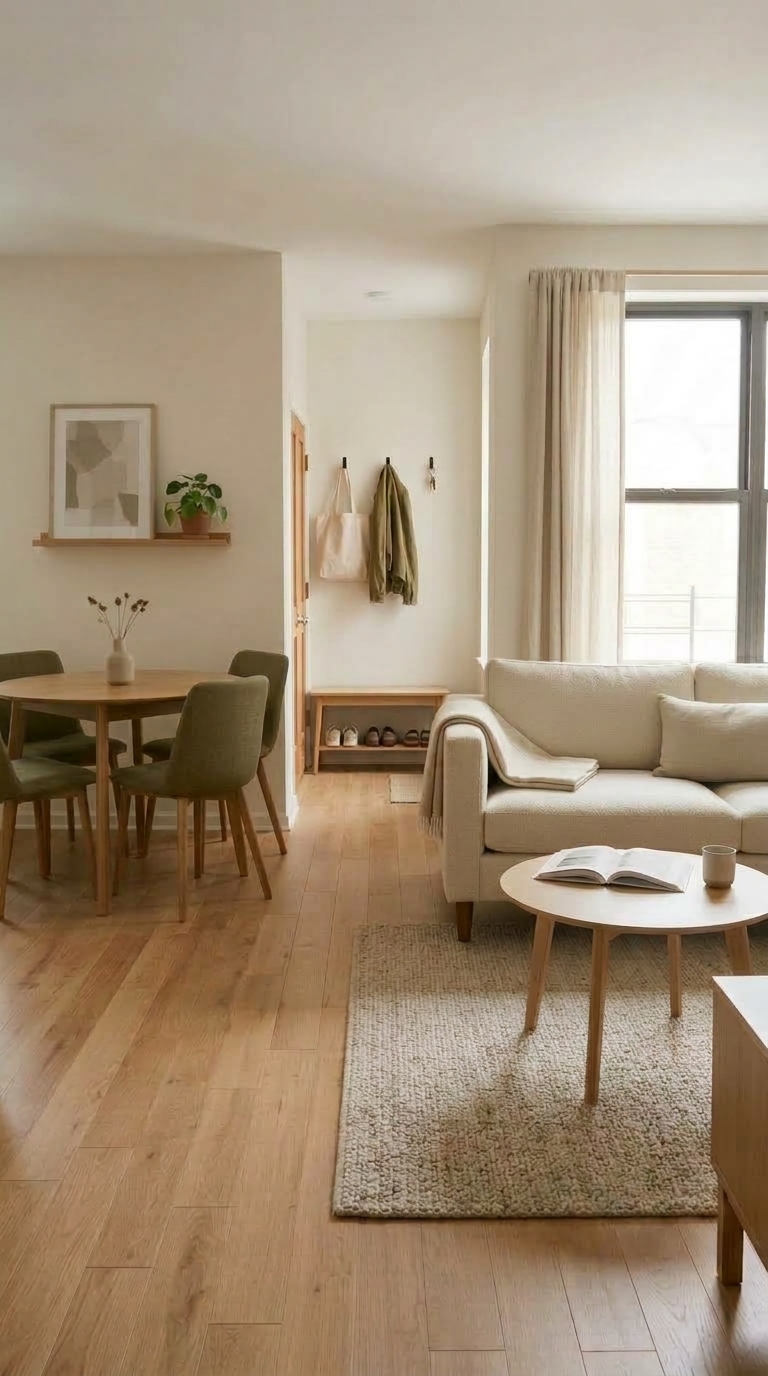
You tidy the kitchen counter, put the shoes away, clear the dining table, and finally feel like you can breathe again. But when figuring out how to organize a small home with little storage, the real battle begins as soon as the day starts.
A handbag lands on the chair. The mail gets left beside the coffee maker. A charger disappears under the sofa cushion. Someone takes a blanket from the basket and leaves it there. By evening, the surfaces that were clear a few hours ago are covered again.
It can be especially frustrating in a small home because there isn’t much room for things to hide. A little everyday mess can make the whole place feel overwhelmed.
And after a while, you may start wondering whether you simply need to become better at organizing.
Maybe you need more shelves. More baskets. A bigger cabinet.
But what if that’s not the real problem?
Learning how to organize a small home with little storage isn’t really about finding a place to squeeze every possession into. It’s about figuring out why the same things keep ending up in the same wrong places—and then making those things easier to put away.
Your home may not need more storage.
It may need better homes for the things you already use.
Before you buy another organizer, let’s look at the patterns creating the clutter in the first place.
1. Find the Things That Keep Becoming Clutter
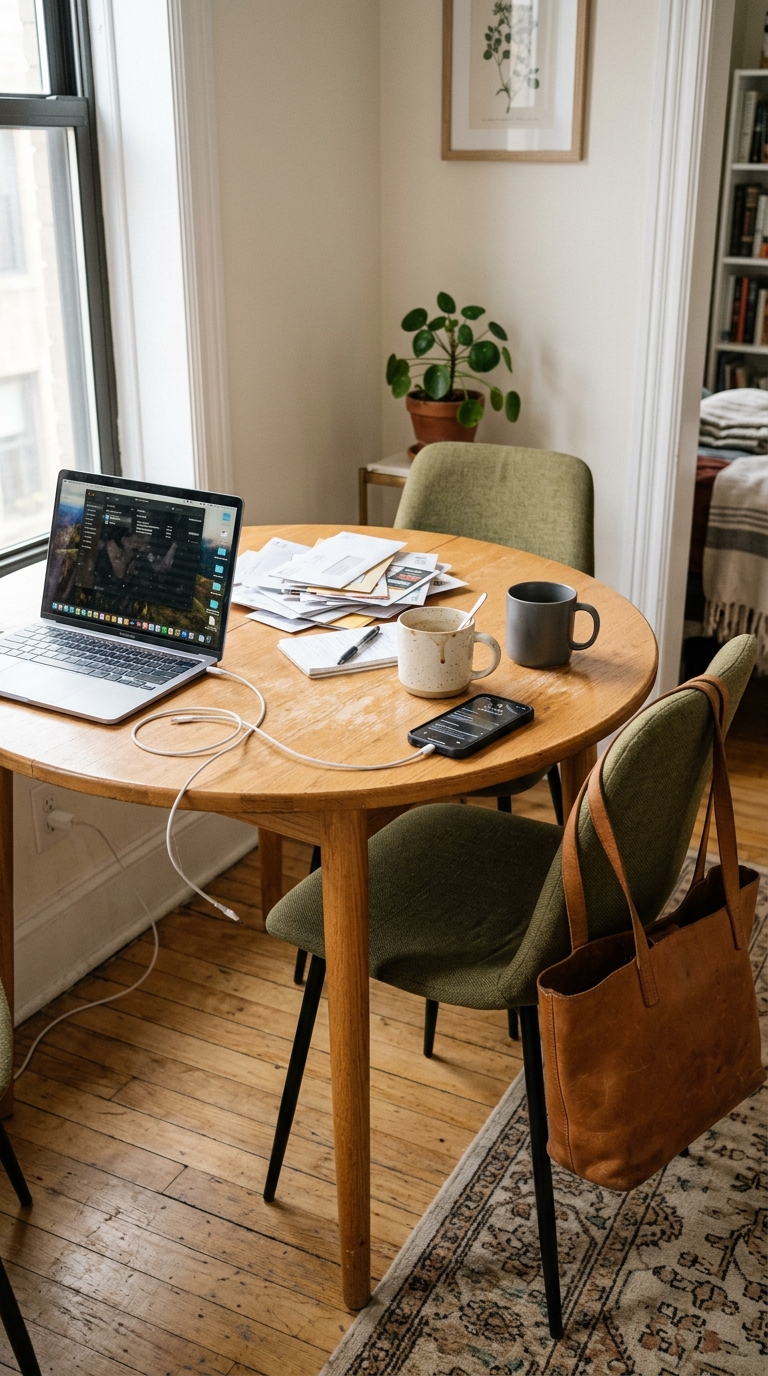
Before buying anything, pay attention to what keeps appearing on the same surfaces.
Maybe the dining table always collects mail and school papers. The kitchen counter becomes a charging station. Shoes gather beside the front door because the closet is too far away. Blankets migrate from the sofa to a chair because nobody wants to walk across the room to put them back.
Those repeated piles are useful clues.
Instead of asking, “How do I store this?” ask:
“Why does this keep ending up here?”
If something is constantly being moved out of the way and then put back in the same spot, your current system may simply be asking too much of you.
Walk through your home and notice the five or six things that are almost always out of place. Don’t try to fix everything yet.
Those recurring items are your starting point.
If your home looks cluttered again almost immediately after you’ve cleaned, take a closer look at the patterns behind it in our guide to why your home still feels cluttered after cleaning.
2. Give Everyday Things a Home Where You Actually Use Them
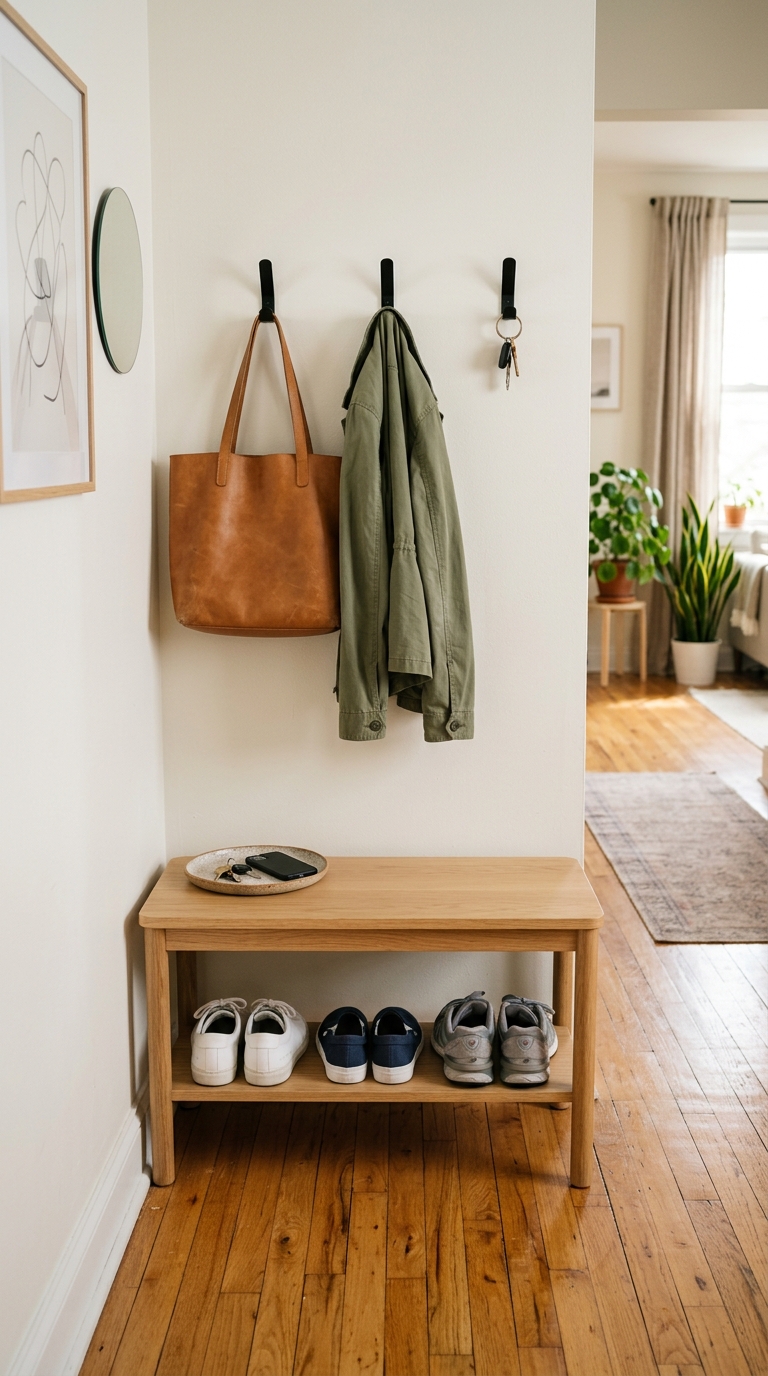
One of the simplest ways to reduce recurring clutter is to stop storing things according to where they should go and start storing them where they are actually used.
If you charge your phone beside the sofa every night, your charging setup probably shouldn’t live across the room.
If you sort mail at the kitchen counter, keep a small paper tray nearby rather than carrying every envelope to a desk you rarely use.
If you always take off your everyday shoes near the door, give them a home there.
This isn’t laziness. It’s practical design.
A useful test is to consider how much effort it takes to put something away.
If putting an item away means opening a closet, moving a box, and finding the right spot inside it, there’s a good chance it will be left out.
That’s why a few hooks beside the door can sometimes work better than a beautifully organized closet if coats and bags are always dropped beside the entrance.
If putting something away is quick, obvious, and nearby, the better habit becomes easier to repeat.
For more ideas, see our guide to small apartment entryway shoe storage ideas.
3. Create Small Landing Zones Instead of Huge Storage Systems
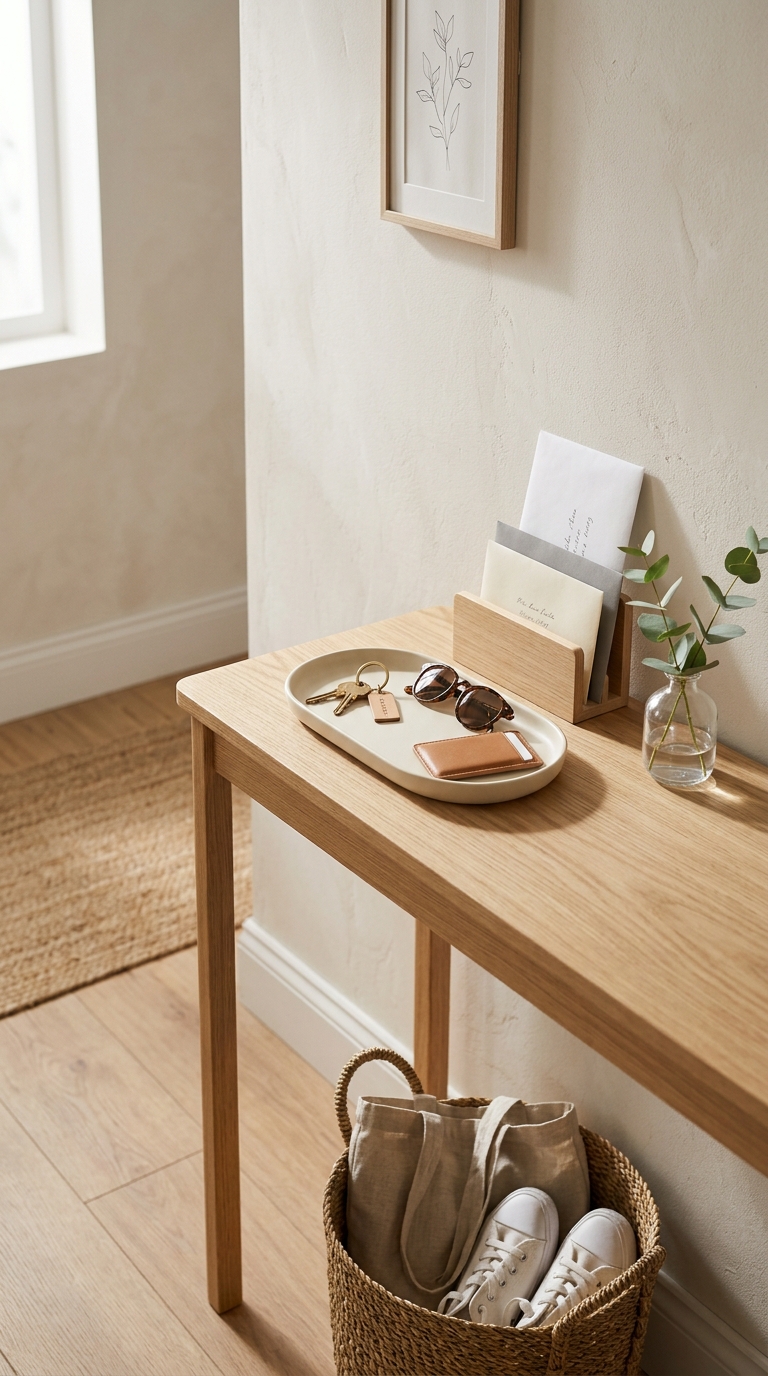
You don’t need an elaborate organization system for every little category.
Sometimes a small landing zone is enough.
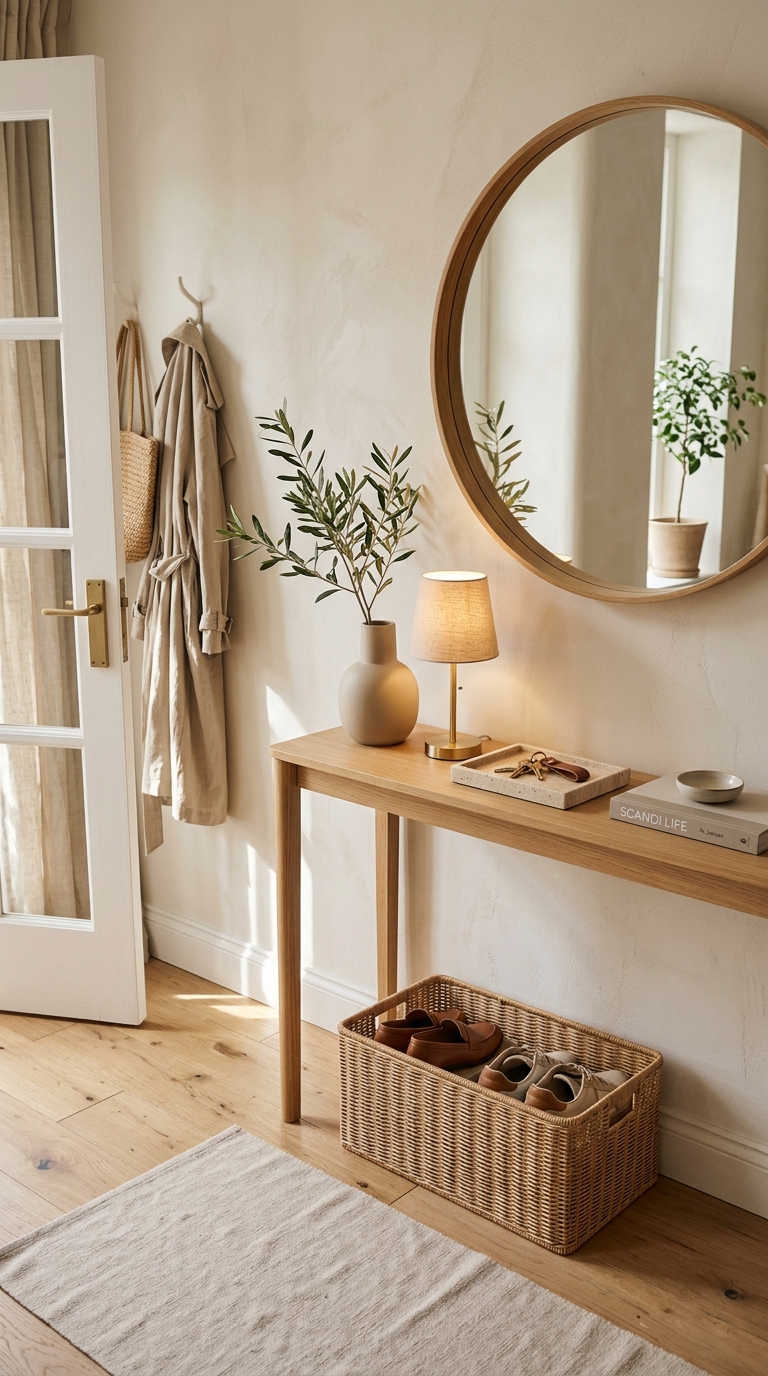
A tray on a console can catch keys and sunglasses. A few hooks near the entry can handle coats and bags. A small basket beside the sofa can hold the remote, a book, or other items that tend to wander around the room.
The important part is keeping these zones small and specific.
For example:
- Keys, sunglasses, and wallet → entry tray
- Incoming mail → small paper holder
- Everyday bags → hooks
- Remotes and reading glasses → living-room basket
- Frequently used charging cables → one designated charging spot
You don’t need a container for every object.
You need a predictable place for the things that repeatedly cause friction.
When a landing zone starts overflowing, don’t automatically buy a larger basket. Treat the overflow as information. Something may need to be removed, relocated, or given a more suitable home.
4. Use Awkward Space Before You Buy More Furniture
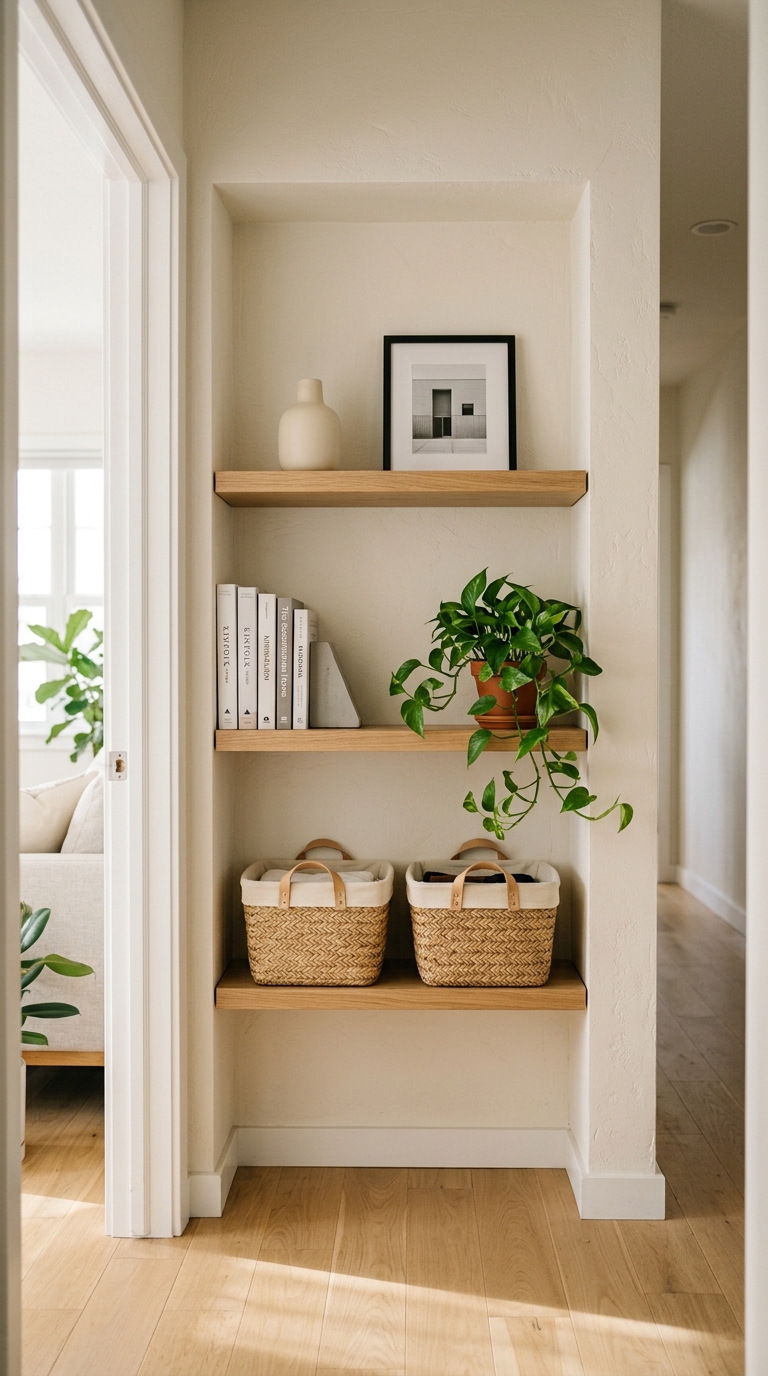
Small homes often have storage opportunities hiding in places we overlook.
The space underneath a bed can hold seasonal clothing or extra bedding. The back of a door can accommodate a slim organizer. A narrow gap beside a cabinet may work for a rolling cart. Higher shelves can hold things you don’t need every week.
Look up, down, behind doors, and into narrow spaces between furniture.
But don’t turn every empty inch into storage simply because you can.
The best storage uses overlooked space without making everyday life harder. Under-bed boxes aren’t helpful if retrieving them requires emptying half the bedroom first.
If you’re organizing a bedroom, our guide to organizing a small bedroom without making it feel cramped goes deeper into using under-bed, vertical, and behind-the-door space without sacrificing the walking area.
5. Reserve Prime Storage for the Things You Use Most
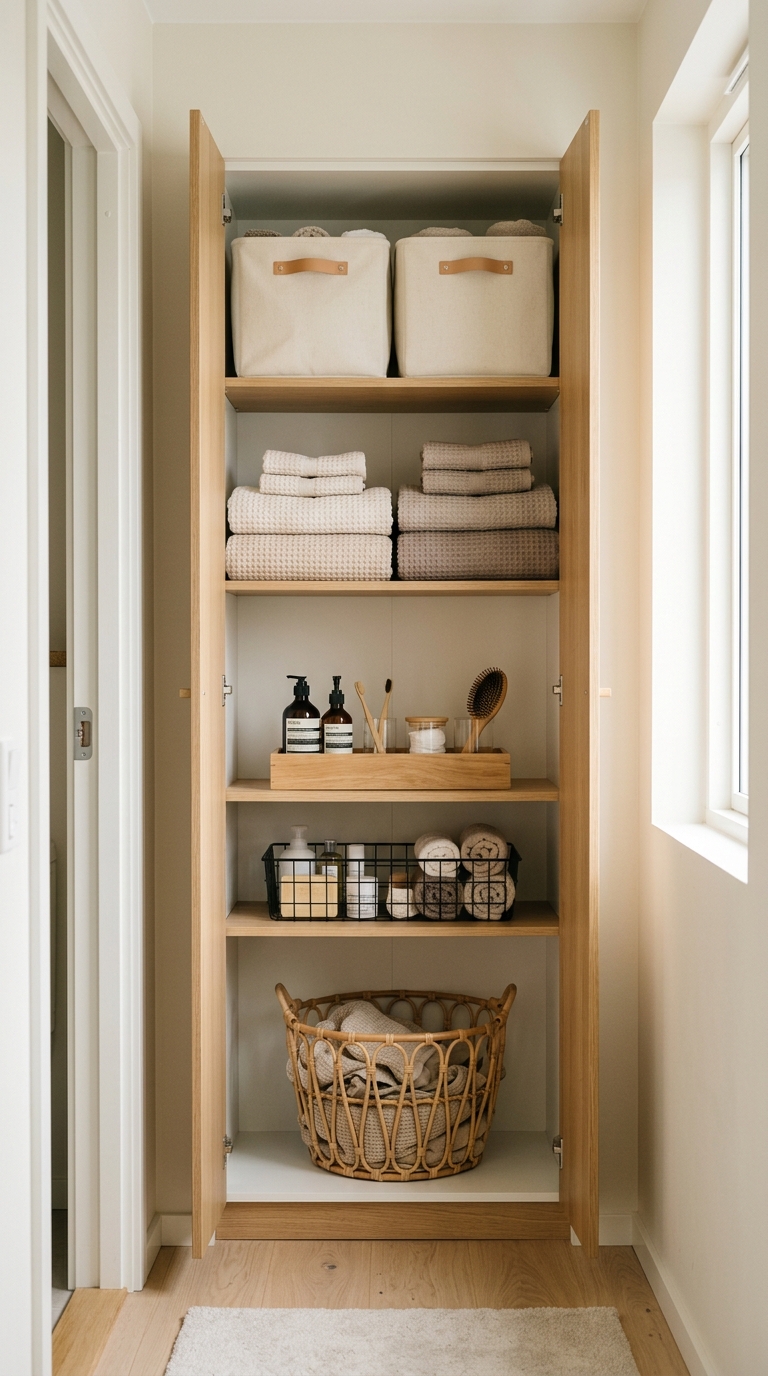
Not everything needs to be within arm’s reach.
Think about what you use daily, weekly, monthly, or only a few times a year.
Holiday decorations, extra linens, luggage, specialty kitchen equipment, and seasonal clothing can live in less convenient areas. Everyday clothing, frequently used cookware, cleaning supplies, and other daily essentials deserve the easiest access.
A simple hierarchy can help:
Prime Space — Daily Use
- Everyday dishes and cookware
- Frequently worn clothing
- Keys and bags
- Daily cleaning supplies
Secondary Space — Occasional Use
- Hobby materials
- Extra pantry supplies
- Occasional kitchen equipment
- Backup household supplies
Deep Storage — Seasonal or Rarely Used
- Holiday decorations
- Seasonal clothing
- Luggage
- Extra bedding
- Special-occasion items
This can make an existing closet or cabinet feel much more useful because you’re giving convenient space to the things you actually reach for.
If something you use every day is buried behind something you touch twice a year, the arrangement is working against you.
The same principle works in utility spaces. See these small laundry room organization ideas for more examples.
6. Stop Letting “Temporary” Storage Become Permanent
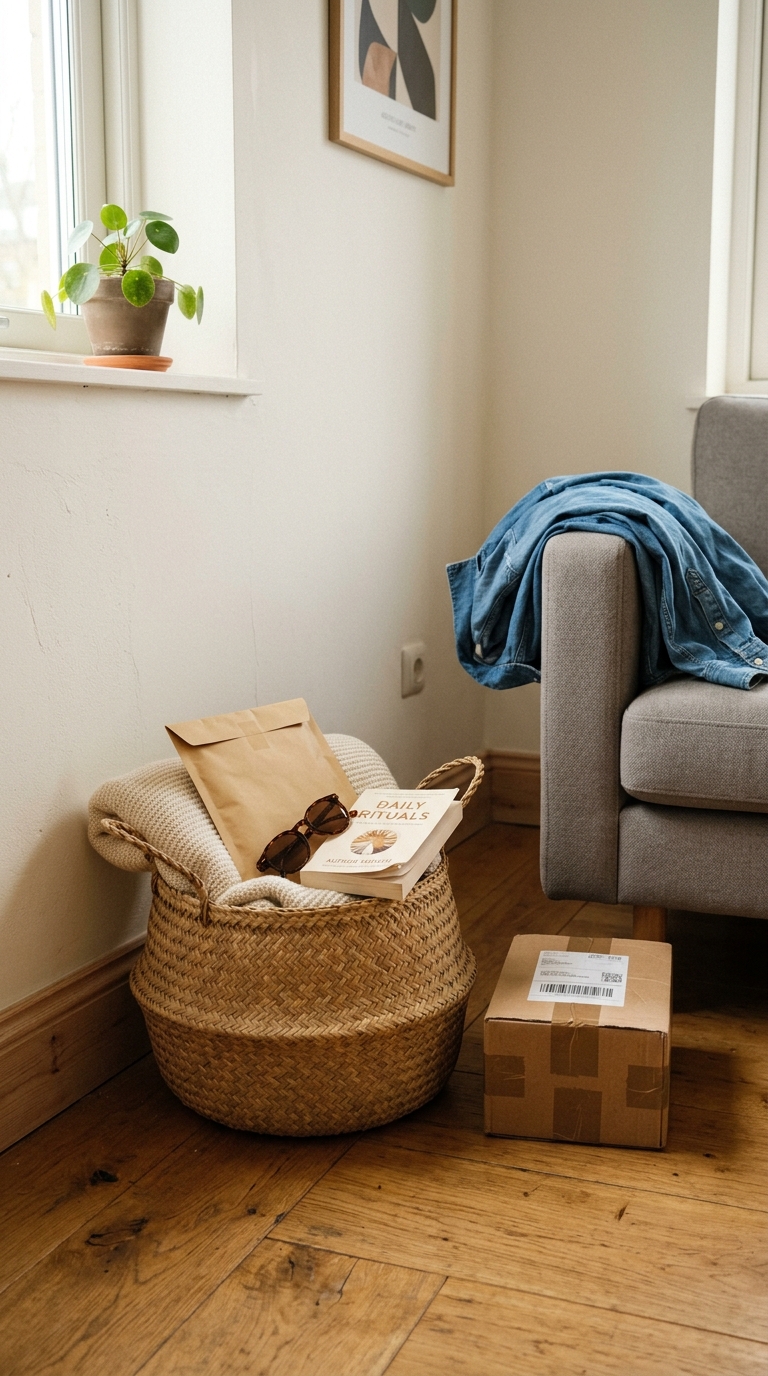
We’ve all done it.
You put something on a chair because you’re going to deal with it later.
A box sits beside the wall because you haven’t decided where it belongs.
A basket becomes the place where everything goes when you don’t know where else to put it.
Then a week passes.
Temporary storage is useful when it genuinely stays temporary. The problem begins when it quietly becomes part of the furniture.
When you notice a permanent “temporary” pile, ask what the items actually need.
Do they need to be:
- Donated?
- Filed?
- Returned to another room?
- Used?
- Stored somewhere more appropriate?
Sometimes the answer is simply that the items don’t have a proper home yet.
Don’t solve that problem by buying another basket. Solve the reason the pile exists.
7. Give Growing Categories a Physical Limit
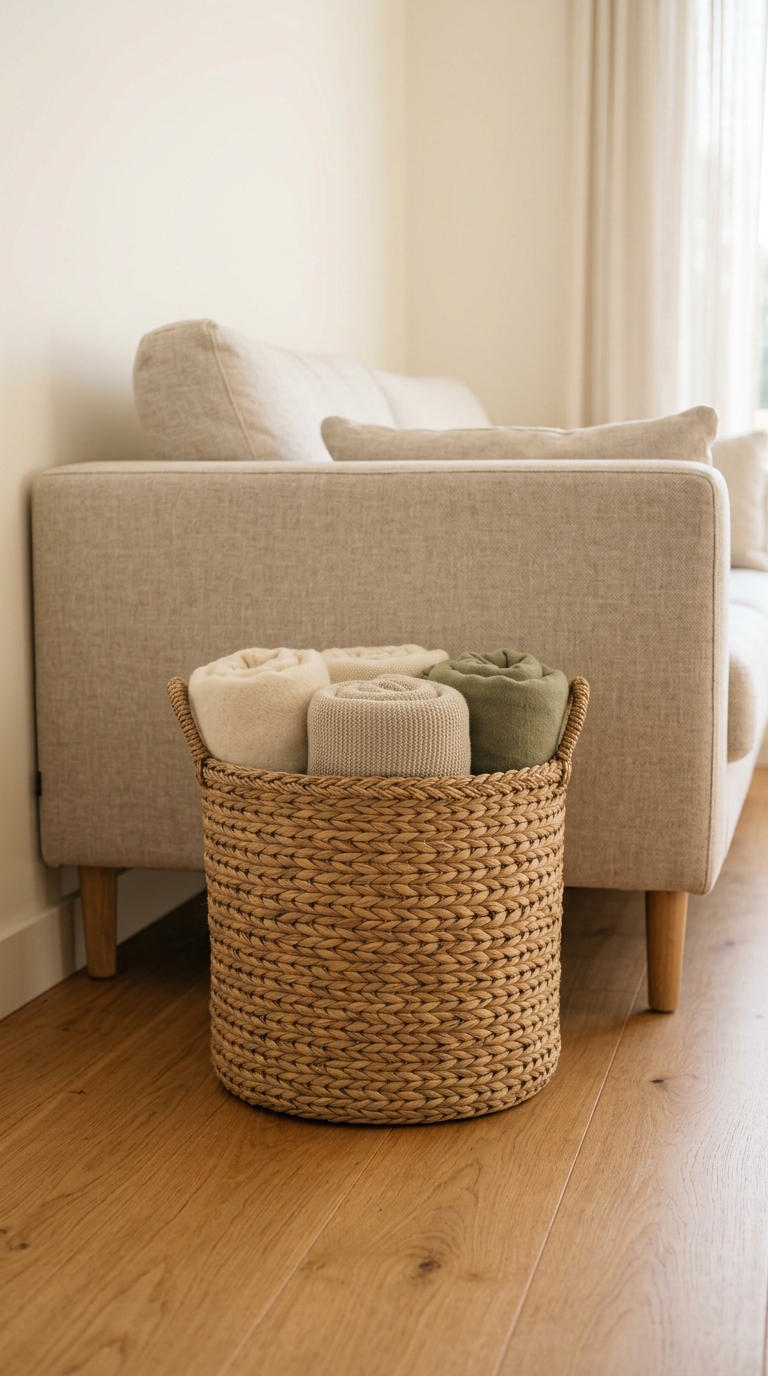
Some things multiply almost invisibly.
Blankets. Water bottles. Reusable shopping bags. Cleaning products. Craft supplies. Takeout containers. Mugs.
You may organize them beautifully today, only to find the same space overflowing again a few months later.
A physical limit gives the category a boundary.
Maybe your extra blankets fit in one basket. Your reusable bags fit in one drawer. Your everyday mugs occupy one shelf.
When the space is full, you have a decision to make before bringing in more.
You don’t need strict rules for every possession. The point is simply to give growing categories somewhere to stop.
8. Don’t Buy an Organizer Until You Know What Problem It Solves
A basket can hide clutter. A drawer divider can separate small items. A rolling cart can add useful storage to a narrow space.
But buying an organizer before understanding the problem often just gives the clutter a nicer container.
Before purchasing anything, ask:
What exactly am I trying to store?
Where will I use it?
What will make this easier to put away?
If you can’t answer those questions, wait.
You may discover that you don’t need another container at all. You may need to move something, remove something, or change where a category lives.
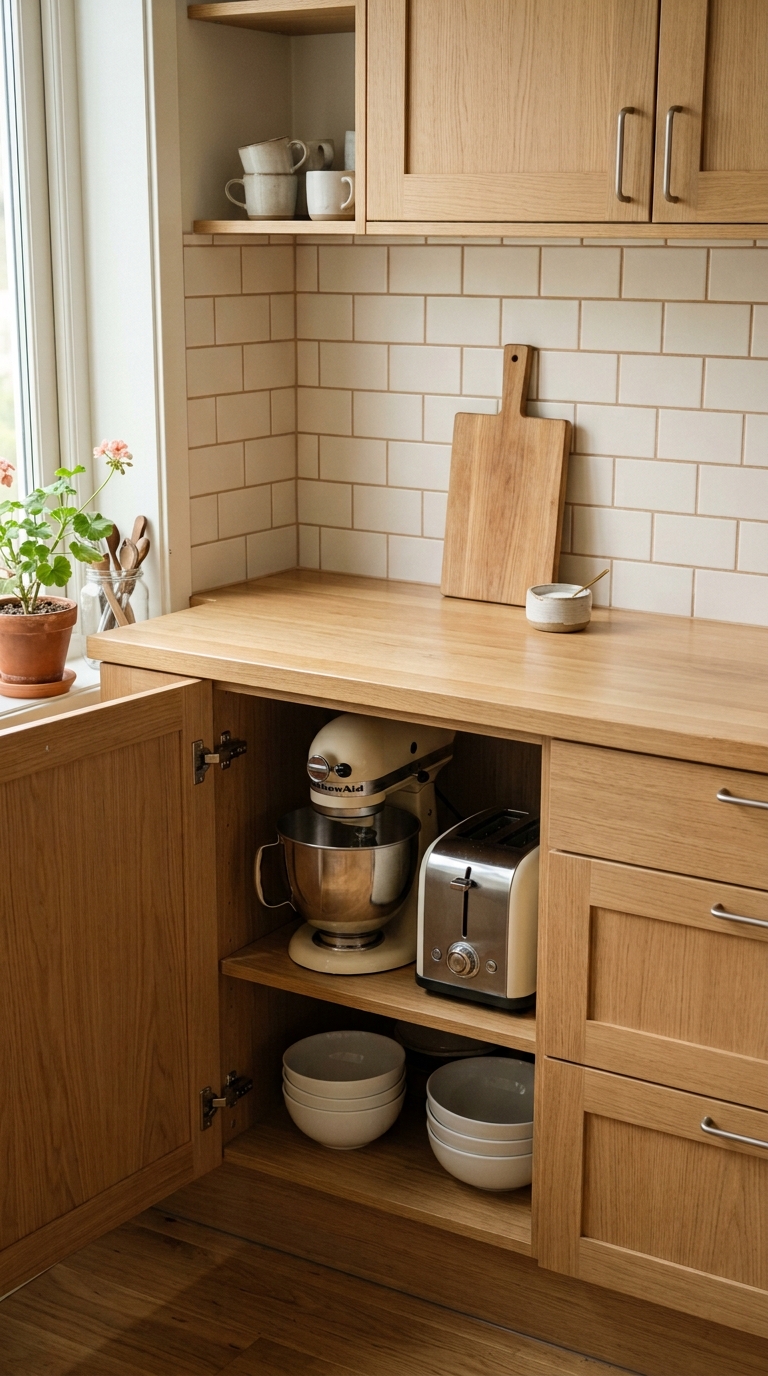
For example, if kitchen counters are covered with appliances you use once a month, a countertop organizer may not solve anything. Moving those appliances into a cabinet could free the counter completely.
That pause can save both money and space.
It also follows a useful organizing principle: decide what stays and where it belongs before choosing containers. Utah State University Extension’s organizing guidance similarly recommends assigning items logical, accessible homes and treating containerizing as a later step rather than the starting point.
9. Make Your Storage Work for Real Life, Not Just for Photos
An organized home doesn’t have to look untouched.
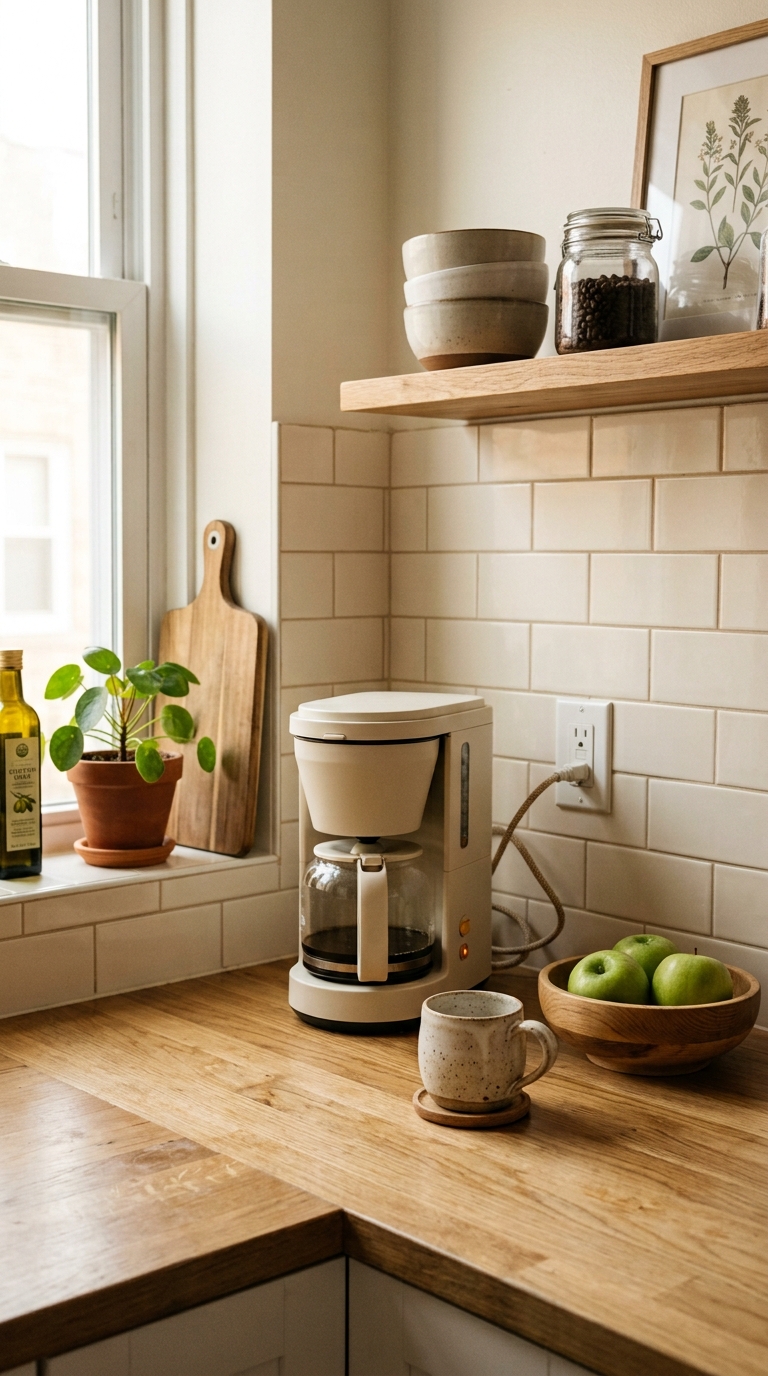
A drawer can be functional without every item being perfectly aligned. A basket can be slightly full. A countertop can have the coffee maker, a fruit bowl, and the things your family actually uses.
The real test isn’t whether your home looks perfect immediately after you organize it.
The test is what happens three days later.
Can you find what you need?
Can you put things away without rearranging half the room?
Can another person in the household understand where something belongs?
Can you maintain the system when you’re tired?
If the answer is yes, the system is doing its job.
Your home isn’t a showroom. It is where people eat, get dressed, charge their phones, drop their bags, do laundry, relax, and come home tired.
Good organization should quietly support that life.
It shouldn’t become another chore you have to perform perfectly.
10. Create a 10-Minute “Everything Home” Reset
Even a good system needs a little maintenance.
Try a short reset once a day.
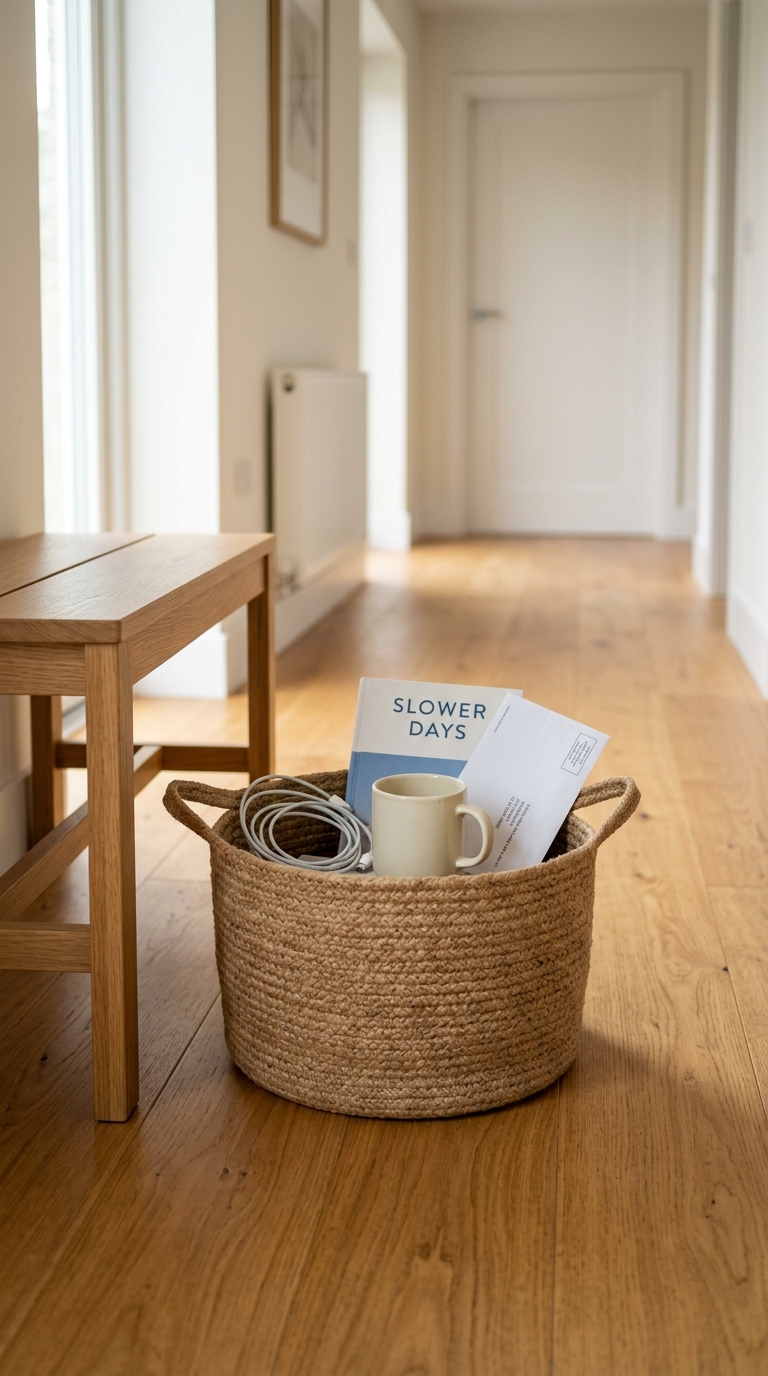
Walk through the main living areas with one basket or empty tote and collect anything that has wandered from its home. Return the shoes, put the blanket back, take the mug to the kitchen, return the charger, and put the mail where it belongs.
Don’t start reorganizing drawers or deep-cleaning rooms.
You’re simply returning things home.
Ten minutes is often enough to stop small piles from becoming tomorrow’s bigger project.
And if the same item needs to be moved every single day, don’t keep moving it.
Ask whether its home should change.
A reset should maintain a system that works—not compensate for one that doesn’t.
11. What to Do When You Truly Don’t Have Enough Storage
Sometimes the problem really is a shortage of space.
If you’ve edited what you own, used your existing space thoughtfully, and created practical homes for everyday items, but you’re still constantly running out of room, you may need to add storage.
That’s okay.
The goal isn’t to prove that every small home can function without buying anything. It’s to make sure anything you add actually solves the problem.
Start with the shortage rather than the product.
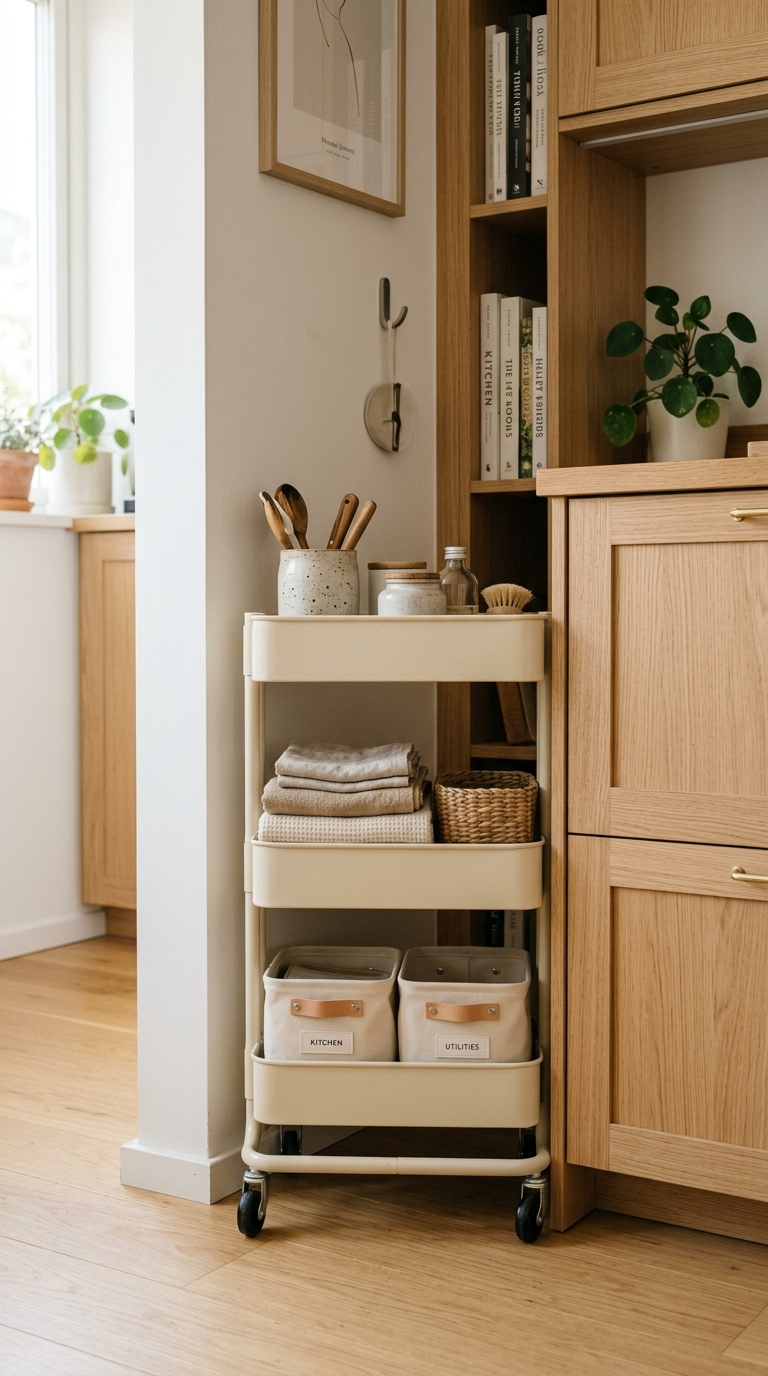
A narrow rolling cart can make use of an otherwise wasted gap. Under-bed storage can take seasonal items out of your everyday closets. Wall hooks can move frequently used items off furniture. A storage ottoman can provide seating and hidden storage at the same time.
Choose one solution for one specific shortage.
Don’t buy a five-piece organization set because one drawer is messy.
If one narrow cabinet is overflowing, solve that cabinet. If coats are always on the sofa, solve the coat problem.
Often, one well-chosen addition solves the problem that five random baskets couldn’t.
If the shortage is happening inside a closet, you can also look at these small apartment closet organization hacks for ways to make existing closet space work harder before adding another piece of furniture.
12. Do a Simple Small-Home Storage Audit Tonight
If your home feels like everything is constantly being moved from one surface to another, don’t start by shopping.
Start with a quick audit.
Walk through your home and write down:
- The things that are always left out
- The surfaces that collect clutter
- The categories that keep overflowing
- The items you use every day but store inconveniently
- The things taking up valuable space that you rarely use
Then choose one problem.
Give those items a realistic home.
Remove anything that doesn’t deserve the space.
Move the home closer to where the items are actually used.
Add a container or organizer only if it solves a specific remaining problem.
Then live with that change for a few days.
If it works, keep it.
If it doesn’t, change the system.
A simple example
Imagine your dining table is always covered with mail.
You could buy a decorative mail organizer.
But first ask what happens when the mail comes into the house.
If everyone walks through the kitchen first, a small mail tray near the kitchen may work better.
If old mail never gets sorted, you may need a simple weekly paper reset.
If the table is the only clear surface where people can actually sit down and sort things, the solution may be completely different.
The pile is the symptom.
The routine behind it is the problem worth solving.
That’s the mindset that makes small-home organization much easier.
Frequently Asked Questions
How do you organize a small home with very little storage?
Start with the things that repeatedly end up on counters, chairs, or floors. Give frequently used items homes close to where you use them, then reserve less accessible areas for things you need less often. Only add storage when you can identify a specific shortage.
How do you organize a small home with no storage?
Look beyond closets and cabinets. Under-bed space, the backs of doors, vertical space, narrow gaps, and higher shelves can all help. Hooks, slim carts, and furniture with built-in storage can also work where appropriate.
But don’t turn every empty wall or corner into storage. It still needs to make the room easier to live in.
Where should I put things when I have nowhere to put them?
Start with where you naturally use the item.
If something repeatedly ends up in the same place, that spot may be telling you where its home should be. A good home is one that people will actually use.
Should I declutter before organizing a small home?
Usually, but you don’t have to declutter everything at once.
Start with the category causing the most trouble and remove items that don’t deserve your limited storage space. Then organize what remains.
How do I keep a small home organized?
Make your systems easy to maintain.
Give everyday items convenient homes, set limits for categories that tend to grow, keep occasional-use items out of prime storage areas, and spend a few minutes returning misplaced things each day.
If the same problem keeps returning, change the system rather than simply cleaning the mess again.
A Small Home Doesn’t Have to Feel Like a Constant Battle
When everything seems to be without a place, it’s easy to believe that the answer is a bigger home, more furniture, or another round of decluttering.
Sometimes those things help.
But often, the more useful place to begin is much smaller.
Look at the handbag that always lands on the chair.
The mail that never makes it past the kitchen.
The shoes that stay by the door.
The blanket that is always left on the sofa.
Those little patterns are telling you something.
Your home is showing you where the current system doesn’t quite fit your life.
You don’t have to fix everything at once.
Give one recurring problem a better home. Make that home easy to use. Then see what changes.
Because a well-organized small home isn’t one where nothing is ever out of place.
It’s one where the things you use every day have somewhere sensible to go—and putting them there doesn’t feel like work.