Floating Shelves Styling Ideas: Organize Open Wall Spaces
When an Empty Wall Still Feels Like a Problem
Small apartments have a way of running out of places to put things. The best floating shelves styling ideas can help, especially when the coffee table fills up by evening and the kitchen counter becomes a drop zone. Somehow, there is always one more thing that needs a home.
Then there is that empty wall.
It has been sitting there for months. You keep thinking you should do something with it. But adding a cabinet or console means giving up floor space you already need.
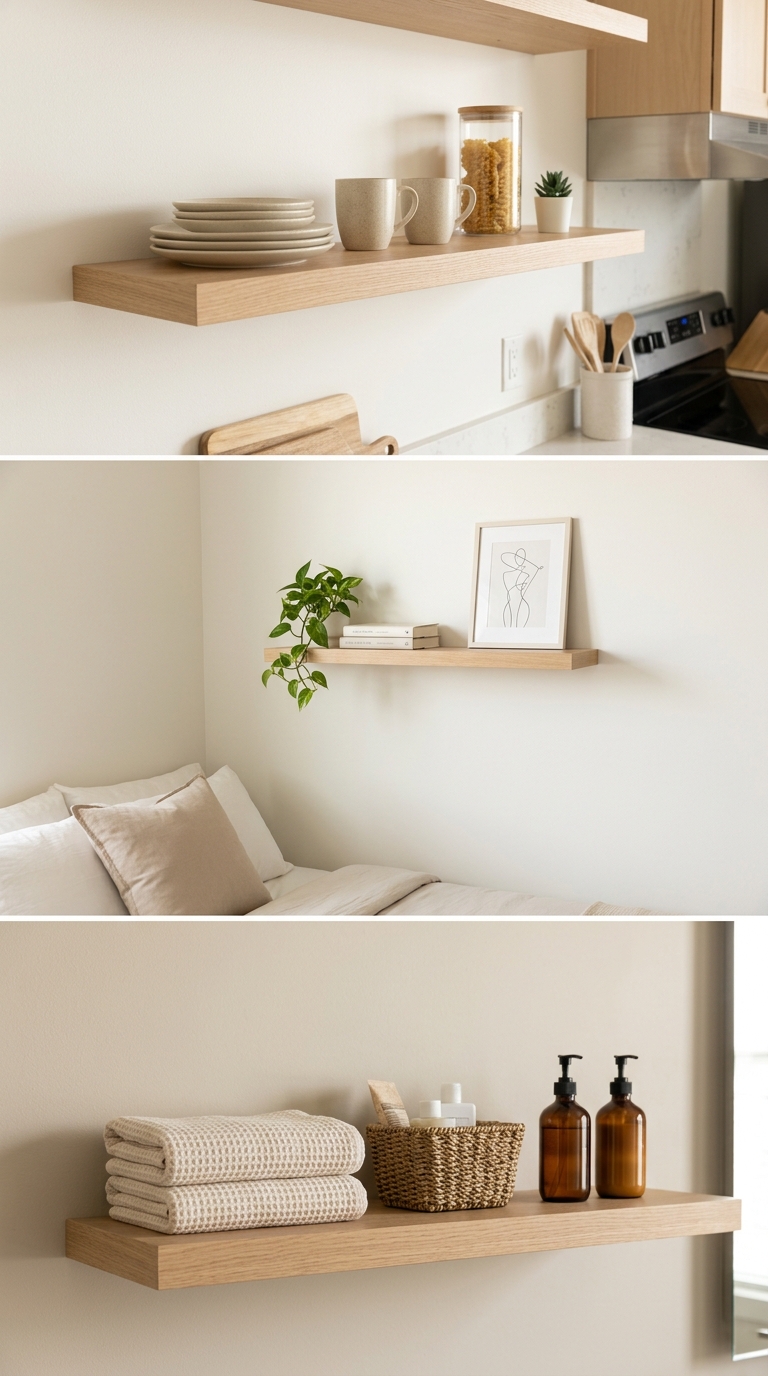
That is where floating shelves can be so useful. They let you use the wall without crowding the room below. Books, dishes, plants, and everyday pieces can stay within reach without another bulky piece of furniture.
Of course, open shelves come with a catch. Everything is visible. A few misplaced items can quickly make a tidy room feel messy again.
So you don’t need to fill every inch. You need to edit what goes there. Choose pieces that earn their space, group them naturally, and leave room around them.
That small shift can make a floating shelf feel less like extra storage and more like a natural part of the room.
The 4-Step Floating Shelf Styling Formula
Styling a shelf does not have to feel complicated. You don’t need a perfect eye for design, either. A few simple choices can make everything feel more intentional. This matters even more in a small apartment, where too many objects can quickly make a room feel busy.
Think of these as flexible principles. They are not rules you have to follow perfectly.
1. Start With One Visual Anchor
Give your eyes somewhere to land first.
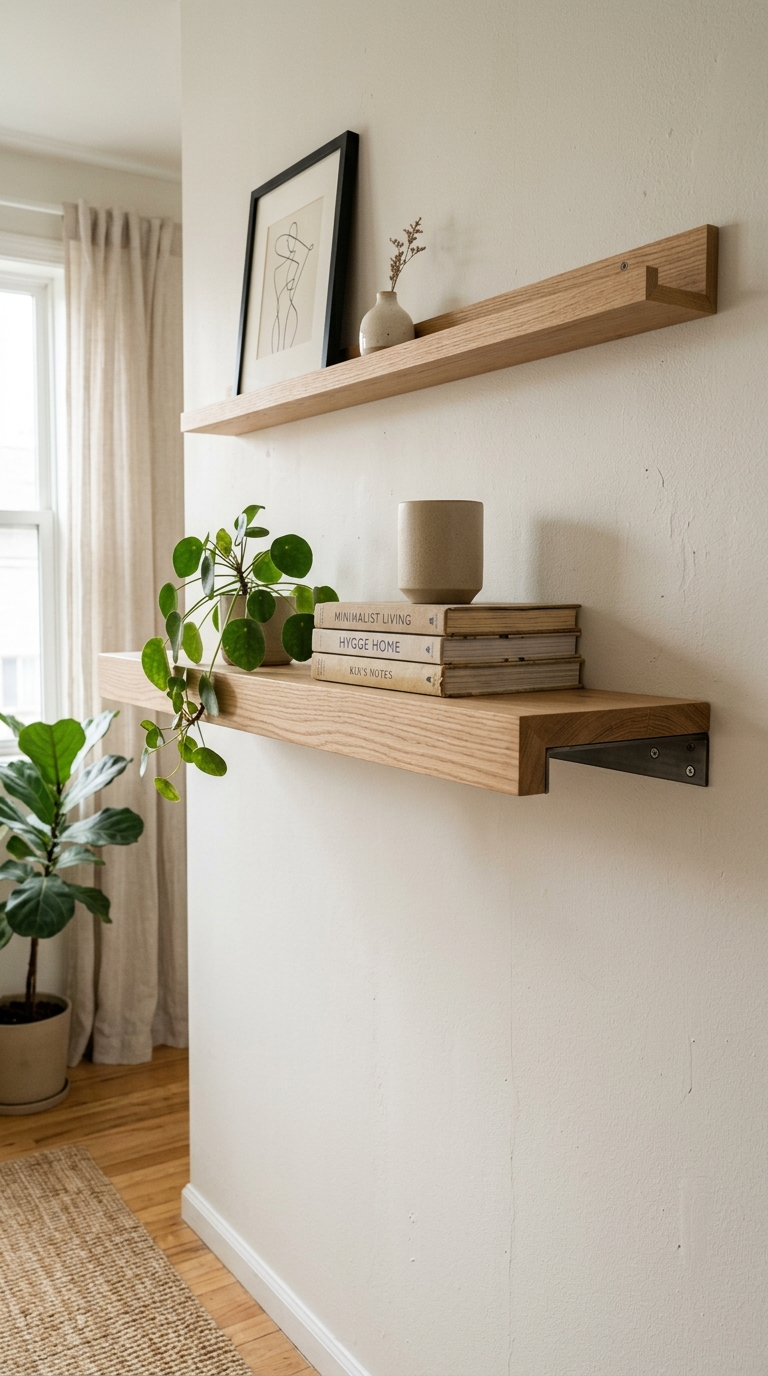
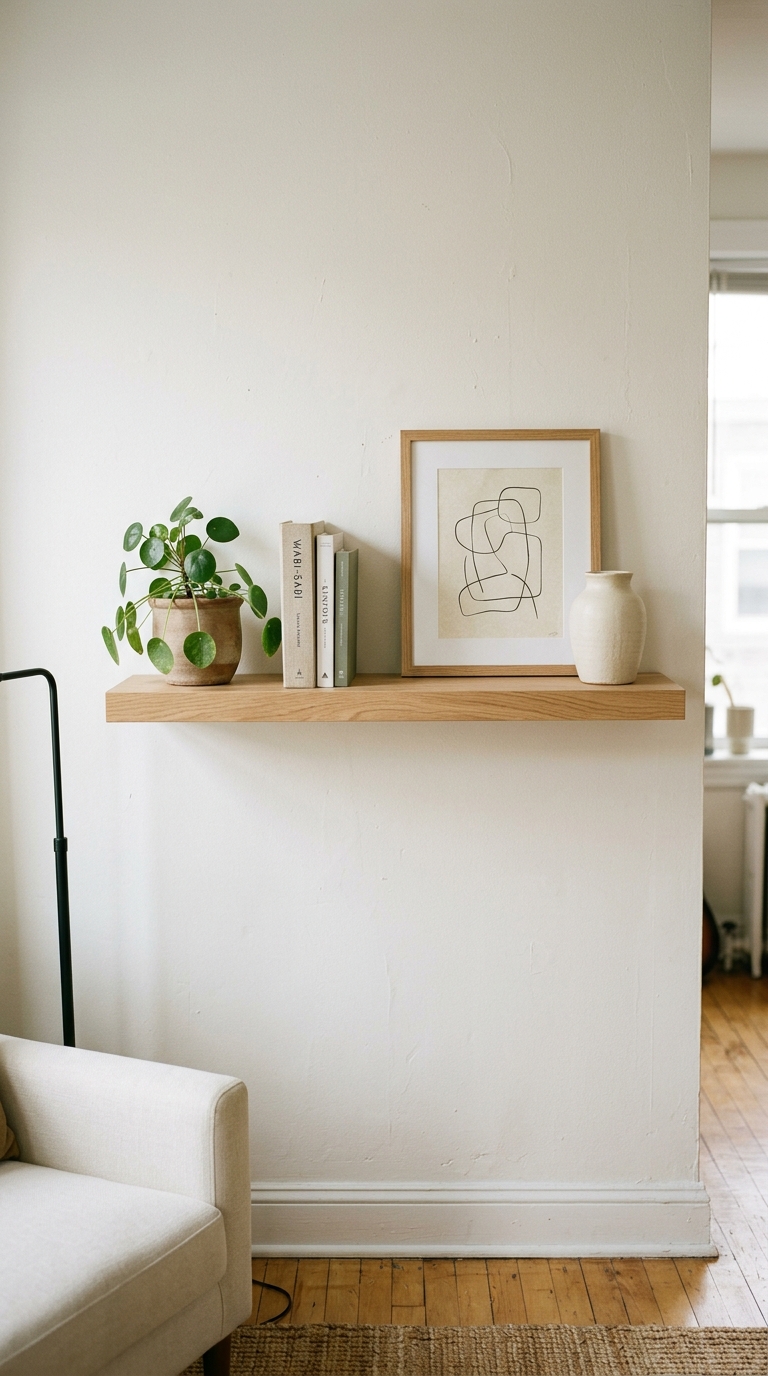
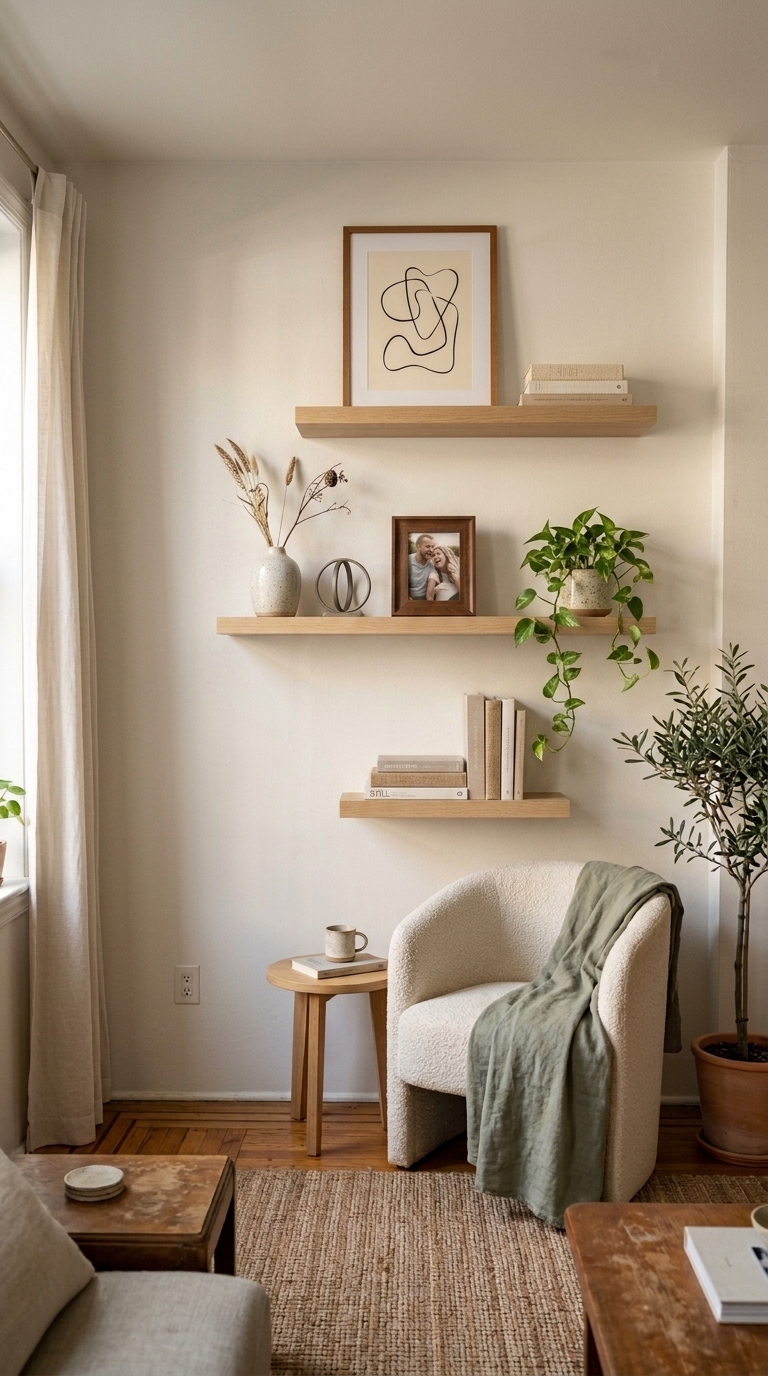
Your anchor should be the strongest piece on the shelf. It might be a medium framed print, a larger ceramic vase, or a small plant with plenty of shape.
Try placing it slightly off-center. This often feels more relaxed than putting it right in the middle.
Then build around it.
A few smaller pieces can support the anchor without competing with it. This also keeps you from adding lots of little decorations just to make the shelf feel finished.
In a small space, that restraint makes a difference.
2. Layer Pieces Instead of Lining Them Up
A shelf can look oddly flat when everything sits in one straight row.
Instead, create a little depth.
Lean a framed print against the wall. Place a small ceramic piece slightly in front of it. Stack two books beneath another object. Let a trailing plant spill gently over the shelf edge.
You don’t need much overlap.
Even small changes in depth can make the arrangement feel more relaxed. It also keeps your shelves from looking like every item was placed with a ruler.
3. Mix Heights and Groupings
Now look at the height of everything.
If every object sits at roughly the same level, the shelf can feel stiff. Mixing tall, medium, and shorter pieces creates a more natural rhythm.
You can also try grouping three items together. This often works well because the arrangement feels balanced without looking too formal.
But don’t treat odd numbers as a rule.
Two pieces can look just as good together. What matters more is variation. A tall vase beside a low ceramic bowl can create enough contrast on its own.
Let the objects feel related without making them match.
4. Leave Room to Breathe
This may be the easiest step to overlook.
When a shelf looks a little empty, the temptation is to add something. Then you add one more piece. Before long, nothing has room to breathe.
Resist that urge.
Open space is part of the styling. It separates your groupings and gives your eyes somewhere to rest. It also helps a small room feel lighter.
Step back from the shelf before adding anything else. If it feels heavy, remove an item first.
You may find that the shelf didn’t need more decoration. It simply needed less.
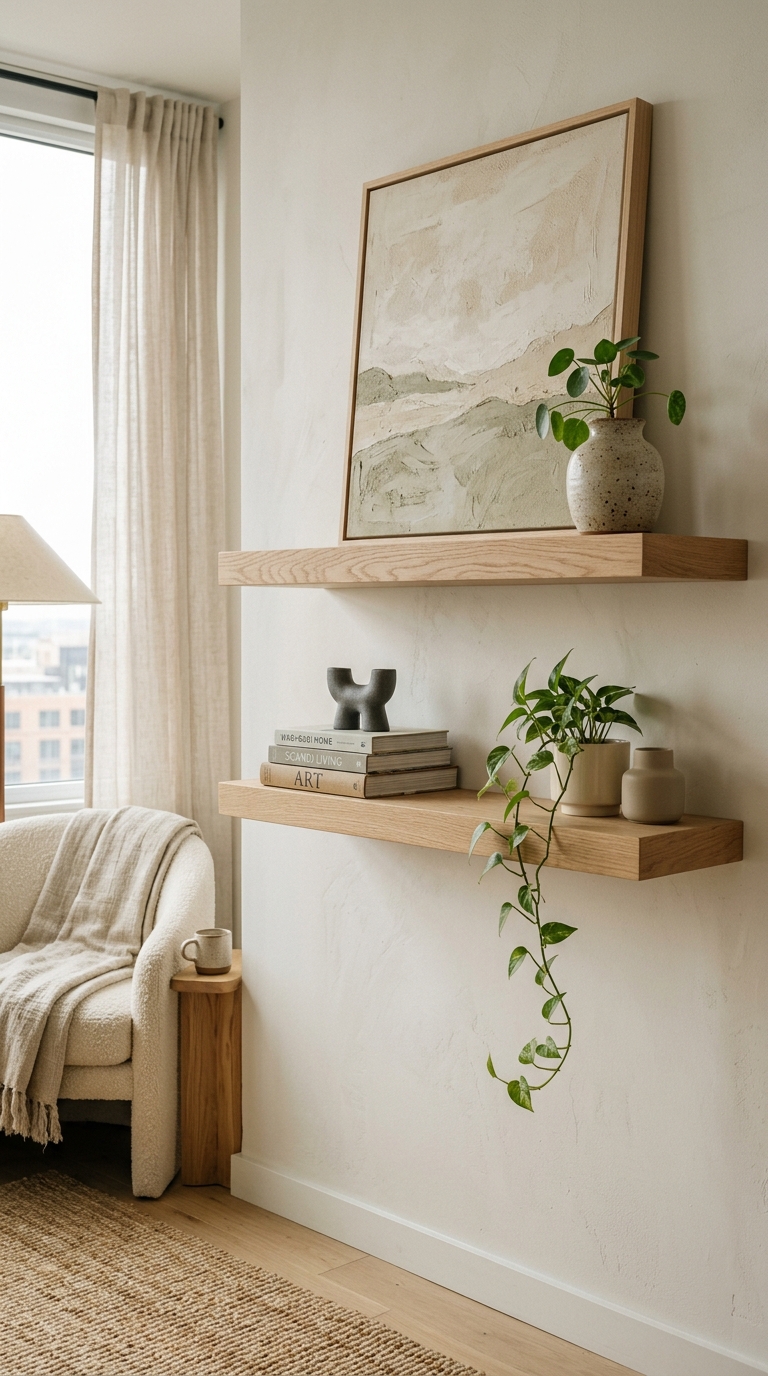
A few versatile pieces can make this approach easy. Think light-oak frames, neutral ceramics, small plants, and simple objects with natural texture. You don’t need a shelf full of decor. You need a few pieces that work well together.
And before loading those shelves with books or ceramics, there is one practical question to answer: can the wall actually support what you want to put on it?