How to Organize Winter Coats and Boots in a Small Entryway Without a Mudroom
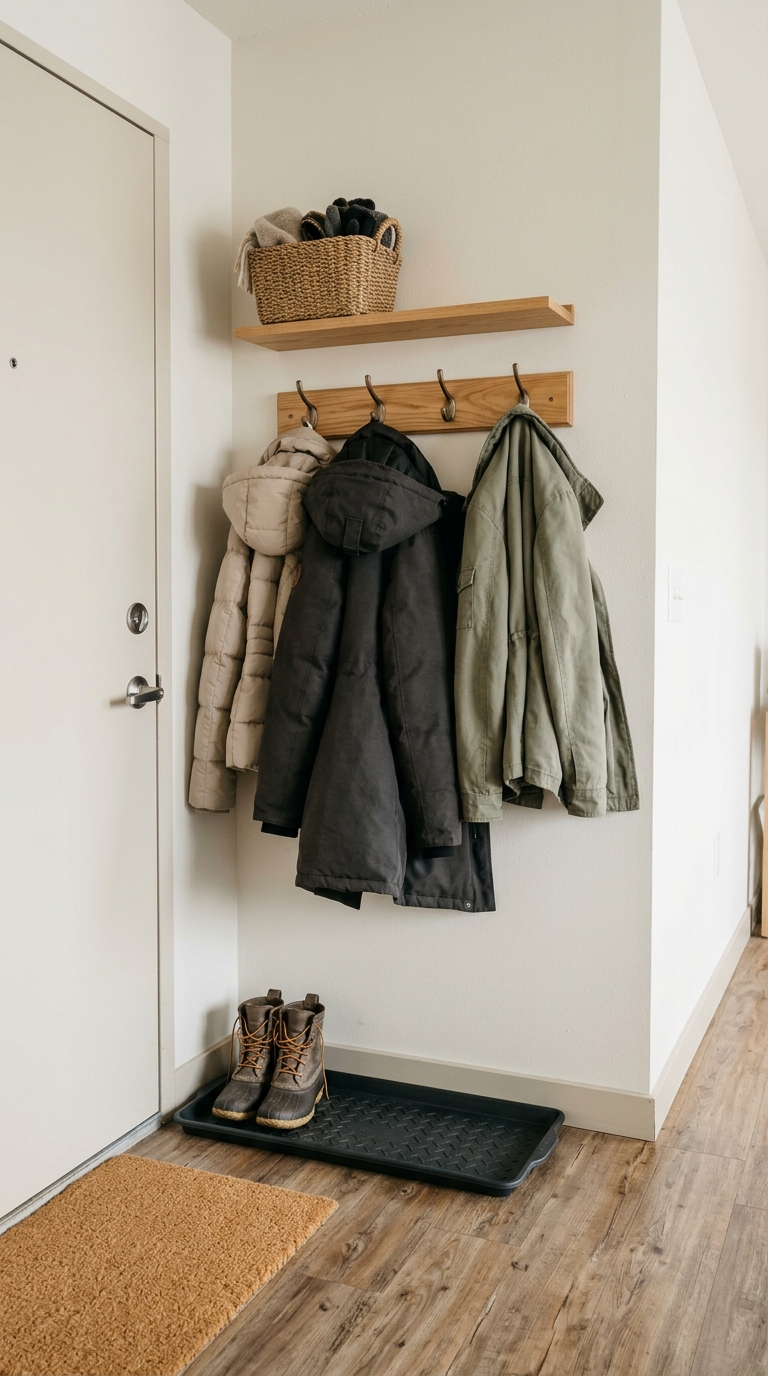
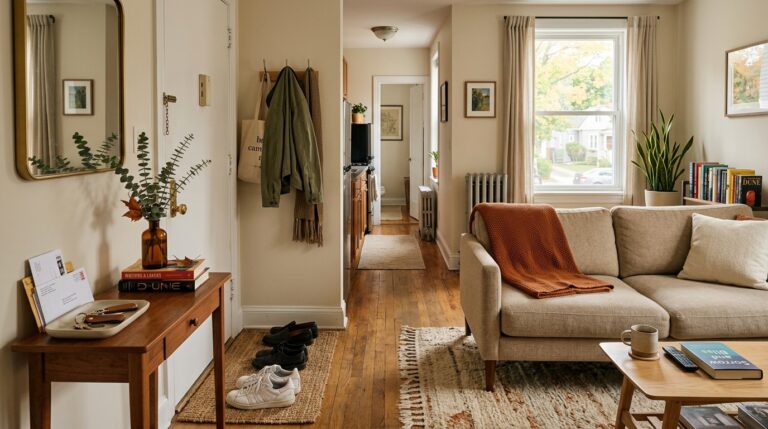
Winter coat storage in a small entryway can become a real challenge when the weather turns cold. One bulky coat takes up the space of two lightweight jackets, wet boots leave puddles beside the front door, and hats and gloves somehow end up everywhere except where you need them.
If your home doesn’t have a mudroom or a proper coat closet, the entrance can quickly become crowded. Shoes pile up, coats end up on chairs, and getting out of the house becomes more frustrating than it needs to be.
The good news is that you don’t need a separate mudroom to create an organized winter entrance. With a few thoughtful storage choices, you can give coats, boots and cold-weather accessories a proper place without filling the little space you have.
The trick is to work with your entryway rather than trying to squeeze a full mudroom into it. Here’s how to make your winter storage practical, accessible and easier to maintain.
1. Plan Your Winter Coat Storage in a Small Entryway
Before buying hooks, baskets or another storage unit, decide what actually needs to stay near your front door.
Not every jacket, pair of shoes or winter accessory needs to be stored in the entryway. Keeping too many belongings close to the entrance can make even a well-designed arrangement feel crowded.
Start by gathering the coats, boots, scarves, hats and gloves your household uses regularly. Separate everyday essentials from occasional-use items. The coat you wear most mornings deserves a convenient spot, while a special-occasion coat or spare pair of boots can be stored elsewhere.
Planning winter coat storage in a small entryway starts with deciding which belongings deserve the limited space closest to the door.
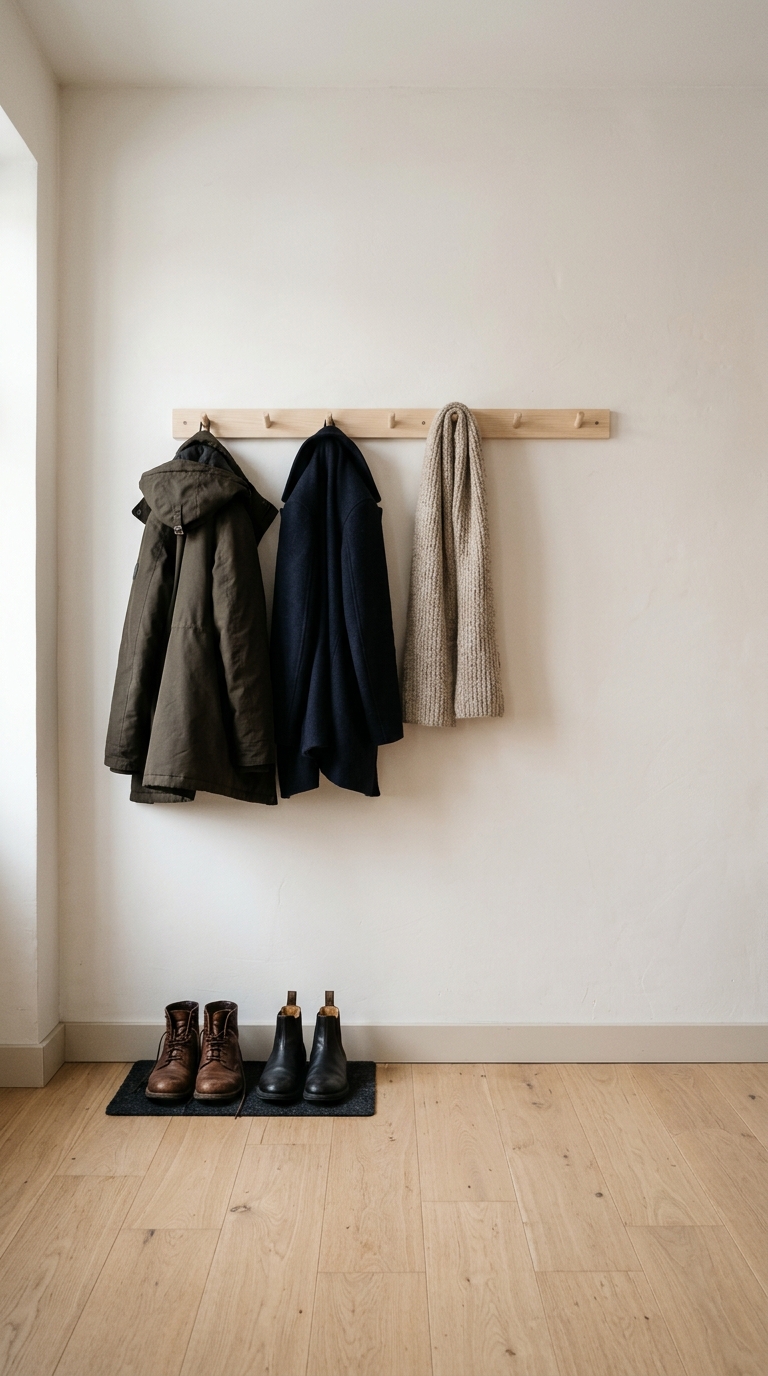
Think about how many people use the entrance each day, too. A household with several people will need a different arrangement from someone living alone. Give regular users a reasonable amount of hanging and accessory space rather than allowing everyone to compete for the same few hooks.
If you have a bedroom or another area with spare wall space, use it for less frequently worn clothing. A separate clothing arrangement, such as a DIY open closet with shelves and a hanging rod, can help keep extra garments out of the entrance.
The goal is to store everyday winter essentials near the door, not every piece of clothing you own.
2. Give Winter Coats Their Own Hanging Space
Winter coats are often the biggest storage challenge because they’re bulky, heavy and difficult to squeeze onto a small set of hooks.
A few well-placed hooks can work, but leave enough room between them. When coats overlap too much, they’re harder to remove and may not dry properly.
For a small entrance, choose a hanging solution that accommodates bulky garments without making the space difficult to use.
Consider these options:
- A sturdy wall-mounted hook rail: A good choice when you have an available wall. Look for one with enough spacing for thick winter clothing.
- Individual wall hooks: These can be arranged to suit your available space and make it easier to assign a hook to each household member.
- A slim freestanding coat rack: Useful when drilling isn’t possible, provided it has a stable base and doesn’t obstruct the walking path.
- A narrow coat stand: This can work in a slightly wider entrance, but avoid one that takes up too much floor space.
Make sure the hooks and fixings can support the weight of your coats. Heavy winter jackets can pull poorly installed hooks away from the wall, so follow the manufacturer’s instructions and use fixings suitable for your wall type.
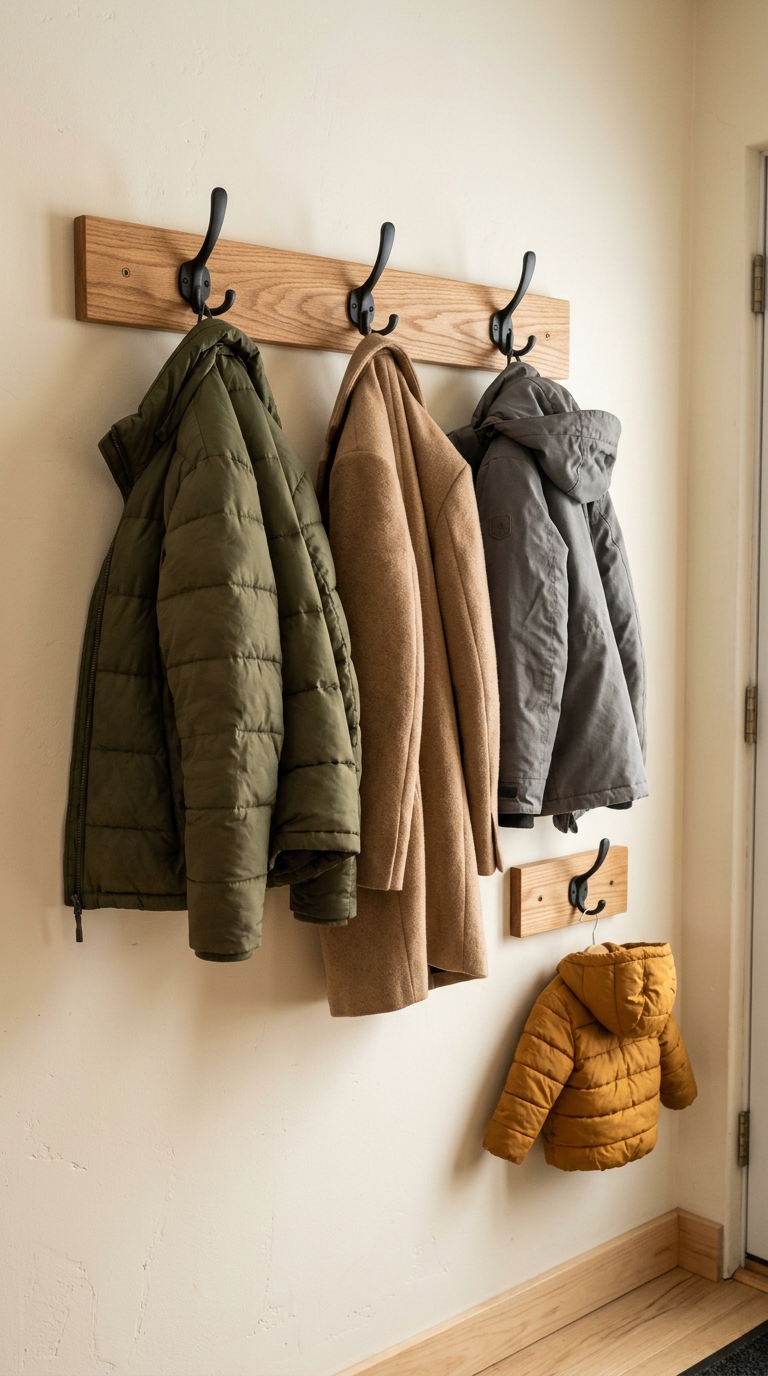
If children use the entrance, place a few hooks low enough for them to reach. This makes it easier for them to put away their own coats instead of leaving them on a chair or the floor.
You don’t need a hook for every garment in the house. Prioritize the coats your household wears most often and store the rest elsewhere.
3. Create a Landing Area for Wet Winter Boots
Wet boots need a designated place, especially when people are coming in from rain, snow or muddy outdoor paths.
Without one, footwear gets left wherever there’s room. Water spreads across the floor, dirt gets tracked indoors, and the entrance quickly becomes unpleasant to walk through.
A simple boot tray is one of the easiest ways to manage this. It provides a contained landing area for wet footwear and makes cleaning up much easier.
Choose a tray that fits the number and size of boots your household regularly wears. A narrow tray may be enough for one or two pairs, while a larger household may need a wider option or two separate trays.
A few practical details make a difference:
- Choose a waterproof tray with raised edges to contain dripping water and melting snow.
- Leave enough space between pairs so boots aren’t packed tightly together.
- Remove excess mud before placing footwear on the tray.
- Allow wet boots to dry fully before putting them in a closed cabinet.
- Empty and clean the tray regularly so water and dirt don’t build up.
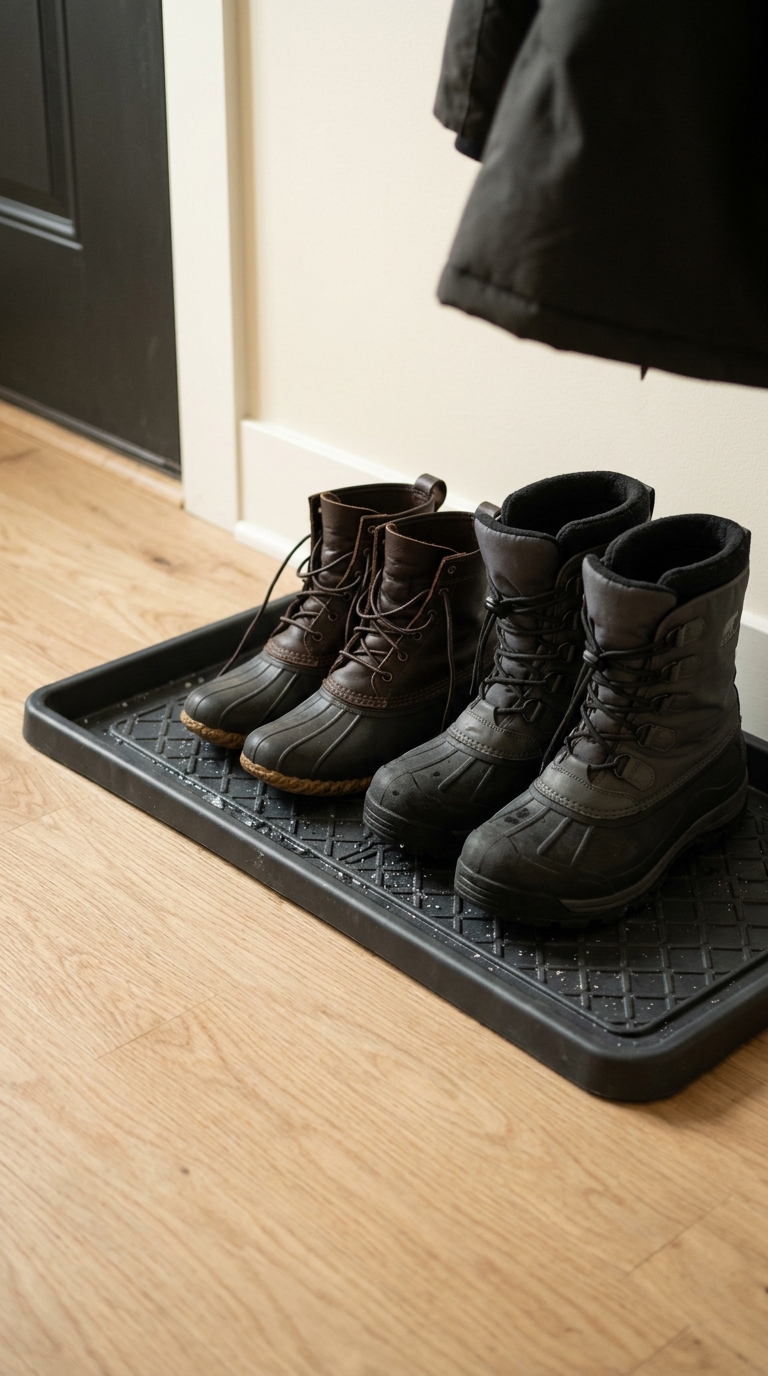
If you have enough vertical space, a small boot rack can help keep footwear upright and improve airflow. Avoid putting wet boots straight into an enclosed storage unit, though. Trapped moisture can cause unpleasant smells and may damage some materials.
For additional guidance on looking after outdoor footwear, see REI’s advice on caring for hiking boots.
The aim is to contain wet footwear without creating another obstacle beside the door.
4. Keep Hats, Gloves and Scarves Together
Coats and boots may take up the most room, but small winter accessories can create just as much everyday frustration.
Gloves disappear, scarves get draped over chairs, and hats end up in different rooms. Giving these items one clearly defined storage area makes them easier to find when you’re heading out.
A few useful options include:
- Small baskets or fabric bins: Use separate containers for gloves, hats and scarves, or assign one to each household member.
- A hanging organizer: A pocket organizer attached to a suitable hook or door can make use of otherwise unused vertical space.
- A shallow shelf: This provides a convenient place for small containers without requiring a large storage unit.
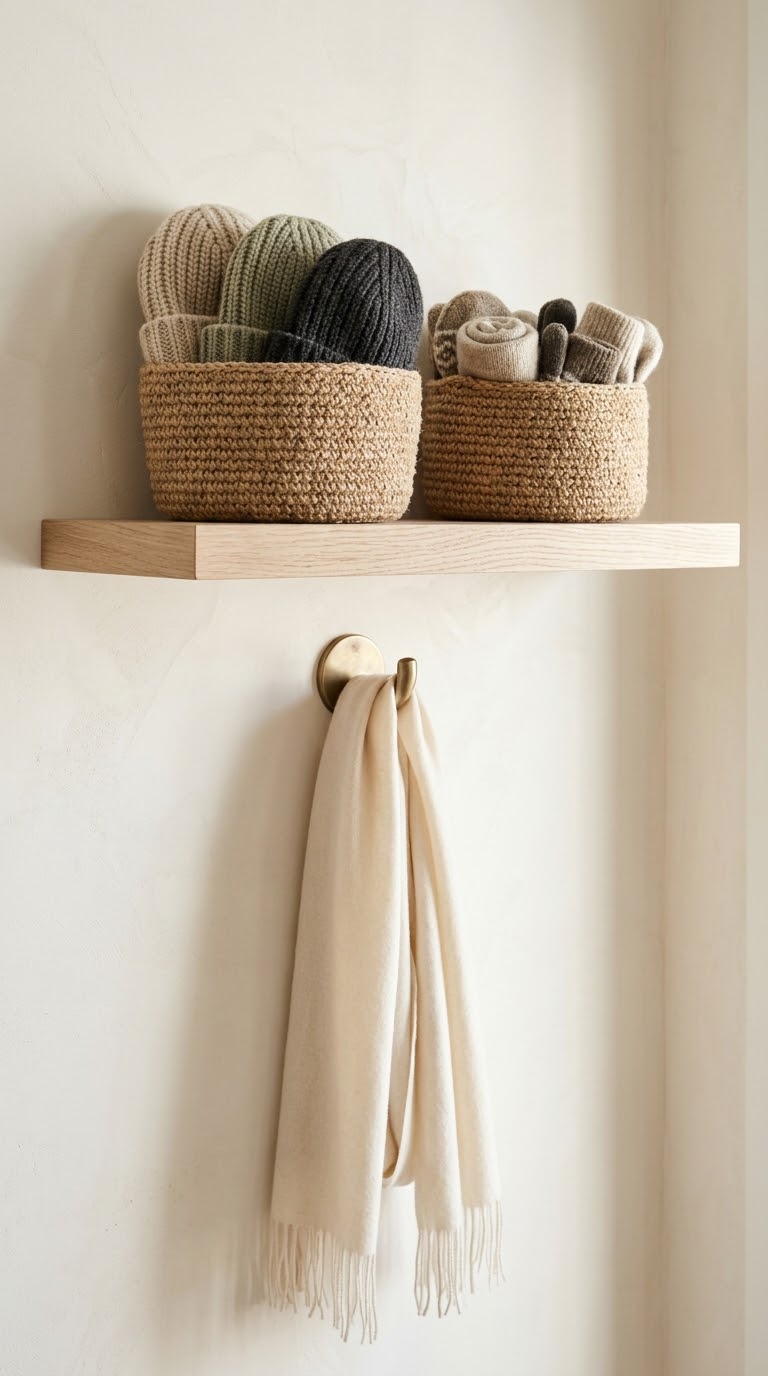
For a household with children, individual baskets can make the arrangement easier to maintain. Each child can have a designated place for their everyday accessories.
Avoid using oversized containers that gradually become dumping spots for anything without a home. Choose a size that comfortably holds the items you actually need near the entrance.
If scarves are particularly bulky, fold them neatly in a basket or hang them separately rather than piling them on top of other accessories.
The simpler the arrangement, the easier it is for everyone to put things back where they belong.
5. Make Use of Wall Space Instead of Adding More Furniture
When an entryway is small, adding another piece of furniture isn’t always the best answer.
A storage bench, large cabinet or deep shoe rack might look useful in a spacious hallway, but in a narrow entrance it can reduce the room you need to open the door, remove your boots or walk through comfortably.
Instead, look at the wall space you already have.
A wall-mounted hook rail, narrow shelf or compact hanging organizer can provide useful storage without taking up much floor space. You could install coat hooks above a slim shelf, place two small baskets on the shelf for accessories and keep a boot tray underneath.
This approach is particularly useful when bulky coats and footwear already compete for limited floor space.
If you prefer a shoe cabinet, choose one with a shallow profile and enough capacity for the footwear you actually use. Before buying, measure the available depth and check how much room remains when the front door is fully open. A storage piece that fits against the wall but blocks the doorway isn’t a useful solution.
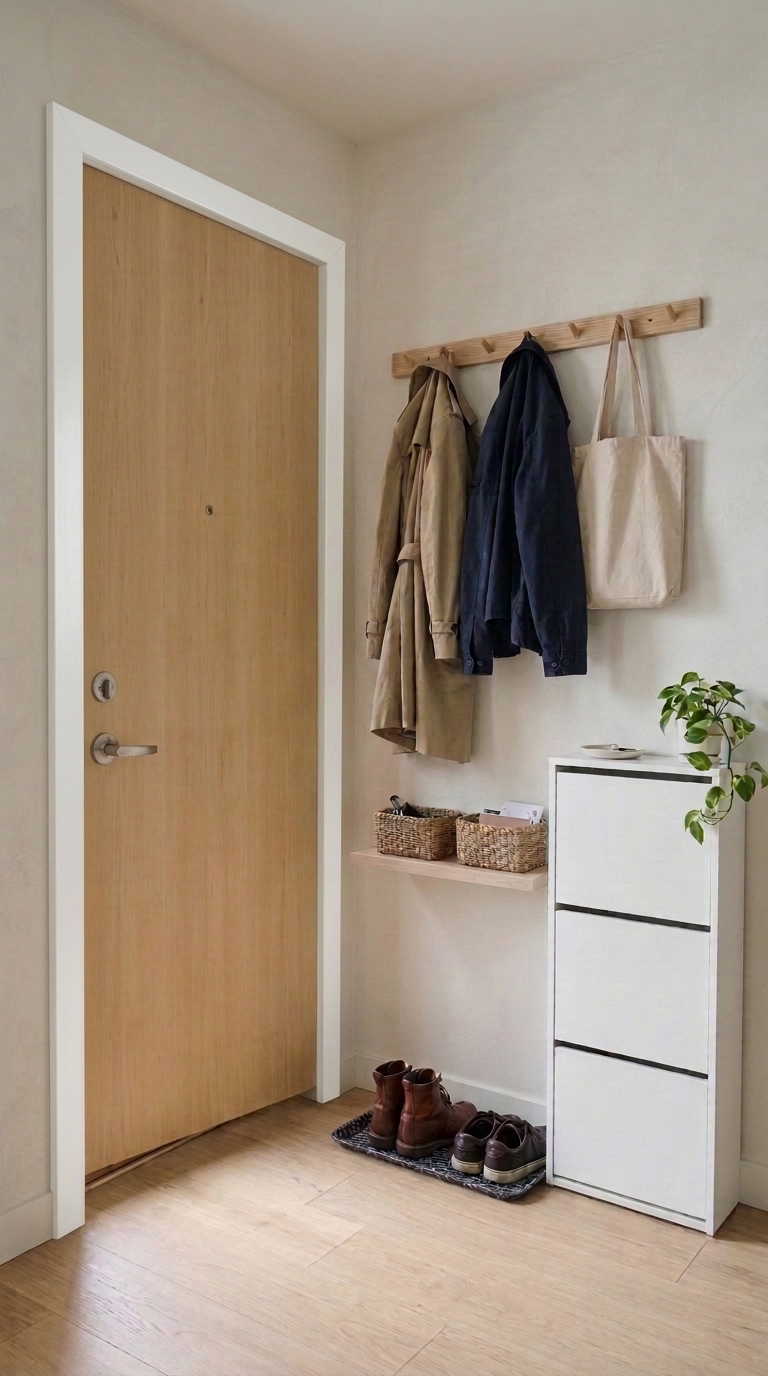
Also consider the height of anything you mount. Hooks should be accessible to the people using them, and shelves should be positioned so that hanging coats don’t interfere with other belongings.
A little vertical storage can make a noticeable difference, but it should never make the entrance difficult to move through.
6. Match Your Storage to the Shape of Your Entryway
Not every small entryway has the same layout. Some homes have a narrow hallway, others open directly into the living room, and some have only a small section of wall beside the front door.
The best arrangement depends on what you’re working with.
The most effective winter coat storage is the arrangement that works with your actual floor space, wall space and door position.
If you have a narrow hallway
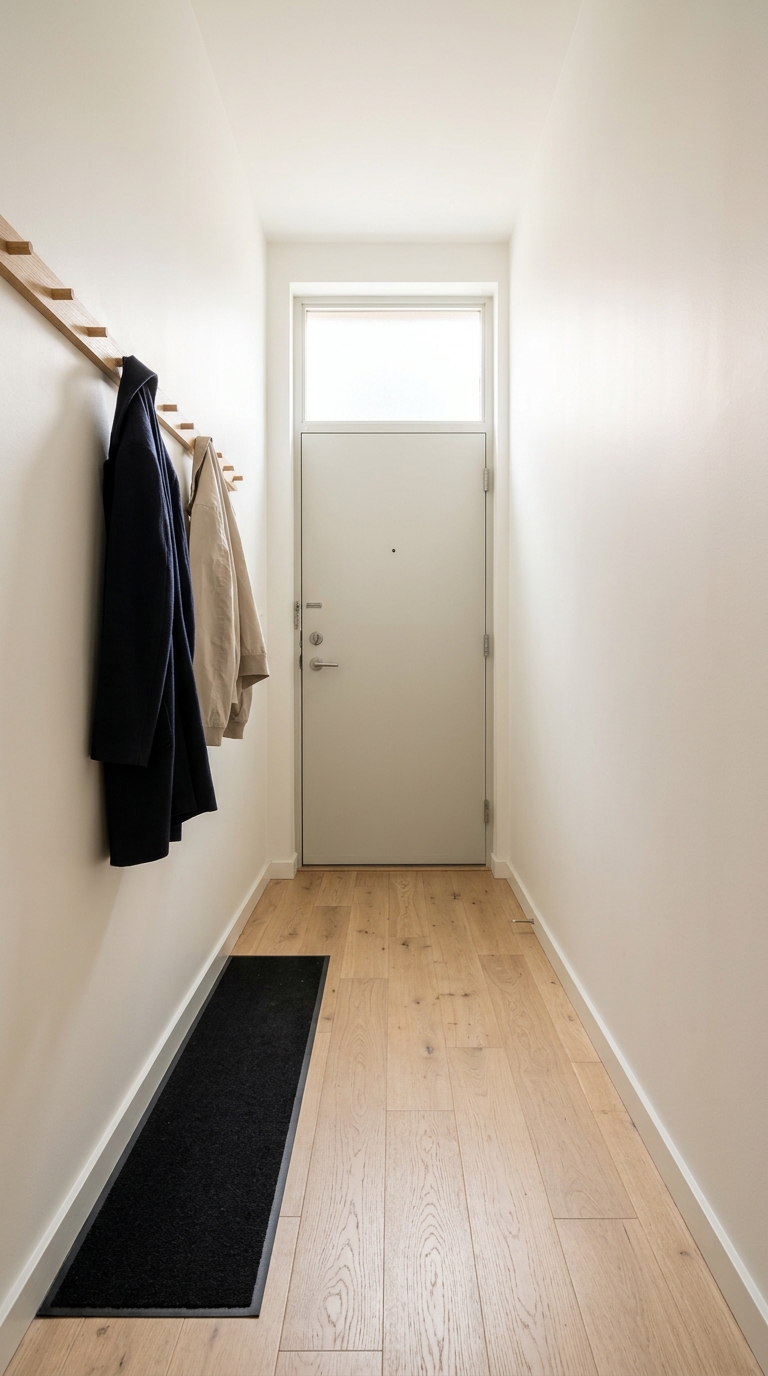
Keep the floor as clear as possible. A slim wall-mounted hook rail, shallow shelf and narrow boot tray may be all you need. Avoid deep cabinets or bulky coat stands that make the walkway feel even tighter.
If your front door opens directly into the living room
Create a small entry zone without making the living space feel like a storage room. A compact wall-mounted arrangement or slim storage unit can help visually separate the entrance from the rest of the room.
Choose a finish that works with your existing furniture so the storage feels intentional rather than like an afterthought.
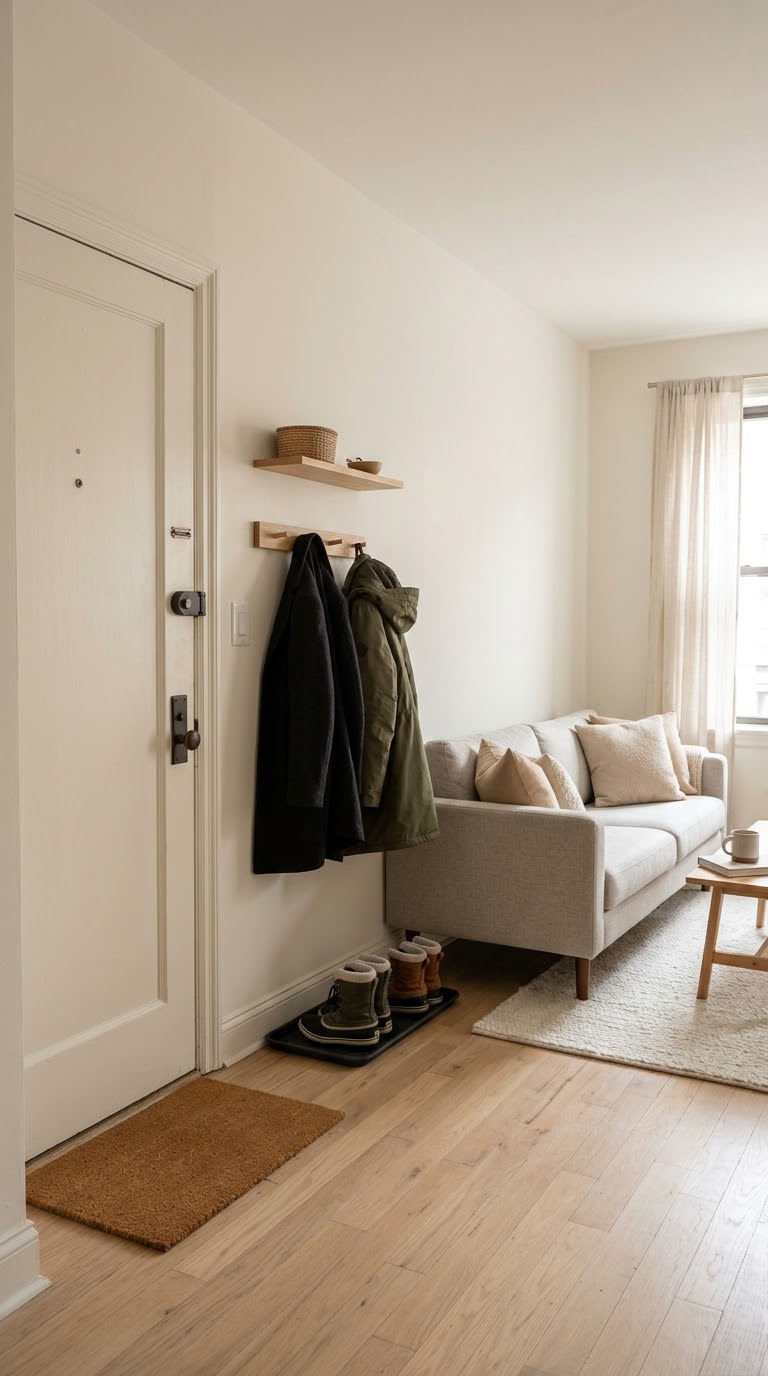
If you only have one available wall
Use that wall carefully. Position coat hooks higher up, add a narrow shelf for accessories and place a boot tray below. Keep the arrangement simple instead of trying to fit several bulky storage pieces into one small area.
If there is very little wall space
Look at the back of a suitable door or the inside of an existing closet door. An over-door organizer can be useful for lightweight accessories, provided the door can still close properly and the organizer doesn’t interfere with the handle.
You don’t need to copy someone else’s mudroom arrangement. A solution that works beautifully in a wide hallway may be frustrating in a narrow apartment entrance.
7. Make the Arrangement Work for Children and Adults
An entryway can look organized, but it also needs to work for the people who use it every day.
If children cannot reach their hooks or find their gloves, they may leave their belongings on the floor. If adults have to move several coats just to reach one jacket, the system will quickly become inconvenient.
Make the storage accessible to everyone. Place lower hooks where children can reach them, keep their accessories in easy-to-use baskets and reserve higher hooks for adult coats.
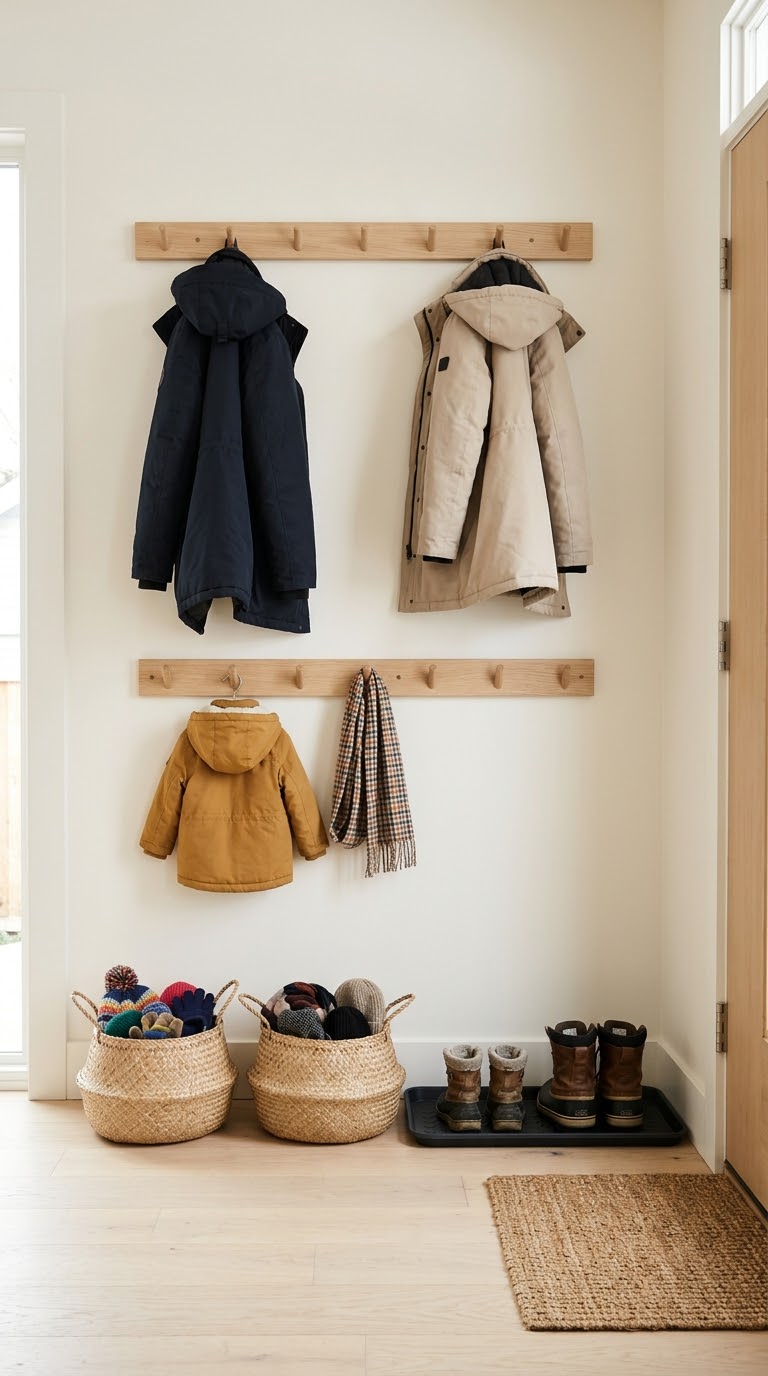
If several people share the same entrance, assigning each person a specific hook or basket can reduce confusion. Keep the most frequently used items within easy reach and store occasional-use accessories somewhere less accessible.
It also helps to keep the system simple. A complicated arrangement with too many categories and containers may look attractive initially, but it can be difficult to maintain during busy mornings.
If your children are still learning to put their belongings away, start with three straightforward habits: coats go on hooks, boots go on the tray, and accessories go in their baskets.
Consistency matters more than having a perfectly styled entrance.
8. Keep Your Winter Entryway Under Control
Even a good storage arrangement can become cluttered without a little maintenance.
Winter brings a steady flow of coats, wet footwear and accessories into the home. A short daily reset can stop these belongings from taking over the entrance.
When everyone comes inside, encourage them to hang up their coats, place wet boots on the tray and return hats and gloves to their baskets. Once or twice a week, check for items that don’t belong there, return misplaced belongings to their proper rooms and clean the boot tray.
It’s also worth checking whether your arrangement is still meeting your needs. If coats are constantly overlapping, you may need to reduce the number kept near the door or create more hanging space elsewhere.
If the entrance feels cluttered again, don’t immediately assume you need more storage. Sometimes the problem is simply that too many belongings are being kept in a space that cannot comfortably accommodate them.
Regularly removing what isn’t needed can make a difference in other parts of your home, too. You can use the same approach when tackling clutter, as explained in Why Does My Home Feel Cluttered?.
The goal isn’t to keep your entryway looking perfect all winter. It’s to make coming home, leaving the house and finding what you need a little easier.
Frequently Asked Questions
1. How do you store winter coats when you don’t have a coat closet?
Use a sturdy wall-mounted hook rail, individual hooks or a slim freestanding coat rack to create a dedicated hanging area. Keep frequently worn coats near the entrance and store occasional-use garments in a bedroom wardrobe or another suitable space.
2. Where should wet winter boots go in a small entryway?
Place wet boots on a waterproof boot tray near the door. Choose a size that accommodates your household’s footwear, and allow boots to dry fully before putting them into enclosed storage. Keep the tray somewhere it won’t obstruct the doorway or walking path.
3. How can I organize winter coats without drilling into the walls?
Consider a stable freestanding coat rack or a suitable over-door hook organizer. Check weight limits and installation instructions before using adhesive hooks, especially for heavy winter coats. Not every adhesive product is designed to support bulky garments.
4. How many coat hooks should a small entryway have?
The number depends on how many people use the entrance and how bulky their coats are. Allow enough room for frequently worn coats to hang without overlapping excessively. Extra garments can be stored elsewhere rather than squeezing every coat onto the same rail.
5. How do you stop wet boots from making a mess?
Use a waterproof tray with raised edges to catch dripping water and melting snow. Remove excess dirt before placing boots on it, empty the tray regularly and allow footwear to dry properly. A boot rack can also help improve airflow when space allows.
6. How can I organize a small apartment entryway for winter?
Use a compact combination of wall hooks, a narrow shelf, small accessory baskets and a boot tray. Keep the floor as clear as possible, make use of vertical space and avoid bulky furniture that blocks the entrance or reduces the available walking area.
Final Thoughts
You don’t need a mudroom to keep winter coats, boots and accessories organized. Even a small entryway can work well when everything has a designated place and the storage fits the space you actually have.
Start with the coats and footwear your household uses most often. Give them accessible storage, keep smaller accessories together and make sure wet boots have somewhere to dry without spreading water across the floor.
Most importantly, resist the temptation to fill every available corner with another storage solution. A little breathing room makes a small entrance easier to use, especially during the busiest parts of winter.
With a few practical changes and a simple daily routine, you can make coming home and heading out feel a lot less stressful.