How to Make Christmas Feel Special in a Small Home
Christmas in a small home can feel like a balancing act. You want the twinkling lights, favorite traditions, and excitement of Christmas morning, but you still need room to cook, relax, and move around. Then the gifts arrive, decorations come out of storage, and the living room that felt comfortable last week suddenly seems too full.
The good news is that you don’t need a giant Christmas tree, decorations in every room, or a generous holiday budget to make the season feel special. You need a plan that gives the things you love a place without making everyday life harder.
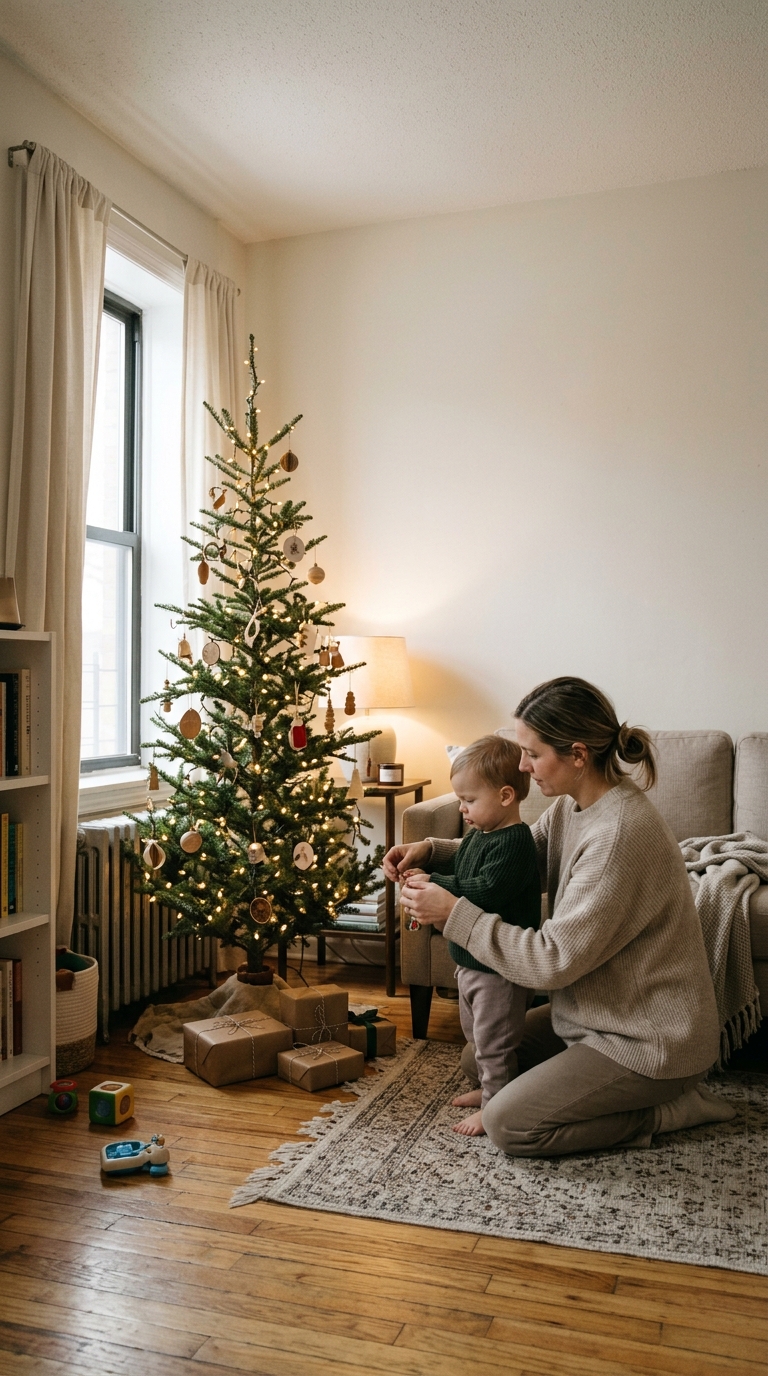
Whether you live in an apartment, a small house, or a home where every room has several jobs, a few thoughtful choices can make Christmas feel warm, personal, and manageable. Here’s how to create that feeling while keeping the space you have working for you.
1. Decide What Makes Christmas Special to You
Before buying decorations or moving furniture, decide what you actually want from the season.
Maybe it’s a glowing tree in the evening, decorating cookies with the children, a favorite Christmas film, or everyone gathering around the table for a special meal. Perhaps your favorite tradition is much simpler, like reading a story together before bed.
Choose two or three things that matter most to your household. Let those choices guide your decorating, activities, and spending. You don’t need to recreate a home you’ve seen on Pinterest or buy everything that catches your eye in a store.
Set a realistic budget, too. Include gifts, food, and activities—not just decorations—so holiday spending doesn’t quietly get out of hand.
Think of this as your Christmas plan: decide what matters, then make room for it. When you know what you’re trying to create, it’s easier to ignore purchases and decorations that don’t contribute to that feeling.
2. Edit Your Space Before Decorating
When space is limited, adding decorations without removing anything can make a room feel crowded before Christmas has even arrived.
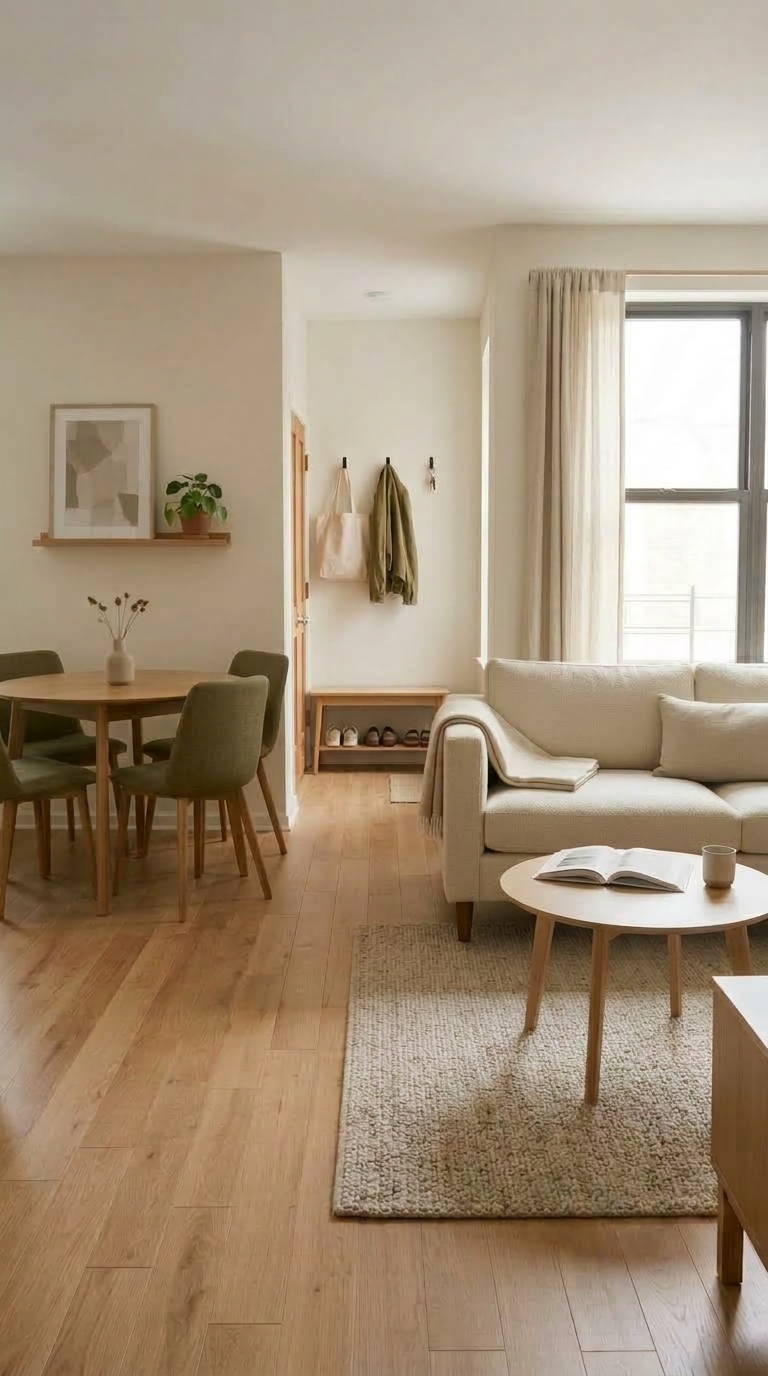
Start with the areas you’ll use most. Clear the coffee table, put away everyday items that have accumulated on the dining table, and move decorative pieces that won’t be needed during the holidays. You don’t have to declutter the whole house. Concentrate on the spaces where you want to decorate, gather, or prepare food.
Then look at the floor. If you’re planning to put up a tree, identify a suitable spot before bringing it home. Check that it won’t block a doorway, crowd the sofa, or interfere with the route between the living room and kitchen.
If your living room doubles as a children’s play area, decide which toys can be temporarily stored elsewhere and which need to remain accessible. A small basket of everyday toys may be more practical than trying to make the room look like nobody lives there.
The goal isn’t to make your home empty. It’s to create enough breathing room for the decorations and activities you care about.
If your home often feels visually busy even after cleaning, Why Does My Home Still Feel Cluttered After Cleaning? offers more ways to identify what’s making a room feel crowded.
3. Choose One Christmas Focal Point That Fits
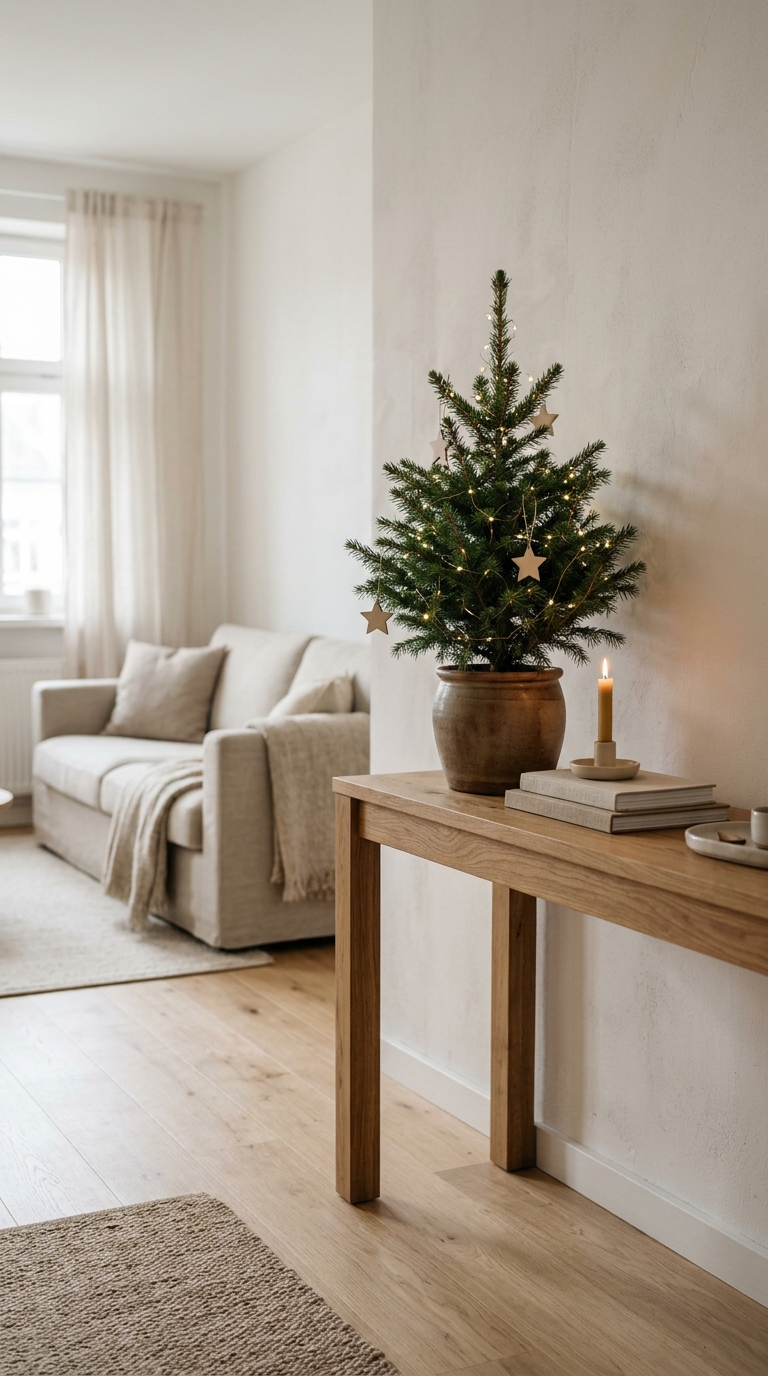
A Christmas tree is a lovely tradition, but it doesn’t have to dominate your living room. The best option is one that fits your available space and how your household uses it.
Before choosing a tree, measure the spot where you want it to stand. Consider its width, the space around its base, and whether people can comfortably walk past it. Don’t forget to account for the stand and any branches that extend farther than the trunk.
Depending on your layout, you could choose:
- A slim tree: Gives you a familiar Christmas look while taking up less floor space than a wider tree.
- A tabletop tree: Works well on a stable surface where it won’t interfere with meals, work, or children’s activities.
- A wall display: Arrange lights or greenery in a tree-like shape to create a festive focal point without using floor space.
- A branch display: Place decorative branches in a sturdy vase and add a few lightweight ornaments for a simpler seasonal arrangement.
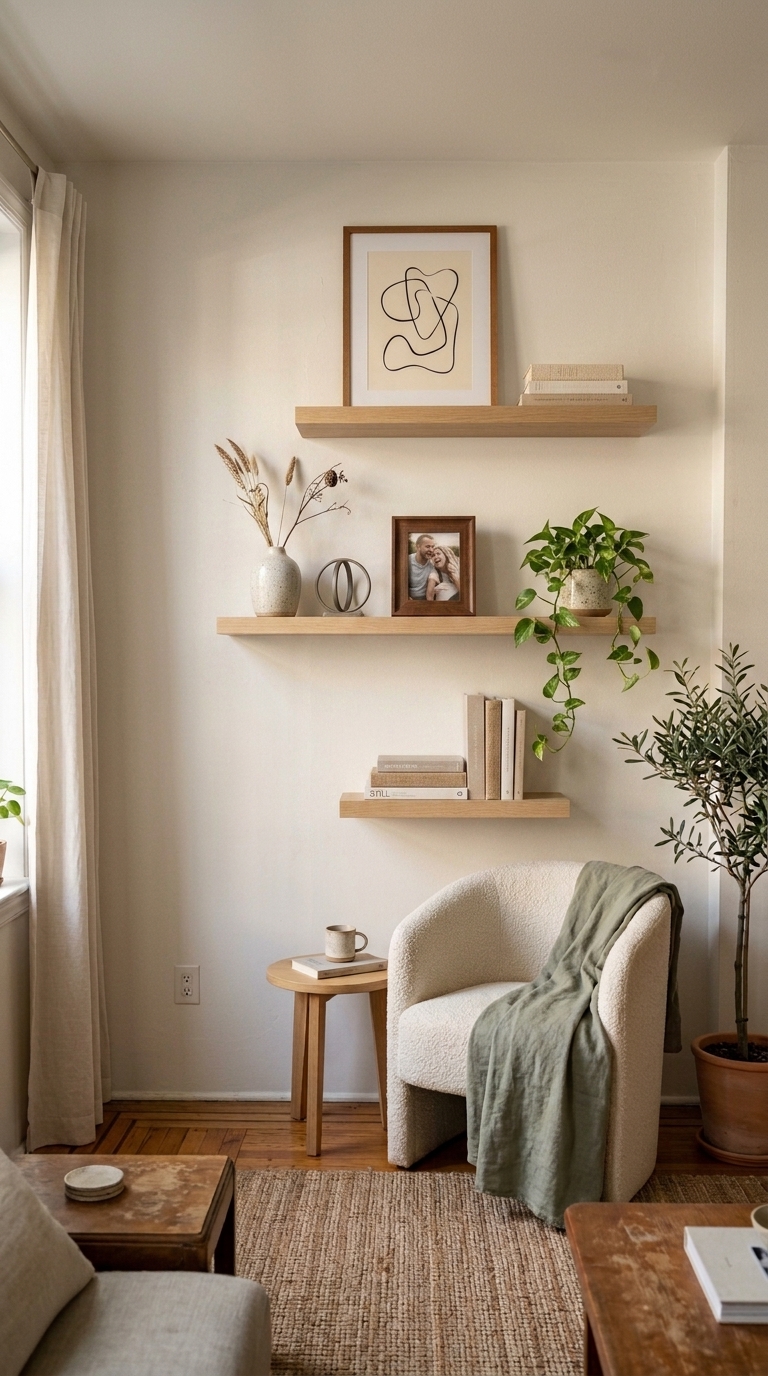
You could also use a bookcase, mantel, or existing console as your main display area. A little greenery, a few favorite ornaments, and warm lights may be all you need.
If you have young children or pets, stability matters as much as appearance. Keep the tree at least three feet from heat sources, including fireplaces, radiators, heat vents, and candles. Keep fragile decorations out of reach, secure cords, and avoid placing a tree where it obstructs an exit. For additional guidance, consult the NFPA’s Christmas tree safety tips.
Once you’ve chosen your focal point, resist the urge to create another large display in every corner. Let one area carry most of the visual impact, with smaller touches elsewhere.
4. Create a Cozy Atmosphere With What You Have
A festive home doesn’t need to be full of new decorations. Often, the feeling comes from how you combine lighting, texture, familiar objects, and small seasonal details.
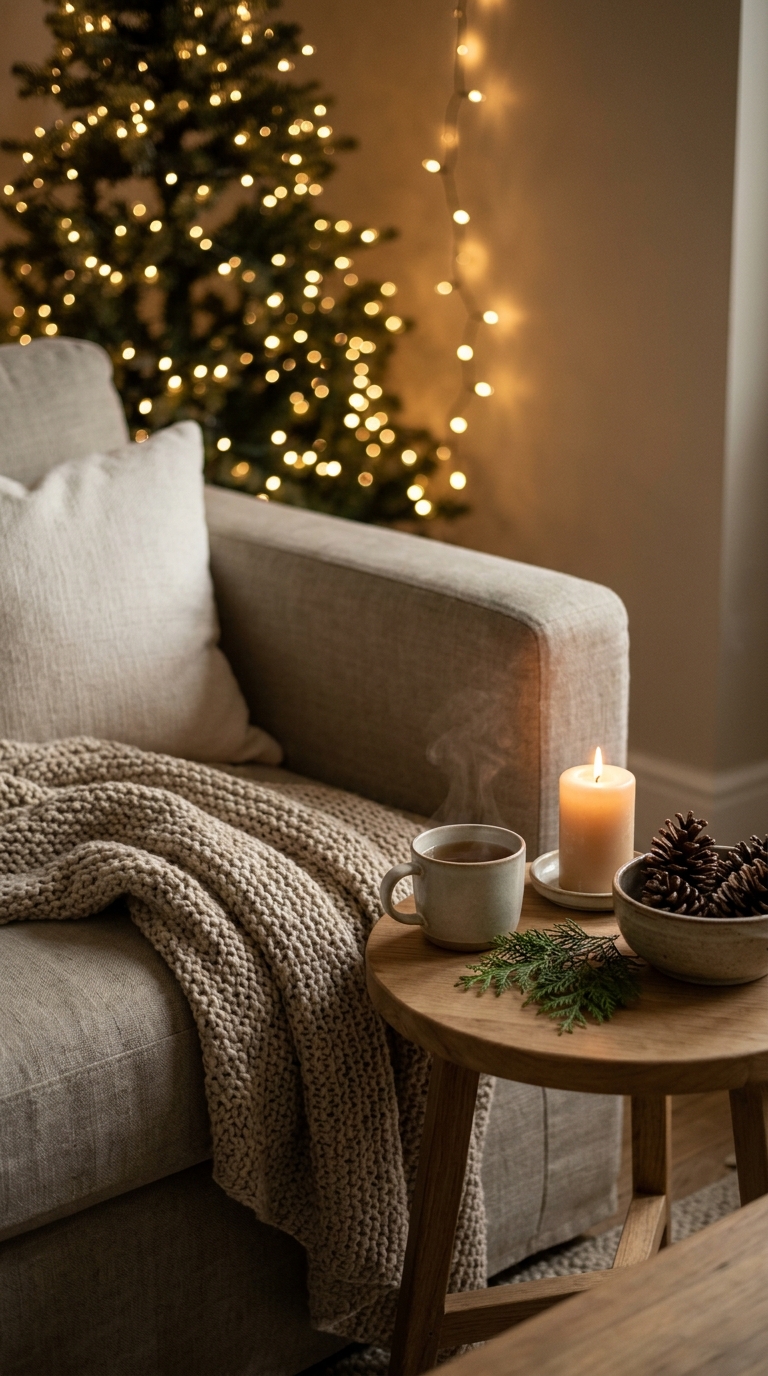
Start with lighting. Warm-white string lights can make a room feel inviting in the evening. Add a lamp with a warm glow or battery-operated flameless candles on a stable surface. Check decorative lights for damaged cords, follow the manufacturer’s instructions, and switch them off before leaving home or going to bed.
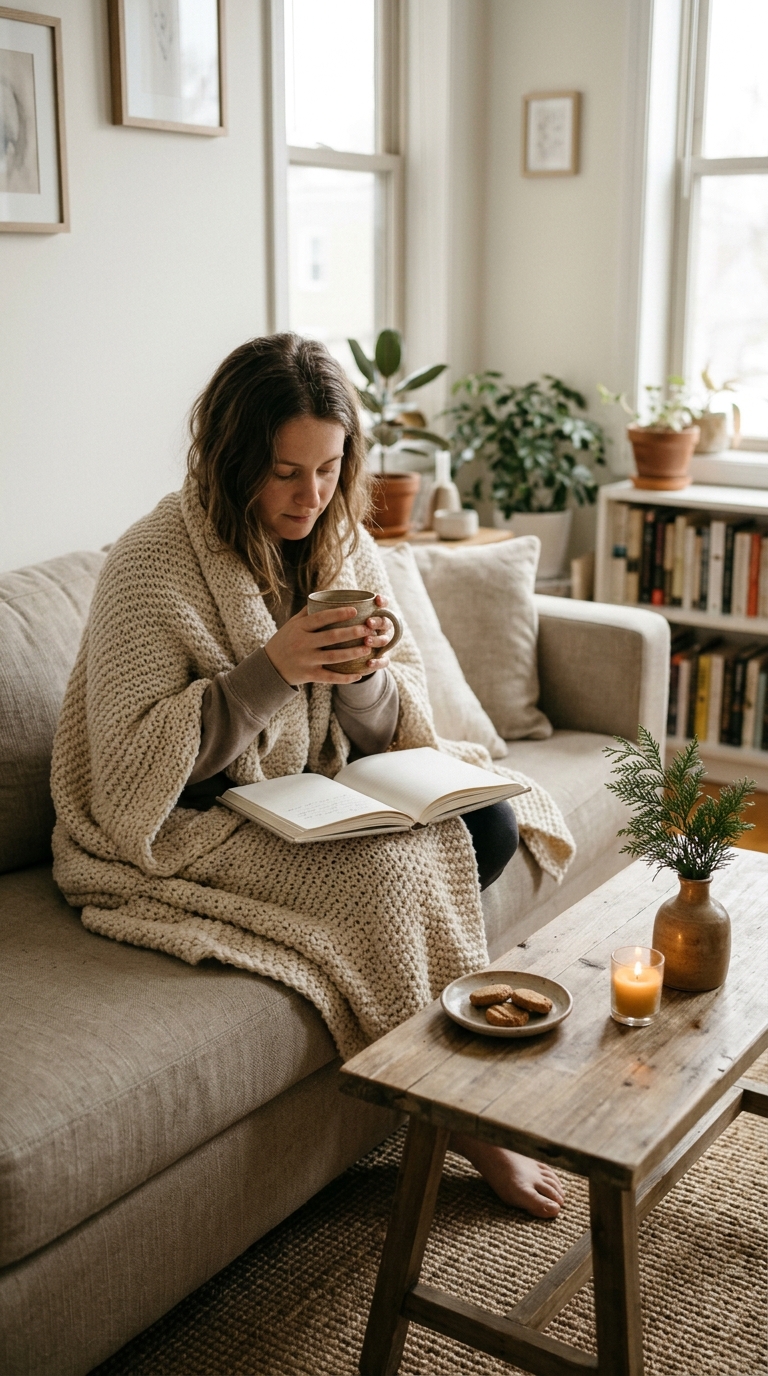
Bring in texture. Fold a cozy throw over the sofa, use cushion covers you already own, or bring out a soft blanket for family film nights. If your everyday textiles already work with your Christmas colors, there’s no need to buy a new set.
Choose a simple color palette. Traditional red and green can look lovely, but so can greenery with natural wood, warm neutrals, or white and gold. Repeating two or three colors helps decorations collected over several years feel connected.
Reuse everyday objects. A vase can hold evergreen branches, a decorative bowl can display a few ornaments, and a basket can hold Christmas books or extra blankets. Before buying something new, look around to see whether you already have an item that can do the job.
Finally, remember that atmosphere isn’t only about what people see. Christmas music while you cook, a favorite film, the smell of cookies baking, or a familiar story can make a home feel festive without taking up any additional space.
The idea is to add warmth, not more things to manage.
5. Make Everyday Rooms Feel Festive Without Losing Their Purpose
You don’t need to decorate every room. Focus on the spaces your household actually uses and choose details that won’t get in the way.
Living room: Let the tree or main display do most of the work. Add a throw and a few lights, but keep enough seating and floor space for relaxing. If the coffee table is used for drinks, games, or children’s activities, keep decorations together on a small tray that can be moved when needed.
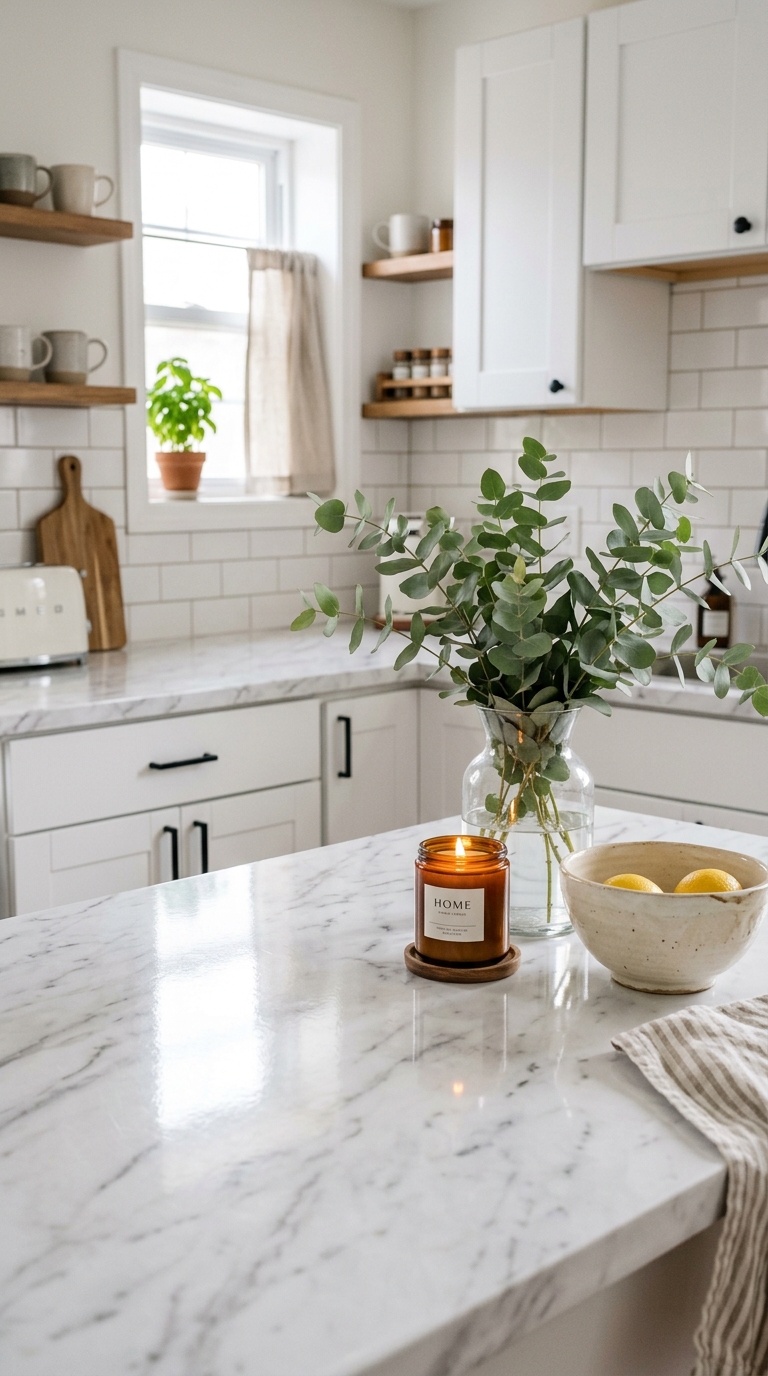
Kitchen: A seasonal tea towel, a small bowl of fruit, or greenery placed safely away from heat can be enough. Protect your main work surface, especially if you’ll be baking or preparing a holiday meal. Decorations shouldn’t have to be moved every time you need to chop vegetables.
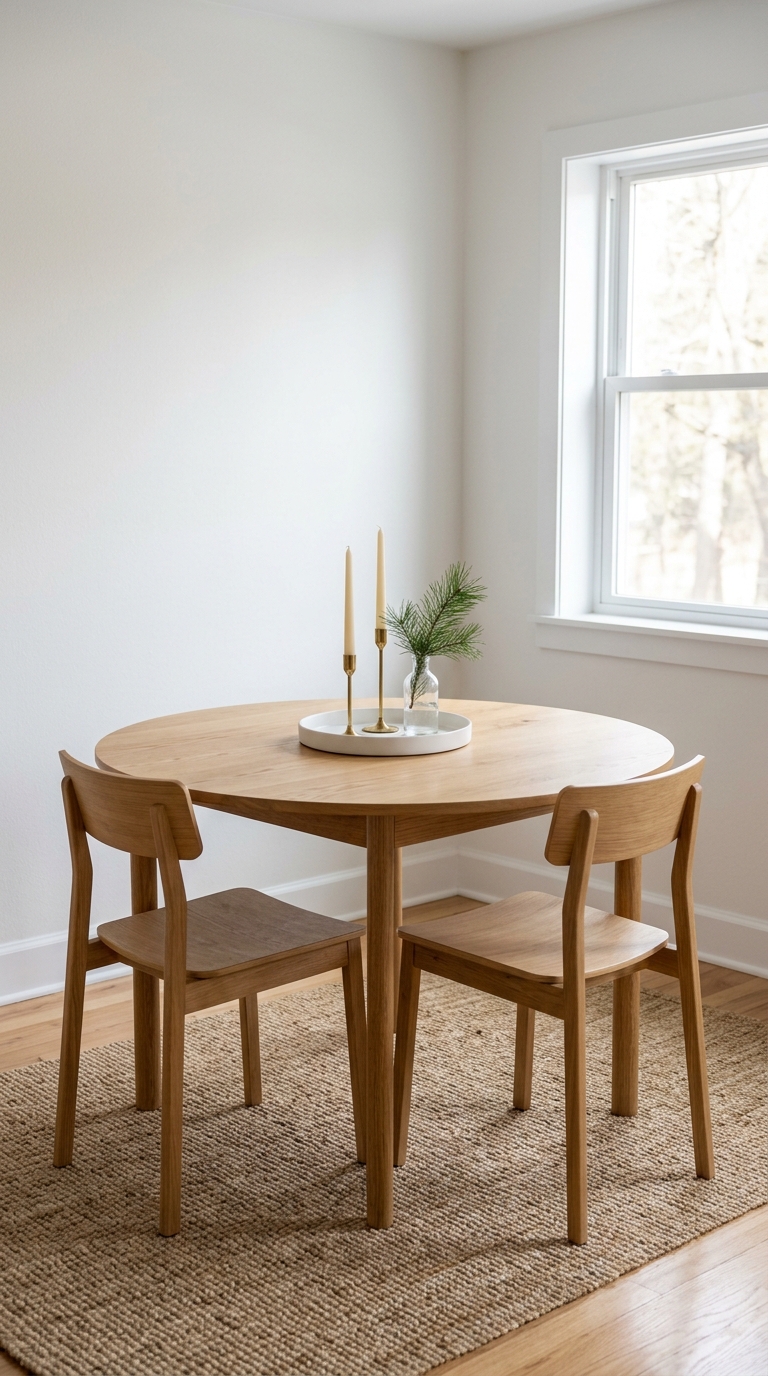
Dining area: Use a narrow runner or a low centerpiece that can be removed easily. If your table doubles as a workspace or homework station, keep the decorations contained on a tray so you can clear the surface quickly when it’s time to eat.
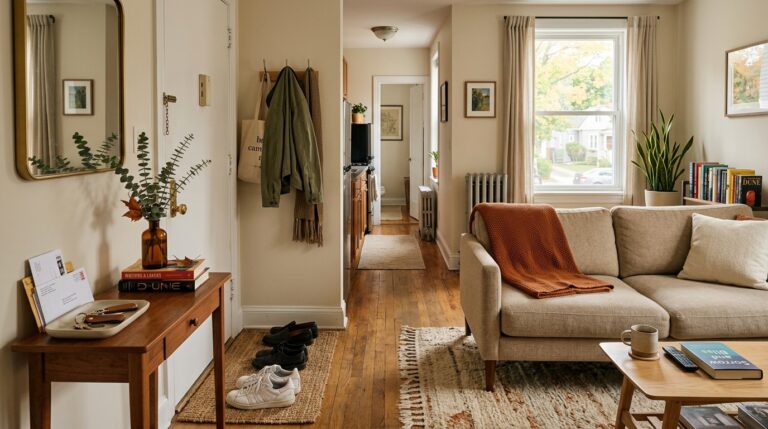
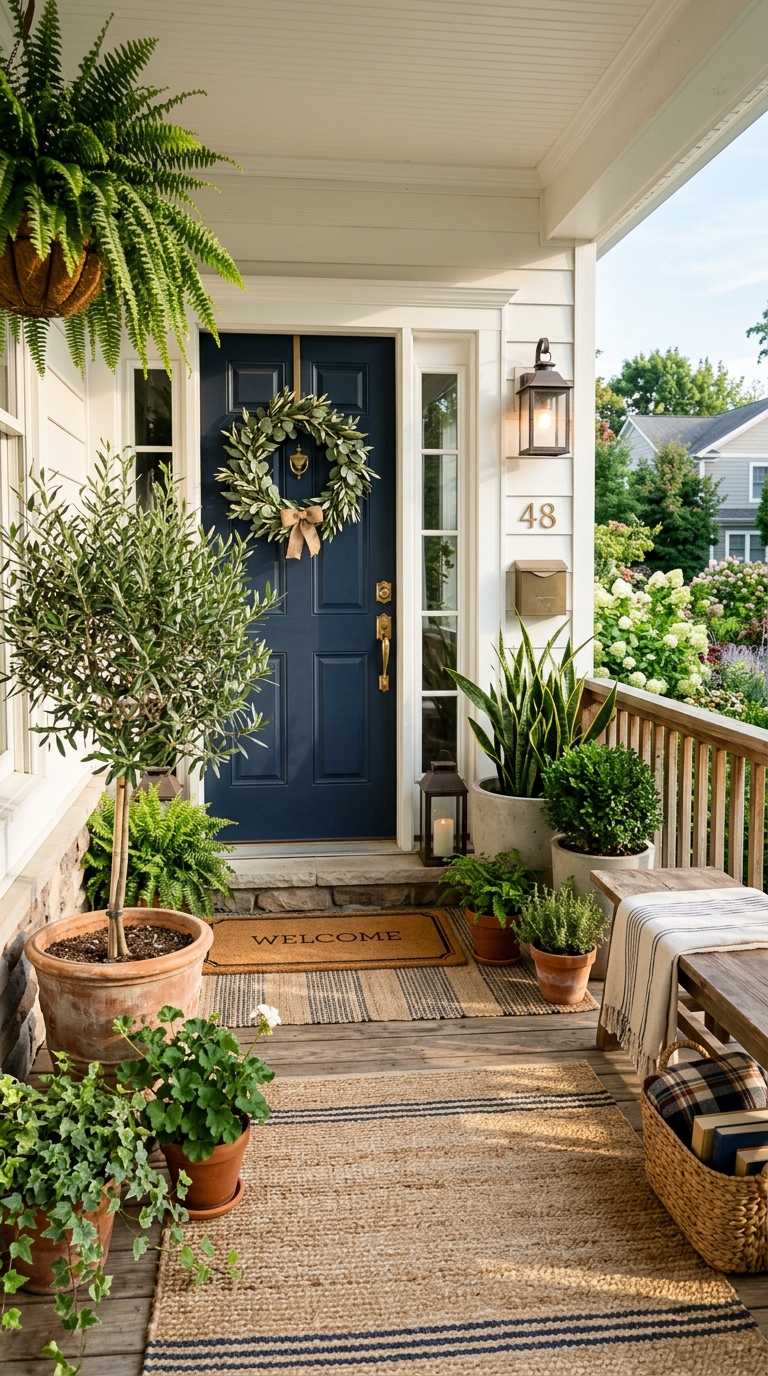
Entryway: A wreath, a small arrangement on an existing console, or a modest seasonal detail can make the entrance welcoming. Keep everyday shoes, coats, and bags manageable, particularly if guests will visit.
Here’s a useful test: before decorating a surface, ask what that surface needs to do during December. If it has an important everyday job, leave enough room for it to keep doing that job.
A festive home should make daily life feel more enjoyable, not give you extra work every time you cook, sit down, or leave the house.
6. Make Christmas Meaningful Without Overspending
It’s easy to feel that a special Christmas requires new decorations, matching accessories, and a packed calendar of activities. But meaningful traditions don’t have to cost much.
Start by reusing what you own. Bring out the decorations you genuinely love, repair what can be repaired, and try displaying familiar pieces in a different way. A favorite ornament paired with greenery may feel fresh without requiring another shopping trip.
If you want to buy something new, ask three questions: Does it serve a real purpose? Will it fit my home? Where will I store it afterward? If you can’t answer those questions comfortably, leave it for now.
You can also create special moments without buying much:
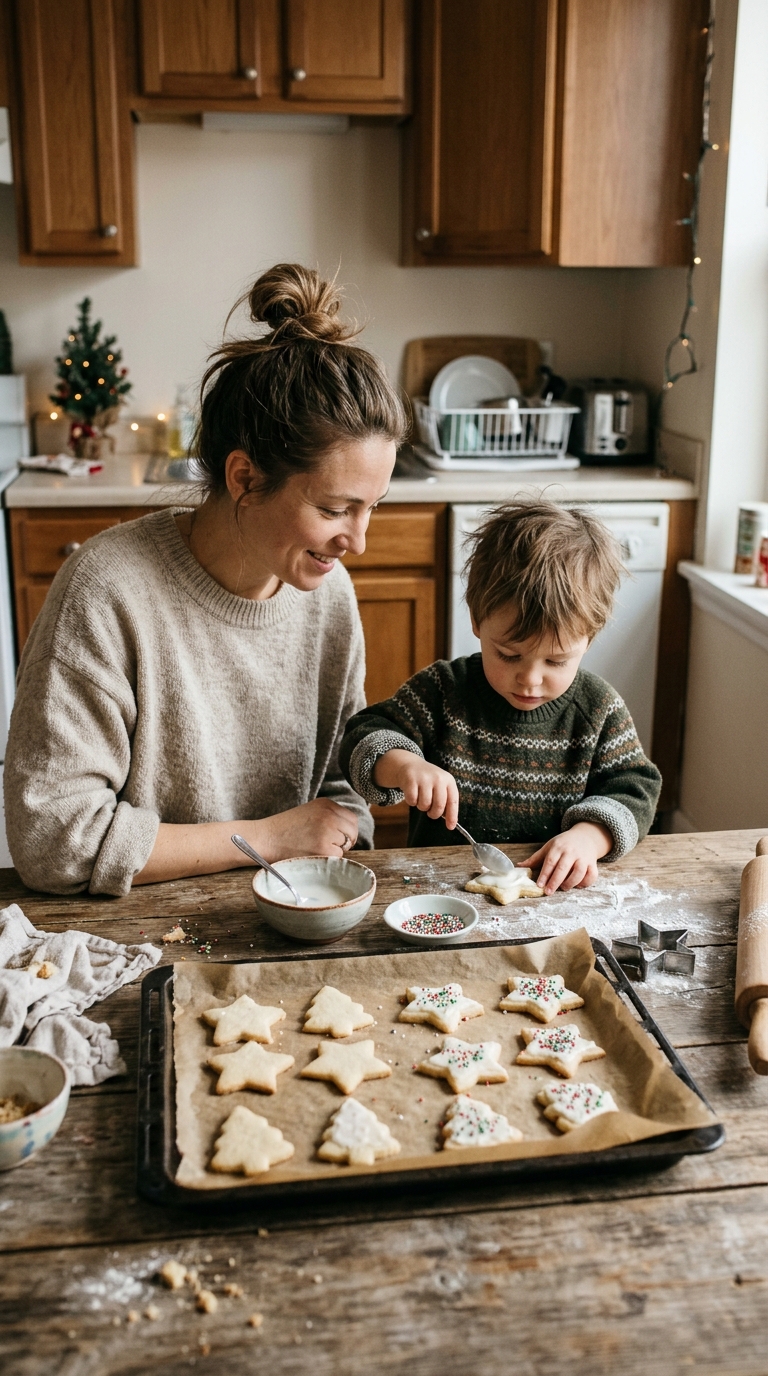
- Decorate cookies together using ingredients you already have.
- Make paper snowflakes or simple ornaments.
- Read a favorite Christmas story or share memories of past celebrations.
- Play a board game or have a Christmas music evening.
- Let each family member choose one favorite tradition to include.
Choose activities that suit your household’s time, budget, and energy. You don’t need to complete a long list of holiday projects to create good memories. One relaxed afternoon together can be more enjoyable than several activities squeezed into an already busy week.
If you have children, let the experience matter more than the result. Homemade decorations may not match, and the cookies may come out uneven, but those imperfect moments can become part of what makes the season memorable.
7. Give Gifts and Christmas Morning a Plan
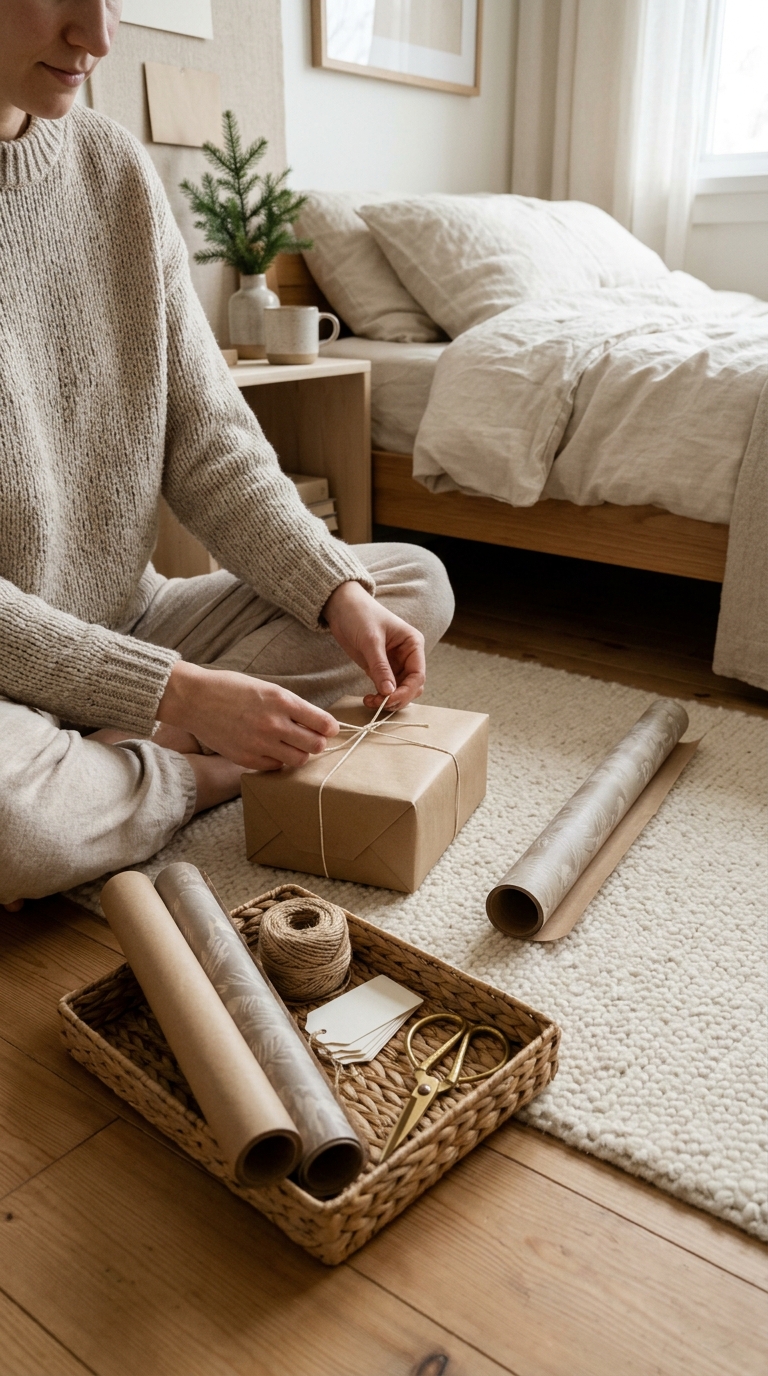
Gifts can take up surprising amounts of space in a small home. Packages arrive, wrapping supplies accumulate, and presents wait in corners until Christmas morning. Without a designated place, the clutter can spread quickly.
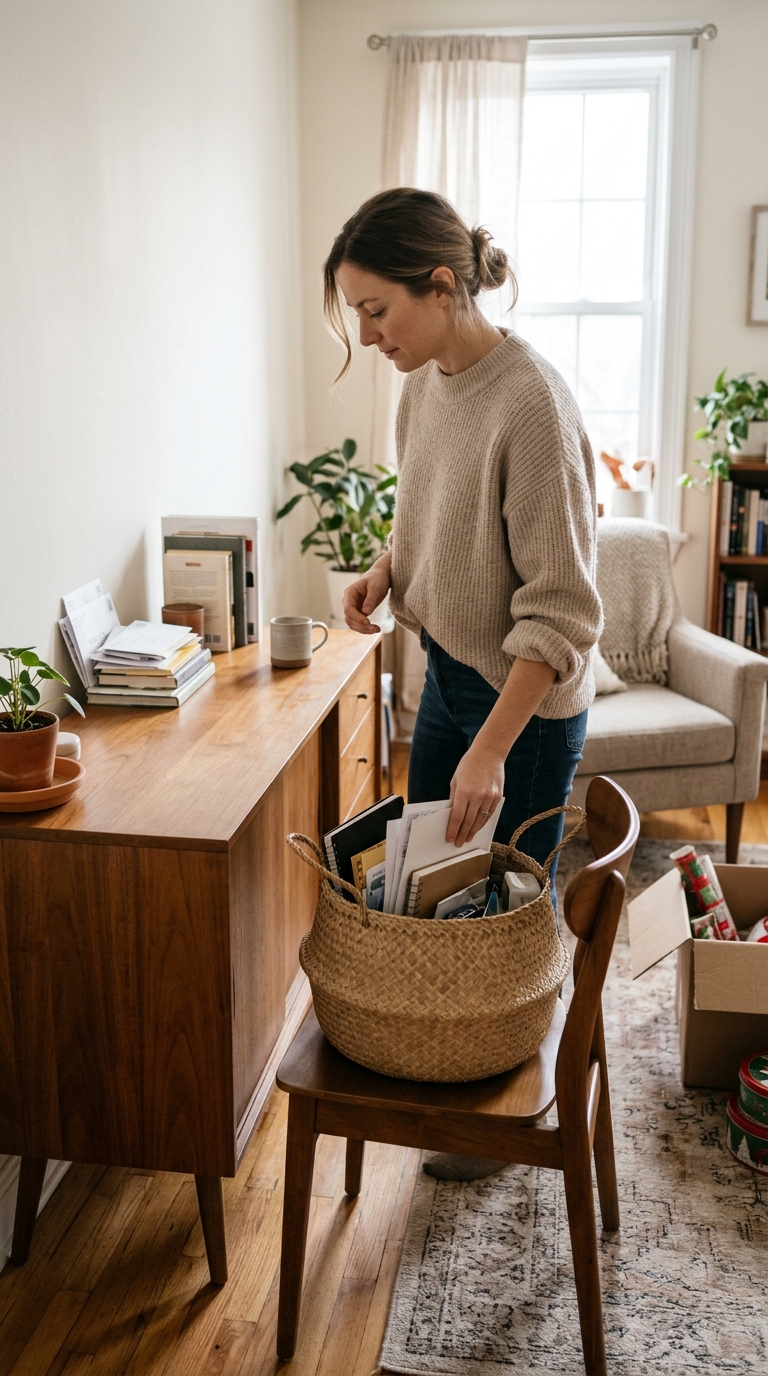
Choose one gift area, even if it’s a shelf in a wardrobe or a storage box under the bed. Keep wrapping paper, tape, gift bags, and cards together in one container rather than spreading them across several drawers and cupboards.
If you have children, store presents somewhere safe and out of sight. You don’t need a separate room; you need a consistent place to keep everything until you’re ready.
Think about Christmas morning, too. If your family opens presents on the living-room floor, move fragile decorations and anything that could easily be knocked over. Keep the main walking route clear so people aren’t stepping over packages to get across the room.
After the gifts are opened, collect wrapping paper, boxes, and ribbons in one place. Keep reusable gift bags together and sort recyclable packaging according to your local rules. You can leave the rest of the room tidy-up until later if you’d rather enjoy the morning first.
A little planning helps you preserve the excitement of gift-giving without letting the packaging take over your home.
8. If You’re Hosting Christmas, Protect the Flow
Hosting in a small home doesn’t mean you need to recreate a formal dining room or rearrange every piece of furniture. It means thinking about how people will move, sit, eat, and spend time together.
Start with the number of guests you can comfortably accommodate. Use the chairs you already own, and consider borrowing extra seating rather than buying furniture you’ll have to store afterward.
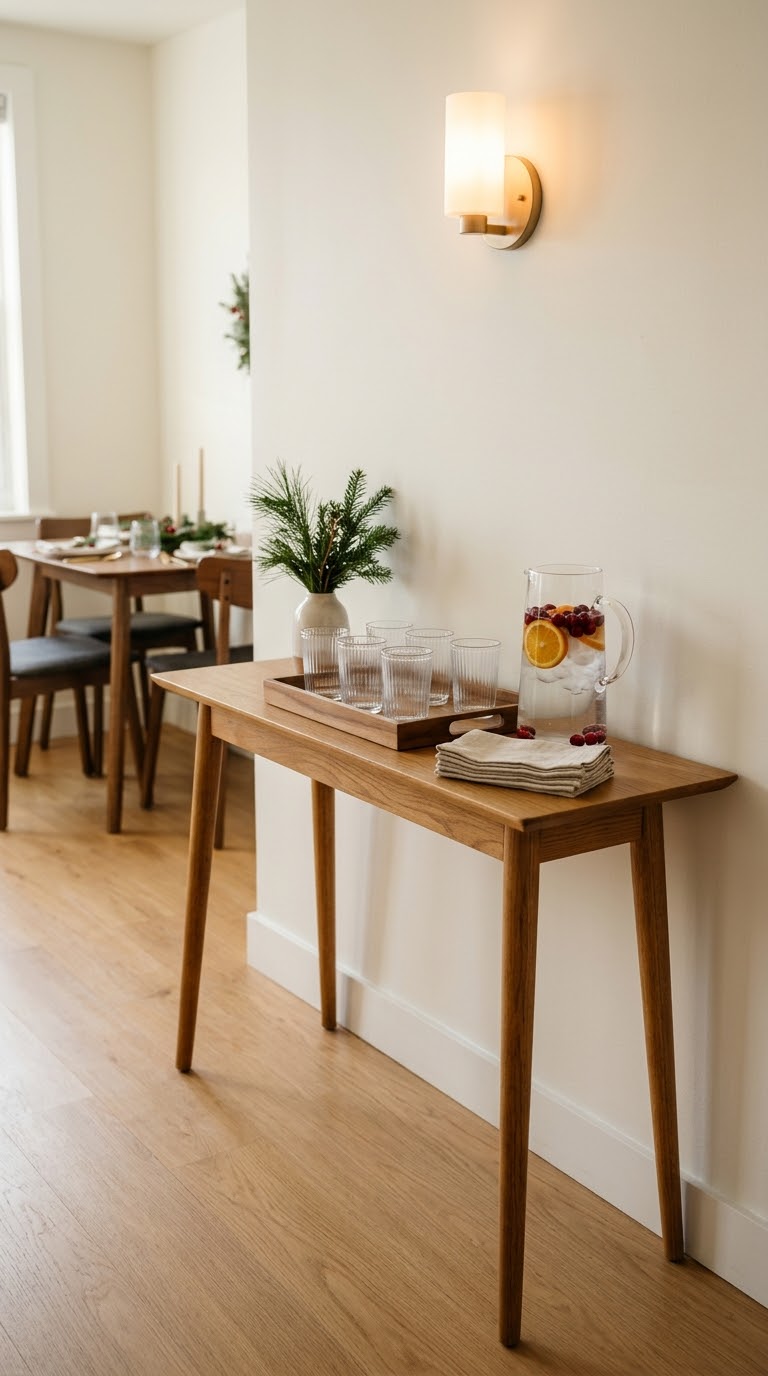
If the dining table is small, think about how food will be served. You might use a sturdy side table for drinks, place serving dishes on a separate surface, or serve food in stages rather than putting everything on the table at once.
Keep entrances and walking routes clear, and avoid placing hot dishes or drinks where people are likely to bump into them. If children will be moving around, leave enough room for them to do so safely.
Before guests arrive, walk through the home as if you’re visiting. Is there somewhere to put a coat or bag? Can everyone reach their seats without squeezing past furniture? Is there enough room to serve food without blocking the kitchen?
For more ideas about seating, serving space, and movement, see How to Host Thanksgiving in a Small Home Without Feeling Cramped. The same small-space principles can help you plan a comfortable Christmas gathering.
The goal isn’t to make your home look bigger than it is. It’s to make the space feel welcoming and work well for the people sharing it.
9. Plan for Storage Before Buying More Decorations
In a small home, storage space is part of the cost of owning something, even when the item itself is inexpensive. Before buying a large decoration, think about where it will live after Christmas.
Choose items that pack away neatly where possible. Foldable pieces, compact ornaments, reusable cushion covers, and lightweight garlands may be easier to store than bulky accessories. If you want a large tree, consider how its sections will fit into your available storage area before purchasing it.
Keep sentimental decorations you love, but review the rest. Broken pieces, duplicates, and decorations you never use may not deserve another year of valuable storage space.
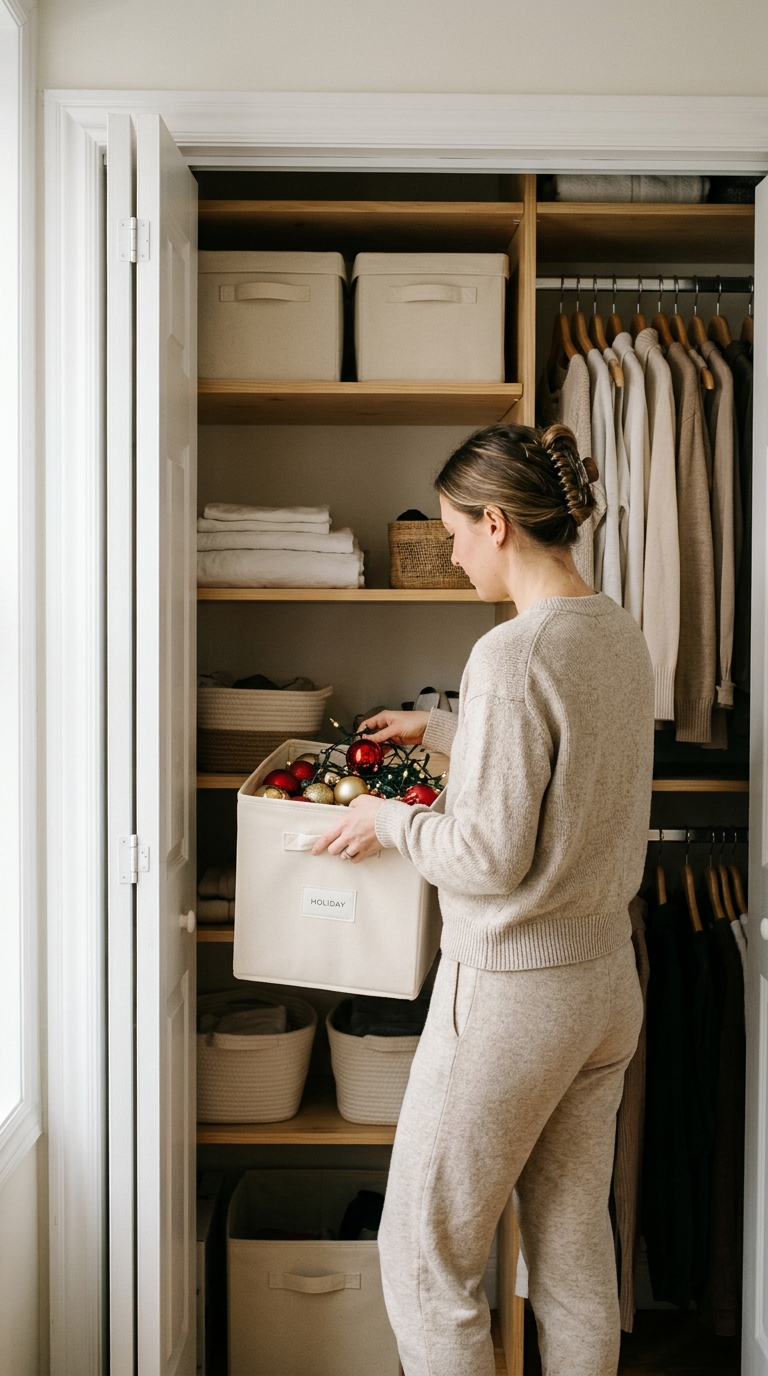
When the season ends, group similar items together. Protect fragile ornaments, keep lights contained, and label boxes so you can find things next year without opening every container.
Choose a realistic storage location, whether that’s a closet shelf, under-bed storage, or a designated cupboard area. Don’t let holiday boxes remain scattered around the home because you haven’t decided where they belong.
If seasonal transitions regularly leave your home feeling crowded, Small Space Fall Home Reset: 11 Things to Organize Before Fall Gets Busy offers a useful approach to making room before bringing out the next season’s belongings.
The best decoration is not necessarily the one that looks beautiful in December. It’s one you enjoy using and can store without creating a problem in January.
10. A Simple 30-Minute Christmas Setup
If you want your home to feel festive but don’t have the energy for a full decorating session, use this quick plan.
Minutes 0–5: Edit. Clear one area and put away items that don’t need to stay out.
Minutes 5–10: Anchor. Set up your small tree or choose one shelf, wall, or table as the main focal point.
Minutes 10–15: Add glow. Switch on your decorative lights or position a lamp to create a warm atmosphere. Check that cords and walking routes are safe.
Minutes 15–25: Layer meaningful details. Add a favorite ornament, a throw, greenery, or something connected to a family tradition. Use what you already own first.
Minutes 25–30: Step back and edit again. Look at the room from the doorway. Remove anything that feels unnecessary and make sure people can walk, sit, and use the room comfortably.
That final step matters. Sometimes a room feels more festive after you remove one extra decoration rather than add another.
You can always do more later. The purpose of this quick setup is to make a visible difference without turning decorating into another source of holiday stress.
Frequently Asked Questions
How do you make a small home feel like Christmas?
Choose one focal point, add warm lighting, bring out a few meaningful decorations, and include traditions your household enjoys. You don’t need to decorate every room to create a festive atmosphere.
What kind of Christmas tree works best in a small space?
A slim or tabletop tree may work well when floor space is limited. Wall displays and decorated branches are alternatives if you don’t have room for a traditional tree. Consider stability, walking space, and storage before choosing.
How can you decorate for Christmas on a budget?
Reuse decorations, make simple ornaments, use everyday items creatively, and focus on a few details that have the biggest impact. Set a budget before shopping and choose items you’ll enjoy using again.
How do you keep Christmas decorations from cluttering a small home?
Clear space before decorating, protect essential surfaces, and choose one main focal point. Keep walking paths open and use smaller seasonal touches elsewhere rather than creating several large displays.
How do you store Christmas decorations when space is limited?
Keep the decorations you use and love, group similar items in labeled containers, and choose compact pieces where possible. Decide where everything will go before buying more.
Make Christmas Feel Like Yours
Christmas in a small home doesn’t have to mean giving up the traditions you love. It simply asks you to be more intentional about what you bring in, where you put it, and how you use your space.
Choose the details that matter to your family, leave room for everyday life, and let meaningful moments do as much of the work as the decorations. Your home doesn’t need to be bigger or more elaborate to feel warm, welcoming, and full of Christmas spirit.