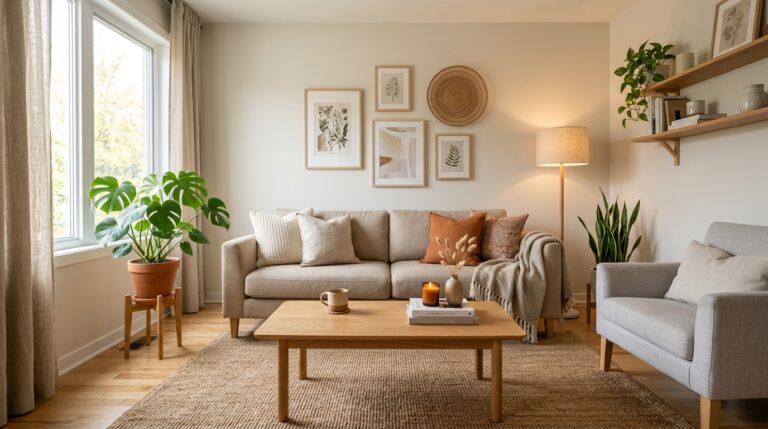
How to Make a Small Living Room Work With the Furniture You Already Have
If your small living room furniture arrangement feels cramped, your first thought might be that you need smaller furniture.
Maybe the sofa is too bulky. Maybe the coffee table seems to take up half the room. Maybe you keep moving the chair around, hoping one arrangement will finally make everything feel easier.
But before you start shopping, there is another possibility worth considering:
Your furniture may not be the problem. Your arrangement might be.
A small living room does not necessarily need miniature versions of everything. Sometimes the biggest improvement comes from changing how the furniture relates to the room, clearing one awkward piece, or giving an existing item a second job.
Here’s how to rethink your small living room furniture arrangement using what you already own — before spending money on replacements.
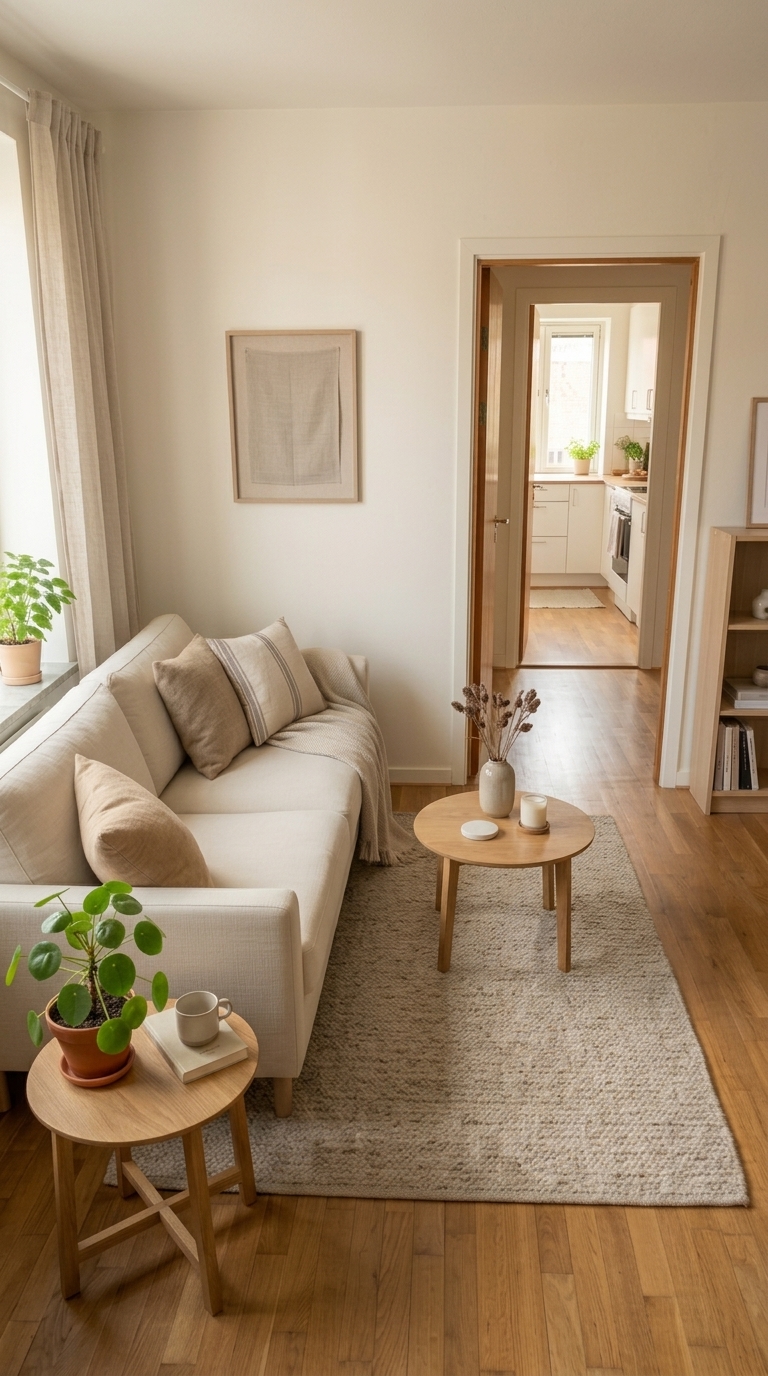
Start With the Furniture You Already Have
Before moving the sofa across the room or opening a furniture-shopping app, look at what is already there.
The goal is not to decide what looks beautiful on paper. It is to figure out what each piece is actually doing for your room.
Try sorting your furniture into four groups:
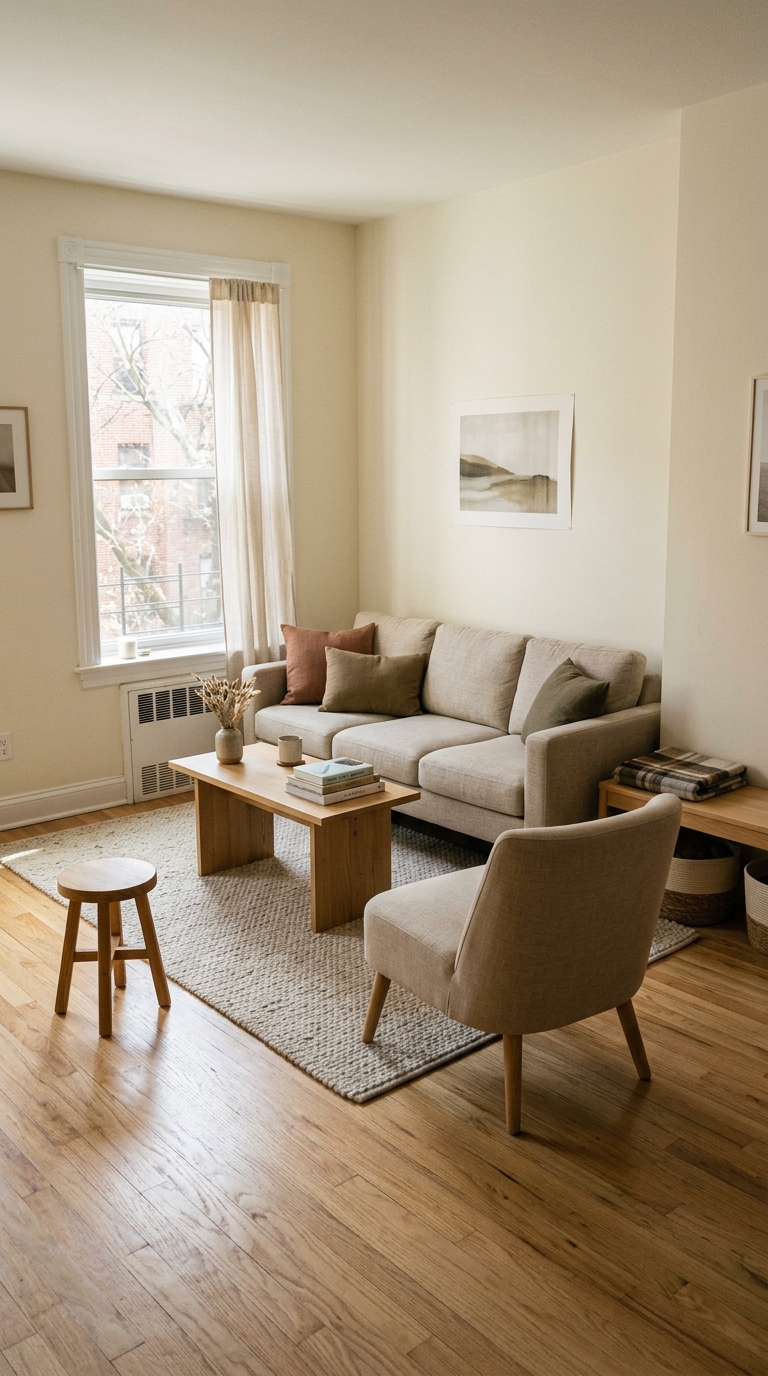
KEEP
These are the pieces that genuinely earn their space.
Your sofa may be large, but if it is comfortable, used every day, and the main place your household sits, it probably belongs in the room.
The same goes for a coffee table that gives you useful surface space or an ottoman that provides seating and storage.
Don’t remove something simply because it takes up floor space.
QUESTION
These are the pieces you are not completely sure about.
Maybe you have a chair that rarely gets used. Maybe a side table has become a permanent landing place for things nobody actually needs there.
Ask yourself:
- Do we use this regularly?
- Does it make the room easier to live in?
- Does it serve more than one purpose?
- Would we miss it if it disappeared?
You may discover that the piece is useful but simply needs a different location.
REMOVE
This does not necessarily mean getting rid of it permanently.
Move one questionable piece out of the living room and live without it for a day.
You may immediately notice that the room feels easier to walk through. Or you may realize you actually need it.
Either answer is useful.
REPURPOSE
Some furniture is more useful than its original purpose suggests.
A stool can become occasional seating. A bench can provide seating while holding blankets underneath. A console can become a narrow work surface.
The goal is to make the furniture you already own work harder for you. If storage is part of the problem, how to organize a small home with little storage can give you more ways to make limited space work without adding more furniture.
And if the room still feels cluttered even after cleaning, it may be worth looking at whether everyday belongings actually have a proper home. These ideas on why your home still feels cluttered after cleaning can help you find what is really contributing to the problem.
Measure the Room Before You Move Anything
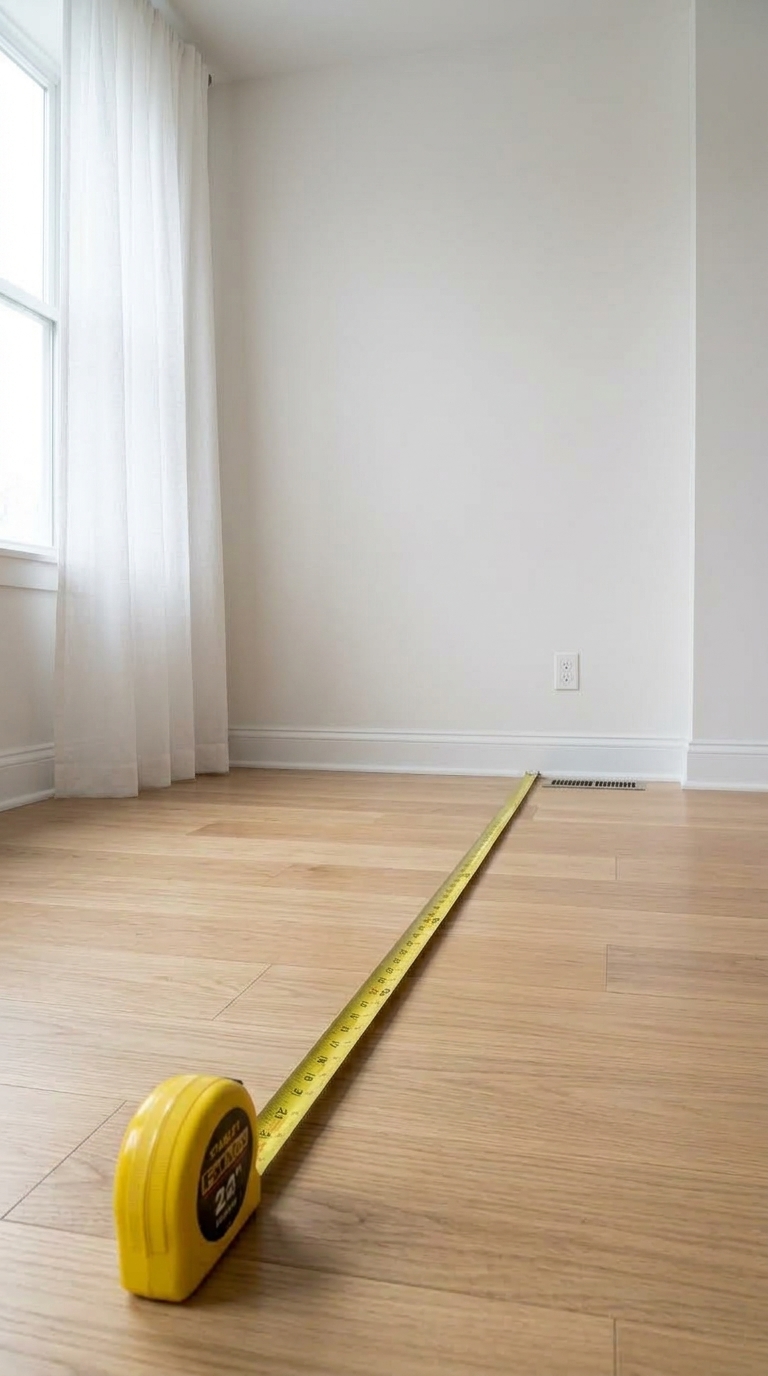
You do not need a professional floor plan.
You just need enough information to stop guessing.
Measure the length and width of the room, then note anything that affects where furniture can go:
- Doorways and the direction they open
- Windows
- Heating or cooling vents
- Radiators
- Electrical outlets
- Television connections
- Built-in shelving
- The main path between rooms
A layout can look perfect until you actually try to live in it.
A sofa might technically fit beside a doorway, for example, but if it forces everyone to squeeze around it every time they enter the room, it is not really working.
Try the Empty-Space Test
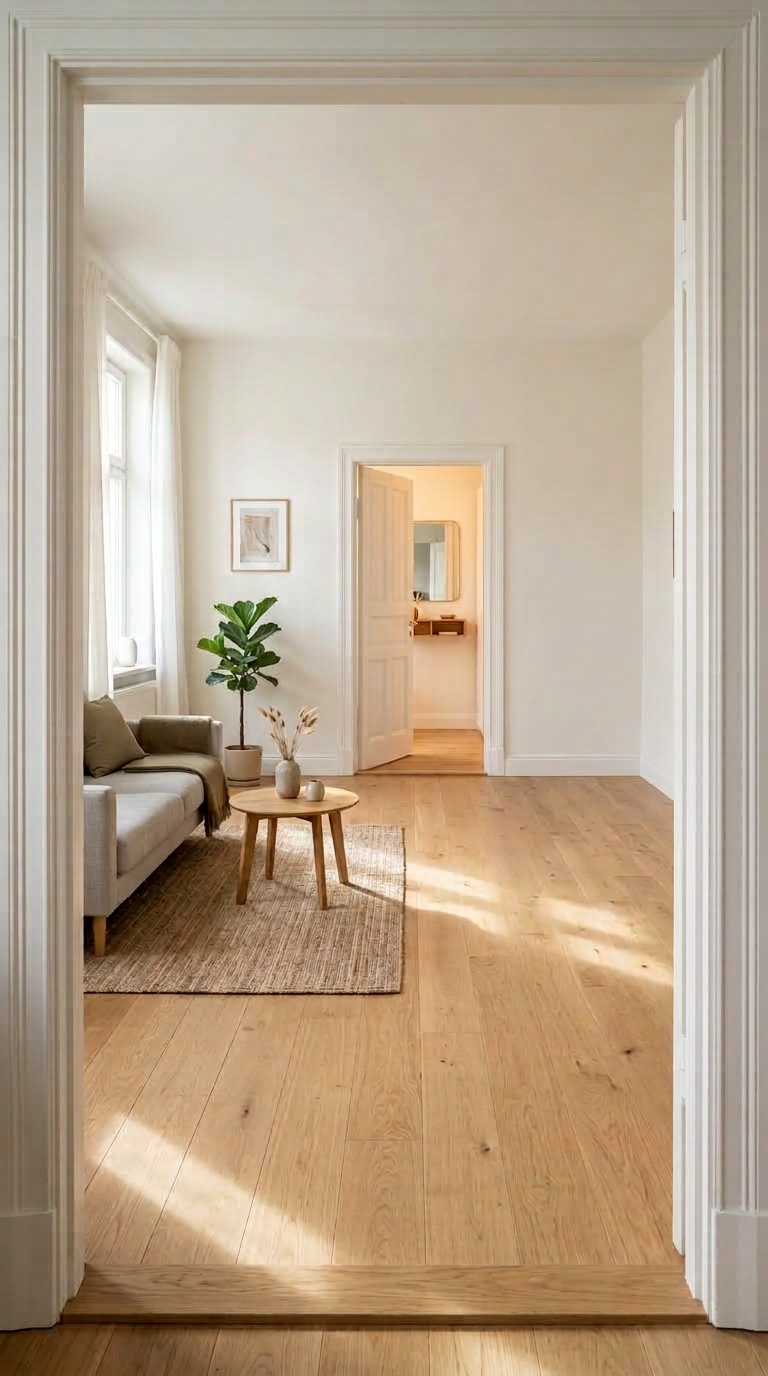
Before moving heavy furniture, stand in the middle of the room and imagine where you naturally walk.
Where do you enter? Where do you go when you sit down? Where do you walk to reach the kitchen, hallway, bathroom, or another room?
Now look at whether your furniture interrupts those routes.
You can also use painter’s tape to mark the approximate footprint of a sofa, coffee table, or other large piece before moving it.
As a general starting point, about 30–36 inches of clear space is often comfortable for a main walking path, while roughly 14–18 inches between a sofa and coffee table can provide a useful balance between accessibility and reach.
Treat those numbers as starting points rather than rules. A household with children, pets, mobility needs, or an unusually shaped room may need something different.
The room has to work in real life, not just satisfy a diagram.
Place the Sofa and TV First
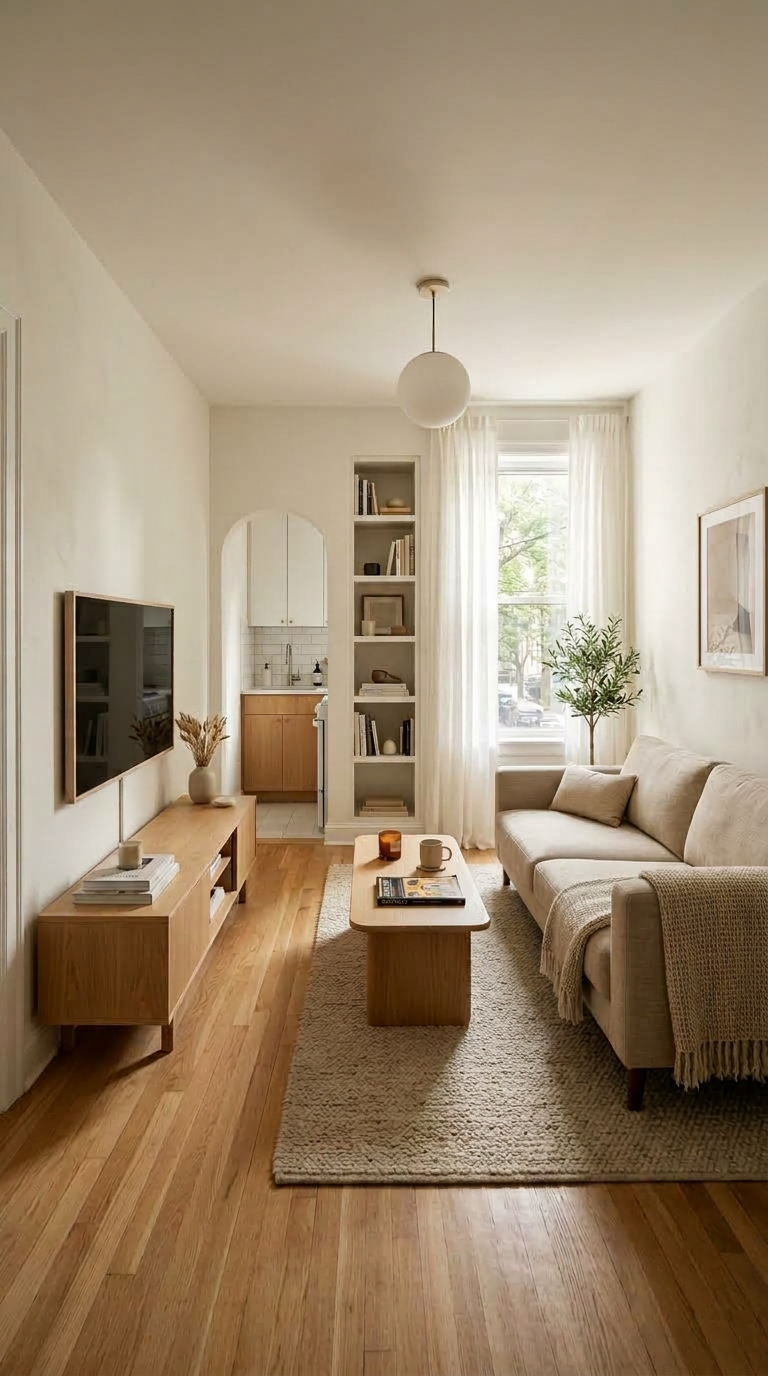
In many living rooms, the sofa and television determine almost everything else.
Start there.
Think about the relationship between the sofa, TV, doorway, and main walking path.
You want the seating area to feel intentional rather than leaving one large piece floating wherever there happens to be space.
If your television is fixed to a particular wall because of outlets or connections, work around that reality instead of fighting it.
If you can move the TV, consider whether its new position would improve the entire room rather than simply making one corner look better.
For example, moving the TV slightly can sometimes allow the sofa to shift enough to create a clearer route through the room.
If you’re working with a TV stand, you may also be able to make the existing setup feel lighter by editing what sits around and on top of it. These TV stand decor ideas can help if that area has become visually crowded.
Think of the sofa and TV as a relationship, not two separate decorating decisions.
Find What Is Taking More Space Than It’s Worth
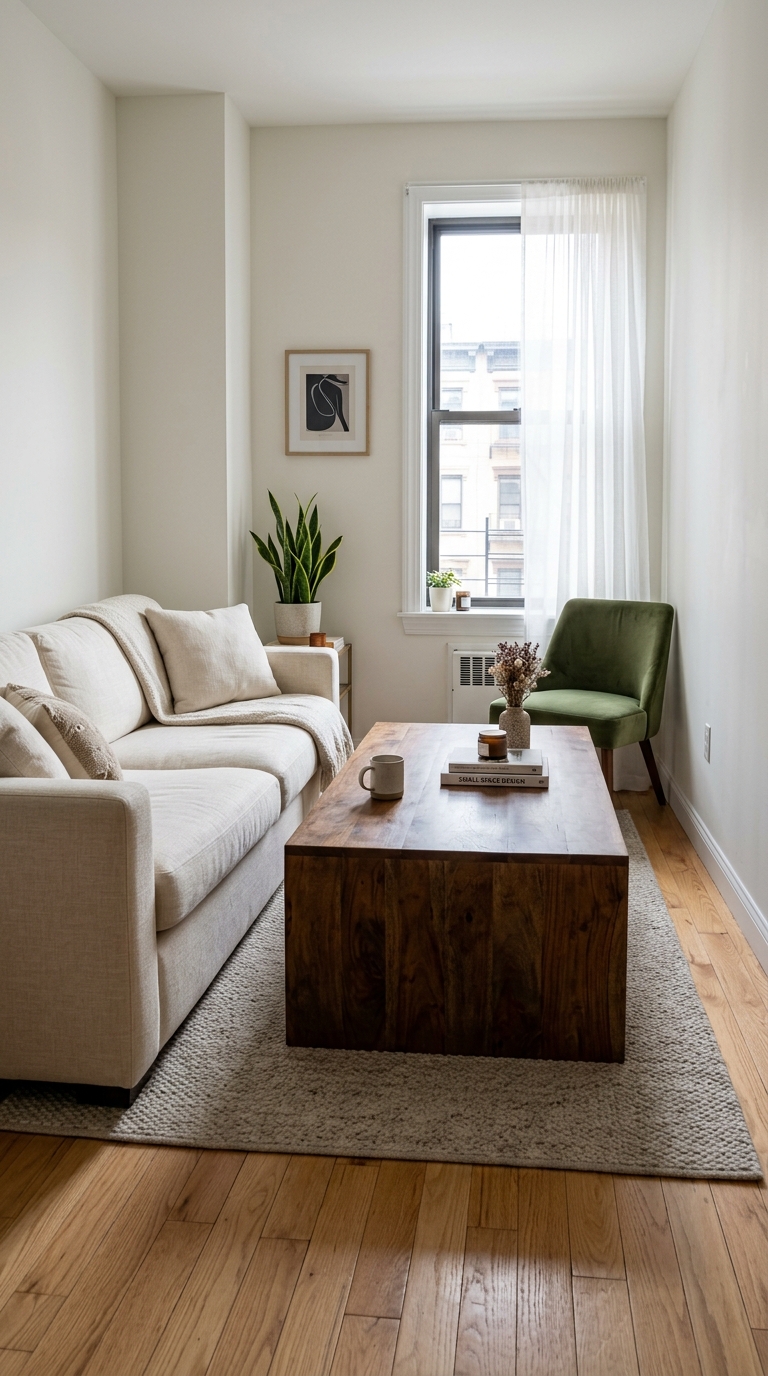
Sometimes the problem is not the largest piece in the room.
It is the piece that occupies valuable floor space without contributing enough.
This could be:
- A chair nobody sits in
- A bulky side table
- An oversized floor lamp
- A decorative basket that is rarely used
- A second coffee table
- A piece of furniture that blocks access to storage
Try the 24-hour removal test.
Move one questionable item somewhere else for a day. Don’t replace it immediately with another decorative object.
Then live with the room.
Can you walk through it more easily? Does the sofa feel less boxed in? Is there more space for the people who actually use the room?
If nothing feels different, perhaps the piece wasn’t the problem.
But if you immediately notice an improvement, you have learned something important without spending a dollar.
A small room often benefits more from removing one poorly placed item than from adding several “space-saving” products.
Give Furniture More Than One Job
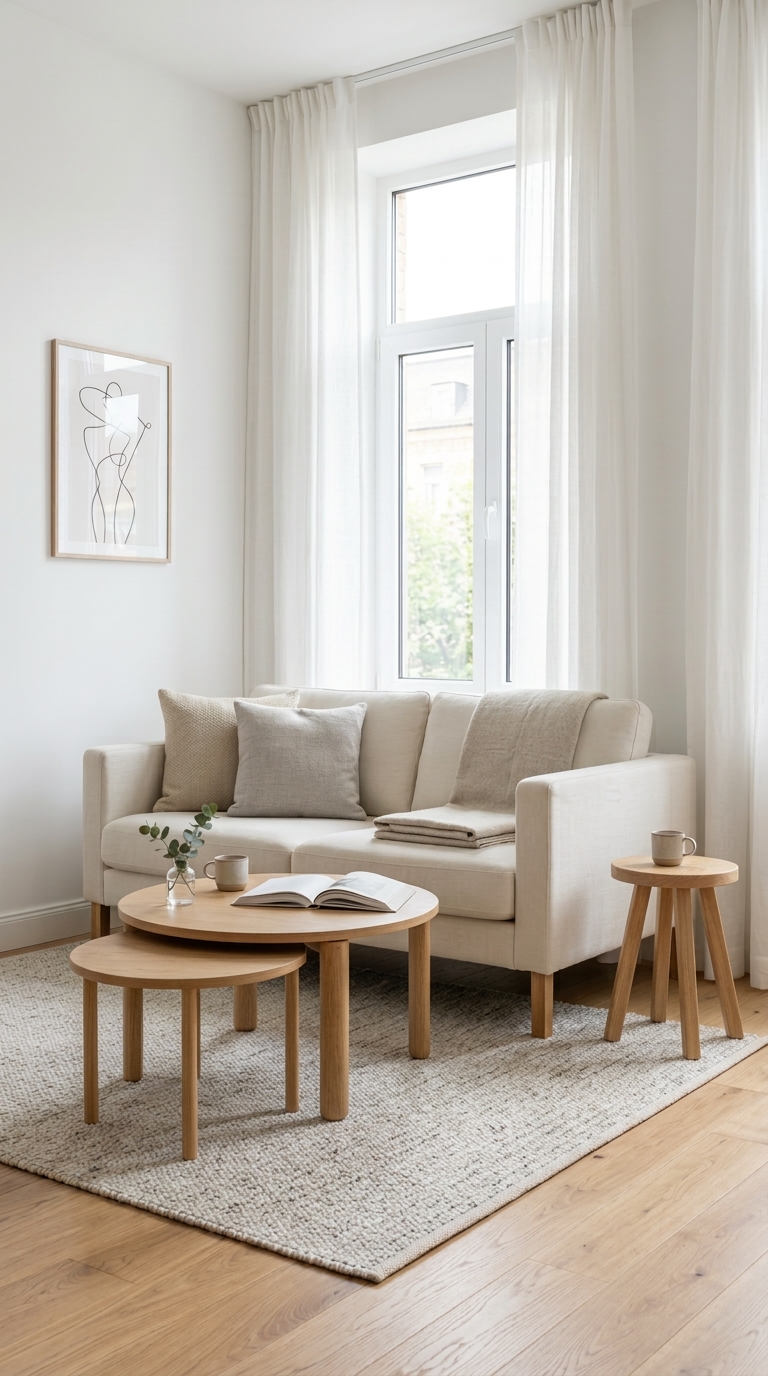
One of the easiest ways to make a small living room work harder is to stop thinking of every piece as having only one purpose.
You do not necessarily need more furniture. You may need to get more use from the furniture you already own.
| Furniture You Already Own | Another Possible Job |
|---|---|
| Ottoman | Footrest, occasional seating, or temporary tray table |
| Small stool | Extra seat or drink perch |
| Storage bench | Seating plus hidden blanket or toy storage |
| Narrow console | Entry drop zone, media perch, or slim desk |
| Nesting tables | Flexible surface space that stacks away |
This does not mean every piece needs to perform three different jobs.
The point is simply to notice where you already have useful furniture that could solve another problem.
If you need occasional extra seating, for example, a stool you already own may solve the problem without adding another chair that sits unused most of the week.
Small rooms reward flexibility.
What If Your Furniture Can’t Go Where You Want It?
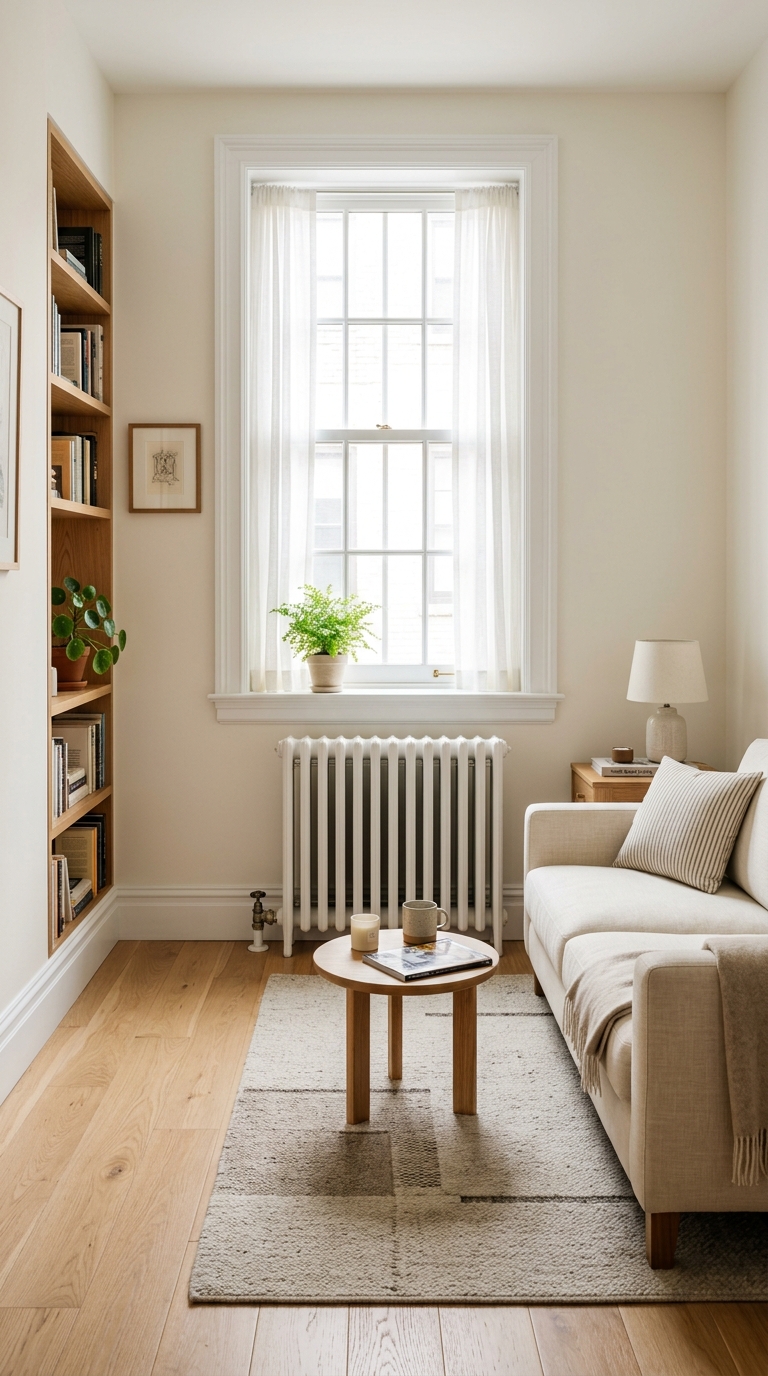
Sometimes the layout problem is not something you created.
The room may have architectural limitations that you simply have to work around.
Your television may need to stay near a particular outlet. A window may take up the only uninterrupted wall. A radiator may prevent furniture from sitting in front of it. A rental may limit what you can mount to the wall.
There may also be a doorway that creates an unavoidable traffic route.
In those situations, stop trying to create the layout you saw in a perfectly rectangular room online.
Instead, ask:
Given what cannot change, what can I improve?
Maybe the sofa cannot move to the opposite wall, but the chair can.
Maybe the TV cannot move, but the coffee table can become smaller or lighter visually.
Maybe a window prevents you from placing a tall cabinet there, but a low bench could still work.
The best small living room furniture arrangement is often not the one that would be possible in an empty room.
It is the one that works with the room you actually have.
Also pay attention to heating and cooling equipment. Keep furniture and belongings from blocking vents or restricting airflow. ENERGY STAR’s guidance on saving energy explains why keeping areas in front of vents clear can help conditioned air move through a space efficiently.
Before You Buy Smaller Furniture, Try These 5 Fixes
Before deciding that your sofa, coffee table, or chairs are simply too large, try these changes.
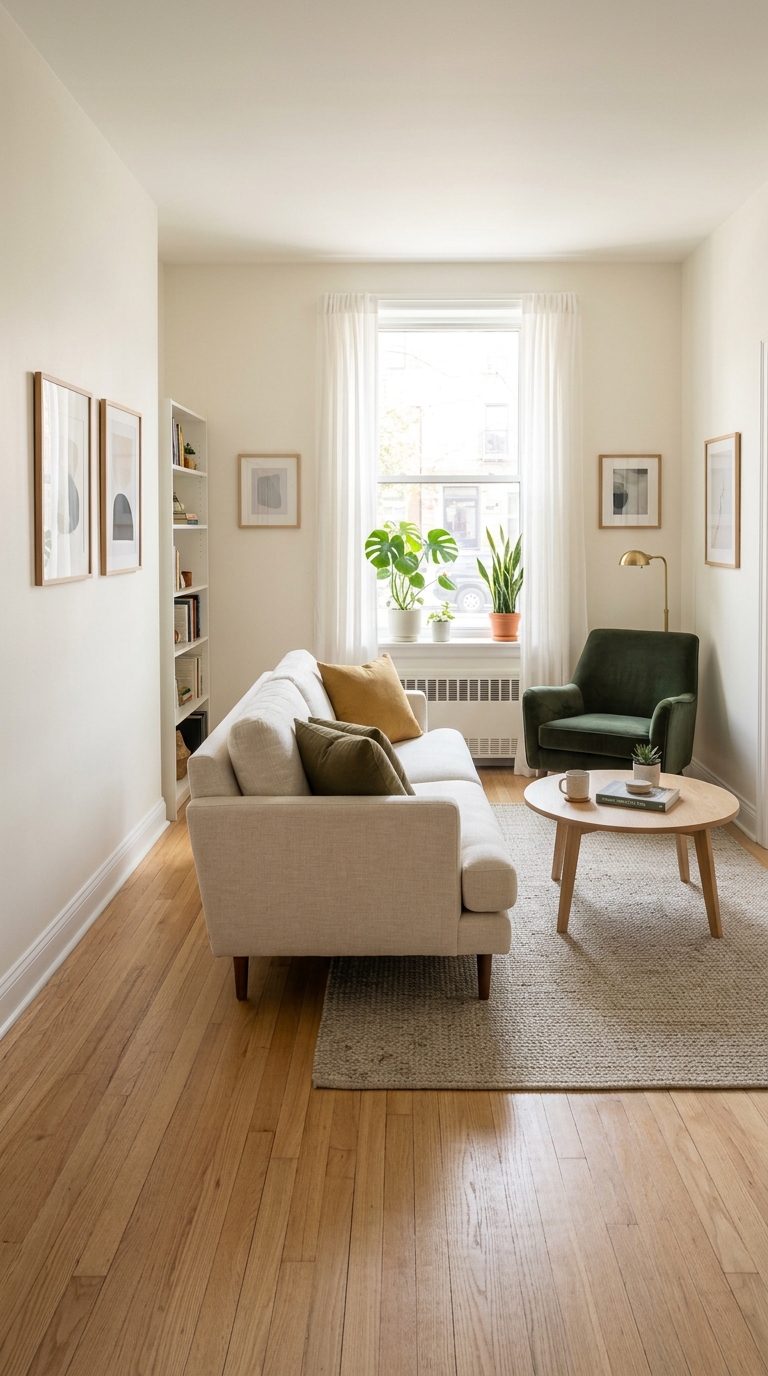
1. Remove One Piece
Take out the least-used piece of furniture.
Don’t replace it with anything.
See whether the room immediately becomes easier to use.
2. Change the Sofa’s Direction
If the room allows it, try turning the sofa rather than pushing it automatically against a wall.
Sometimes a sofa can divide a living area from another zone more effectively than a wall-hugging arrangement. Other times, moving it toward a wall really does create better circulation.
The point is to test it rather than assume.
3. Rethink the Coffee Table
A coffee table should support the way you actually use the room.
If it is constantly in the way, ask whether you need that exact size or shape.
Could an existing smaller table work? Could two nesting tables give you flexibility? Could an ottoman do the job?
You may also find that simply editing what sits on the coffee table makes the room feel less crowded. These coffee table decor ideas for small living rooms can help you keep the surface useful without making it visually busy.
4. Clear the Main Walking Path
Look at the route people use most often.
Then remove anything that makes that route narrower than it needs to be.
Don’t place a chair in a doorway just because it technically fits. Don’t leave a basket in the path because it looks nice there.
A few inches of extra clearance can make a room feel easier to live in.
5. Create One Clear Seating Zone
Small living rooms can become awkward when furniture is scattered around the room as though every piece needs its own little area.
Instead, try grouping the main seating together.
The sofa, chair, coffee table, and other seating should feel like they belong to one conversation area.
You can still have separate functions elsewhere in the room, but the primary living zone should feel intentional. Once the layout works, you can bring in warmth and personality without filling every surface. These cozy minimalist living room ideas for small spaces can help with that next step.
Your 30-Minute Small Living Room Furniture Arrangement Reset
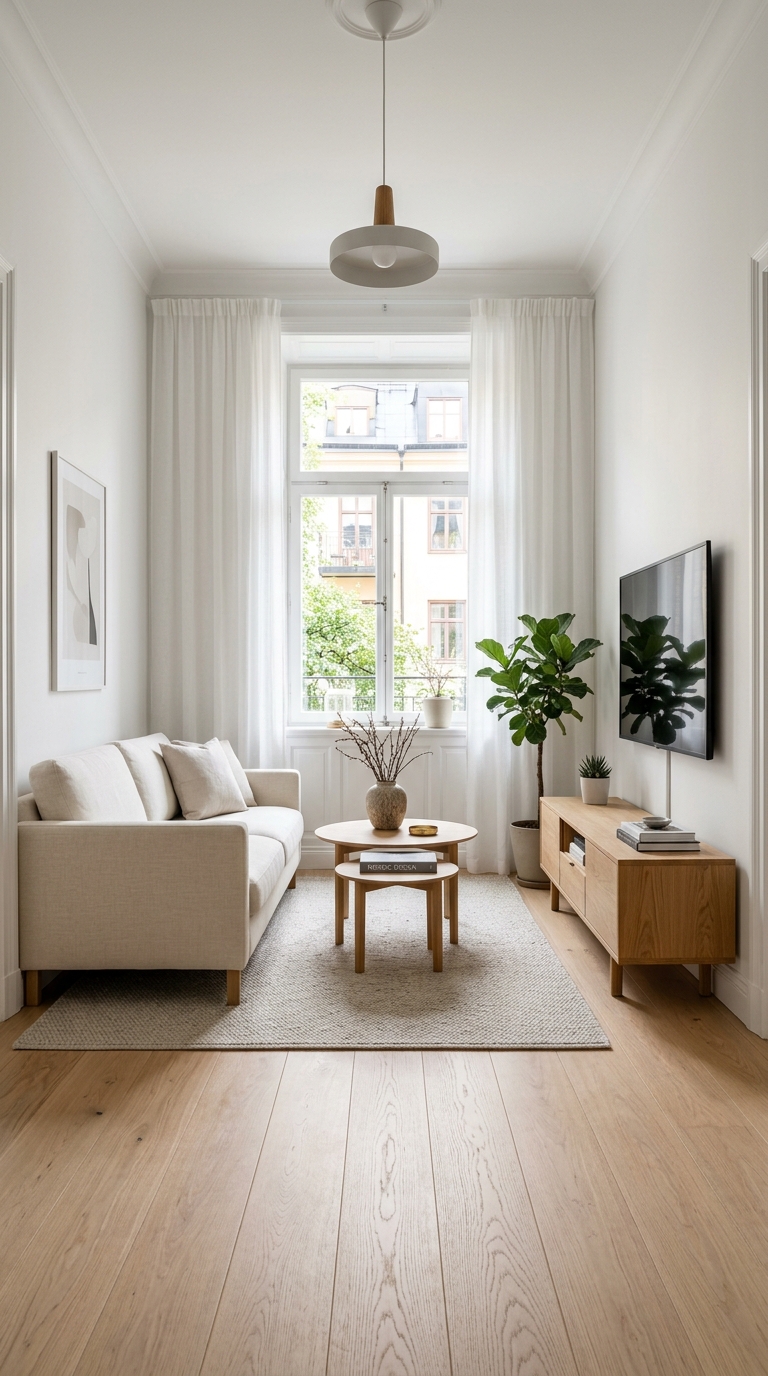
If your living room feels wrong but you don’t know where to begin, give yourself 30 minutes.
Don’t try to redesign the entire room.
Minutes 0–5: CLEAR
Remove obvious clutter and anything you know does not belong in the room.
Put everyday objects where they actually belong instead of simply moving them from one surface to another.
Minutes 5–10: WALK
Walk through the room the way you normally do.
Look for anything that makes you turn sideways, step around furniture, or take an unnecessary detour.
Minutes 10–15: PLACE
Start with the sofa and TV.
Then place the other major pieces around that relationship.
Don’t worry about styling yet.
Minutes 15–20: EDIT
Remove one piece that seems to be taking more space than it earns.
If you’re unsure, use the 24-hour removal test rather than making a permanent decision.
Minutes 20–25: COMBINE
Look for furniture that can perform more than one job.
Move a stool, ottoman, bench, or small table where it will be most useful.
Minutes 25–30: LIVE
Now actually sit down.
Walk through the room. Reach for the coffee table. Stand up. Walk toward the kitchen. Open the door.
Move around as you normally would.
A layout is not finished because it looks good from the doorway.
It is finished when the room feels easier to use.
When You Really Do Need to Replace Something
Sometimes rearranging is not enough.
There are pieces that genuinely are too large for the room, physically damaged, uncomfortable, or poorly suited to how your household lives.
If you have tested the layout and the same problem keeps appearing, replacing one problem piece may make sense.
Maybe the sofa is fine, but the oversized coffee table is the issue. Maybe the chairs are useful, but one blocks the only practical walkway. Maybe the TV stand is much deeper than the room can comfortably accommodate.
Start with the piece causing the problem.
Before buying anything new, make sure the replacement actually solves the problem you identified.
A smaller coffee table that still blocks the same walkway has not really fixed anything.
Frequently Asked Questions
How do you arrange furniture in a very small living room?
Start with the furniture you use most. Usually that means establishing the sofa and TV relationship first, then creating a clear walking path before adding smaller pieces.
Remove or relocate furniture that interferes with movement, and avoid filling every available corner simply because there is room for something there.
Should a sofa go against the wall in a small living room?
Not necessarily.
Pushing the sofa against a wall can sometimes create more usable floor space, especially in a very small room. But pulling it slightly away from the wall can work better in some layouts.
Test both options if the room allows it.
How much space should I leave for a walkway?
As a general starting point, around 30–36 inches of clear space can work well for a main walking path.
But don’t treat that as a strict requirement. The right amount depends on the room, who uses it, and what the walkway needs to accommodate.
How much space should be between a sofa and coffee table?
Around 14–18 inches is a useful starting range for many living rooms.
You want enough space to move your legs comfortably and get up from the sofa without feeling trapped, while keeping the table close enough to be useful.
How do I make a small living room feel less crowded without buying furniture?
Start by removing or relocating one piece that is not earning its space.
Then clear the main walking path, group your seating, reduce visual clutter on surfaces, and give existing furniture more than one job.
Sometimes the biggest improvement comes from having less furniture, not different furniture.
How do I arrange a small living room with a TV?
Place the TV where it works with the room’s existing outlets and viewing position, then arrange the sofa around it while protecting the main walking path.
Think about how people enter, sit, move, and use the room throughout the day rather than letting the TV dictate every placement decision.
Can I make a small living room work with full-size furniture?
Yes.
Small rooms do not automatically require apartment-size versions of every piece.
A full-size sofa can work surprisingly well if it suits the household and the rest of the furniture is edited around it.
The problem is often not the size of one item, but the combined footprint of everything in the room.
Your Small Living Room May Need a Better Layout, Not New Furniture
Before you decide that your living room is too small, give the furniture you already own a fair test.
Measure the room.
Protect the walking paths.
Start with the sofa and TV.
Question the pieces that aren’t earning their space.
Try removing something for a day.
Look for furniture that can perform another job.
And only then decide whether something genuinely needs to be replaced.
You may eventually discover that one piece really is too large.
That’s okay.
The goal was never to avoid buying furniture forever. It was to make sure you were solving the actual problem before spending money.
Because sometimes the room doesn’t need new furniture.
It just needs the furniture you already own to finally work together.