How to Host Thanksgiving in a Small Home Without Feeling Cramped
Thanksgiving is supposed to feel warm, relaxed, and full of people you’re happy to have around. But when your home is small, the thought of how to host Thanksgiving in a small home can bring a very different feeling: Where is everyone going to sit? Where will the food go? What happens when someone needs to open the refrigerator while another person is carrying a hot dish?
You may have a small dining table, a few chairs, limited counter space, and a living room that already feels full on an ordinary day.
That doesn’t mean you can’t host.
The trick is to stop trying to make your home function like a larger home just for Thanksgiving. Instead, temporarily change how each part of your space works. Your dining table doesn’t have to hold every dish, your living room doesn’t have to stay arranged exactly as it normally is, and you don’t need to buy a whole dining set to give everyone somewhere comfortable to sit.
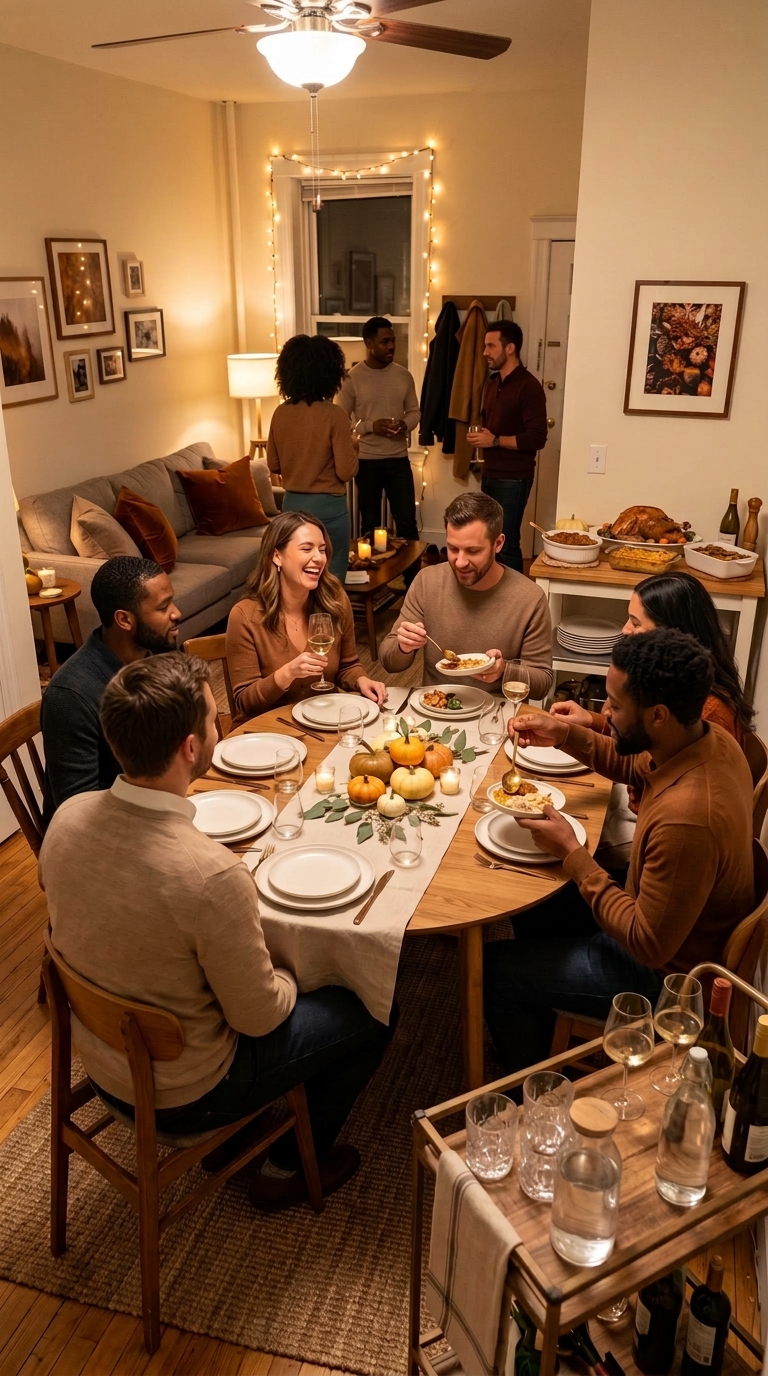
Here’s how to make your small home work for Thanksgiving without making the day feel like one long exercise in squeezing past furniture.
Start With the Number of People, Not the Decorations
Before you think about pumpkins, candles, napkins, or a pretty tablescape, figure out how many people you’re actually hosting.
If you’re hosting six people, you need six comfortable places to sit, plus enough room for chairs to pull out and people to move between the kitchen, bathroom, and seating area. If you’re hosting ten people in a home that normally seats four, simply adding six chairs isn’t the whole solution.
You also need somewhere for those chairs to go, a surface for everyone to eat, somewhere for the food to sit, and enough room to move once the room is full.
Before doing anything else, ask:
- How many people can comfortably sit at my existing table?
- Can I add another table or temporary surface?
- Which chairs from other rooms could be used?
- Where will the food and drinks go?
- Can people still move easily between the important areas?
A chair may technically fit in a corner, but if someone has to squeeze past it every time they need the refrigerator, it isn’t really helping.
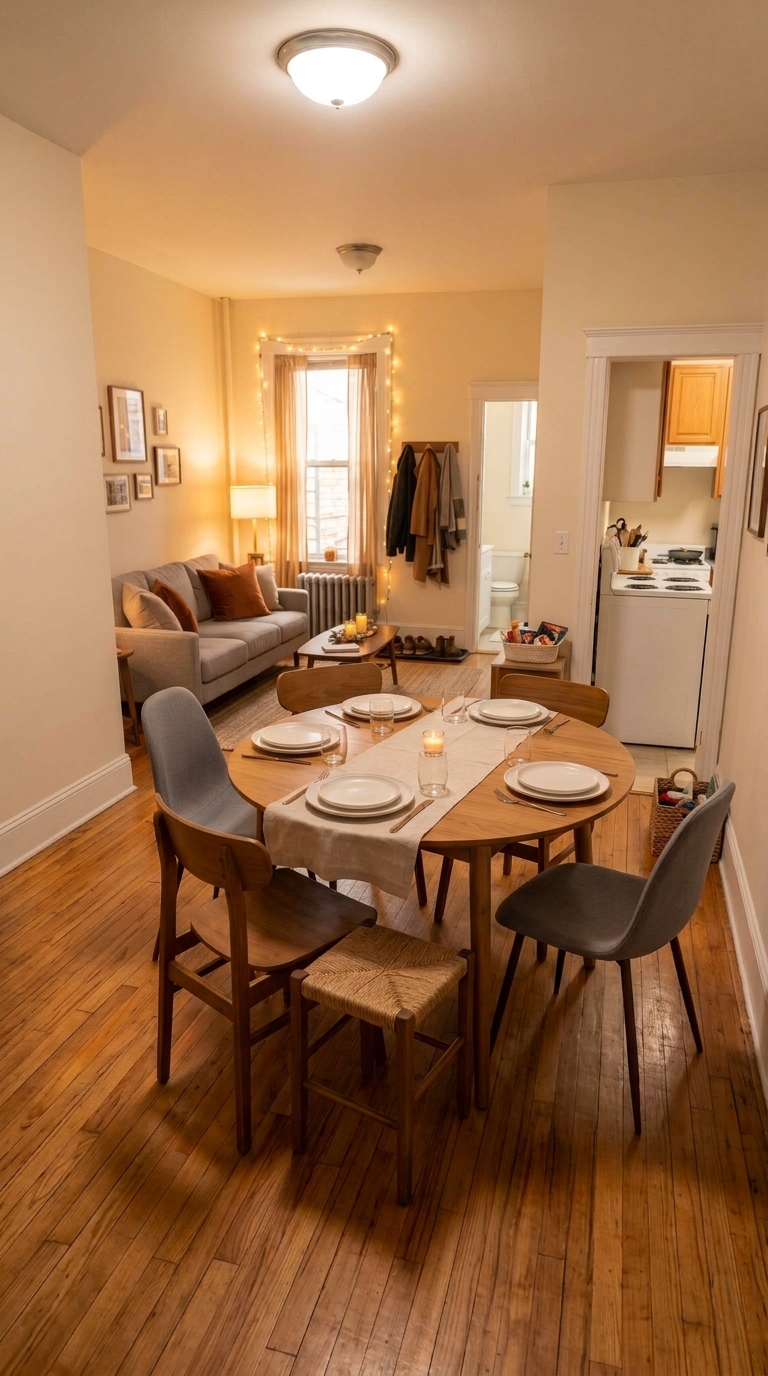
Make a Five-Minute Thanksgiving Floor Plan
You don’t need graph paper or a fancy app.
Stand in the middle of your home and imagine Thanksgiving happening from beginning to end. Where will everyone sit? Where will you serve the food? Where will someone put their drink? Where will you carry hot dishes from the kitchen? Where will guests walk when they need the bathroom?
Then test it.
Pull out the chairs you’re planning to use. Move the coffee table. Open the refrigerator and oven. Walk from the kitchen to the dining area carrying an empty serving dish.
That little test can reveal problems you won’t notice when the room is empty.
Try to create four simple zones:
Dining zone: where people actually eat.
Food zone: where serving dishes and plates can be picked up.
Drink zone: where guests can help themselves without entering the kitchen.
Walking route: a clear path between the important areas.
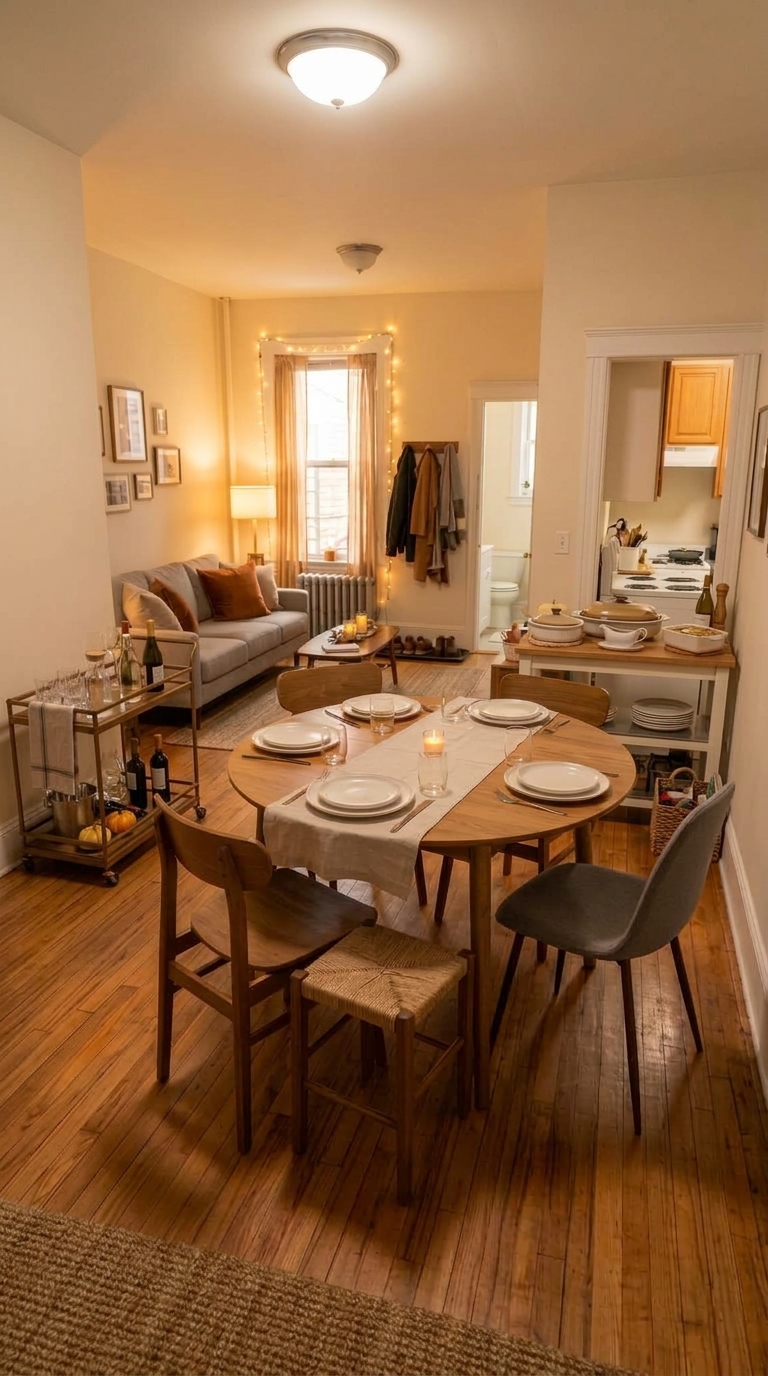
The goal isn’t to create lots of empty space. It’s to make the space you already have easier to use.
Clear the Room Before You Add Anything
Before bringing in another folding chair or temporary table, take a few things out.
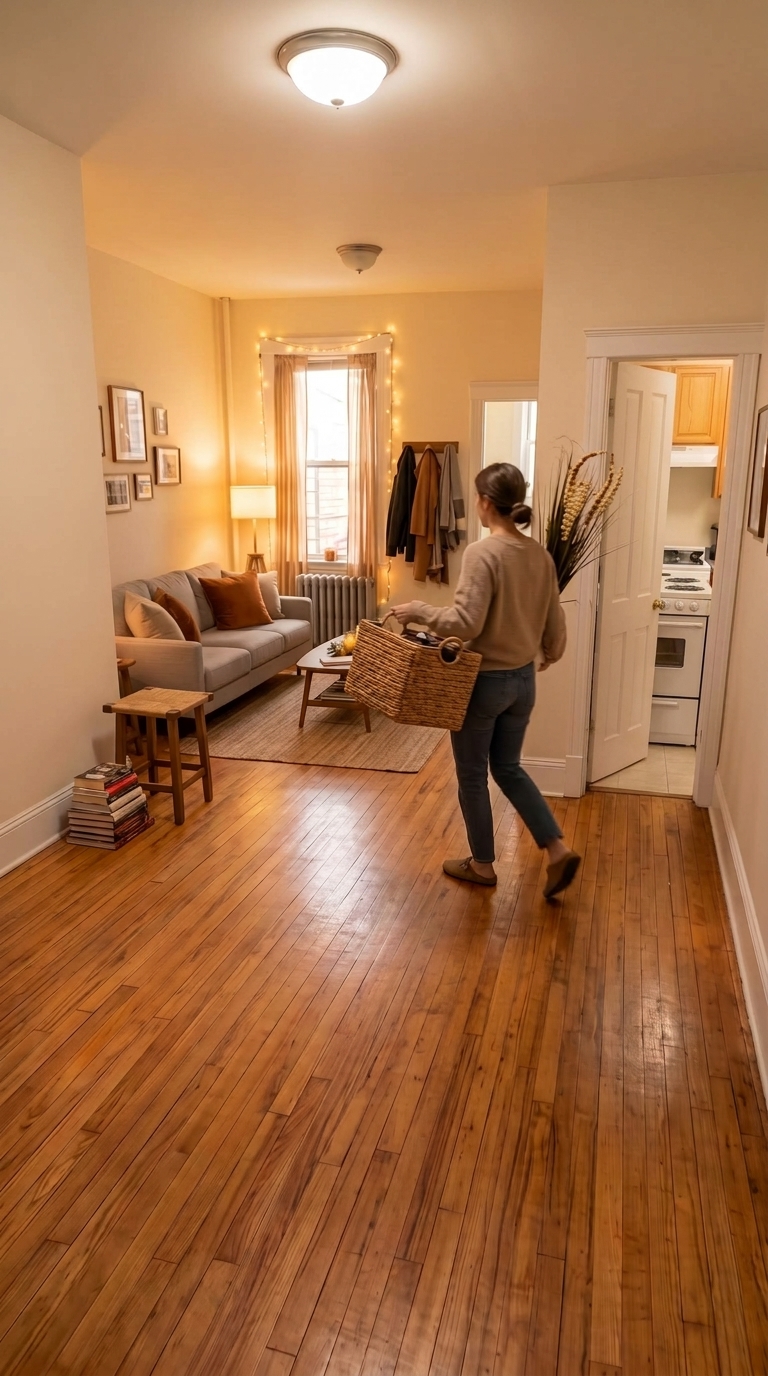
Look around your living and dining areas and ask yourself, Does this really need to be here on Thanksgiving?
Maybe the accent chair can move into another room. Maybe the floor plant is taking up the exact piece of floor you need for an extra chair. Maybe the ottoman, basket, or small side table can temporarily disappear.
You don’t need to make your home look empty. You’re simply making room for people.
Thanksgiving already brings plenty of extra things into a small home—serving dishes, food containers, coats, bags, drinks, and people. If the room already feels full before the first guest arrives, it won’t feel more spacious once everyone is inside.
Think of this as creating breathing room before you start decorating. If your home tends to feel crowded even after you’ve tidied, our guide on why your home still feels cluttered can help you identify what may be making the space feel fuller than it actually is.
Create a Temporary Dining Zone
If your home doesn’t have enough dining space, don’t assume your existing dining table has to do everything.
For Thanksgiving, another part of your home can temporarily become the dining area. A folding table, sturdy desk, console, or two smaller tables can provide useful space without permanently changing the room.
You can also shift your everyday furniture slightly to create a temporary dining zone.
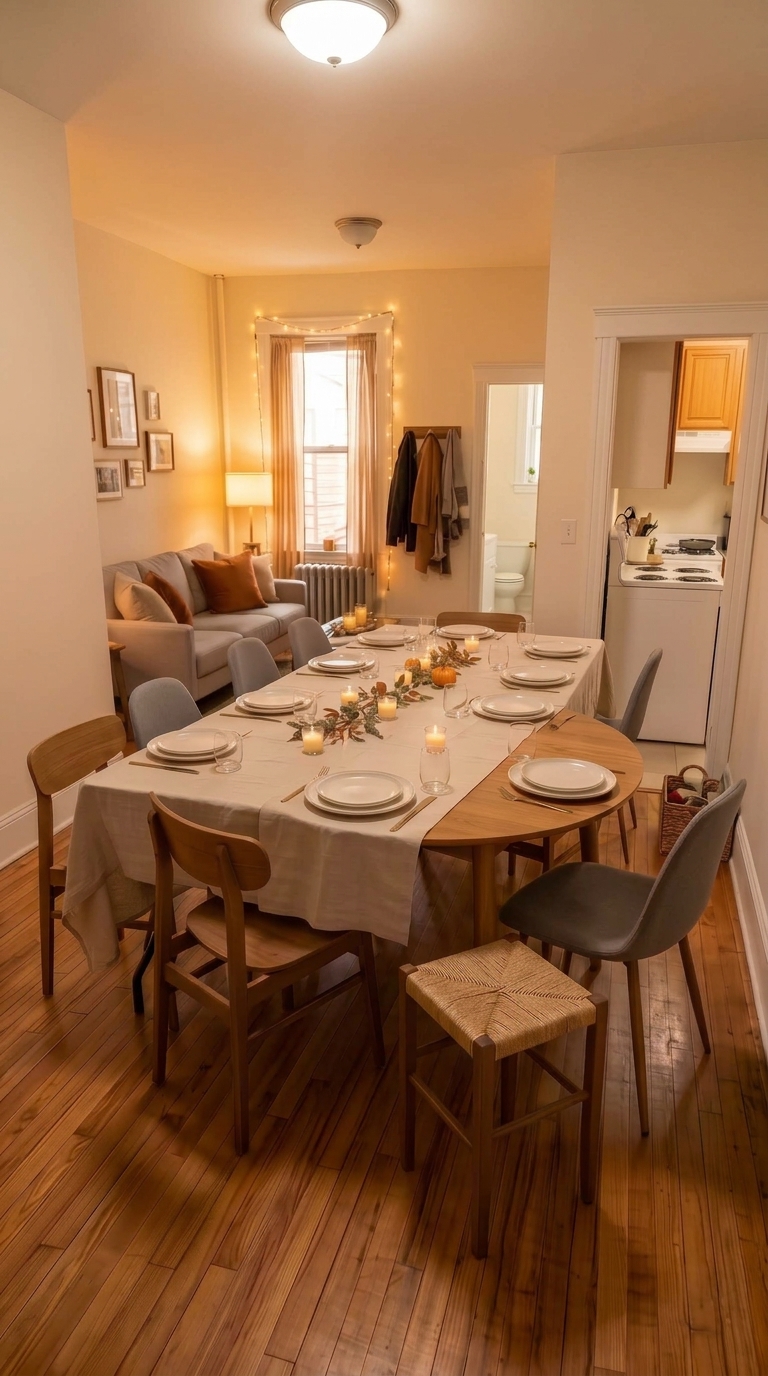
Your living room is normally your living room. On Thanksgiving, part of it can simply become the place where everyone eats—and tomorrow, it can become your living room again.
You aren’t redesigning your home. You’re giving it a different job for a few hours.
A quick small-space fall home reset can also help you decide what should stay, what can be stored, and what deserves space for the season before you bring Thanksgiving into the room.
Solve Seating With What You Already Have
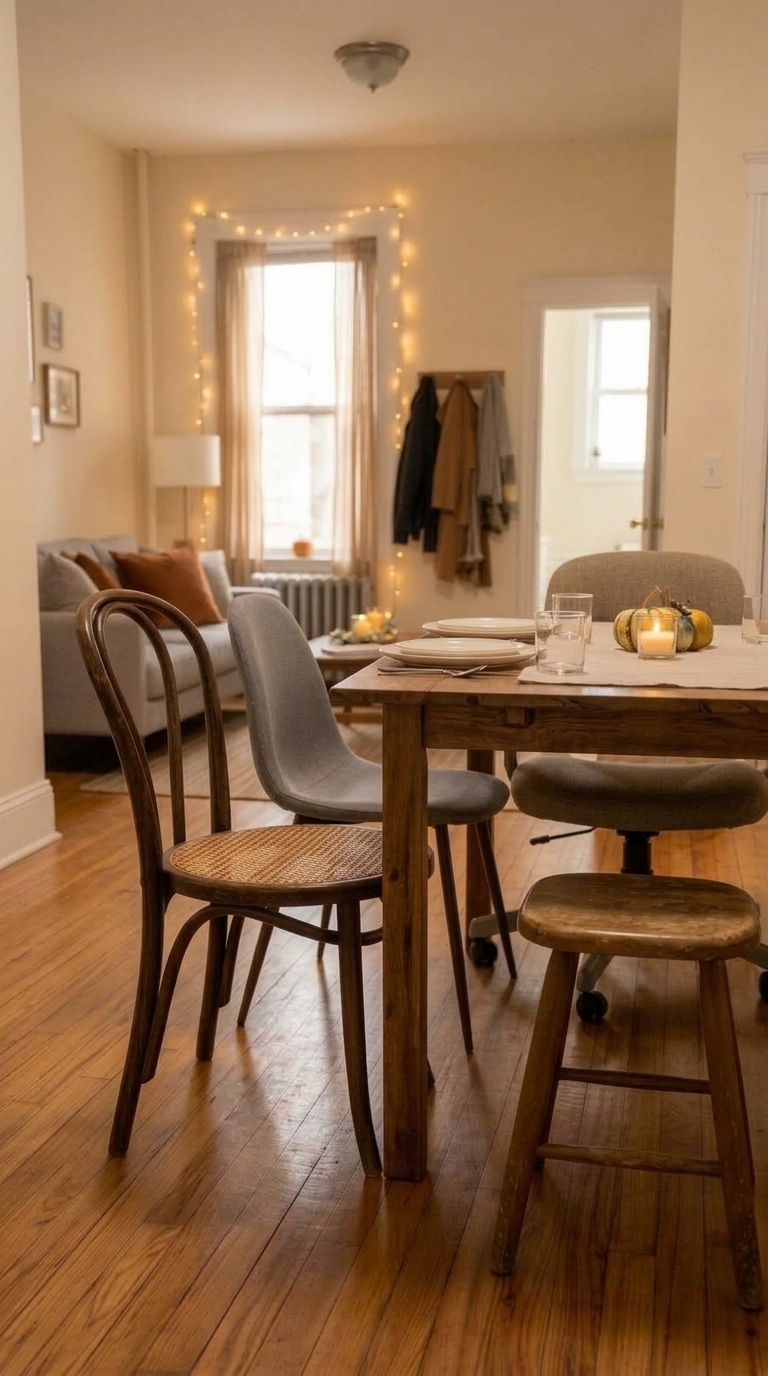
You don’t need matching dining chairs because you’re hosting Thanksgiving.
Start with what you already have:
- Dining chairs
- Desk chairs
- Stools
- A small bench
- Stable accent chairs
- Folding chairs
You can also borrow chairs from family or friends. For a relaxed Thanksgiving, the sofa can work for some guests if they have a separate, stable surface for eating.
Matching isn’t the important part. Comfort, stability, and enough room to get in and out are.
If some chairs are different heights, arrange them thoughtfully so the table remains comfortable to use. Borrow before buying; Thanksgiving is one day, and you don’t need to turn your storage space into a furniture warehouse.
Don’t Put All the Food on the Dining Table
This might be the single change that makes the biggest difference in a small home.
Your dining table needs to be a place for people, not a parking lot for every Thanksgiving dish. If you put the turkey, stuffing, potatoes, vegetables, gravy, rolls, drinks, candles, and decorations on one small table, there won’t be much room left for actual eating.
Instead, spread the meal around the room.
For example:
Dining table: plates, utensils, napkins, and only the dishes that need to stay there.
Kitchen counter or console: main serving dishes.
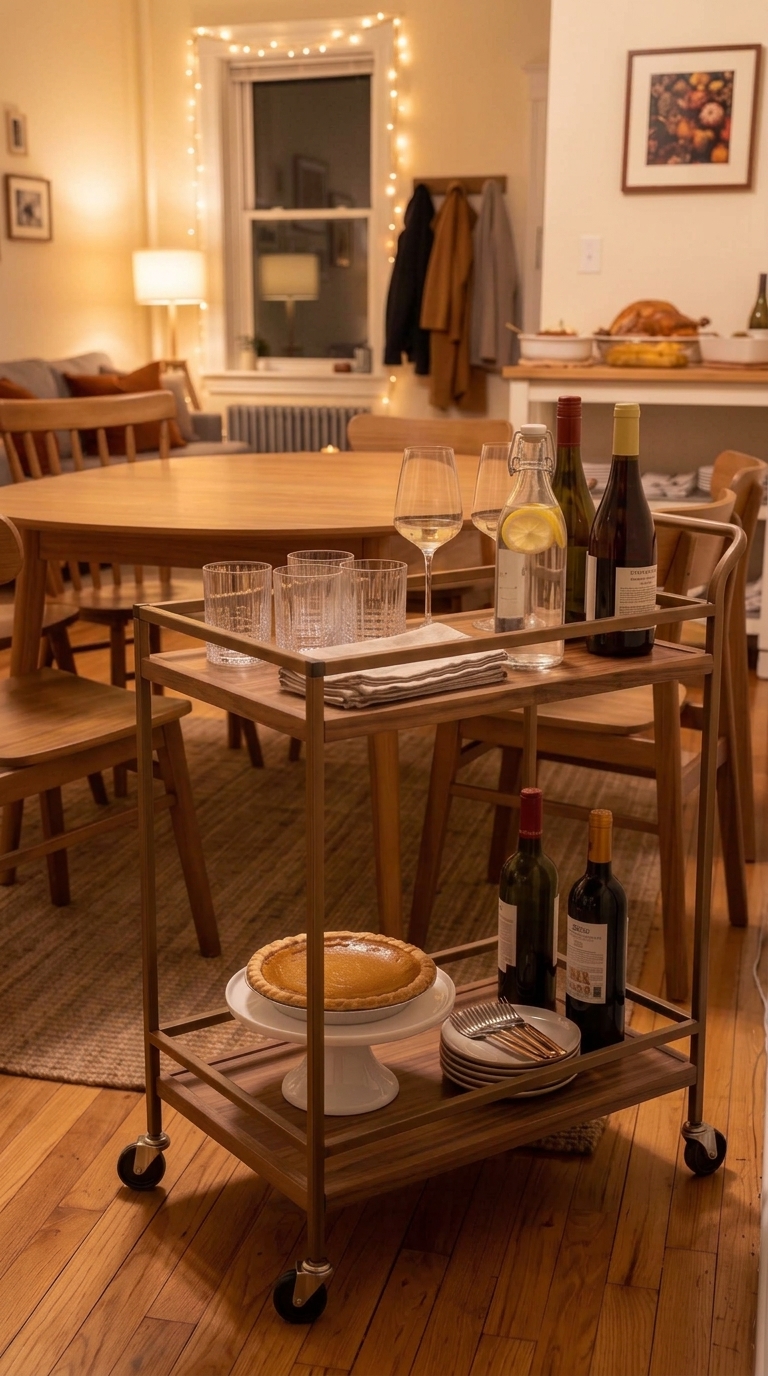
Small side table or cart: drinks.
Separate surface: dessert.
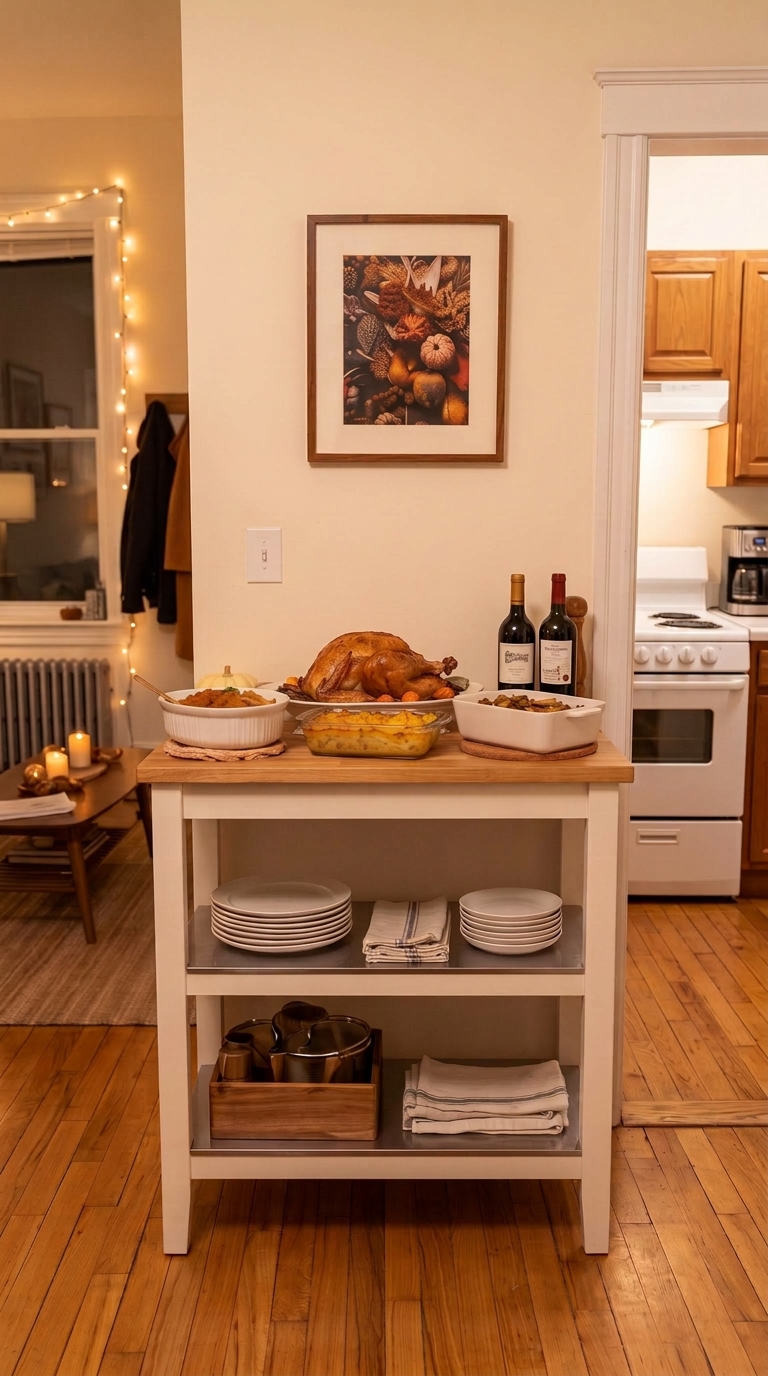
This keeps everyone from reaching across one another for the same bowl and gives the table more room to breathe.
Give Your Kitchen a “No Guest Zone”
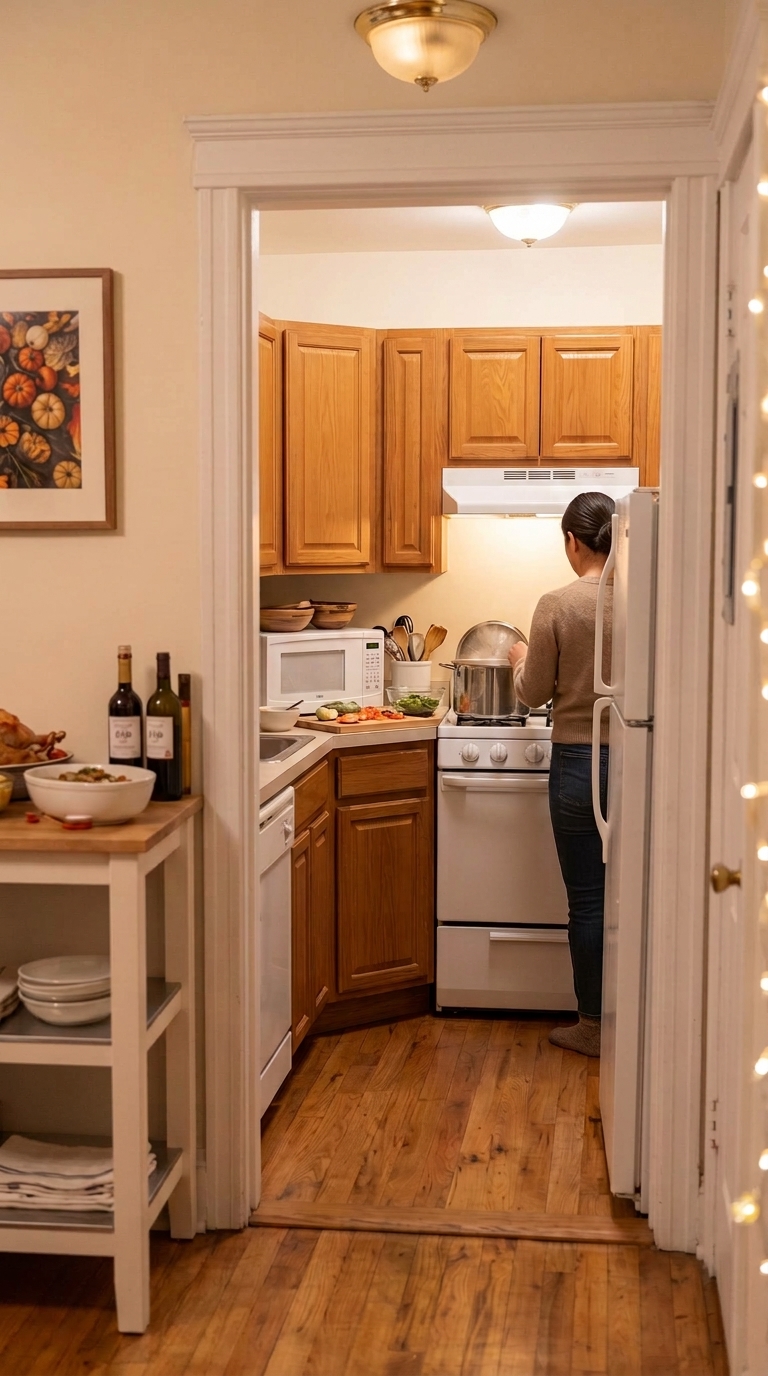
Small kitchens can become overwhelming very quickly on Thanksgiving. Hot pans, the refrigerator, dirty plates, and people looking for drinks can turn a small kitchen into a traffic jam.
Decide ahead of time what the kitchen is actually for: cooking, plating, warming food, using the refrigerator, and collecting dishes.
Move unnecessary things off the counters. Give coats and bags another home. Put drinks somewhere guests can reach them without coming into the kitchen.
If people still wander in, gently send them back out. You’re not being unfriendly; you’re making it possible to carry hot food safely through the room.
Keep the Thanksgiving Table Low and Simple
Now that the practical pieces are in place, you can have some fun with the table.
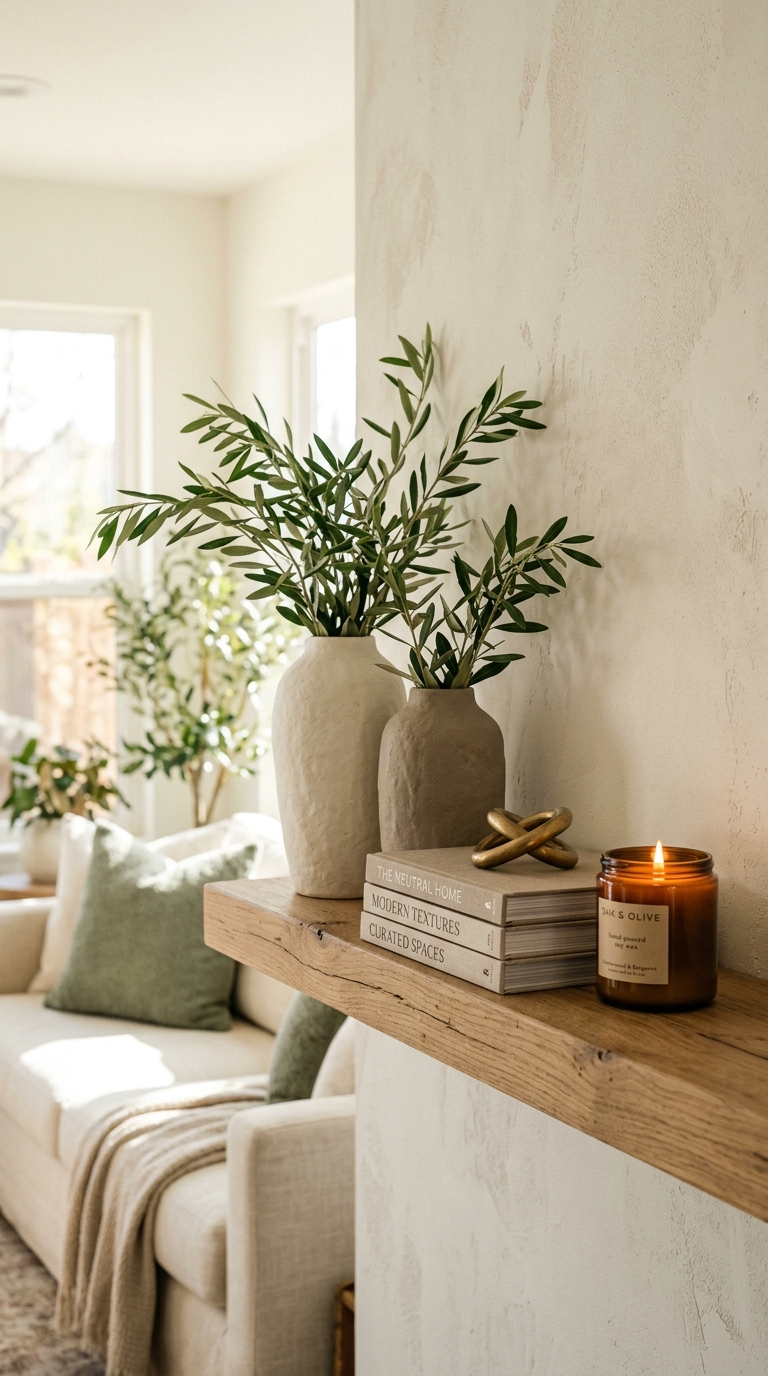
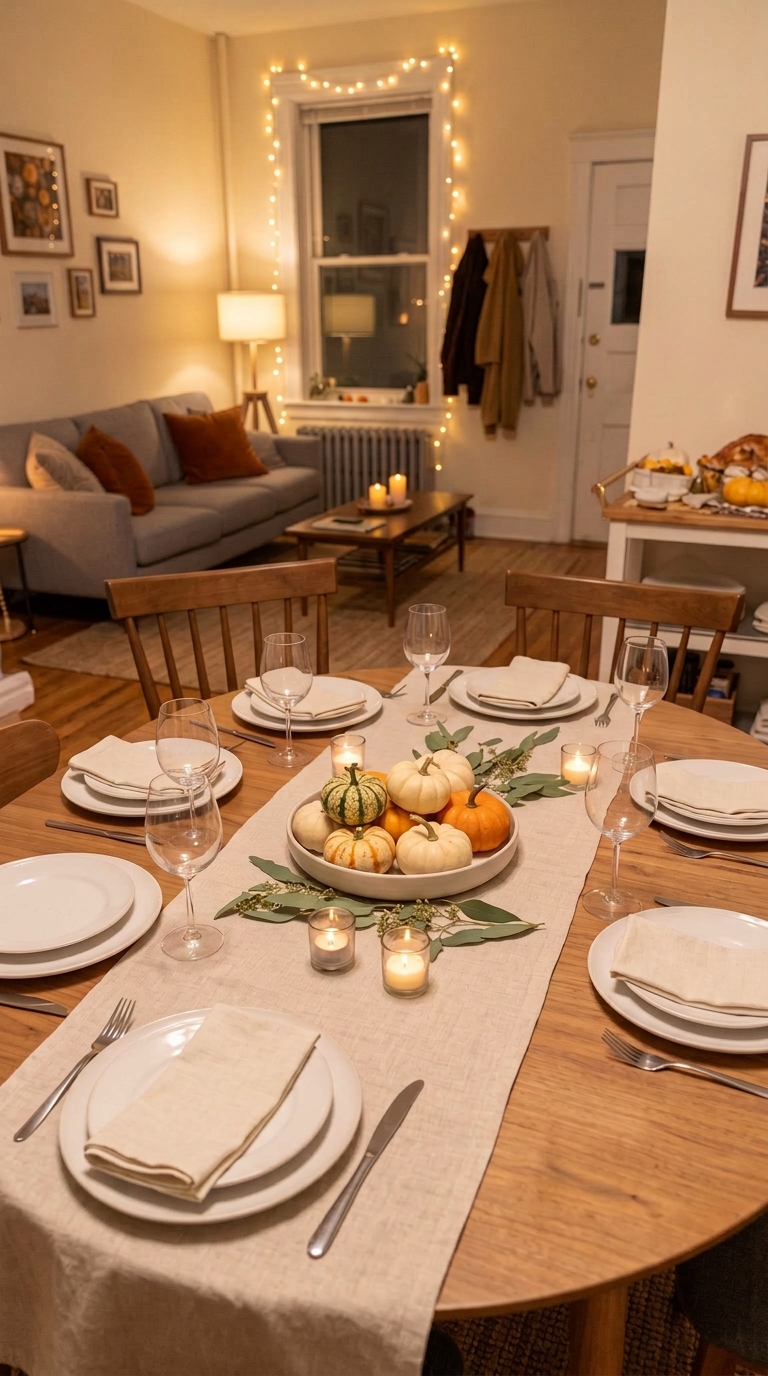
A narrow runner, warm-toned napkins, a little greenery, a few small pumpkins, or candles can be more than enough. Think about texture instead of quantity: linen, warm wood, simple ceramics, and natural elements can make a small table feel thoughtful without making it busy.
That same approach works throughout the rest of your seasonal decorating. If you’re trying to make your home feel warm without adding visual clutter, these ideas for decorating for fall without making a small home feel cluttered are worth carrying into Thanksgiving.
For the centerpiece, keep one simple rule in mind: if you can’t comfortably see across the table, it’s too tall.
Sit down and look at the person opposite you. Can you talk without leaning around the centerpiece? Can someone pass a dish without knocking something over? If not, simplify it.
A shallow bowl of small pumpkins, a few short branches in a simple vase, or several small candles grouped together can create a seasonal feeling without taking over the table. Leave room for plates, glasses, elbows, serving spoons, and conversation.
Create a Separate Drinks and Dessert Station
Drinks seem harmless until everyone needs one at the same time.
If every guest has to walk into the kitchen to refill a glass, your small kitchen can quickly become the busiest room in the house. Find a little spot outside the main cooking area—a bar cart, console, side table, small folding table, or clear section of counter.
Put glasses, napkins, water, and drinks there so people can help themselves.
Dessert can work the same way. Once dinner is finished, move it to another surface if you can. You don’t need the pie, cake, coffee, and leftover serving dishes competing for space with everyone’s dinner plates.
Plan for the Moments That Aren’t Dinner
Your floor plan may look perfect when everyone is seated, but Thanksgiving isn’t spent entirely at the table.
Guests arrive with coats, purses, food containers, and drinks. Someone will need to use the bathroom. Someone will open the refrigerator. Someone may bring a dish you weren’t expecting. Kids may wander between rooms. And at some point, several people will probably end up standing in the kitchen even though you planned for them to stay out.
You can’t control every moment, but you can give the predictable ones somewhere to go.
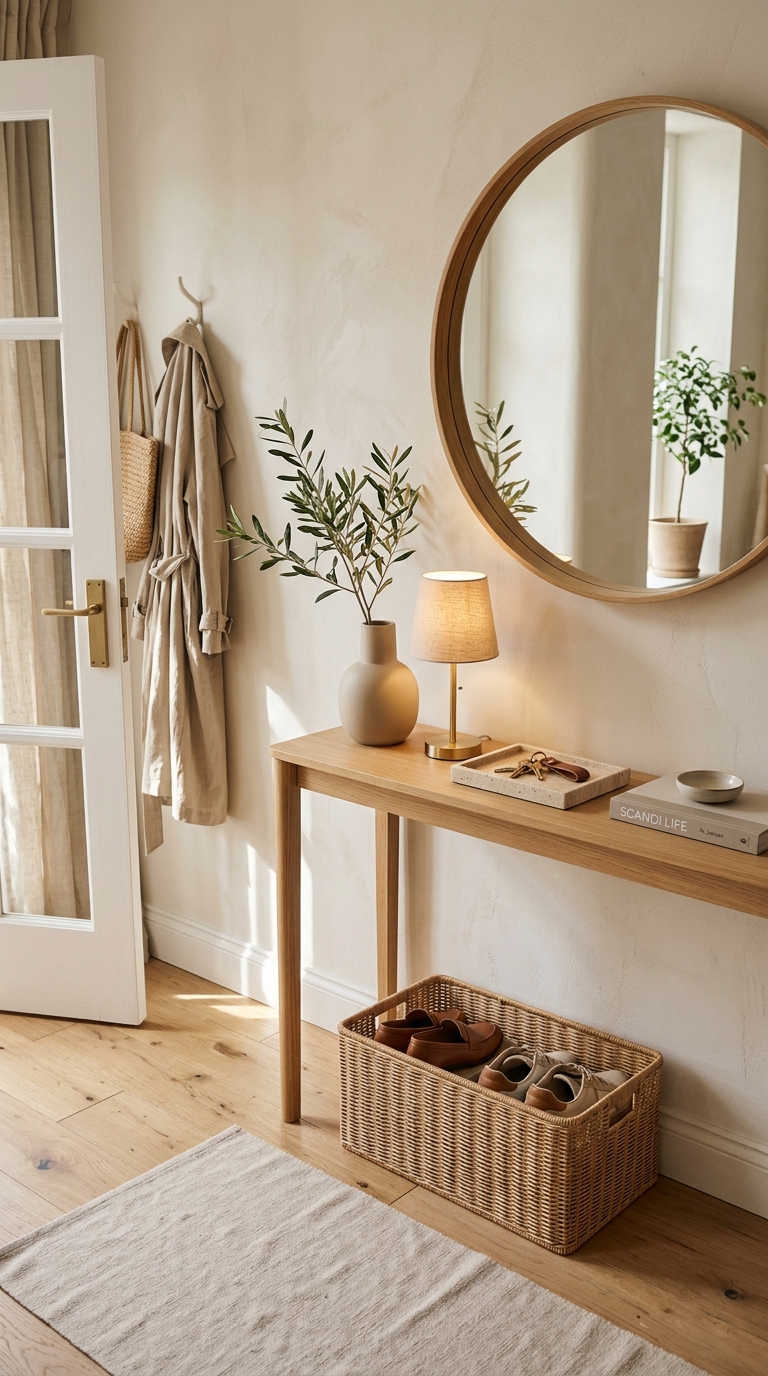
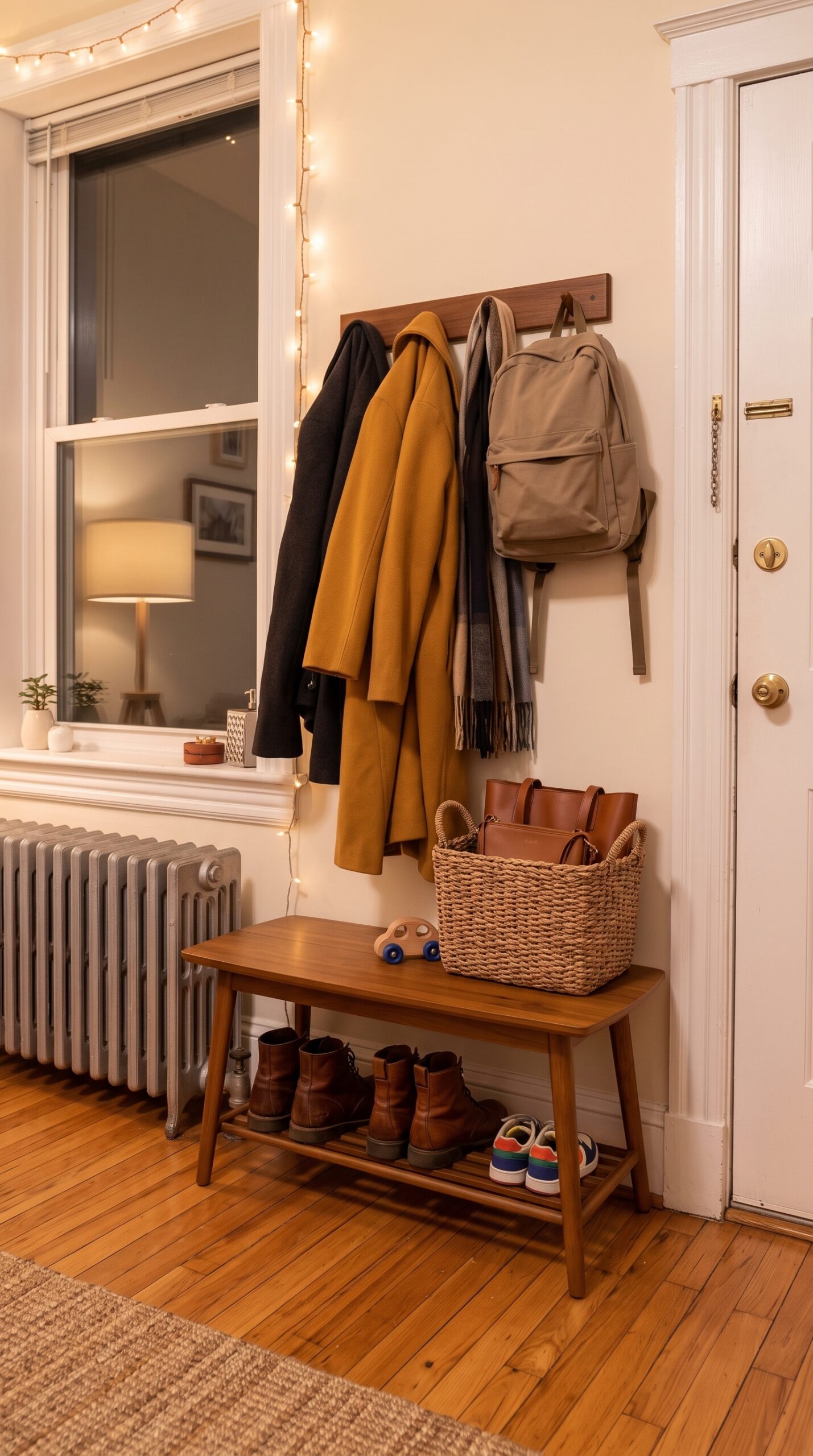
Create a drop zone: Choose a chair, bench, basket, or small corner near the entry for coats and bags so they don’t end up on dining chairs.
Keep one refrigerator path clear: Don’t block the refrigerator with a chair or serving table just because the arrangement looks good.
Leave one flexible seat: If someone needs to get up, you don’t want moving one chair to require rearranging the entire room.
Give children somewhere to land: If kids are coming, a small basket of books, coloring supplies, or another simple activity can give them a place to settle when they aren’t eating.
The goal isn’t to control the day. It’s simply to give the little bits of predictable Thanksgiving chaos somewhere to go.
Protect the Kitchen-to-Table Traffic Route
Before Thanksgiving begins, walk the important routes yourself.
Kitchen to table. Table to refrigerator. Table to bathroom. Seating area to drinks.
Carry an empty serving dish as you do it. Then ask yourself, Could I do this if six people were standing here?
A walkway can look perfectly fine when the room is empty and become almost unusable once chairs are pulled out and people are talking.
Don’t place a chair directly beside a doorway just because it technically fits. Don’t put drinks directly in the path from the oven to the table. If something feels awkward now, fix it now.
A few inches of extra clearance can matter more than another decorative item.
If You’re Hosting Thanksgiving in a Rental
A small rental can absolutely work for Thanksgiving.
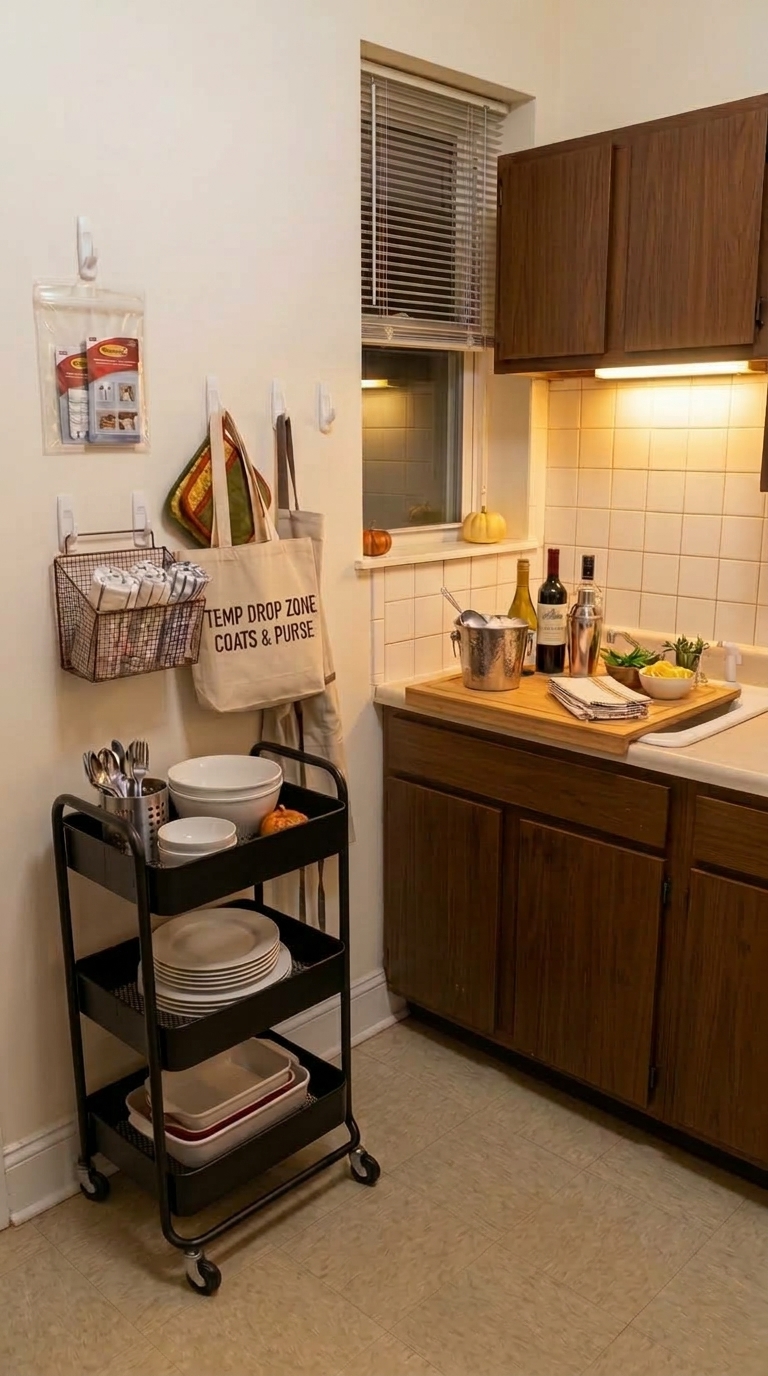
Lean into temporary solutions: movable furniture, removable decorations, borrowed chairs, folding tables, and serving pieces you can put away afterward.
Most importantly, don’t solve a one-day problem with a permanent change.
Move what you already own. Borrow what you need. Create the setup. Enjoy the day. Then put your home back afterward.
Decorate Where Guests Actually Notice
When space is limited, decorating every surface can quickly make the home feel more crowded.
Instead, choose the areas people will naturally notice: the entryway, dining area, one living-room focal point, or the Thanksgiving table.
A small arrangement near the entry, warm lighting in the living room, and a simple table setting can make the whole home feel festive without making every corner compete for attention.
If you’re adding lamps or using your existing lighting more often as the evenings get darker, choosing energy-efficient lighting can also be a simple way to be more mindful of energy use. ENERGY STAR lighting guide
You aren’t staging a showroom. You’re preparing your home for people you care about.
Plan the Cleanup Before Thanksgiving Begins
In a small home, cleanup can feel just as cramped as dinner itself because there isn’t much room to hide dirty dishes, leftover food, serving bowls, and glasses.
Give yourself a little head start:
- Clear one section of the refrigerator for leftovers.
- Put food-storage containers somewhere easy to reach.
- Choose one place for dirty dishes.
- Have a spot for used glasses.
- Clear enough counter space that you can actually work afterward.
- Decide where borrowed furniture and serving pieces will go.
You don’t have to deep-clean the whole house immediately. You just want to stop the post-Thanksgiving mess from spreading across every available surface.
Your 30-Minute Small-Home Thanksgiving Setup
If Thanksgiving morning arrives and you’re looking around your home thinking, How am I going to fit everyone in here?, don’t try to solve everything at once.
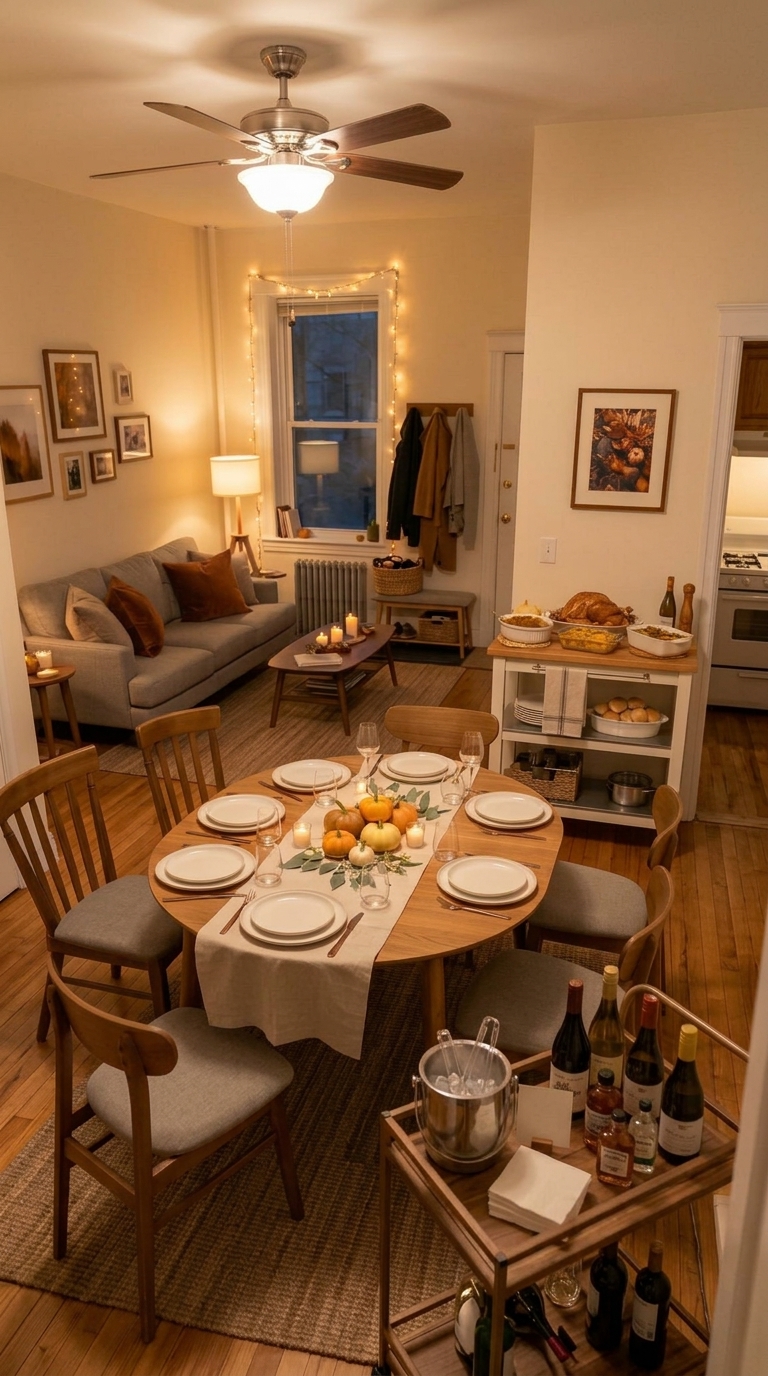
Give yourself 30 minutes and work through the space in this order.
Minutes 0–5: CLEAR
Remove furniture and everyday objects you won’t need that day. Don’t worry about organizing them perfectly. Just create breathing room.
Minutes 5–10: MOVE
Create your temporary dining area. Move the table, bring in the folding table, shift the sofa, or rearrange whatever needs to change.
Minutes 10–15: SEAT
Bring out every chair, stool, bench, or other safe seating option you’re planning to use. Sit in them. Pull them out. Walk behind them. Make sure people can actually get in and out.
Minutes 15–20: SERVE
Decide where the food, drinks, and dessert will go. Keep the dining table focused on the people eating.
Minutes 20–25: FLOW
Walk the important routes: kitchen to table, table to bathroom, seating to drinks. Move anything that gets in the way.
Minutes 25–30: BREATHE
Now add your Thanksgiving touches. Set out the napkins. Add the centerpiece. Turn on the warm lighting. Put out the things that make the room feel like Thanksgiving.
Then stop.
Walk through the home one last time as if you’re a guest. Where would you put your coat? Where would you get a drink? Could you find the bathroom? Could you sit down without bumping into someone?
If those things work, you’re ready.
Frequently Asked Questions
Can you host Thanksgiving in a small home?
Absolutely. Start with your guest count, then create temporary zones for dining, food, drinks, and movement. Flexible seating and a separate serving area can make a surprisingly small home work well.
How do you host Thanksgiving without a dining room?
Use another part of your home temporarily. A living room or other open area can become a dining zone with a folding table, smaller tables, or furniture you already own.
How many people can you host in a small home?
There isn’t one number that works for every home. Consider your available seating, floor space, kitchen capacity, and walking routes. The goal is enough room to eat and move comfortably.
Where should I put Thanksgiving food if my table is small?
Use separate surfaces whenever possible. A kitchen counter, console, bar cart, side table, or small folding table can become a temporary serving station.
How do you seat Thanksgiving guests in a small space?
Mix the seating you already have. Dining chairs, desk chairs, stools, benches, borrowed folding chairs, and a sofa can all help. Focus on stability, comfort, and clear walking paths rather than matching seats.
How do you decorate a small apartment for Thanksgiving?
Keep the decoration focused. A simple centerpiece, warm lighting, seasonal textiles, and one or two decorated areas can make the apartment feel festive without filling every available surface.
A Small Home Can Still Hold a Big Thanksgiving
You don’t need a huge dining room, a perfect table, or a house full of matching chairs to host a wonderful Thanksgiving.
Work with the space you actually have: clear what you don’t need, move furniture temporarily, give food and drinks their own places, keep the kitchen workable, and make the walking routes clear. Then add just enough decoration to make the home feel warm.
And remember that Thanksgiving isn’t a photograph. People will stand up, move around, refill drinks, open the refrigerator, bring things you didn’t plan for, and probably gather in the kitchen at least once.
That’s okay.
Your home doesn’t have to be bigger for Thanksgiving. It just needs to work differently for one day.
The goal isn’t to make a small home look like a large one.
It’s to make the home you already love feel comfortable enough to share.