Studio Apartment Layout with Bed and Couch: 5 Space Ideas
There is a very specific kind of panic that hits when you move into a studio apartment and realize your front door opens almost directly into your bed. Figuring out a functional studio apartment layout with bed and couch setups can feel overwhelming when space is limited. Nobody wants guests sitting on their bed, but squeezing a full living room into the same space as your sleeping area can quickly make everything feel cramped and messy.
The key is not smaller furniture, but better zoning. When you clearly separate your sleeping area from your living area, even in a single room, the space instantly feels more organized and livable.
If you are struggling with studio apartment layout challenges like this, the right plan can completely change how your space feels.
Here are five simple setups that balance comfort, function, and style without wasting space.
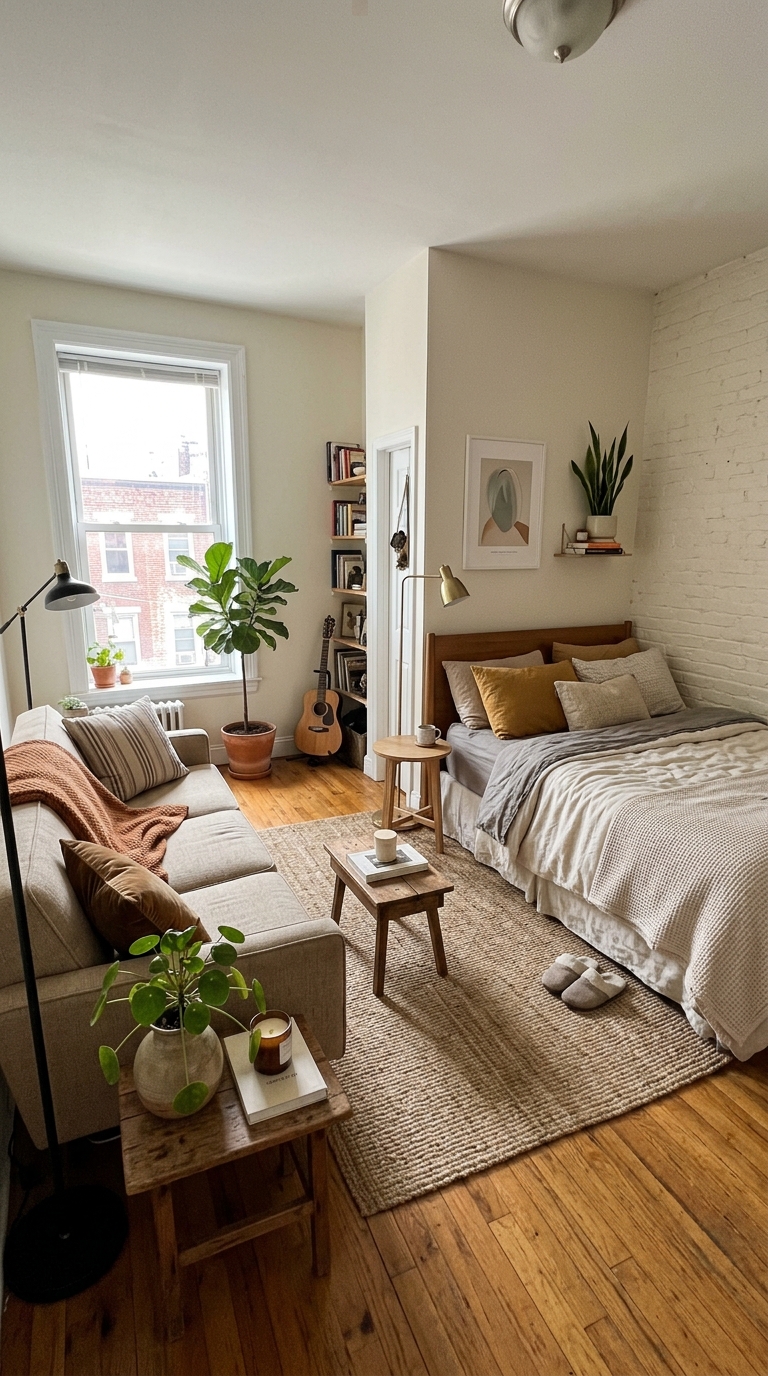
Many people naturally push all furniture against the walls to “open up” the center of a studio apartment. It feels logical, but in a small square or rectangular space, this often makes the room feel even more exposed and smaller.
Instead of relying only on walls, you can use your furniture to create separation between zones.
For this layout, place your bed along the back wall or in a corner of the room. Then position your sofa at the foot of the bed, facing away from it. This creates a natural divide between your sleeping and living areas without adding extra furniture or walls.
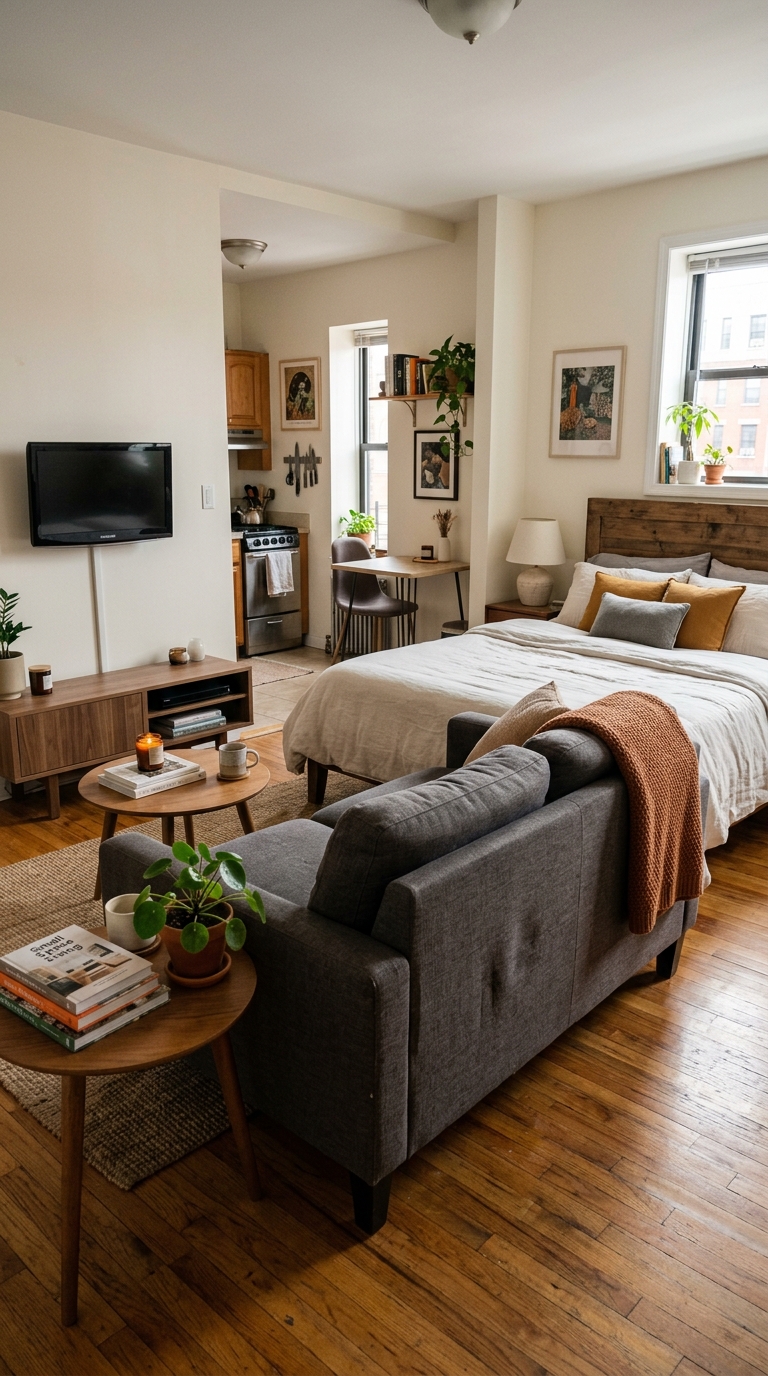
Placing the sofa in the middle of the room allows its backrest to act as a natural divider between spaces. It blocks direct sightlines to the bed from the entryway, creating more privacy in a studio layout.
When you sit on the couch, the sleeping area sits behind you and feels visually separated, which helps reduce the “hotel room” effect many studio apartments have.
At the same time, this setup does not block natural light, so the room still feels bright, open, and spacious.
The “Opposite Walls” Studio Apartment Layout with a Bed and Couch Setup
If your studio apartment is long or rectangular, you do not need physical dividers to separate your space. Instead, you can rely on smart placement and visual balance.
The “Opposite Walls” layout places the bed and sofa on opposite sides of the room. However, instead of lining them up directly across from each other, you slightly offset their positions so the room feels balanced rather than rigid.
This simple adjustment creates two clear zones while keeping the space open and easy to move through.
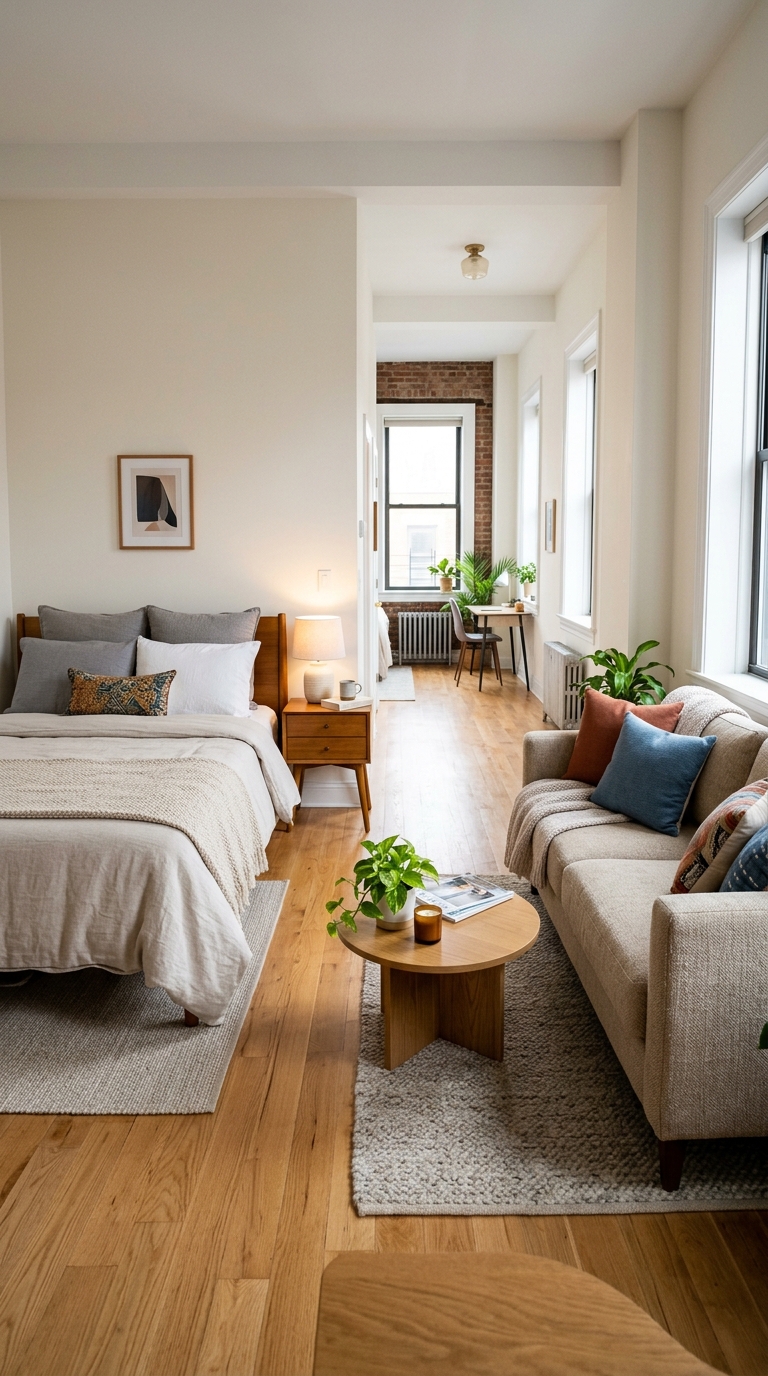
Pushing the bed against one wall and placing the sofa directly across from it creates a simple, balanced flow in a studio apartment. To keep the space from feeling like a cramped hotel room, each side should feel slightly distinct in style and purpose.
For example, you can group the sofa, coffee table, and TV together using a single large area rug to define the living area. On the other side, keep the bed visually separate with a headboard and a few coordinated pillows.
Keeping the center of the room open allows easy movement and helps the apartment feel more spacious and breathable.
If you need styling inspiration for the living area, you can explore budget home decor ideas that look expensive to elevate the space without overspending.
The Open-Bookcase Studio Layout
When you want separation between your sleeping area and living space but do not want to block natural light, a solid room divider can feel too heavy and restrictive. A better budget-friendly option is a tall, open-backed shelving unit placed perpendicular to the wall.
This allows the shelf to act as a soft divider while still letting light pass through the space. It creates a clear boundary between your bed and couch without making the room feel closed off.
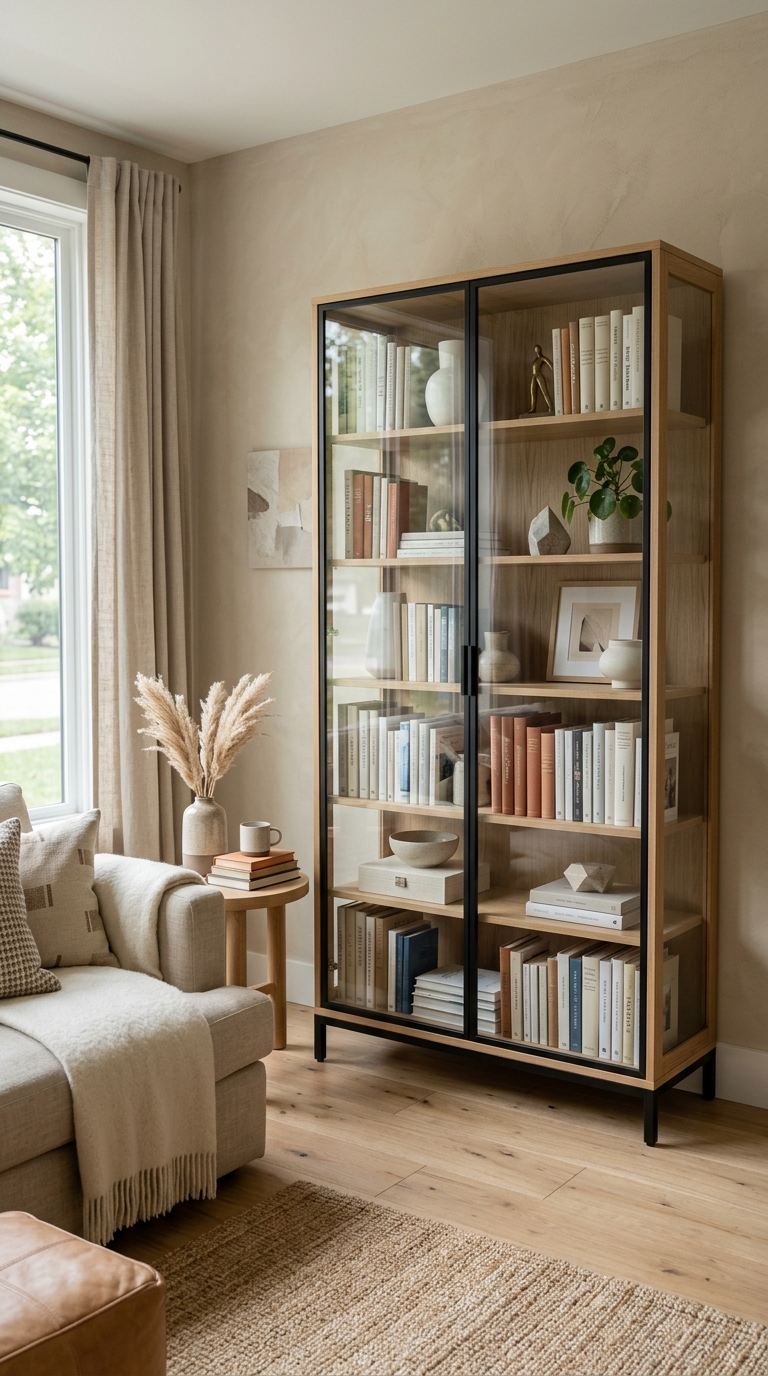
You can style the shelves with books, baskets, or small decor items to add storage while still keeping the layout visually open and airy.
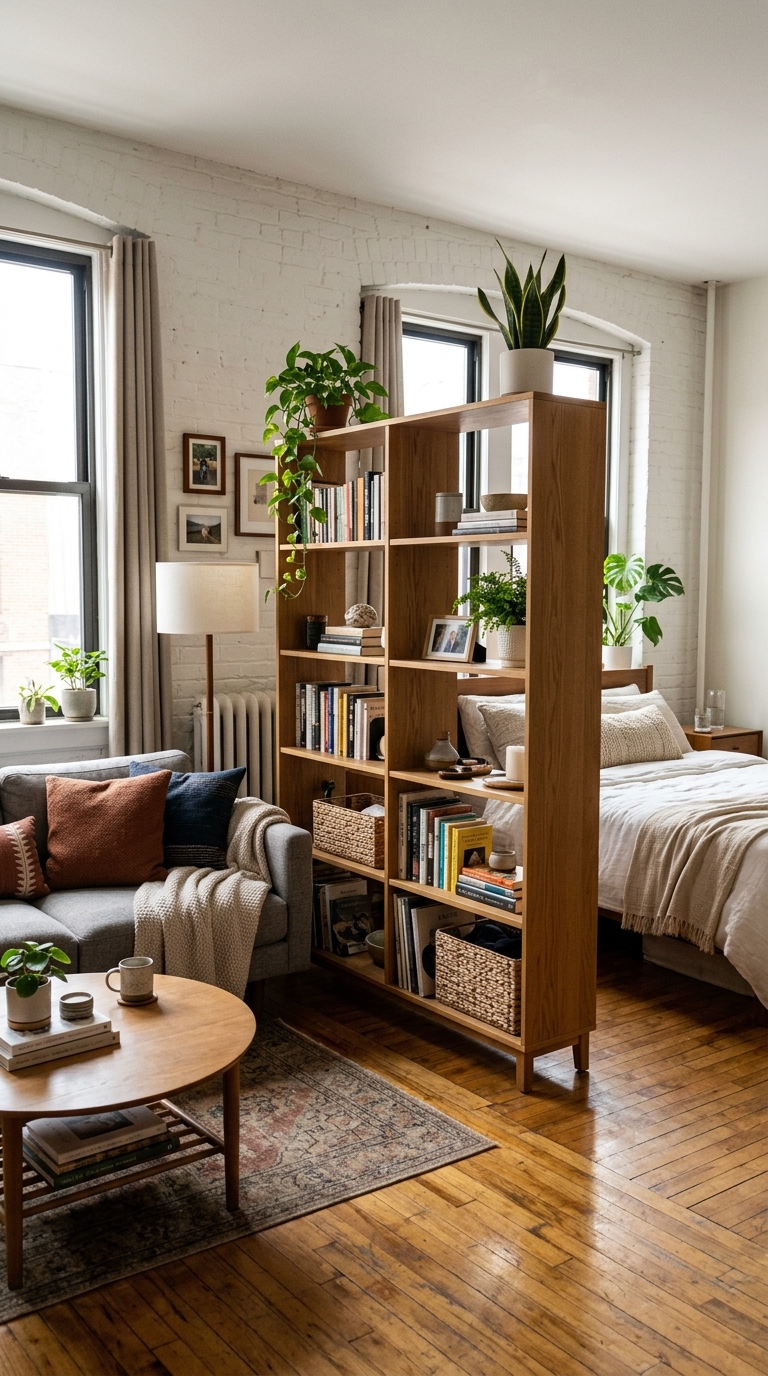
Positioning a tall bookcase between the bed and the couch creates a faux wall that naturally separates the room. Because the shelves are open-backed, sunlight still passes through from the windows to both sides of the apartment. This keeps the space bright and prevents it from feeling boxed in.
The key to avoiding visual clutter is thoughtful styling. Do not fill every shelf with books. Instead, leave some cubbies empty so light can pass through. Use the remaining spaces for woven baskets, small plants, or framed art prints. This turns a simple divider into a stylish design feature that looks intentional and expensive without much cost.
You can find affordable options here: open-back bookcase shelves on Amazon
The Tucked Corner Nook
If your studio apartment has an alcove, L-shaped corner, or recessed wall, do not treat it as wasted space. Instead, use it to your advantage. The “Tucked Corner Nook” layout places your bed deep into the most private corner of the room, keeping the main floor area open for everyday living.
This setup naturally separates your sleeping area from the rest of the apartment without needing partitions or extra furniture. It also helps reduce visual clutter since the bed is partially hidden from the main entry view.
The result is a more open, functional layout where your living space feels intentional and easier to use.
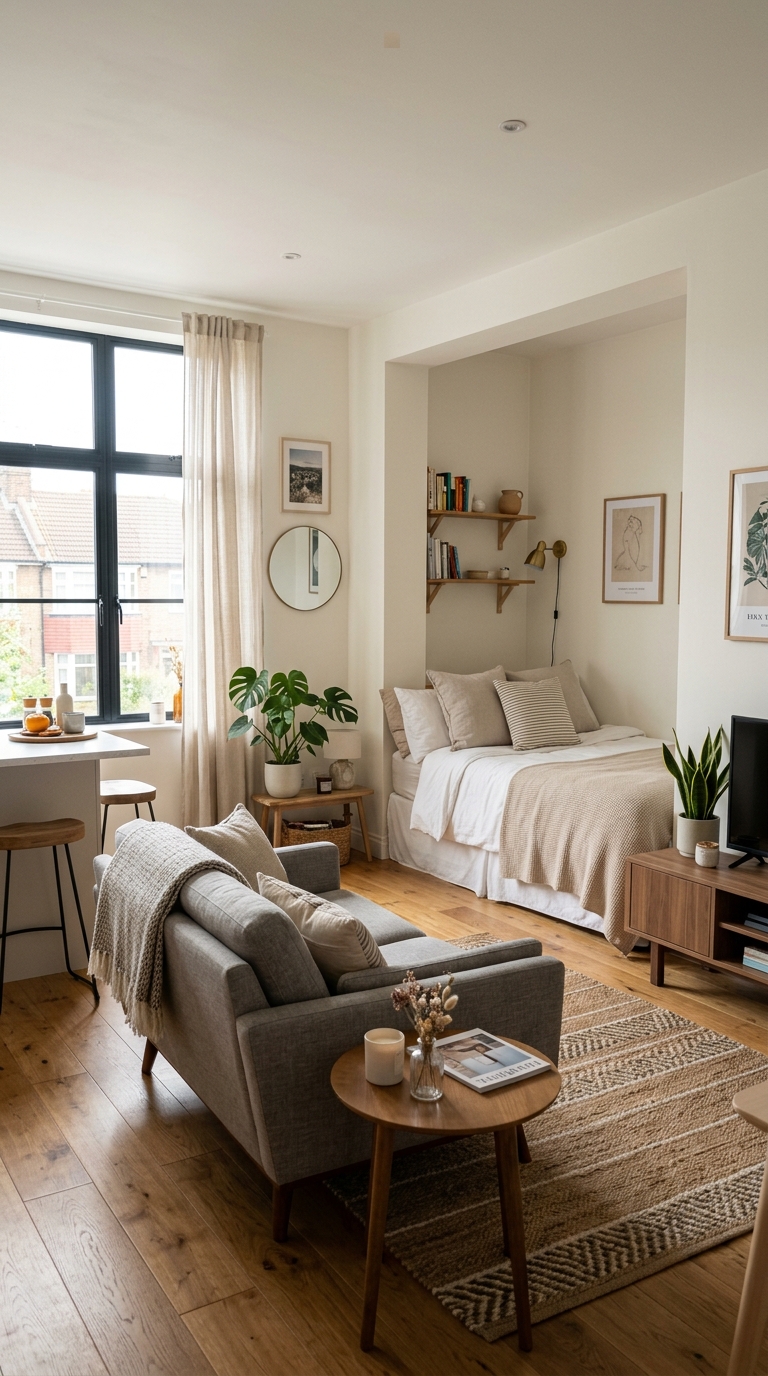
When you tuck your bed into a corner—using a low-profile frame or styling it like a simple daybed along two walls—it creates a built-in sleeping nook. This instantly frees up the rest of the apartment to function as a proper living space.
Place your sofa, coffee table, and entertainment setup in the open area of the room, facing away from the bed. This naturally shifts attention toward the living zone and keeps the sleeping area visually secondary.
As a result, guests focus on the lounge space first, and the studio feels more like a balanced, multi-use home rather than a single crowded room.
The Floating Curtain Studio Apartment Layout
If you want privacy in your sleeping area when guests visit but still want your studio to feel open during the day, a ceiling-mounted curtain track is a simple and effective solution. It separates your bed from the rest of the room. It also avoids the cost or permanence of a real wall.
This approach works especially well in rental apartments. It installs with minimal damage. You can fully open it whenever you want a larger, uninterrupted space.
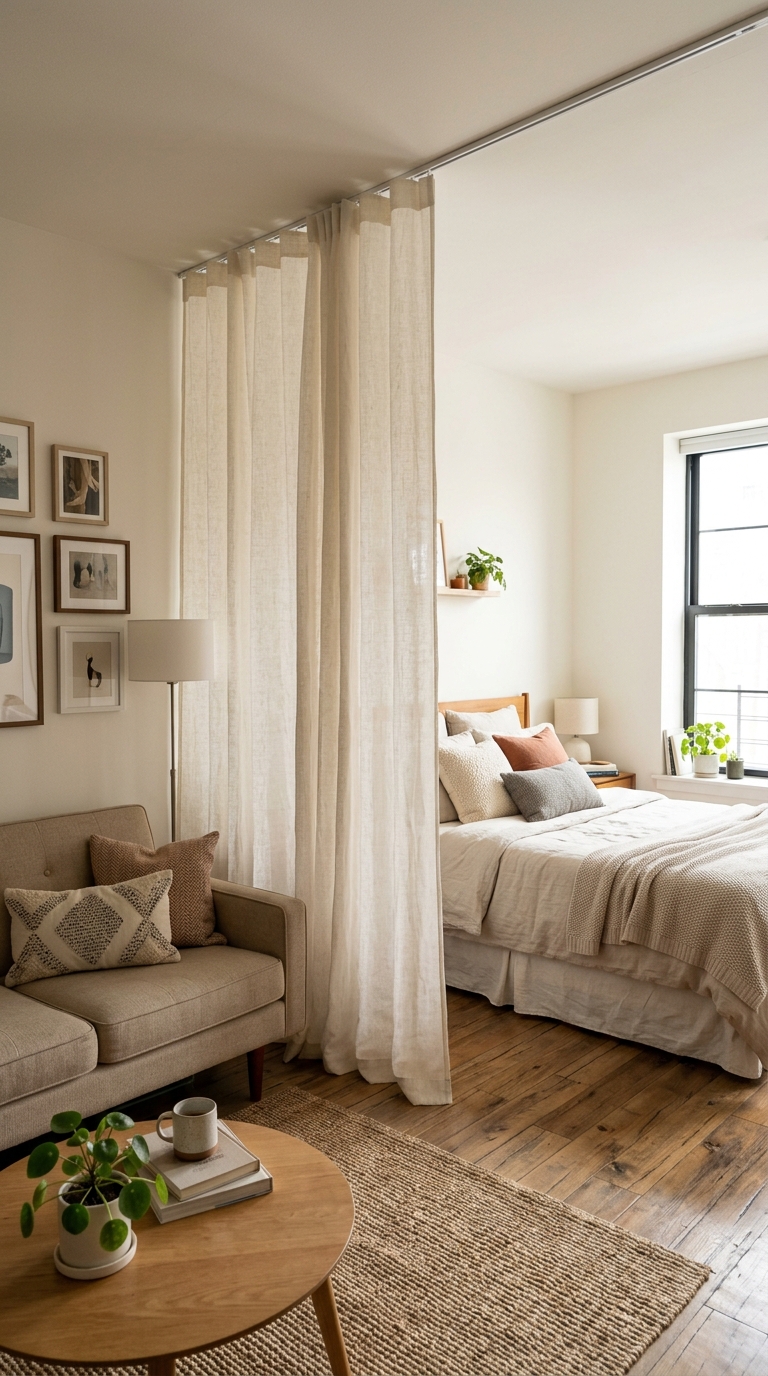
Installing a sleek, low-profile curtain track directly to the ceiling gives you full control over how your studio space is used. When opened, the curtains slide neatly to the sides, allowing natural light to fill the room and making the apartment feel larger and more open.
When you need privacy—whether for sleeping or hosting guests—you can simply close the curtains to fully screen off your bed and keep the space visually organized.
To keep the look elevated rather than cheap, choose ceiling-height curtains in light fabrics like sheer linen or soft cotton. Neutral tones such as cream, beige, or white work best. This adds softness and texture to the room while still allowing light to pass through.
Quick Design Hacks to Make a Studio Feel Bigger
Once you choose the right studio apartment layout with bed and couch, a few simple design choices can make your space feel even larger and more open.
Mount your TV instead of using a stand:
Wall-mounting your television with a swivel bracket frees up valuable floor space. It also makes it easier to view from both the bed and the sofa.
Use multi-functional furniture:
Choose pieces like storage ottomans or nesting coffee tables. These can be tucked away when not in use, giving you more room to move around.
Keep furniture legs visible:
Avoid heavy, boxy furniture that sits flat on the floor. Sofas, beds, and tables with raised legs create visible floor space underneath, which helps the room feel lighter and more open.
Finding Your Perfect Layout
Arranging a studio apartment does not mean you have to sacrifice style or privacy. When you treat your furniture as functional structure instead of just decoration, you can create a space that naturally supports sleeping, working, and relaxing in one room.
Take time this weekend to observe your apartment’s natural light, wall outlets, and walking paths. Then choose the layout that best fits your daily routine and start reshaping your space into something more comfortable and intentional.
Frequently Asked Questions About Studio Apartment Layouts
What is the average size of a studio apartment in the US?
Most studio apartments in the United States range from about 400 to 600 square feet. In large cities like New York, Los Angeles, or Chicago, many studios are much smaller, often between 200 and 350 square feet. Because space is limited, smart layout planning is important no matter the size.
How can I make my studio apartment look bigger?
The fastest way to make a studio apartment feel larger is to reduce visual bulk. Choose furniture with raised legs, use light colors, and keep floor areas as open as possible. Hanging curtains closer to the ceiling and using mirrors can also help reflect light and create a more open feel.
What size bed is best for a studio apartment?
A full or queen bed usually works best in a studio apartment. A king bed often takes up too much floor space and makes the room feel crowded. If storage is limited, a bed with built-in drawers can help reduce the need for extra furniture.
How do I separate a bed and couch in a studio apartment?
You can separate a bed and couch using layout zoning instead of walls. Popular methods include placing the sofa at the foot of the bed, using rugs to define areas, or positioning furniture on opposite sides of the room to create clear sections.
How do I create privacy in a studio apartment?
Privacy in a studio apartment can be created using curtains, open shelving units, or strategic furniture placement. Ceiling-mounted curtains are especially effective because they divide the space without permanently closing it off.
How do I maximize space in a small studio apartment?
To maximize space, focus on multi-functional furniture, vertical storage, and simple layouts that keep walkways open. Avoid overcrowding the room and choose fewer but more functional pieces.